Looking For Drain Cleaning Pros in Frisco? Call Mother

What's Included:
- Up to 100' of sewer cleaning
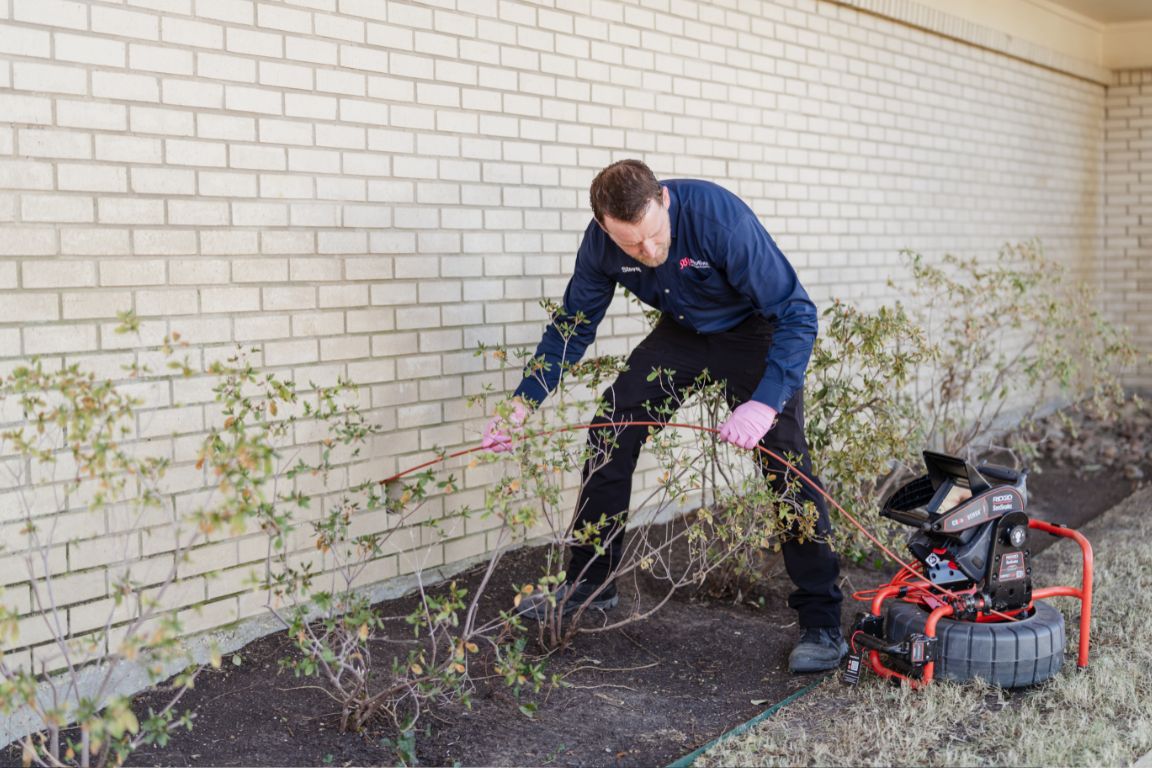
- Camera inspection + footage
- 120-day no clogs guarantee
- Get Same Day Service!
- Family Owned and Operated
- Fix Your Issue 100% Guaranteed

-(17).webp)
Drain Cleaning in Frisco, TX: What Black Clay Means for Your Home's Plumbing
If you've lived in Frisco long enough, you've watched the cracks appear in your yard every August. Those deep fissures snaking across your lawn aren't just cosmetic. They're a warning sign about what's happening beneath your slab- and inside your drain lines.
If you have drain problems, why are we talking about soil? Because most drain problems here start much deeper than inside your drain.
Down here, we don't have "normal" drain problems. We have Frisco drain problems. And that distinction matters more than most plumbers will ever tell you.
Why Frisco's Black Clay Soil Causes Drain Problems Other Cities Don't Have
Frisco sits on Black clay. It’s the most common soil in North Texas, and it's among the most aggressive expansive soil in the country. We're talking 40-60% smectite clay content. That's not a number most homeowners ever hear, but it explains everything about why your drains keep failing.
This soil doesn't just sit there. It moves.
How Seasonal Shrink-Swell Cycles Shift Your Slab and Stress Drain Joints
During our brutal summer droughts, Black clay contracts violently. Cracks open up to 4 inches wide and extend 30 centimeters deep into the earth. Your slab- and the drain lines running beneath it- shift with that movement.
Then the rain returns. The clay swells back. Your foundation moves again.
This isn't a one-time event. It's a cycle that repeats every year. Each shrink-swell episode stresses your drain line joints a little more. Pipes belly. Connections separate. Gaps form where roots find their way in.
The damage is cumulative. A drain line that survived its first decade on this soil may start failing in year fifteen- not because anything dramatic happened, but because the geology finally won.
The Connection Between Watering Restrictions and Recurring Clogs
Here's something most Frisco homeowners don't connect: our year-round watering restrictions actually accelerate soil movement.
When you're limited to once-per-week watering on your trash day, the soil around your foundation experiences more extreme wet-dry cycles than it would with consistent moisture. The clay contracts harder and swells faster- and your slab is exposed to constant strain.
If your drains started acting up after the city tightened watering rules, that's not coincidence. That's cause and effect.
Signs Your Frisco Home Needs Professional Drain Cleaning
Not every slow drain means disaster. But in Frisco, certain symptoms point to problems that won't resolve themselves- no matter how much Drano you pour down the sink.
Slow Drains in Stonebriar and Starwood: What 30-Year-Old Pipes Are Telling You
If you're in Stonebriar (established 1987) or Starwood (established 1996), your drain infrastructure has been riding this clay for 25 to 35 years. That's a lot of shrink-swell cycles.
Homes from this era often feature 3 problematic plumbing materials:
- Clay sewer lines susceptible to root intrusion
- Cast iron drain pipes prone to internal corrosion and scale buildup
- Original pipe joints that have loosened from decades of soil movement
A slow drain in these neighborhoods isn't just a clog. It's your pipes telling you they've been stressed for three decades and something has finally given way.
Gurgling Fixtures After Heavy Rain- A Red Flag for Clay Soil Movement
When multiple fixtures gurgle after a storm, most homeowners assume it's a main line backup. Sometimes it is.
But in Frisco, that gurgling often signals something more specific: the soil just swelled, and your drain lines shifted with it.
Heavy rain saturates Black clay fast. The soil expands. Pipes that were barely holding alignment suddenly pinch or belly. Air gets trapped, and pressure builds. Your toilet bubbles when the washing machine drains.
This symptom tends to appear seasonally. If your drains gurgle every spring and fall- right when our soil is transitioning between wet and dry- you're watching geology in action.
How We Diagnose Drain Problems in Frisco (Before We Clear Them)
Clearing a clog is easy. Understanding *why* it formed- and whether it will return next month- requires actual diagnosis.
Why Camera Inspection Matters More on Expansive Clay Soil
On stable soil, a camera inspection is a nice-to-have option. On Black clay, it's essential.
Here's 4 things we're looking for that other cities don't have to worry about:
- Bellied pipes where soil movement created low spots that collect debris
- Separated joints where shrink-swell cycles pulled connections apart
- Root entry points where clay movement cracked pipes or opened gaps
- Pipe alignment shifts that indicate ongoing foundation stress
A camera shows us the condition of your drain line, not just the location of today's blockage. That's the difference between fixing a symptom and solving a problem.
Finding Bellied Pipes and Separated Joints Under Your Slab
Most Frisco homes sit on slab-on-grade foundations with post-tension cables. Your drain lines run beneath that slab, inaccessible without tunneling or penetration.
When soil movement bellies a pipe, water and waste pool in the low spot. Debris accumulates, and clogs form in the same location over and over.
If you've had the same drain cleared three times in two years, there's a structural reason. A camera inspection reveals whether you're dealing with a bellied section that needs repair- or whether the line is still serviceable with proper maintenance.
Hydro Jetting vs. Snaking: Which Method Frisco Drains Actually Need
Not every clog requires the same tool. And in Frisco, choosing wrong can mean damaging pipes that were already stressed by soil movement.
When High-Pressure Cleaning Is Safe for Older Pipes in Pre-2000 Neighborhoods
Hydro jetting uses 1,500 to 4,000 PSI of water pressure to scour pipe walls clean. It's the most thorough method for removing grease, scale, and root intrusions.
But here's the caution: older pipes on expansive clay may have compromised joints or hairline cracks that high-pressure water can exploit.
In neighborhoods like Stonebriar and Starwood, we always camera-inspect before recommending hydro jetting. If the pipe shows signs of separation or deterioration, we adjust our approach. Blasting water through a weakened line doesn't clean it- it destroys it.
Why Snaking Alone Won't Solve Root Intrusion from Mature Oaks and Elms
A cable machine punches through blockages. That's its job. But when roots have invaded your sewer line, snaking only cuts a temporary channel through the mass.
Why? Because the roots are still there. They'll grow back within months.
Frisco's established neighborhoods- especially those along the Dallas North Tollway corridor- feature mature live oaks, pecans, and elms with aggressive root systems. These trees don't politely avoid your sewer line. They seek it out.
Effective root intrusion treatment requires 3 steps:
- Hydro jetting to remove the root mass completely
- Camera inspection to assess pipe damage
- Ongoing maintenance to prevent regrowth
Snaking alone is a temporary fix that guarantees a repeat service call.
Why Store-Bought Drain Cleaners Fail in Frisco's Hard Water
You tried Drano. It didn't work. That's not your fault- it's chemistry.
Hard Water and Mineral Scale Resist Chemical Drain Cleaners
Frisco's water comes from the North Texas Municipal Water District with a hardness level around 94 ppm. That's enough to leave mineral deposits inside your pipes over time.
Chemical drain cleaners work by dissolving organic matter- hair, grease, soap scum. They don't touch mineral scale. And in hard water areas, that scale often *protects* the clog from the chemicals you're pouring on it.
The cleaner sits on top of the blockage, doing nothing, while you wait and hope.
The Hidden Damage Chemicals Cause to Aging Clay and Cast Iron Lines
Here's what the bottle doesn't tell you: caustic drain cleaners generate heat as they work. In a PVC pipe, that's manageable. In aging clay or cast iron lines- common in pre-2000 Frisco homes- that heat causes three problems:
- Accelerates corrosion in cast iron
- Weakens already-stressed clay pipe joints
- Damages the pipe coating that prevents root intrusion
Every bottle you pour down the drain is a gamble on pipes that may already be compromised by 30 years on Black clay.
Root Intrusion in Frisco: The Hidden Drain Killer in Established Neighborhoods
Roots don't break into healthy pipes on stable soil. They exploit weaknesses. And Frisco's soil creates plenty of those.
Live Oaks, Pecans, and Willows- Which Trees Threaten Your Sewer Line
Not all trees are equal threats to your drain lines:
High Risk:
- Willows – Aggressive, water-seeking root systems
- Silver Maples – Fast-growing with shallow, spreading roots
- Elms – Common in East Frisco; roots travel far from the trunk
Moderate Risk:
- Live Oaks – Extensive root systems, but slower to invade
- Pecans – Deep taproots, but lateral roots can find pipe joints
If you have mature trees within *25 feet of your sewer line*, root intrusion isn't a question of "if"- it's "when."
How Clay Soil Movement Creates Entry Points for Aggressive Roots
Roots don't drill through solid pipe. They find gaps.
Every time Black clay shrinks and swells, your drain line joints flex. Over years, that flexing loosens connections. Hairline cracks form, and gaps open at fittings.
Roots sense the moisture and nutrients escaping from those gaps. They grow toward the source. Once inside, they expand- turning a hairline crack into a full blockage.
This is why root intrusion is worse in Frisco than in cities with stable soil. The clay creates the entry points. The trees do the rest.
Preventing Future Drain Clogs in North Texas Clay Conditions
The best drain cleaning is the one you don't need. In Frisco, prevention means working *with* the soil cycle, not against it.
Seasonal Maintenance Timing Based on Frisco's Soil Cycle
Schedule drain maintenance in late spring and early fall- right when the soil is transitioning between wet and dry seasons.
Why these time windows?
- Late spring (April-May): The soil is stabilizing after winter rains. Any joint separation from the dry season is visible on camera. Cleaning now removes debris before summer heat bakes it in place.
- Early fall (September-October): Before the soil fully dries out, you can address any root growth that accelerated during summer. You're also ahead of holiday hosting season.
- Avoid mid-summer maintenance unless you have an active problem. The soil is at maximum contraction, and any camera inspection will show worst-case joint gaps that may close when moisture returns.
Protecting Your Drains During Drought Restrictions
When you can only water once per week, your foundation soil dries unevenly. The side of your house that gets afternoon sun contracts more than the shaded side. Your slab- and your drain lines- twist slightly with that differential movement.
Three strategies that help:
- Soaker hoses along the foundation (on your designated watering day) to maintain more consistent soil moisture
- Avoiding deep-rooted plants near the sewer line that compete for moisture and seek out pipe joints
- Gutter extensions that direct roof runoff away from the foundation, preventing localized soil swelling
These aren't plumbing tips. They're geology management. In Frisco, that's the same thing.
What Frisco Homeowners Deserve to Know
Most plumbers will clear your drain and hand you a bill. They won't explain why Stonebriar's 1987 clay lines look different after 35 years on this soil than pipes in Austin or Houston. They won't connect your recurring clogs to the watering restrictions or the live oak in your front yard.
Mother doesn’t just clear your drain- we show you why it clogged in the first place, so you're never caught off guard again.
That's not a sales pitch. Mother understands what it takes to properly serve Frisco.
Your home sits on some of the most challenging soil in Texas. Your drains are fighting geology every single day. You deserve a plumber who knows what they’re up against.
Proudly Providing Expert Drain Cleaning Across Frisco’s Neighborhoods
Chapel Creek
Located in west Frisco off Parkwood Boulevard between Stonebrook Parkway and Wade Boulevard, near Preston Road, this luxury community features custom estate homes built primarily from 2002 through the mid-2010s. With properties ranging from 4,000 to over 6,000 square feet on quarter-acre to one-acre lots, these homes now span from 10-25+ years old, creating a range of plumbing infrastructure ages. Older homes from the early 2000s typically feature copper plumbing that may be experiencing pinhole leaks and corrosion, making whole-home pipe replacement increasingly common. Original water heaters from the 2002-2008 era are long past their service life, and we regularly help homeowners upgrade to efficient tankless water heater systems for these expansive properties. The extensive landscaping along Stewart Creek and throughout the hike-and-bike trails can contribute to sewer line root intrusion, requiring periodic hydro-jetting to maintain proper drainage. Many luxury homeowners also invest in electronic leak detection systems and whole-house water softeners to protect their high-end fixtures from Frisco's hard water effects.
Lexington
Situated on the east side of Coit Road between Main Street and Eldorado Parkway, this 950-acre master-planned development is one of Frisco's largest and newest communities with construction beginning in the late 2010s and continuing today. Built by premium builders, these contemporary properties feature modern PEX plumbing systems and the latest efficient fixtures. With homes primarily less than 10 years old, residents are just beginning to see routine maintenance needs for their water heaters, making preventive services like water heater flush and descaling tankless units essential for longevity. Wwe assist residents with yard leak detection for irrigation systems. With Frisco's moderately hard water at 146.5 ppm, many homeowners proactively install whole-house water softeners and whole-home water filtration systems to protect their investment. The smart home features common in this modern development also make smart water shutoff valves a popular upgrade for tech-savvy residents.
Shaddock Creek Estates
This gated community situated between Main Street and Eldorado Parkway on Legacy Drive, just one block off the Dallas North Tollway, features luxury homes built starting in 2006 with development continuing into the early 2010s. Surrounded by 68-acre Cottonwood Creek Park with its lakes, trails, and greenbelts, these 4,000-6,000 square foot estate homes on quarter to half-acre lots are now 13-18+ years old. Original plumbing systems from the mid-2000s construction are showing typical age-related concerns, and homeowners commonly need water heater replacements as units exceed their 10-15 year service life. The wooded walking trails and mature landscaping throughout the community contribute to sewer line root intrusion, making drain cleaning and hydro-jetting services frequently needed. With the community pool and extensive outdoor amenities, water line repair and water pressure testing are valuable services for maintaining property value. Many residents also upgrade to tankless water heater systems for improved efficiency in these larger homes, and invest in whole-home water filtration to address local water quality concerns.
Do I need a sewer camera inspection before cleaning?
While not always mandatory for simple clogs, a camera inspection is highly recommended before hydro jetting, especially for recurring issues.
It allows the plumber to see the exact cause of the clog, the pipe's condition, and confirm if hydro jetting is the safest and most effective solution.
How long will sewer augering (snaking) last?
A snaking typically clears the current clog, but how long it lasts depends on the original cause. If it's roots or buildup, the clog will inevitably return.
Why are my bathtub and toilet clogged at the same time?
If your bathtub and toilet are both clogged, you have a blockage in the branch drain line — the dedicated drain pipe that serves the toilet and bathtub. Most times, these branch drain line blockages happen when too much hair, soap scum and paper products go down your bathroom drains.
What is the best enzyme drain cleaner for grease?
Our Master Plumbers rate Endure by American Formula as the best enzyme drain cleaner for grease. We tested six enzymatic drain cleaners for their effectiveness in clearing grease clogs and organic clogs.
How much does drain cleaning cost in Dallas?
We offer $299 drain cleaning service for Dallas homeowners. The service comes with a video camera inspection and a free bottle of Endure enzyme drain cleaner. Members of our Pipeline receive a $300 drain cleaning coupon annually.


-(27).webp)
-(22).webp)
-(16).webp)
-(8).webp)


.webp)