Sewer Vent Problems: The Roof Issue Ruining Your Drains
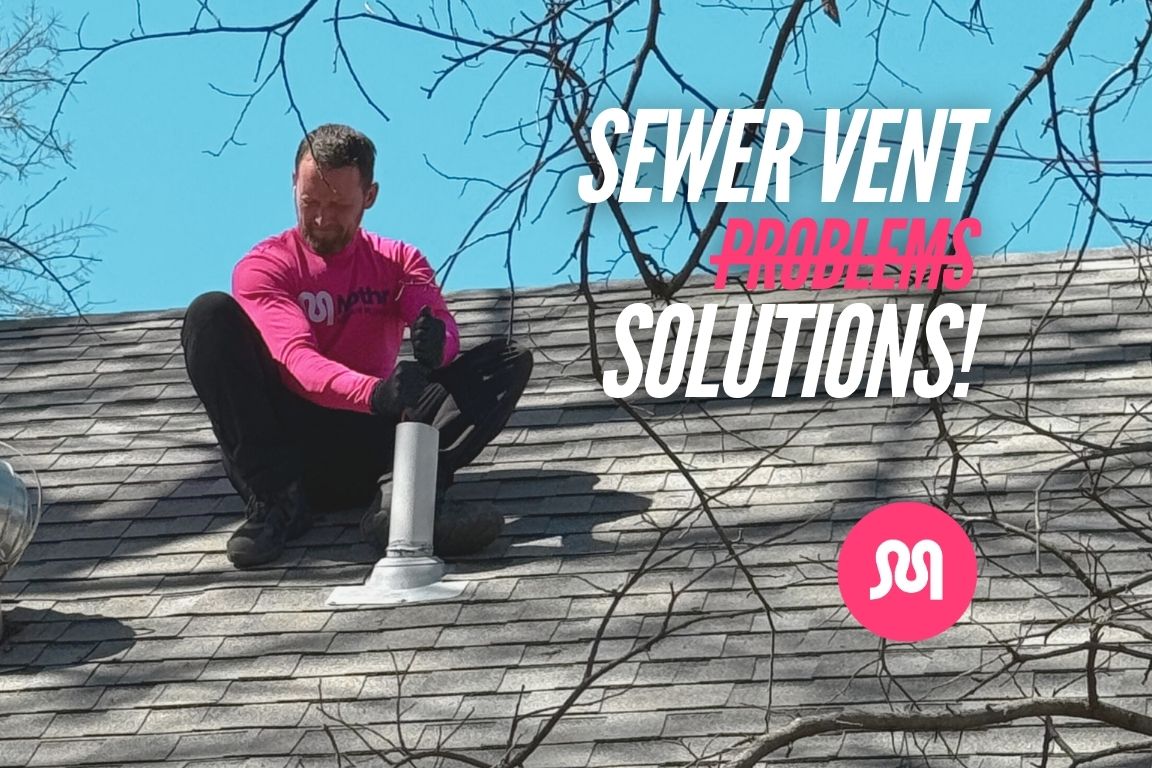


table of contents
table of contents
Your kitchen sink is gurgling. Water backs up when you flush the toilet. The bathroom smells like a sewer. You called a plumber who inspected your drains- perfectly clear. Ran a camera through your sewer line- no blockages anywhere. You're out of options and out of patience.
But there's one place nobody checked yet: your roof.
Sewer vents are the forgotten heroes of your plumbing system. They sit quietly on your roof doing critical work until one determined bird builds a nest, one winter ice storm creates a plug, or one windstorm blows debris into the opening. Then your entire drainage system stops working properly- and most homeowners never think to look up.
At Mother, our Master Plumbers diagnose and fix sewer vent problems across Dallas-Fort Worth. In this guide, we'll explain what sewer vents actually do, the common problems that block them, and how to decide whether cleaning or sewer pipe repair is the right solution for your home.
Slow drains and out of ideas in Dallas? Call Mother 24/7 for complete sewer vent diagnostics, cleaning and repair. We find what other plumbers miss- and fix it right the first time.
{{sewer-cleaning="/services/sewer-cleaning"}}
The Silent-But-Priceless Job of Your Sewer Vents
Your sewer vent system does two essential jobs: it allows air into your plumbing so wastewater can flow out smoothly, and it lets sewer gas out of your house.
Plumbing code requires vents to protect the trap seals in your drainage pipes. A blocked vent lets air and stinky smells blow back up your drains.
Think of it like a straw. When you put your finger over the top of a straw and lift it from a glass, the liquid stays trapped inside. Remove your finger and air rushes in from the top, allowing the liquid to drain out the bottom.
That’s what happens when you flush a toilet or drain a sink. When things are working smoothly, wastewater rushes down the pipes towards the main sewer line. There’s a vacuum of air behind it- it would slow or stop your drainage totally if there wasn’t air to replace it. Your sewer vents provide that air intake from the roof.
The vents also release sewer gases safely into the atmosphere instead of allowing them to build up inside your pipes and bubble back through your drains. Without functioning vents, you'd smell sewer gas every time you used a fixture.
How Your Vents Help Your Home Sewer System
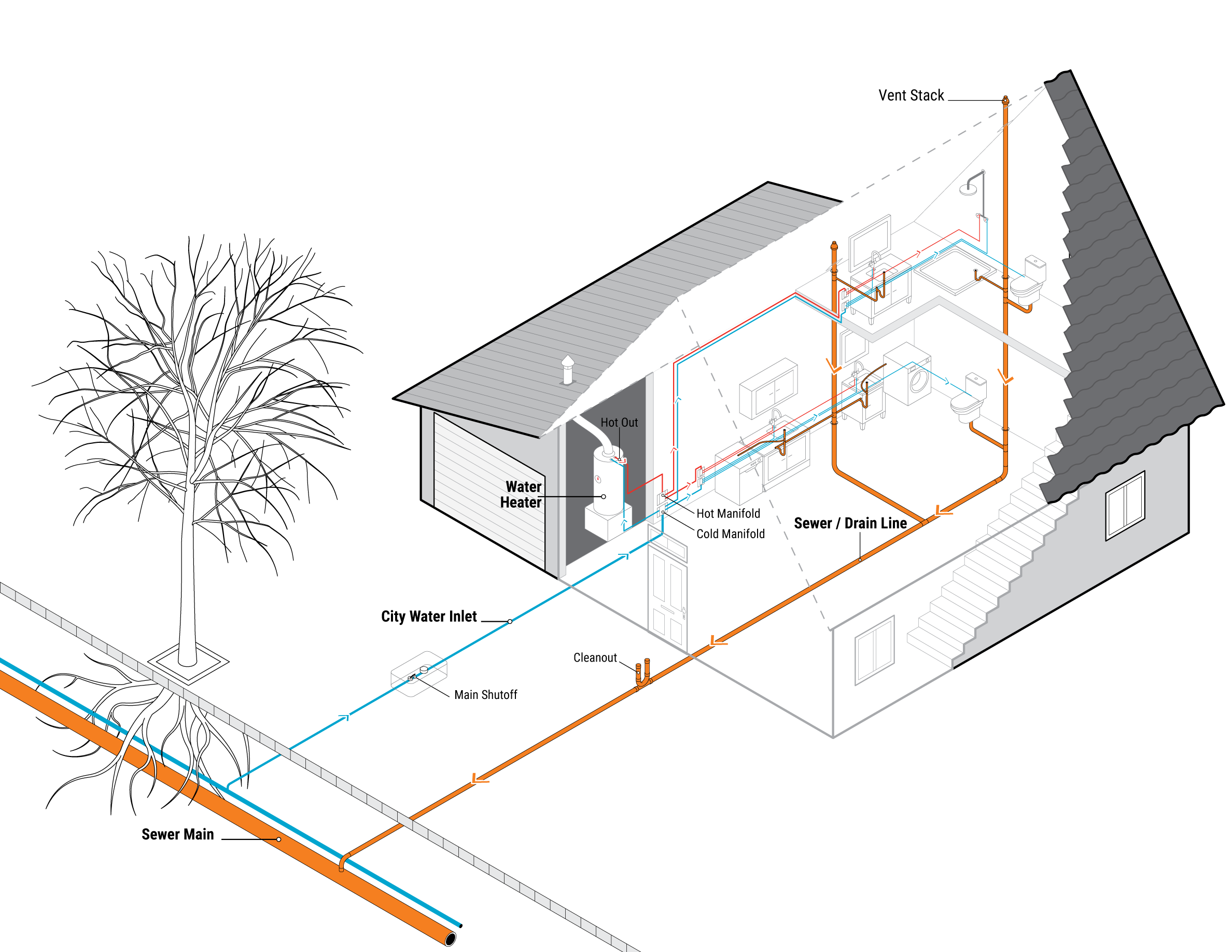
Every drain in your home connects to the vent system through a network of pipes hidden in your walls. The main vent stack runs vertically through your house and exits through your roof, usually near the highest point. Branch vents connect individual fixtures to this main stack.
When vents get blocked, air can't enter the system. Sinks back up. Toilets bubble. Pressure imbalances force sewer gas back through your drains. Your entire plumbing system struggles- and the problem is literally out of sight on your roof.
Where To Find Your Sewer Vents
Look for one or more pipes sticking up through your roof. They’re usually between 1.5” and 4” in diameter- these are your sewer vents.
Most homes have a main vent stack that exits near the center or back of the roof- usually above bathrooms since that's where the most plumbing fixtures cluster. Larger homes often have multiple vent pipes, with secondary stacks serving additions or distant fixtures.
You’ll usually see pipes made of PVC or ABS. In older Dallas-Fort Worth homes built before 1980, you might see cast iron vent pipes. Newer homes use white or black PVC pipes. The pipe extends several inches to a few feet above the roofline to prevent snow, debris, or water from entering during storms.
Need a whole home view of your sewer system? Check out our simple residential sewer diagram!
{{fast-plumbing-answers-your-house-sewer-line-diagram="/blogs/fast-plumbing-answers-your-house-sewer-line-diagram"}}
Your Sewer Vents Are Invisible- Until There's a Problem
Nobody thinks about their sewer vents. Why would you? They're on the roof doing their job silently, year after year, while you focus on the parts of your plumbing you actually see and use every day.
That invisibility is exactly the problem. You don't notice when leaves collect around the opening. You don't see the squirrel that decided your vent pipe makes a perfect home for its acorns. You don't know about the ice plug that formed during the last freeze.
You only notice when your drains start acting strange- and diagnosing the cause becomes difficult because the vent system is the last place anyone looks.
The 6 Most Common Sewer Vent Villains
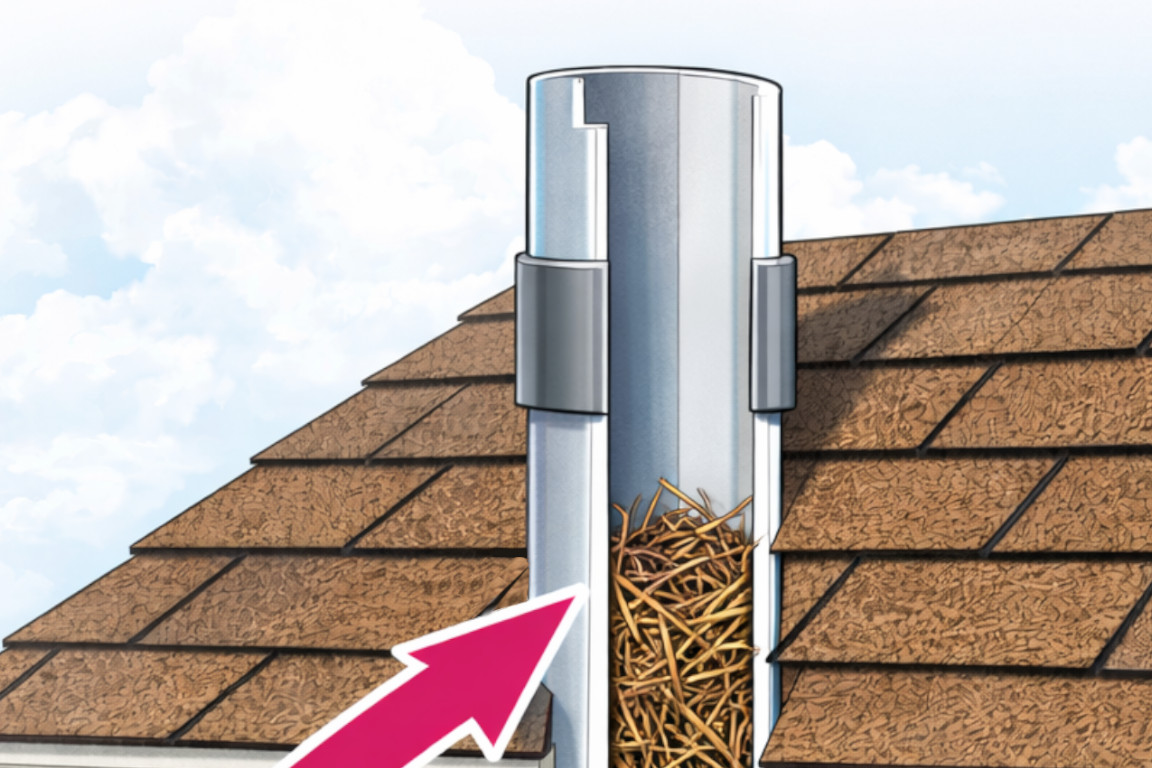
- Bird nests - Birds see your vent pipe as a safe, enclosed space perfect for raising babies. Nests can completely block airflow, especially in spring and early summer.
- Leaves and debris - Fall storms blow leaves, small branches, and organic matter directly into open vent pipes. Over time, this debris compacts and creates blockages.
- Ice plugs - During freezing weather, condensation inside your vent pipe can freeze, creating a solid ice barrier that blocks air completely. This is especially common in DFW during our occasional hard freezes.
- Squirrels and acorns - Squirrels drop acorns into vent pipes, either accidentally or while foraging on roofs. Multiple acorns can jam together and block the pipe.
- Wasp nests - Wasps build nests inside vent pipes during warm months, creating partial or complete blockages that restrict airflow.
- Frost closure - In extremely cold weather, frost can form around the opening of your vent pipe, gradually narrowing the opening until air can't pass through. This differs from ice plugs- it's external closure rather than internal freezing.
How Sewer Vent Problems Present Themselves
Blocked or damaged sewer vents create six common symptoms throughout your home:
- Slow drains in multiple fixtures - Water takes forever to drain from sinks, tubs, and showers throughout your house, not just one fixture
- Gurgling sounds from drains - You hear bubbling or gurgling when water drains, especially from toilets and tubs
- Sewer gas odors - You smell sewage coming from drains, particularly in bathrooms
- Toilets that don't flush properly - Weak flushes, incomplete clearing, or water that rises then slowly drains
- P-trap siphoning - You hear sucking or slurping sounds from drains after water stops running, indicating trapped water is being pulled out of P-traps
- Water backing up in low fixtures - When you run water upstairs, drains downstairs bubble or back up slightly
We know exactly what you’re thinking. These symptoms sound a lot like red flags that I have a drain clog or sewer blockage. And that’s exactly why diagnosis is so tricky.
Bathroom smell like sewage? It’s usually a dry P-trap- find out how to tell if it’s a simple fix or requires a plumber’s help in our 3-minute guide!
{{fast-plumbing-answers-sewer-smell-in-bathroom="/blogs/fast-plumbing-answers-sewer-smell-in-bathroom"}}
Sewer Vent Issues Often Trick Homeowners
Most homeowners assume drain problems mean drain clogs. They try plungers, drain cleaners, and eventually call a plumber to snake the line. When that doesn't fix it, they assume sewer line damage.
Another plumber, another camera inspection, another "everything looks fine." The real culprit sits on the roof the entire time, quietly blocking the air that makes drainage possible.
The three symptoms that confuse homeowners most are slow drains, gurgling sounds, and sewer odors- because these are also classic signs of drain clogs or sewer line blockages.
- Slow drains from a blocked vent look identical to slow drains from a clogged pipe. The difference is scope. A drain clog affects one fixture or one bathroom. A vent blockage affects multiple fixtures throughout your home simultaneously because the entire system can't breathe properly.
- Gurgling sounds can indicate a partial drain obstruction or a vent problem. Here's the difference: drain-related gurgling happens when you use that specific fixture. Vent-related gurgling happens when you use a different fixture- you hear the toilet gurgle when you drain the bathtub, or the kitchen sink gurgles when you flush the upstairs toilet. That cross-fixture symptom points to vent issues.
- Sewer gas odors from a blocked vent smell exactly like odors from a damaged sewer line. The key distinction is pattern. Sewer line damage usually creates localized odors near the damaged section- often in your yard if the break is underground. Vent-related odors appear at multiple drains throughout your house because sewer gases are being forced back through P-traps systemwide.
If you can't tell the difference based on these patterns, you need a plumber to investigate. The symptoms overlap enough that self-diagnosis rarely works.
Sewer Vent Issue or Not? Get a Plumber on Your Roof
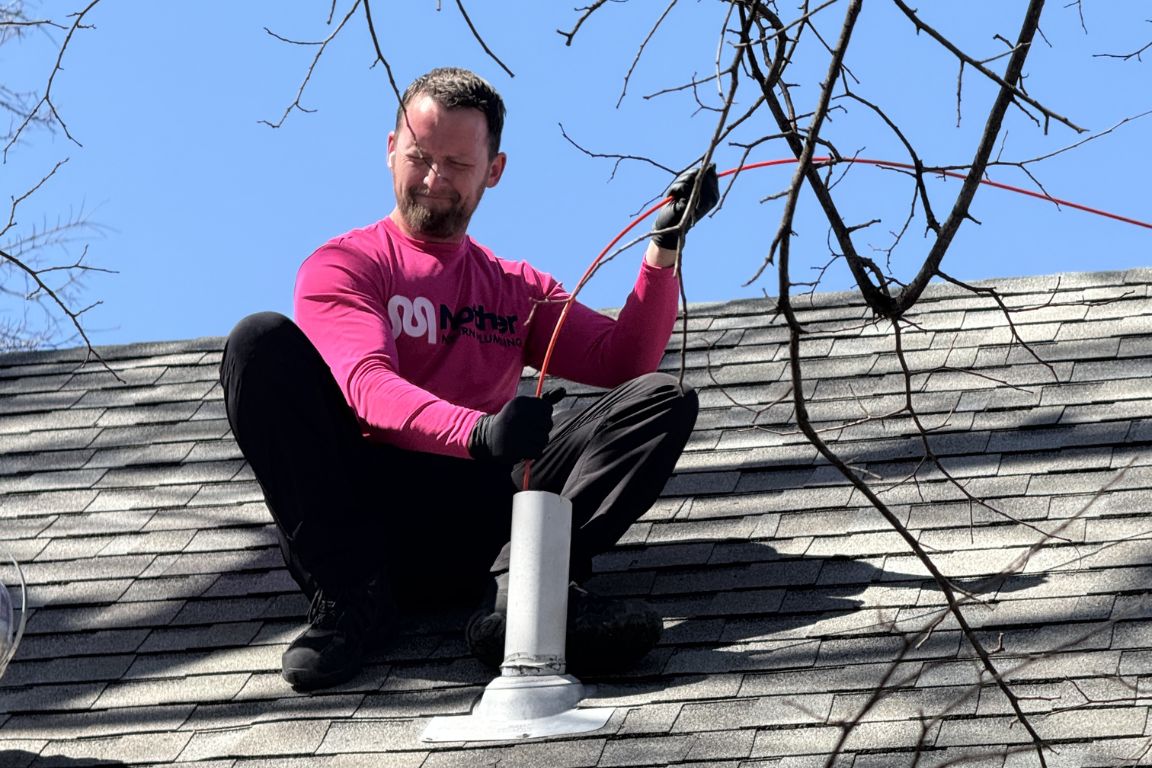
Professional sewer diagnostics have what DIY detective work doesn’t: access and equipment.
- Your plumber has the experience to navigate roof surfaces without causing damage or injury. They can physically inspect your vent pipes, look inside them, and identify blockages you couldn't see from the ground.
- They bring specialized tools. A plumber's inspection mirror and flashlight reveal what's lodged inside your vent pipe. If the blockage is deep, they have flexible cameras that travel down the vent stack to locate the problem. If the issue is inside your walls rather than on the roof, they use drain cameras to inspect the vent system from below.
- A plumber understands how your vent system connects to your drainage system. They know which fixtures share which vents, where branch vents tie into the main stack, and how to trace symptoms back to their source. That expertise eliminates guesswork.
- Most importantly, a plumber can fix the problem immediately. Once they identify a blocked vent, they have the tools to clear it- whether that's removing a bird nest by hand, using an auger to break up ice, or running a cable through to dislodge debris. No second trip required.
Always Start With a Camera Inspection
Camera inspection confirms what's wrong before any clearing or repair work begins. Your plumber inserts a waterproof camera into your vent stack from the roof, slowly feeding it down through the pipe while watching real-time footage on a monitor.
The camera shows exactly what's blocking your vent- a bird nest, ice formation, debris buildup, or structural damage. It reveals where the blockage is located, how severe it is, and whether your pipe has cracks or separations that need repair beyond simple cleaning.
This visual confirmation prevents wasted time and money. Without camera evidence, plumbers might spend hours trying solutions that don't address the actual problem. With footage showing a bird nest 8 feet down your vent stack, they know precisely what tool and approach will clear it in minutes.
Camera inspection also gives you proof. You see exactly what your plumber sees. If the vent pipe needs replacement due to damage, you have visual documentation rather than just taking someone's word for it.
Find the Single Best Sewer Vent Fix: Cleaning or Repair?
Once your plumber completes the camera inspection, they'll recommend either cleaning to remove blockages or repair to fix damaged pipes. The right solution depends entirely on what the footage shows you.
Here are eight unique and effective solutions for a variety of sewer vent problems- four if cleaning is needed, and four if repair is required.
If Your Sewer Vent is Blocked: Choose Cleaning
Bird nest removal requires reaching into the vent pipe and manually extracting the nest material. Your plumber might use long hooks or grabbing tools if the nest sits deep in the pipe. This typically takes 15-30 minutes once they're on your roof.
Ice plug clearing happens by running warm water down the vent or using heat cables to melt the ice. For severe ice blockages, plumbers sometimes use a plumbing auger to break through the ice mechanically. In DFW's climate, ice plugs usually resolve within an hour once addressed.
Debris removal involves using a plumber's snake or auger to break up and clear leaves, acorns, and compacted organic matter. The cable travels down the vent stack, breaking apart the blockage so it falls into your main sewer line and flushes away. This process takes 30-60 minutes for most residential vents.
Wasp nest removal requires careful extraction to avoid disturbing active nests. If wasps are present, pest control should handle removal first. For abandoned nests, plumbers can remove them manually or break them apart with tools.
If Your Sewer Vent System is Damaged: Choose Repairs
Vent cap installation solves recurring blockage problems. Your plumber installs a mesh cap over your vent pipe opening that allows air to pass while keeping out birds, debris, and animals. This prevents future nest-building and leaf accumulation while maintaining proper airflow.
Pipe section replacement addresses cracked, corroded, or damaged vent pipes. If your camera inspection revealed deterioration, your plumber cuts out the damaged section and installs new PVC pipe. For roof-level repairs, this typically involves removing a small section of roofing, replacing the pipe, and sealing everything properly.
Vent system expansion solves chronic drainage problems in homes where the existing vent system is undersized. This is common in older homes where additions were built without proper venting added. Your plumber installs additional vent pipes or air admittance valves to provide adequate airflow.
Flashing repair fixes leaks where the vent pipe passes through your roof. Damaged flashing allows water to enter your home around the vent pipe. Your plumber or roofer replaces the rubber boot or metal flashing to create a watertight seal.
Never Do These Six Things to Your Sewer Vents
We’ve read some DIY horror stories about homeowners climbing on their roofs and trying wild things to clear a blocked sewer vent. (We’ve seen a few in the field, too.)
Please, from Mother’s family to you, do not do any of these six things. Heck, don’t climb on your roof to begin with- call a licensed plumber you trust.
- 🚫 DON’T pour drain cleaner down your vent pipe from the roof
- 🚫 DON’T stick a garden hose down the vent and run water at full pressure
- 🚫 DON’T use compressed air to blow out blockages
- 🚫 DON’T attempt roof access without proper equipment or experience
- 🚫 DON’T cap or seal your vent pipe permanently
- 🚫 DON’T ignore vent problems hoping they'll resolve themselves
Get Your Dallas Sewer Vents Working Again

Most sewer vent problems resolve with professional cleaning- removing a nest, clearing an ice plug, or extracting debris that's blocking airflow. But you can't know whether cleaning is enough until a camera inspection shows you exactly what's inside your vent system and whether the pipe itself is damaged.
Mother Modern Plumbing's Master Plumbers diagnose sewer vent issues throughout Dallas-Fort Worth with camera inspection technology that pinpoints problems without guesswork. We clear blockages on the spot, recommend repairs only when the camera proves they're necessary, and install vent caps to prevent future problems.
Don’t let one little bird or one pesky squirrel back up your toilet. Before you give up looking for that drainage problem- always have your plumber check the roof.
Drains acting strange in Dallas-Fort Worth? Call Mother 24/7 for roof-to-sewer diagnosis. We’ll find the problem, show you proof, and offer the single best solution- fast.
{{sewer-cleaning="/services/sewer-cleaning"}}