Root Intrusion in Sewer Line: Find It and Fix It For Good



table of contents
table of contents
A sewer backup in your home came out of nowhere. You keep looking at the huge oak tree in your backyard, wondering if a tree root infiltration in your underground pipes is to blame.
Before we take a deeper dive, here are the 3 things you need to know:
- The warning signs: A root intrusion affects multiple drains, not just one. Look for several clogged drains throughout your home, particularly sinks, tubs and showers.
- Why it happened: Your sewer system is a magnet for tree root intrusion. It's full of organic material that aggressive root systems crave. Older pipes and separated pipe joints are easy targets for root damage.
- How to fix it: Always get a sewer camera inspection for visual proof of the root growth. Sewer cleaning removes the existing root mass. Sewer line repair stops the roots from growing back into the damaged pipe section.
Our Master Plumbers guide you through the first steps you need to diagnose and locate the root intrusion in your sewer line. Then, we'll show you the right options to solve the specific problem affecting your home.
Suspect a root intrusion in your DFW sewer pipes? Call Mother 24/7 for expert inspection, hydro jetting and targeted repairs that keep roots out for good.
{{sewer-line-repair-and-replacement="/services/sewer-line-repair-and-replacement"}}
Tree Root Intrusion in Sewer Line: The Seven Warning Signs
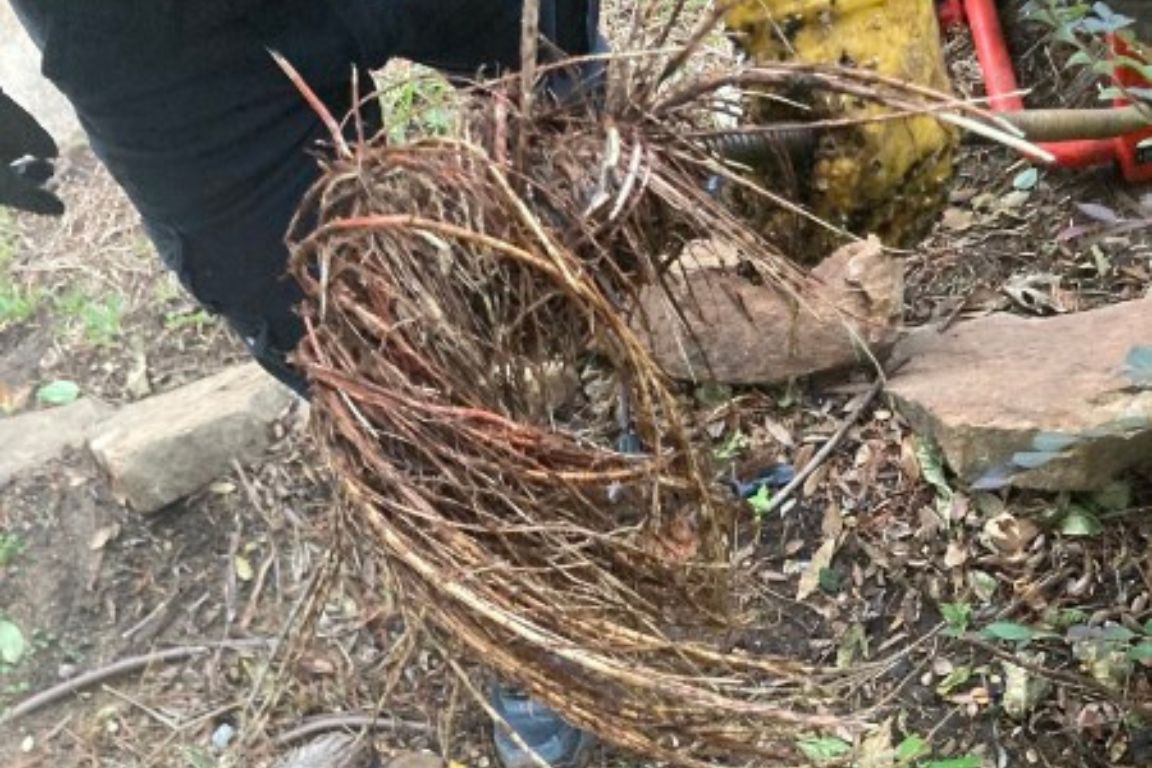
Root intrusion creates distinctive symptoms that start mild and progressively worsen as roots grow larger inside your pipes:
- Multiple slow drains throughout your home: Water takes forever to drain from sinks, tubs, and toilets in different bathrooms, not just one fixture.
- Bubbling and gurgling toilets: You hear bubbling after you flush, or when you flush an upstairs toilet or drain an upstairs shower.
- Sewage backups into lowest drains: Wastewater backs up into your shower, tub, or basement drain when you flush toilets or run water upstairs.
- Sewer odors in your home or yard: You smell sewage in multiple rooms or notice foul odors in your yard above your sewer main.
- Odd green patches of lawn: A strip of grass is noticeably greener and grows faster than surrounding lawn, following your sewer line path.
- Your lawn is sinking and soft: Areas above your sewer line feel soft when you walk on them or show visible depressions.
- There’s a big tree in your yard (or your neighbor’s): Mature oaks, elms and sycamores have root systems that travel up to 50 feet to break sewer pipes.
How to Be Sure It's Root Damage (And Not Something Else)
Root intrusions in sewer lines are one of the most common home drainage problems, especially in neighborhoods with mature trees. Roots don't just clog your pipes- they break into them, create permanent damage, and keep coming back unless you address both the roots and the structural damage they cause.
Root intrusion symptoms often get confused with regular clogs or sewer line bellying, but three patterns point specifically to hungry tree roots being your problem.
- The biggest clue: recurring symptoms. Root intrusions clear temporarily, then return within weeks or months as roots regrow. If you've cleared the same drain three times in six months, roots are almost certainly involved.
- Worse in spring/summer? It’s roots. Drainage problems get worse in spring and summer when trees actively grow and roots expand rapidly. If your drains slow down every April and improve somewhat in winter, that seasonal pattern strongly indicates root intrusion.
- A strip of lush, green grass. When roots break into your sewer line and wastewater leaks into the surrounding soil, it acts as fertilizer. You'll see a line of exceptionally green grass that follows your sewer pipe path from house to street. This symptom doesn't occur with simple clogs or bellied pipes.
Tree Roots Love What's In Your Main Sewer Line
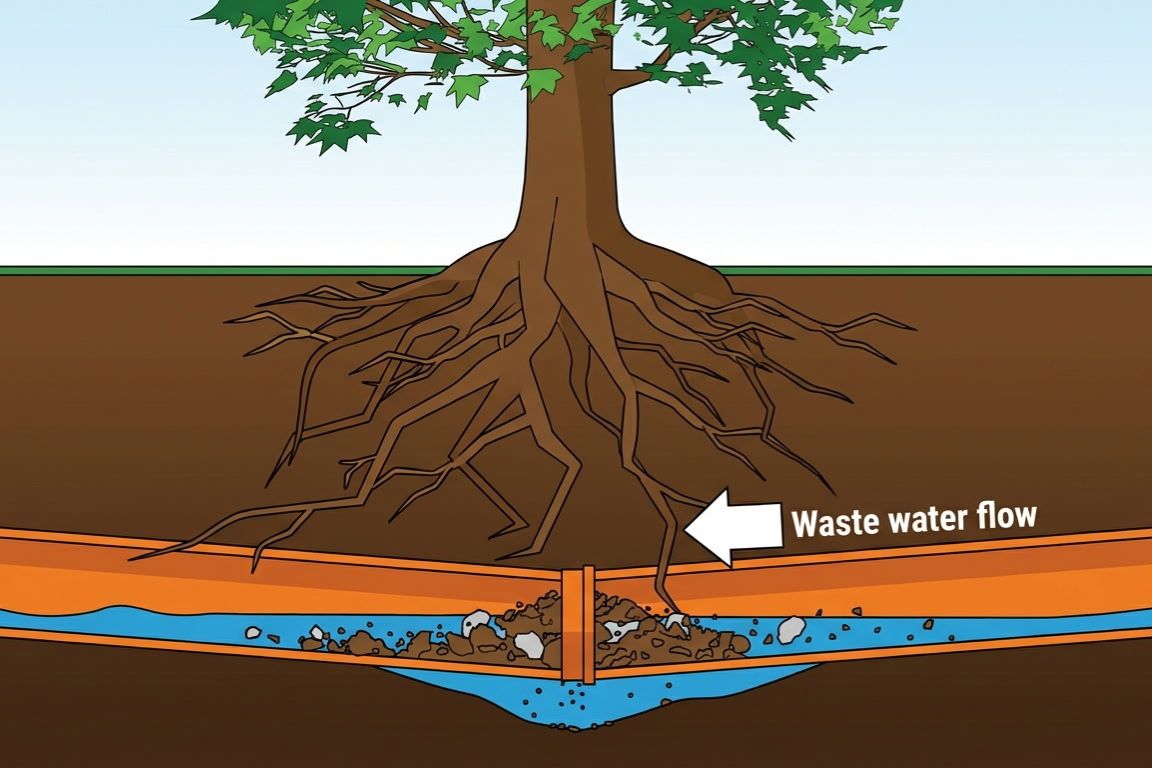
Tree roots seek out your sewer line because it's the richest nutrient source available underground. They don’t break into water lines as much because there’s only water inside. Your sewer main is a grocery store for roots- access to water, organic matter, nitrogen, and nutrients from wastewater.
Roots grow toward moisture. Once they reach the sewer pipe, they don't just stop at the outside- they find every crack, joint separation, or weak point and force their way inside where conditions are perfect for aggressive growth.
Inside your sewer line, roots have constant access to water and waste that feeds them exactly what they need. They expand rapidly, creating dense mats that trap passing debris. More waste catches on the roots, creating larger blockages. The roots continue growing and spreading, cracking the pipe further as they expand.
Old Sewer Pipe Materials Are Prime Targets
Homes built before 1980 with original sewer pipes are juicy targets for tree roots seeking nutrients.
Every cast iron sewer pipe is outdated. Existing systems have major pipe wall corrosion issues that are no match for aggressive oak, pecan and sycamore root systems.
Clay pipes and root damage go hand in hand. Ever see a mint or bamboo plant break through a clay pot? The same thing's happening underground.
Orangeburg pipes are awful. Their mix of tar and wood fiber stands no chance against fully grown trees.
Are your sewer pipes outdated? Check their “expiration date” in our article on sewer line lifespan.
{{how-long-do-sewer-lines-last="/blogs/how-long-do-sewer-lines-last"}}
Your 4 Step Root Intrusion Removal Plan

Most root intrusions require both cleaning and repair to solve permanently. Cleaning removes the roots currently blocking your pipe. Repair fixes the damage that allowed roots in, preventing them from returning.
Our Responsible Master Plumber Steven Smith built a 4 step root intrusion removal plan that offers short-term root intrusion treatment and stops them from growing back into your pipes.
Here's a shorthand version of the plan:
1. Call a Certified Arborist Before You Dig
A great first step that doesn’t require a plumber or any excavation. An ISA certified arborist has ground penetrating radar equipment to map the size and trajectory of your trees’ root systems.
They’ll also check for overall tree health by looking for wilting or early leaf drop. This indicates a lack of nutrients- which explains why the roots are trying to enter your sewer pipe.
Use this handy locator to find an ISA certified arborist near you.
2. Always Request a Sewer Camera Inspection
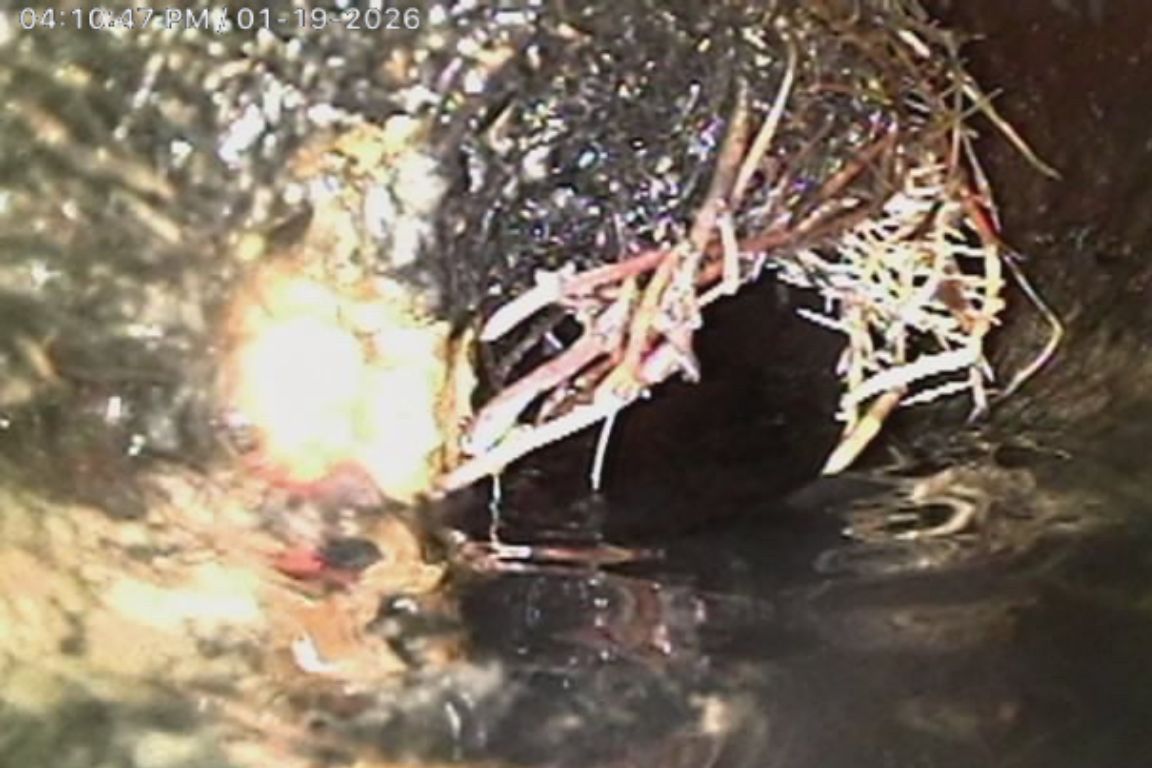
A sewer line video inspection reveals root intrusions with precision.
Camera inspections are the best method to show exactly where roots have entered your sewer line, how extensive the damage is, and whether your pipe needs repair beyond just root removal. Without this visual confirmation, you're guessing at solutions.
3. Hydro Jetting: The Best Root Removal Option
Hydro jetting is the best sewer line cleaning option. It clears root intrusions more effectively than any other cleaning method. High-pressure water jets (3,000-4,000 PSI) blast away root masses, cutting through both thick roots and fine root hairs that cling to pipe walls.
Sewer snakes only punch a hole in the tree root infiltration. Sewer jetting equipment removes the entire root growth, then scours interior pipe walls clean.
4. Sewer Repair: Keeping Roots Out For Good
Cleaning removes roots. Repair prevents them from coming back. The cracks and separations where roots entered remain after hydro jetting- and roots will find those same entry points again within months.
Trenchless pipe lining is a great option if your pipes are in good condition. Newer PVC sewer lines with minimal intrusion damage are excellent candidates for CIPP sewer lining.
Damaged cast iron pipe sections should be repaired with Schedule 40 PVC.
Discover our Master Plumbers' plan for removing roots from sewer lines in this in-depth guide to hydro jetting and root intrusion repair!
{{fast-plumbing-answers-does-hydro-jetting-remove-roots="/blogs/fast-plumbing-answers-does-hydro-jetting-remove-roots"}}
Two Root Removal Options That Don't Work Well
Wondering why the chemicals you poured down the drain line aren't working? Considering a root barrier system? Here's why these options don't fully solve your root problem.
Chemical Root Treatments Aren’t Worth the Savings
Chemical root killers are tempting: they cost $20-50 and promise to dissolve roots inside your pipes. But they provide temporary relief at best.
- They don't work immediately. Chemical root killers take 2-4 weeks to work, and trees become more resistant to their active ingredients over time.
- They don't actually kill the root… The chemicals kill exposed root tips but don't eliminate the root mass already filling your pipe. More importantly, they do nothing about the structural damage allowing roots inside.
- They become less effective over time. Trees develop resistance to repeated chemical treatments. The same product that worked last year becomes less effective this year. Meanwhile, your pipe damage continues worsening.
We asked our licensed plumbers for their opinions on root killer products. Marcus Sanchez offered great insight: “Your sewer system is sloped to avoid standing water. So as fast as the root killer goes in, it goes out. It's like putting Icy Hot on your shoulder and hopping right in the shower.”
Our Master Plumber Jesse Crane responded with one word: “Band-Aid”.
If you use chemical root treatments, only use copper sulfate. Products with other active ingredients can kill your entire tree.
Root Barriers Cause Other Plumbing System Issues
Engineers and arborists don't like root barriers. While they're reasonably effective at keeping roots away from your underground sewer main, they cause a host of other problems on your property.
- Pooling water. Plastic barriers block natural groundwater flow through your soil. This causes pools and saturated areas on your lawn. If the problem's near your foundation, you just turned a root intrusion into a potential slab repair.
- Tree instability. Forcing tree roots in another direction compromises the stability of the tree itself. You risk roots breaking the ground surface or a tree falling on your property.
- It's expensive. It costs about $65-$70 per linear foot to install a 3'-4' deep barrier system, with most installation costs running $1,200+. If you're spending that much, you might as well fix your sewer pipe damage.
How to Prevent Future Root Intrusion in Sewer Line
To avoid root intrusion in the future, add these 4 preventive measures to your home maintenance plan:
- Plant Strategically: Certain trees have smaller root profiles, like crepe myrtles. If possible, keep trees at least 10 feet away from sewer lines.
- Upgrade Pipes: Consider sewer line replacement of cast iron, clay and Orangeburg pipes with Schedule 40 PVC to resist future root infiltration.
- Routine Inspections: Schedule regular sewer line camera inspections to catch early signs of damage. Check out Mother’s Pipeline membership program, which comes with a free sewer camera inspection.
- Maintain Healthy Trees: Ensure trees receive adequate water and nutrients from other sources to reduce their reliance on sewer lines.
Get Lasting Root Intrusion Solutions in Dallas-Fort Worth

Tree roots in sewer pipes require both cleaning and repair for permanent results. Hydro jetting removes the roots blocking your pipe right now. Repairing damaged sections with Schedule 40 PVC eliminates the cracks and separations where roots entered, preventing them from breaking in again.
Mother Modern Plumbing's Master Plumbers use camera inspection equipment to show you exactly where roots invaded your sewer line, hydro jetting to clear the blockage completely, and targeted repairs that fix only the damaged sections- not your entire sewer line unless necessary.
Live oak roots in your Dallas sewer line? Call Mother 24/7 for camera inspection, expert hydro jetting, and lasting sewer repair solutions that keep roots out for good.
{{sewer-line-repair-and-replacement="/services/sewer-line-repair-and-replacement"}}
Other FAQs About Roots In Sewer Lines
Will root treatments kill my tree?
Some will, some won't. Using sewer line cleaning options (hydro jetting, chain knocking) won't threaten the full tree. Chemical root killers that don't use copper sulfate can poison the entire tree through its vascular system.
Can I remove roots myself?
Chemical treatments and rental snakes provide temporary relief but don't solve the problem. Professional hydro jetting removes roots completely, and only pipe repair prevents them from returning.
Will cutting down the tree solve the problem?
Not necessarily. Roots already inside your pipes continue causing problems even after the tree is removed. Dead roots decompose slowly and can remain in your pipe for years. You still need hydro jetting to clear them and repair to seal entry points.
Why do tree roots target sewer lines over water lines?
Tree roots seek nutrients, not just water. Sewer lines contain organic waste that provides nitrogen and nutrients roots need for growth. Water lines offer only water, making them less attractive to invading roots.