Fast Plumbing Answers: Why Is My Tub Draining Slowly?


table of contents
table of contents
You step out of the shower and look down. The water is still there- sitting around your ankles, barely moving. The drain is gurgling. And while you deal with the “ick factor”, you're wondering what exactly you're standing in.
A slow tub drain is one of the most common bathroom plumbing calls we get at Mother. The good news: it's almost always fixable. The bad news: the wrong “DIY fix” can make it much worse.
Most slow shower and tub drains are caused by simple clogs- but plunging, baking soda and vinegar don’t help. If the clog isn’t hair and grime, you may have a sewer blockage.
Slow tub drains in Dallas? Call Mother 24/7 for safe, effective drain cleaning.
{{drain-cleaning="/services/drain-cleaning"}}
Here's Why Your Tub Is Draining Slowly
In most cases, the answer is simple: hair, soap scum, and grime have built up inside your drain pipe and formed a clog.
Think of your drain pipe like a straw. When it's clean, water flows through fast. But over time, hair and soap scum stick to the inside walls of that straw- layer by layer- until the opening is so narrow that water can barely pass through.
This kind of clog usually sits just below the drain cover, in the first few inches of your drain pipe. It builds slowly over months or years, which is why it seems to sneak up on you. One day your tub drains fine. The next, you're standing in standing water.
This is the most common cause of a slow tub drain by a wide margin. But here's where it gets tricky: the answer isn’t quite as simple as the problem.
Tub AND toilet both clogged at the same time? Learn why multiple fixtures fail at once and what it means.
{{fast-plumbing-answers-bathtub-and-toilet-clogged="/blogs/fast-plumbing-answers-bathtub-and-toilet-clogged"}}
DIY Plunging Can Make the Problem Worse
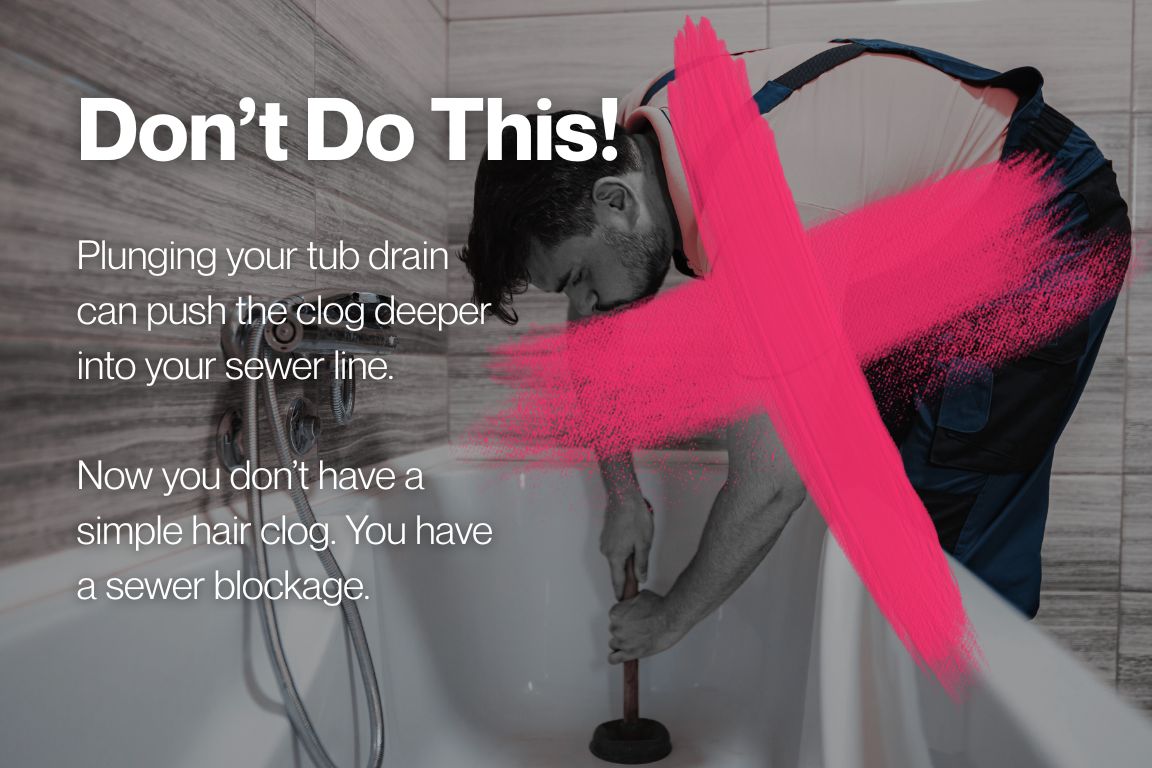
This isn't a sales pitch. There are plenty of clogs you can knock out with a plunger. A hair and soap scum clog in a tub drain is not one of them.
Here's the problem: a plunger uses force and pressure to push whatever is blocking your drain. When it works, great. But when it doesn't- and with a packed, sticky hair clog, it often doesn't- you can push that clog further down your drain pipe, past the easy-to-reach section, and into your branch line. (That's the larger pipe that connects your tub to your main sewer line.)
Once a clog reaches your branch line or main sewer line, what started as a simple tub drain fix becomes a much bigger job. The clog is now deeper, harder to reach, and harder to clear.
What to Do Instead- The Single Best Solution
The right tool for a hair and soap scum clog is a drain snake- also called an auger. A plumber feeds a flexible cable down your drain and physically grabs and pulls the clog out. It doesn't push the clog further in. It removes it.
A professional drain snake reaches deeper than the plastic "hair catchers" sold at hardware stores, and it pulls the entire clog out in one pass. Our augers reach 40-100 feet through your drain line and into your sewer main- nothing’s getting by it. The one you bought at Home Depot won’t reach any clogs more than 25 feet away.
After snaking is complete, your plumber will run water to confirm full flow before they leave.
This is a short job- typically less than an hour- and it solves the problem completely. No chemicals, no guesswork, no risk of making things worse.
When It's Not a Simple Clog: Sewer Blockage Issues
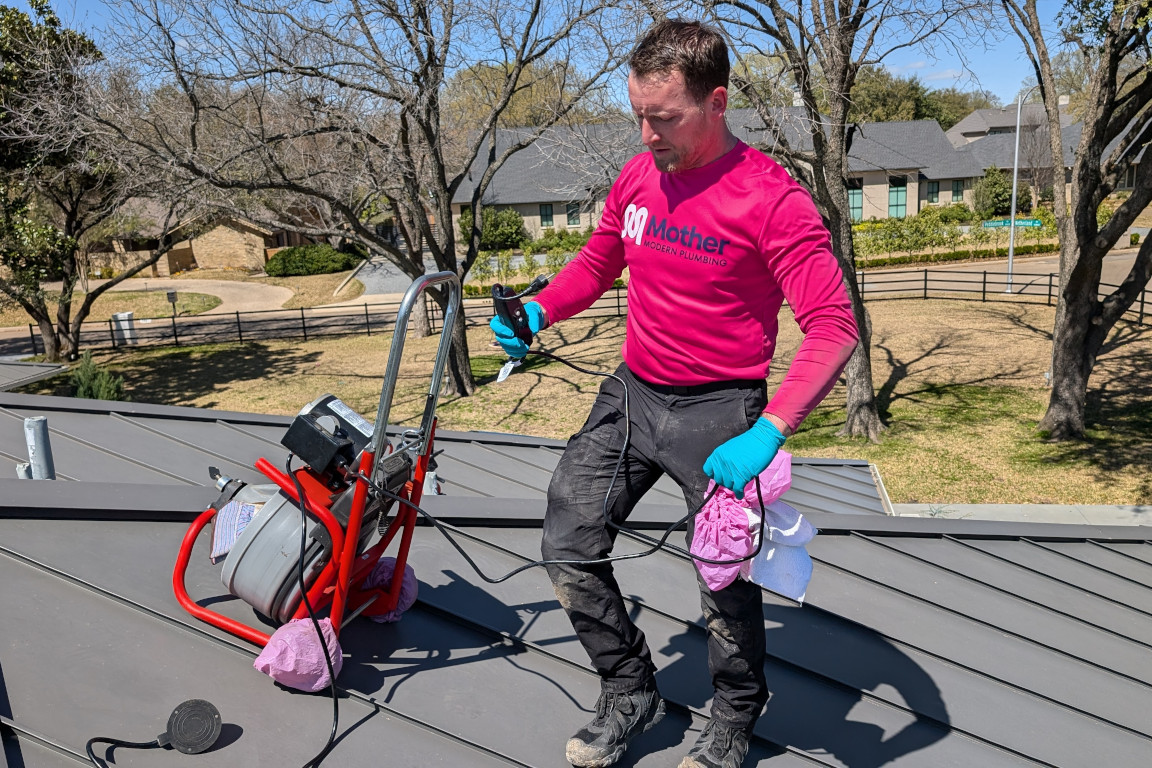
If you've already tried plunging or a store-bought drain cleaner and your tub still won't drain, the issue may be further down the line. The clog isn't in your drain pipe- it's deeper in your sewer line.
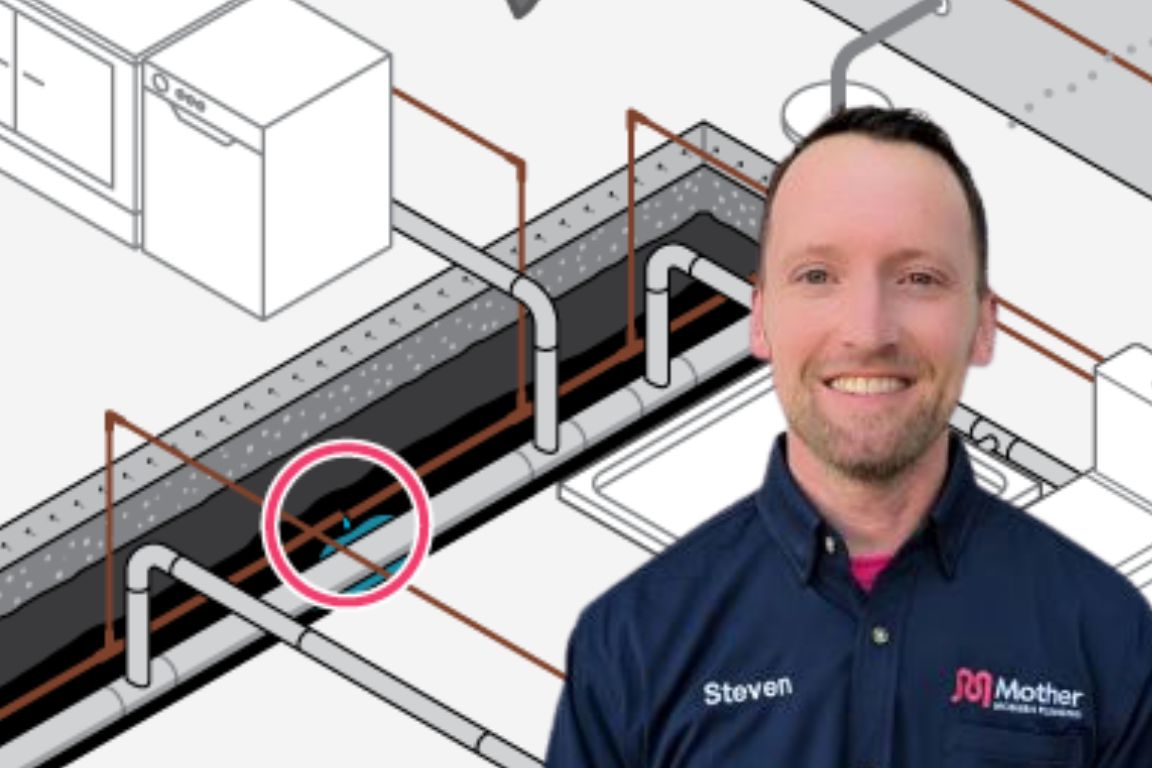
Your home's plumbing is like a highway system. Your individual drains are the on-ramps. They all feed into a branch line (a two-lane road, which feeds into your main sewer line (the highway). When a clog forms on the highway, traffic backs up everywhere- not just at one drain.
Common Symptoms of a Deeper Blockage
A deep sewer line blockage shows up differently than a simple surface clog. Watch for these five warning signs:
- Multiple drains in your home are slow at the same time (tub AND sink, for example)
- Your toilet gurgles or bubbles when you run water somewhere else in the house
- Water backs up in one drain when you use a different fixture
- The slow drain came back quickly after you cleared it once before
- You notice a sewage smell coming from your drains
If any of these sound familiar, the problem isn't just your tub. It's your sewer line.
Seeing wastewater backing up into your shower? That's a different- and more urgent- problem. Here's what to do right now.
{{fast-plumbing-answers-toilet-backing-up-into-shower="/blogs/fast-plumbing-answers-toilet-backing-up-into-shower"}}
The Best Solution for Deeper Blockages is Hydro Jetting
For a deep sewer line blockage, the best fix is hydro jetting. A plumber sends a high-pressure stream of water through your sewer line that blasts away grease, scale, roots, and buildup- not just at one spot, but along the entire length of the pipe.
Unlike snaking, which pokes a hole through a clog, hydro jetting cleans the full inside of the pipe. Think of it like pressure washing the inside of your plumbing. The result is a pipe that flows like new, with no debris left behind to start the next clog.
After hydro jetting, your plumber should run a camera through the line to confirm it's clear and check for any damage to the pipe itself.
{{hydro-jetting="/services/hydro-jetting"}}
Chemical Drain Cleaners Are Never the Answer
We know the temptation. A bottle of drain cleaner sits right there at the hardware store, it's cheap, and the label promises to dissolve clogs fast. But chemical drain cleaners are one of the worst things you can pour down a slow tub drain.
Chemical drain cleaners work by creating a heat reaction inside your pipe. That heat breaks down the clog. Trouble is, the same heat that eats through a hair clog also eats through your pipes.
Using Drano on shower clogs is like using bleach to clean a cotton shirt- it works, but you're destroying the shirt in the process.
In newer homes with PVC pipes, repeated chemical cleaner use softens and warps the pipe over time. In older DFW homes with cast iron or galvanized steel pipes, it speeds up corrosion and rust. Either way, you're trading a slow drain today for a cracked or corroded pipe down the road.
And here's the kicker: chemical drain cleaners often don't fully clear the clog. They thin it out enough that water flows a little faster- for a few weeks. Then the clog forms again, you use more cleaner, and the cycle repeats while your pipes quietly take the damage.
Want a non-toxic option for drain buildup? Meet Endure- our plumbers’ top-rated enzyme drain cleaner for grease and organic buildup.
{{best-drain-cleaner-for-grease-buildup="/blogs/best-drain-cleaner-for-grease-buildup"}}
Other DIY Methods You Shouldn't Try
The internet is full of drain cleaning advice. Some of it is harmless. Some of it can make things worse.
Here are three “DIY hacks” that waste your time and compound your frustrations:
- Baking soda and vinegar: This combo creates a satisfying fizz that feels productive- but the reaction is too weak to break down a real hair and soap scum clog. It won't break up moderate to severe clogs- and over time, the acid in vinegar corrodes old metal pipes and breaks down PVC.
- Shop vac: A shop vac can sometimes pull out loose debris near the drain opening, but it can't reach deep enough to clear a real clog. If your drain has standing water mixed with soap and grime, you're also pulling that mess straight into your shop vac motor.
- Plunging: As covered above, a plunger on a packed hair clog risks pushing it deeper. It can also break the wax seal on a nearby toilet if there's shared pipe pressure. When in doubt, skip the plunger and call a plumber.
What to Expect From Your Plumber
A slow tub drain is a straightforward job for a licensed plumber. Here's what the process should look like from start to finish:
- Diagnosis first. Your plumber asks where the slow drain is, whether other fixtures are affected, and how long it's been going on. These questions help them figure out whether this is a surface clog or a deeper sewer line issue before they touch anything.
- Visual inspection. They check the drain cover and the drain itself for signs of a surface clog they can confirm before going further.
- Drain snaking. For a standard hair and soap scum clog, they run a drain snake into the pipe, grab the clog, and pull it out. Clean, effective, done.
- Flow confirmation. They run hot water for several minutes to confirm the drain is fully clear and flowing at full speed.
- Camera inspection (if needed). If snaking doesn't fully resolve the issue, or if you're showing signs of a deeper blockage, your plumber runs a small camera through the line. This shows exactly where the problem is and what's causing it- no guessing.
- Clear summary. Before they leave, you know exactly what they found, what they did, and whether there's anything to watch for. No surprises.
That's it. A trustworthy plumber doesn't complicate a simple drain cleaning call.
No More Water Around Your Ankles- Call Mother
Standing water in your tub almost always indicates a hair and soap scum clog sitting just below your drain. The fix is simple: a professional drain snake removes it completely, safely, and fast.
Skip the chemical cleaners. Go easy on the plunger. And if multiple drains are slow or the problem keeps coming back, that's your signal to call a plumber and look deeper. You may be dealing with a sewer blockage- especially if multiple drains are affected.
You shouldn't have to stand in yesterday's shower water. We’ll fix that.
Tub drain backing up in Dallas? Call Mother 24/7 for expert solutions and get back to comfortable showers.
{{drain-cleaning="/services/drain-cleaning"}}