.svg)
Fast Plumbing Answers: Does Hydro Jetting Remove Roots?


table of contents
table of contents
A sewer camera inspection revealed a mass of Pecan tree roots in your sewer main. The plumber recommended hydro jetting, but it’s pricier than chain knocking. You need two questions answered to know if it’s worth the cost:
Will a sewer jetter cut roots out of your pipes? And how quickly will they grow back?
Yes, hydro jetting is the most effective short-term way to clear tree root intrusions from your buried pipes. But it’s not a permanent solution- without repairing the pipe itself, most tree roots will grow back without repeat service every 3-5 years.
At Mother, we frequently use hydro jetting to get rid of roots in sewer lines throughout Dallas-Fort Worth. We'll answer all your other questions about hydro jetting tree roots in 3 minutes or less.
Need hydro jetting service in Dallas? Call Mother 24/7- we'll clean your sewer line and discuss long-term solutions.
{{hydro-jetting="/services/hydro-jetting"}}
Hydro Jetting Tree Roots Is The Best Option For Most
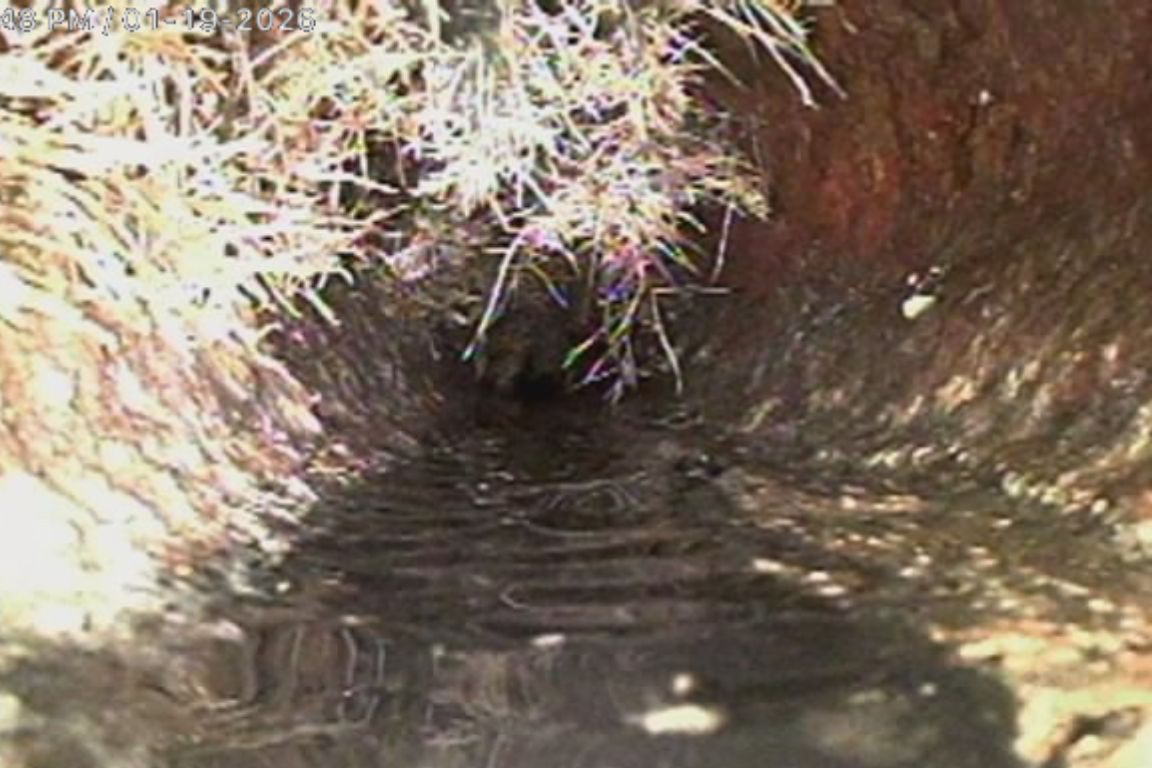
Hydro jetting uses sewer jetting equipment to remove tree roots from your sewer pipes more effectively than other sewer cleaning solutions. This is particularly true for large, severe root intrusions that are too pervasive for chain knocking equipment to fully clear.
Sewer jetter equipment uses a specialized nozzle attached to a high-pressure water hose. We feed this hose through your two-way cleanout or vent stack and push it all the way through your clogged pipe.
"Hydro jetting is a pressure washer for the inside of your pipes," says our Responsible Master Plumber Steven Smith. "We're shooting water at 4,000 PSI through your sewer line. That's enough force to blast roots, grease, scale, and everything else completely out of the pipe."
Find out why tree roots love what’s inside your sewer line in our quick guide.
{{root-intrusion-in-sewer-line="/blogs/root-intrusion-in-sewer-line"}}
Why Hydro Jetting Beats Other Root Removal Options

You can save some money upfront by choosing chain knocking or chemical root treatments instead of hydro jetting. But it’s the wrong decision long-term due to a lack of effectiveness and the need for repeat service.
Here’s a quick comparison of hydro jetting for root removal vs. other services:
Chain Knocking Doesn’t Remove the Entire Root Intrusion
Chain knocking (also called sewer snaking or augering) uses rotating equipment to punch a hole through the tree roots blocking your underground pipes. But that’s where the benefits stop.
“You’re not clearing the whole root system from the line,” Steven says. “It’s like putting a hole in your wall- there’s still a lot of wall left.”
And those roots in your sewer system didn’t come alone. Any debris, mineral scale or organic buildup along the interior walls of the pipe aren’t cleared out by chain knocking.
As a result, homeowners who choose chain knocking to remove sewer root intrusions schedule repeat service every year, vs. every 3 years for most hydro jetting jobs.
Not sure if hydro jetting is right for your sewer line blockage? Compare hydro jetting to snaking and learn which method works best for different clogs.
{{hydro-jetting-vs-snaking-comparing-sewer-cleaning-options="/blogs/hydro-jetting-vs-snaking-comparing-sewer-cleaning-options"}}
We Don’t Recommend Chemical Root Treatments
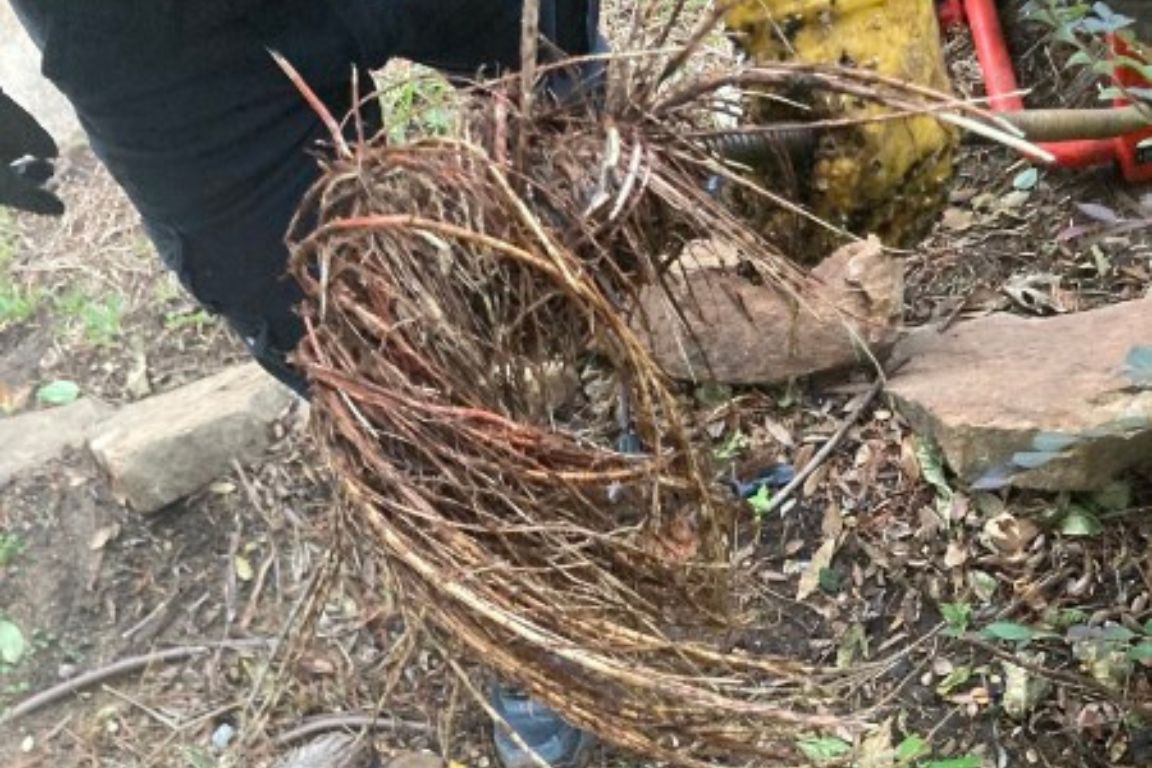
Homeowners looking for a cost-effective solution to root removal turn to chemical root killers. A foaming herbicide goes into your sewer line through an access point.
But 4 key drawbacks make root intrusion treatments an inferior option for clearing your sewer pipes.
- You’re still not addressing the reason for root intrusions. Cracks and breaks in your sewer line still remain unsealed. You’ll need to reuse these chemicals over and over to prevent future intrusions.
- It takes time. Existing roots don’t die off for 2-4 weeks after application.
- Tree resistance grows over time. As you take medication, your resistance to its effects grows stronger. The same happens with tree roots.
- Aggressive trees are chemical-resistant. These root killers don’t work well on poplars, willows, maples and sycamores- trees with some of the most aggressive root systems.
Beyond all these issues, chemical treatments don’t last any longer than hydro jetting. You’ll wait 2-4 weeks longer for the roots to go away, and you’ll still be back in 1-3 years.
Another benefit hydro jetting has that chemical root killers don’t is the addition of a sewer camera inspection. You’ll see precisely what’s going on in your sewer pipes, and if there are any other issues like mineral scale to worry about.
{{sewer-cleaning-why-a-camera-inspection-is-non-negotiable="/blogs/sewer-cleaning-why-a-camera-inspection-is-non-negotiable"}}
How Quickly Will Roots Return After Hydro Jetting?
When you remove roots from your sewer line, it’s not a “forever” root intrusion treatment.
Hydro jetting removes the roots that are currently in your pipe, but it doesn't kill the tree or stop new roots from growing back.
The tree roots outside your pipe are still alive and still searching for water and nutrients. Depending on the aggressiveness of that tree species’ roots and the damage to your existing sewer line, most root intrusions return between 2-5 years.
Here’s How Long Hydro Jetting Lasts for Root Intrusions
If the tree causing your blocked sewer main has a moderately aggressive root system, expect hydro jetting service to last approximately 3 years.
In Mother’s DFW Metroplex service area, several aggressive tree species (Live oaks, Pecans and Mexican sycamores) may require sewer jetting every 2 years.
Tree species with compact, slow-growing root systems may require repeat jetting service every 5 years. These include Japanese maples and dogwoods.
If you want to stop the cycle of hydro jetting those roots out of your sewer line, investing in sewer pipe repair is the right choice.
Hydro Jetting + Sewer Repair: The Right Long-Term Solution
Schedule sewer line repair to replace the damaged pipe section immediately after your hydro jetting service.
You’ll remove the intrusion completely, then seal off the punctures and separations where they entered in the first place.
“Get the pipe fixed with Schedule 40 PVC after we use the sewer jetter,” Steven suggests. “Then, you won’t have to reschedule hydro jetting again in 3 years.”
Best Option for Most: Spot Repairs. Best for most root intrusion issues, as spot repairs handle damaged pipe sections under 10 feet in length. You’re not paying for a huge new section of pipe- rather, our plumbers target the specific trouble spot and replace it with fresh Schedule 40 PVC. This new section lasts 50+ years from date of installation.
This approach also saves on excavation costs and labor, because we don’t have to dig up your whole yard to deal with a specific patch.
Two Reasons Hydro Jetting May Not Work For You

If jetting your sewer line is the best way to remove roots, why don’t we recommend it for all homeowners? Steven outlines the two cases where hydro jetting isn’t the right choice:
- You have old, damaged sewer pipes. Aging cast iron or clay tile sewer pipes generally can’t withstand the high water pressure of hydro jetting. “Blasting water into a corroded sewer main can just cause more damage,” Steven explains.
- There’s already severe pipe damage. Getting roots out of the pipe won’t fix a belly or sewer line collapse. Skip straight to repairs and save the money.
Clear Those Roots- Call Mother For Hydro Jetting Service
Hydro jetting effectively removes severe tree root intrusions from your sewer line. High-pressure water blasts roots (and more) out of your pipes and restores full wastewater flow away from your home quickly.
Remember: hydro jetting isn't a permanent fix. Most roots will grow back through the same cracks in 3 years unless you seal those entry points or treat the roots chemically.
Start with hydro jetting to clear the immediate problem. Then, replace the damaged pipe section with targeted sewer repairs and eliminate the problem for good.
Get roots out of your Dallas sewer line. Call Mother 24/7 for same day sewer line cleaning, hydro jetting and a permanent long-term solution.
{{hydro-jetting="/services/hydro-jetting"}}