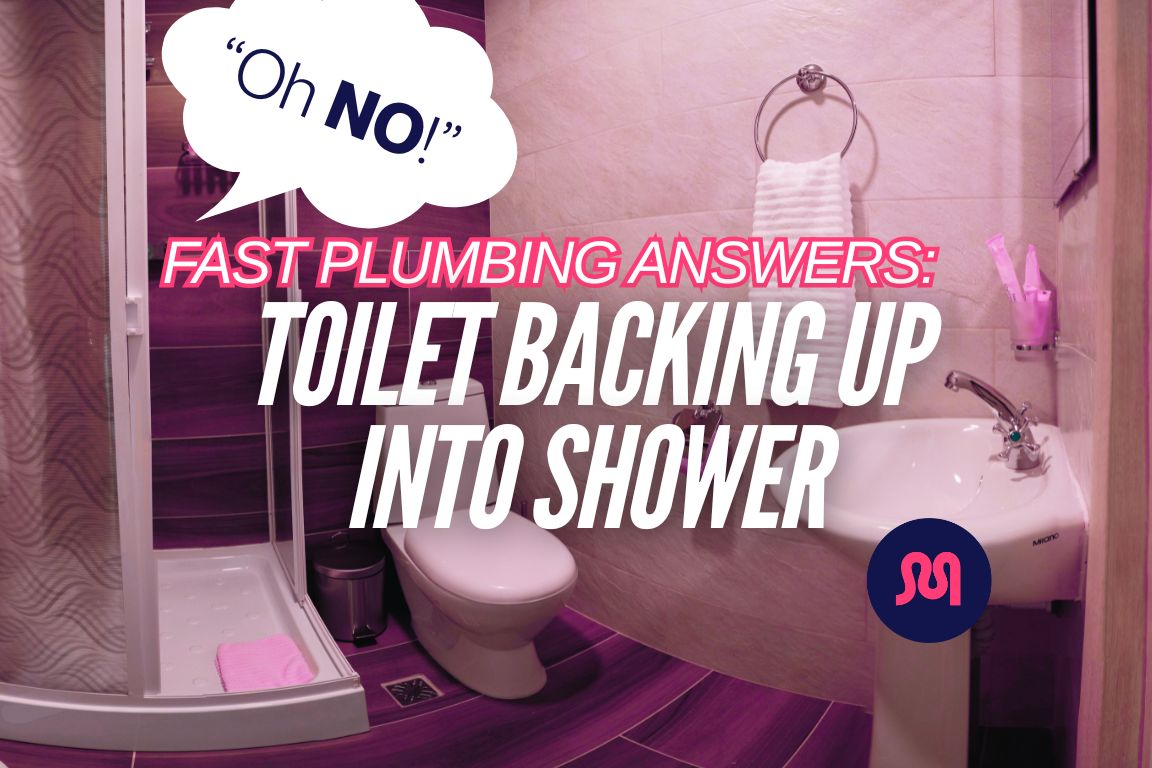
Fast Plumbing Answers: Toilet Backing Up Into Shower


in this article
In this article
Is there any sound worse than a toilet flushing while you’re in the shower? It usually means a blast of hot water coming your way. But what if you look down and see sewage coming up through the drain? That’s a new level of gross.
If that happened in your house, we hope you weren’t in the shower when it did!
The reason you’re having trouble fixing the problem is because the sewage isn’t coming from where you think. It’s actually coming from underneath the house in your drainage system, because a blockage there is forcing it back towards the lowest drains in your house.
Seeing wastewater in the shower is nasty. But here’s the silver lining: it points to one clear cause, and that makes diagnosing and fixing the problem much simpler.
Sewer Backups in the Shower Aren’t a “Toilet Problem”

Most people think that when they see wastewater in the shower, it’s coming from the toilet. It’s easy to think that, because it often happens right after someone else flushes a toilet. But that nasty stuff is coming from your home’s sewer line, not the toilet itself.
“If there’s a clog in your toilet, the waste would come back up in the toilet,” explains our Responsible Master Plumber Steven Smith (RMP-43457). “If it’s in your shower, that means there’s a blockage in your sewer line.”
That’s why your plunger isn’t helping the problem.
Why It’s Always a Sewer Line Issue
When you flush the toilet, everything inside goes down into your home’s main drain pipe and out into the main sewer line that runs under your yard to the city sewer system. So does the water from your dishwasher, washing machine and toilet.
For the toilet water to come back into your shower drain, it has to be blocked on its way to the city sewer. There’s a blockage in your buried sewer pipe that stops the waste dead in its tracks.
“But the wastewater doesn’t want to sit there,” Steven says. “The air in the sewer pipe wants the water to keep flowing. So it has to find the quickest way to escape.”
When it can’t go forward, that sewage goes back the way it came and finds the first possible place to get out of your drainage pipes. That’s the lowest drain on the first floor of your house- which is usually your shower drain on the floor.
Wastewater in the Shower? Stop Using Water Immediately
Stop water use completely until a plumber clears the blockage. Tell everyone in your household- no water down any drain until the problem is fixed.
Every drop of water you use goes down a drain and into the blocked sewer pipe under your house. It’s only going to make the backup worse and send more stuff you don’t want into your shower and floor drains.
“A lot of people think flushing the toilet a few times helps,” Steven says. “Please don’t do that. You’re just sending more sewage inside your home.”
Here’s what you should stop doing as soon as you see sewage in the shower:
- Don’t flush toilets
- Don’t use any sinks
- Don’t do laundry
- Don’t do dishes
- Don’t take a shower or bath
- Don’t add water to a pool, hot tub or spa
Learn what to do during a sewer backup in your house in our updated guide.
Are Any Other Drains Clogged or Backing Up?
Steven suggests you quickly check around your house and see if any other drains are backing up besides the one in your shower or tub.
If they are, refer to these guides:
If your toilet’s also overflowing after you flush:
{{fast-plumbing-answers-toilet-keeps-overflowing-after-flush="/blogs/fast-plumbing-answers-toilet-keeps-overflowing-after-flush"}}
If your bathtub and toilet are clogged at the same time:
{{fast-plumbing-answers-bathtub-and-toilet-clogged="/blogs/fast-plumbing-answers-bathtub-and-toilet-clogged"}}
Next Step: Let’s Figure Out Where the Blockage Is
Now you know the sewer water in your shower is caused by a blockage in your home’s drainage pipes. In order to fix that for good, we need to find out exactly where the blockage is.
“Drain cleaners, plungers, even hardware store drain snakes aren’t reaching this clog,” Steven says. “Your plumber can find it without messing up your property or tearing up the backyard.”
The best way to find the blockage is with a sewer line camera inspection. An HD camera is lowered into your main sewer pipe on a flexible cable. It has bright LED lights and protective casting to keep it away from all the sludge.
Your plumber will show you the live footage from the camera inspection. You’ll see exactly what caused the blockage and where it’s located in your drainage system.
The Fix Depends on What Caused Your Blockage
There are two common culprits that cause the sewer line blockage that’s sending waste into your shower drain. Each of them has a unique repair that’s best to fix the issue:
- Tree root intrusion: Roots from aggressive trees like oaks, myrtles and cedars burst through your sewer pipe in search of nutrients. Hydro jetting blasts the roots out of your sewer line without costly underground repairs.
- Sewer belly: A U-shaped dip or sag in your sewer line. It’s like a kink in a garden hose- wastewater’s stopped still and backs up towards your house. Sewer line repair is the best possible option for long-term relief from sewage backups.
“A bellied sewer line needs excavation to fix, and that’s not ideal,” Steven says. “But it beats replacing your entire sewer line, and it sure beats having nasty toilet stuff around your feet in the shower.”
The Single Best Solution is Hydro Jetting

Call a licensed plumber immediately for emergency sewer cleaning. This is not a "schedule for next week" problem. This is a "call right now and get it done" issue.
A plumber will run a camera through your sewer cleanout or access point to pinpoint the exact location of the blockage. Then, they clear it with hydro jetting or mechanical snaking. Hydro jetting is better for complete clearing- it uses high-pressure water to blast the entire pipe clean, not just poke a hole through the blockage.
The process should take 1-3 hours in most cases. Once your plumber clears the blockage, you can safely use water again without sewage backing up into your shower.
Timeline expectations: Emergency service means you get the first possible appointment on the same day. Clearing the blockage takes 1-3 hours depending on location and severity. You're looking at same-day resolution.
Dealing with a larger sewage backup throughout your home? Read our emergency sewage backup guide for immediate steps.
{{fast-plumbing-answers-quick-sewage-backup-fix="/blogs/fast-plumbing-answers-quick-sewage-backup-fix"}}
Please Don’t Try to DIY This Problem!
Some articles say that you can fix this yourself with gloves and a mask. They're wrong. Toilet water backing up into your shower exposes you to E. coli, hepatitis A, salmonella, and other pathogens that cause serious illness.
Sewage contains human waste. It carries bacteria, viruses, and parasites that make you really sick. Wearing gloves and a mask doesn't protect you enough. You need professional equipment- body coverage, respirators, proper ventilation, and sanitization protocols.
The health risks of attempting to DIY the problem include:
- Gastroenteritis (severe diarrhea and vomiting)
- Respiratory infections from breathing contaminated air
- Skin infections from direct contact, and
- Parasitic infections that require medical treatment
These aren't “scare tactics”. They’re real outcomes from from DIY sewage cleanup attempts. And we don’t want your family anywhere near them.
Toilet Water in the Shower? We Fix That!

We’d rather spend the night in a graveyard than see wastewater in the tub. But as gross and scary as it looks (and smells), at least there’s a really simple explanation for the problem.
The first thing to do is call a licensed plumber with an HD sewer camera. They’ll find the exact location and reason for the backup without lifting a shovel or touching a tile. You’ll get the footage you need to make the best sewer cleaning or repair decision for your home.
(In the meantime, don’t use any water!)
If you’re in the DFW Metroplex, give us a call. We’re here 24/7 to take care of you- and take care of that nasty stuff in your shower drain.
{{toilet-repair="/services/toilet-repair"}}