Do Chemical Drain Cleaners Work? Not Enough to Risk It
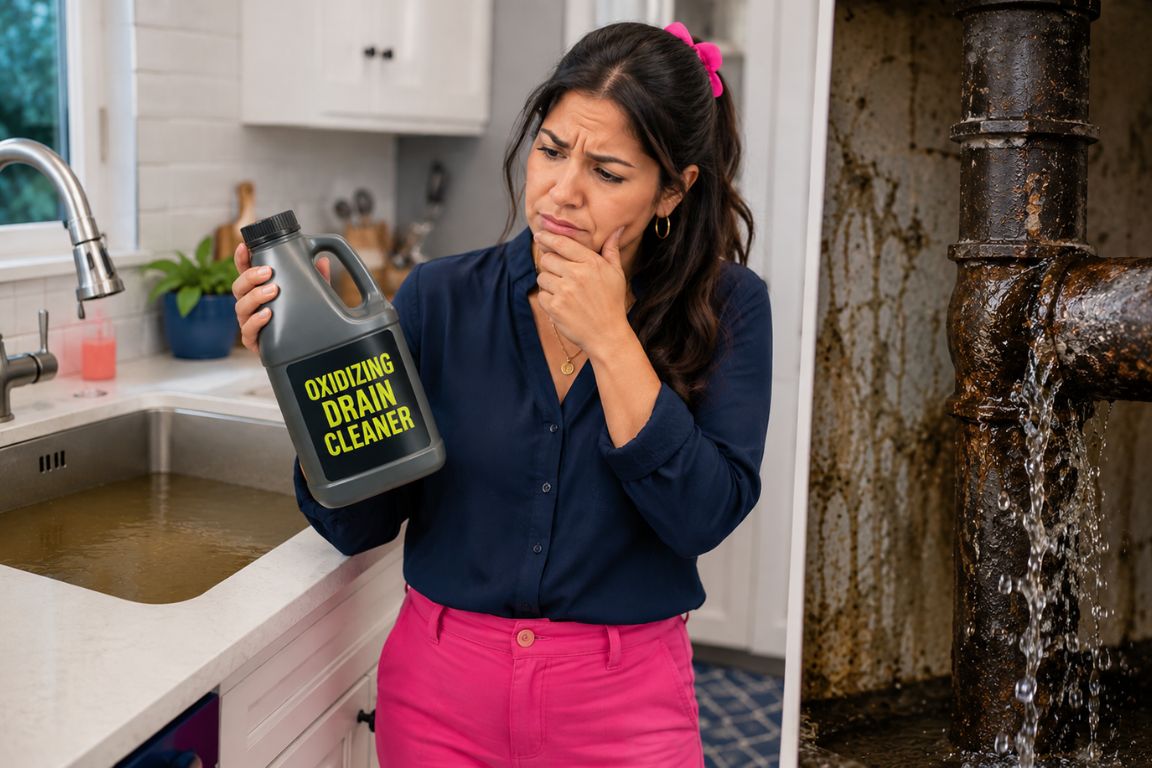


table of contents
table of contents
You want a fast fix for a sink full of standing water or a blocked shower drain. But asking “do chemical drain cleaners work?” is the wrong question. The real question is whether the chemical reaction required to melt that clog is going to melt your pipes- or permanently burn your skin and lungs - in the process.
If you’re willing to take that risk, you need to know how effective your drain cleaning product is against the specific type of clog you want to clear- whether it’s cooking grease, hair, soap scum or mineral scale.
The performance of chemical drain cleaning products is all about their active ingredients, the chemical reactions they cause in your drain pipes, and their ability to break down different types of materials. It’s also about the potential damage they can cause along the way.
- Caustic drain cleaners are okay for localized grease clogs and stink against hair clogs. They contain lye- which turns human skin into soap and can make organic clogs even worse.
- Oxidizing drain cleaners clear out biofilm and eliminate odors. They don’t clear organic fat and grease clogs. But if mixed with other cleaners or ammonia, they create the same lethal gas used in World War I chemical warfare.
- Acidic drain cleaners should be avoided at all costs. Acid-based cleaners burn your skin and respiratory tract, emit toxic gas and melt or crack your pipe material.
Our Master Plumbers guide you through each type of chemical drain cleaner- common brands, active ingredients, use cases and risks. Then, we’ll introduce you to a safer alternative that’s even better at clearing organic clogs.
Clogged drains in DFW? Trust Mother’s same day drain cleaning service with non-toxic clearing products and a complimentary camera inspection.
{{drain-cleaning="/services/drain-cleaning"}}
Chemical Drain Cleaners vs Your Clog: Quick Chart
Don’t have time to read the full article? Here’s a breakdown of the three types of chemical drain cleaners, their active ingredients, their realistic performance timeline against different types of common household clogs, and the risks associated with each:
*Organic clogs do not include sewage or biohazard material. These products are not advised for clearing these blockages.
Defining the Three Common Types of Household Clogs
Most common clogs in your home’s drains are broken down into three categories:
- Organic: The most common are cooking fats, oil and grease (aka “FOG”). These also include hair mats, keratin and food scraps.
- Soap and Chemicals: Soap scum and the sticky polymer residue from body wash and hair conditioner products.
- Minerals and Debris: Mineral scale from hard water (calcium carbonate), soil and debris, and improperly flushed items like flushable wipes and paper towels.
{{are-fats-oil-and-grease-fogs-ruining-your-drains="/blogs/are-fats-oil-and-grease-fogs-ruining-your-drains"}}
Caustic Drain Cleaners: The Threat of Liquid Lye
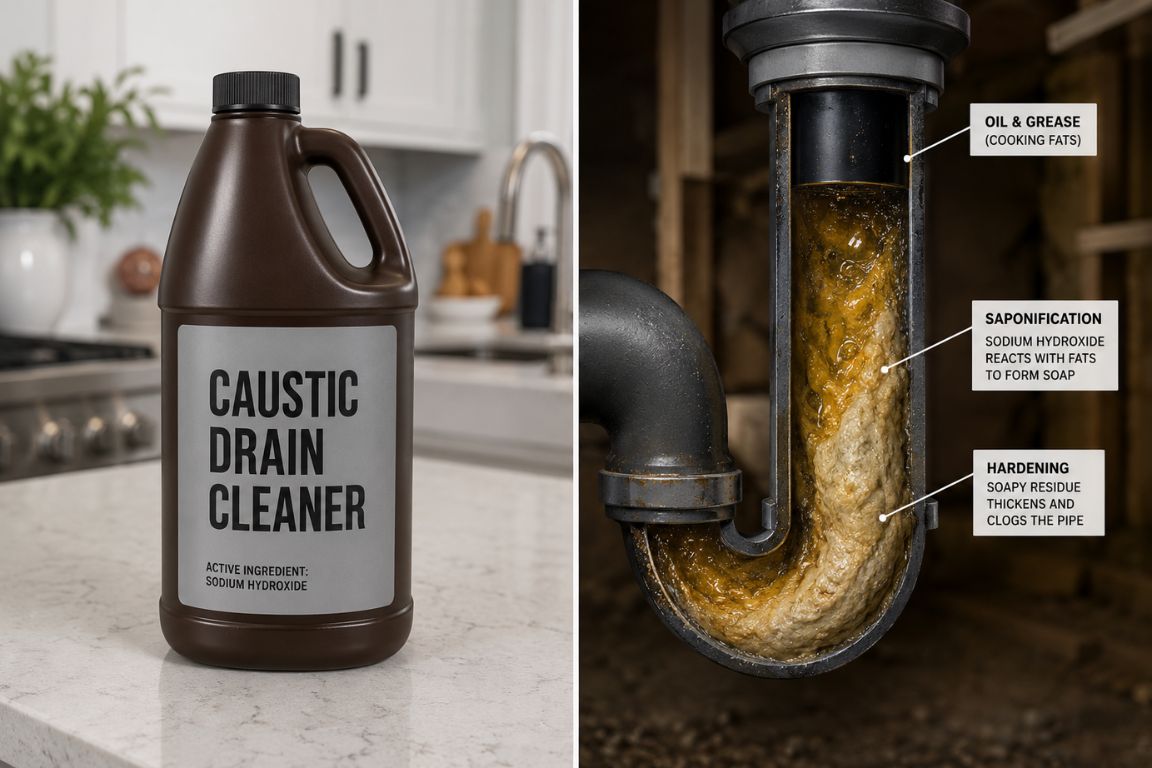
Well-known products: Roebic Crystal Drain Opener, Instant Power Crystal Lye Drain Opener, and granular lye products.
The most common heavy-duty drain cleaners you’ll find on hardware store shelves are caustic products. They’re designed to eat through soft organic material- like fats and food scraps- and perform best in kitchen sink drains.
But unlike acids, the base chemicals in caustic cleaners don’t wash clogs away. They aggressively alter the chemical structure of whatever they touch.
How The Bases in Caustic Drain Cleaners Work
We all learned about the pH scale in school. Acids (like battery acid) are on one side of the scale. Bases are on the opposite side. “Caustics” is another word for bases. Products that contain extreme acids or extreme bases are highly corrosive and dangerous.
The main active ingredient in caustic drain cleaners is usually sodium hydroxide, commonly known as lye. When lye hits the standing water in your drain, it causes an exothermic reaction. This means the lye self-creates extreme heat that causes the standing water inside your pipe to rapidly boil.
The goal: melt the clog as quickly as possible using this boiling reaction.
Turning Fatty Clogs Into Soap Makes ‘FOG Clogs’ Worse
Most homeowners pour caustic cleaners down kitchen sinks to tackle “FOG” clogs- cooking fats, oil and grease. When a heavy base like lye mixes with these greases, it triggers a chemical process called saponification.
If you’ve seen Fight Club, you know what saponification is. The lye transforms the grease molecules and turns them into a crude soap. That soap is supposed to wash away down the drain. But it doesn’t always work.
If your pipe’s full of standing water, your cleaner gets watered down. If the lye weakens before its job is done, you end up with a rock-hard block of solid soap halfway down your drainage plumbing system.
Your caustic drain cleaning product just turned a soft, fixable organic clog into a brick that requires hiring a licensed plumber for professional drain or sewer line cleaning.
Caustic Cleaners Kill The Tissue Under Your Skin
Here’s the bigger problem: the same chemical reaction that turns your bacon grease clog into soap does the exact same thing to your body.
Your skin contains a protective layer of fat. If caustic cleaner splashes out of the drain and onto your arm or face, it starts the saponification process on you.
A lye burn isn’t like a fire or acid burn. There’s no hard scab. Lye turns your skin cells into liquid goo. And with no protective scab to stop it, it eats deeper into your tissue until it hits bone. If you’re exposed to lye, it usually requires medical attention.
The NIH also reports caustic lye products cause blindness and severe lung damage.
Oxidizing Drain Cleaners: Why Bleach Fails on Tough Clogs

Well-known products: Liquid-Plumr Hair Clog Eliminator. Drano Max Gel Clog Remover
You’ll find oxidizing cleaners like Liquid Plumr and Drano in the grocery store in the form of thick liquids and gels. They’re formulated to be heavier than water, so they sink right through the standing water in your blocked sink or shower and head directly to the clog.
Once it gets there, it’s a roll of the dice whether it works or not.
Electron Transfer: The Science Behind Oxidizing Cleaners
Sodium hypochlorite is the main active ingredient in oxidizing drain cleaning products. It’s a highly concentrated form of household bleach. Some oxidizer brands use strong peroxides instead of sodium hypochlorite.
Acid and base cleaners melt clogs with boiling heat. Oxidizers use a chemical process called electron transfer. The bleach or peroxide attacks the organic clog in your drain and strips away the electrons from its molecules. This breaks down the structure of the blockage, making it softer and heavier.
Once the clog is weakened, the weight of the backed-up water in your pipe is supposed to push it the rest of the way out of your plumbing system.
Oxidizers Are Too Weak For Tough Clogs
Electron transfer is a much weaker chemical reaction than caustic saponification or acid hydrolysis (used by acidic cleaners). While oxidizers are okay for soft, shallow clogs, they usually fail against heavy-duty blockages.
If you have a solid grease clog or a massive, balled-up hair mat deep in your shower drain, bleach won’t break it apart. The core of the blockage will stay in your drainage pipes.
But oxidizing cleaners are great at clearing out the sticky bacteria called biofilm that coats the inside of your pipes. So even though the clog remains, your pipes are going to smell much better immediately.
This “odor masking” effect leads many to believe their blocked drain is fixed- when it’s not.
Mixing Oxidizers Will Poison The Air In Your House
“I hate waiting around for Drano to work, so I pour other stuff in there with it.” We hear this sentiment too much from homeowners who don’t realize how deadly it is.
Homeowners get impatient with oxidizing cleaners and tough clogs. So they pour things like white vinegar, CLR or other chemical cleaners down the drain with it. And that’s the most dangerous mistake you can make with Drano or Liquid Plumr:
Never, ever pour another chemical or acid down the drain with your oxidizing gel or liquid cleaner.
If you mix a bleach-based drain cleaner with an acid like CLR or vinegar, the reaction immediately releases toxic chlorine gas- the same gas used in World War I chemical warfare. If you mix oxidizers with ammonia (Windex, floor cleaners), you’re instantly exposed to chloramine gas, which attacks your lungs with deadly toxicity.
If this reaction happens in your unventilated bathroom, you immediately inhale these heavy gases. This causes chemical burns in your lungs and can kill you.
Acidic Drain Cleaners: The Most Dangerous Bottle in Your House
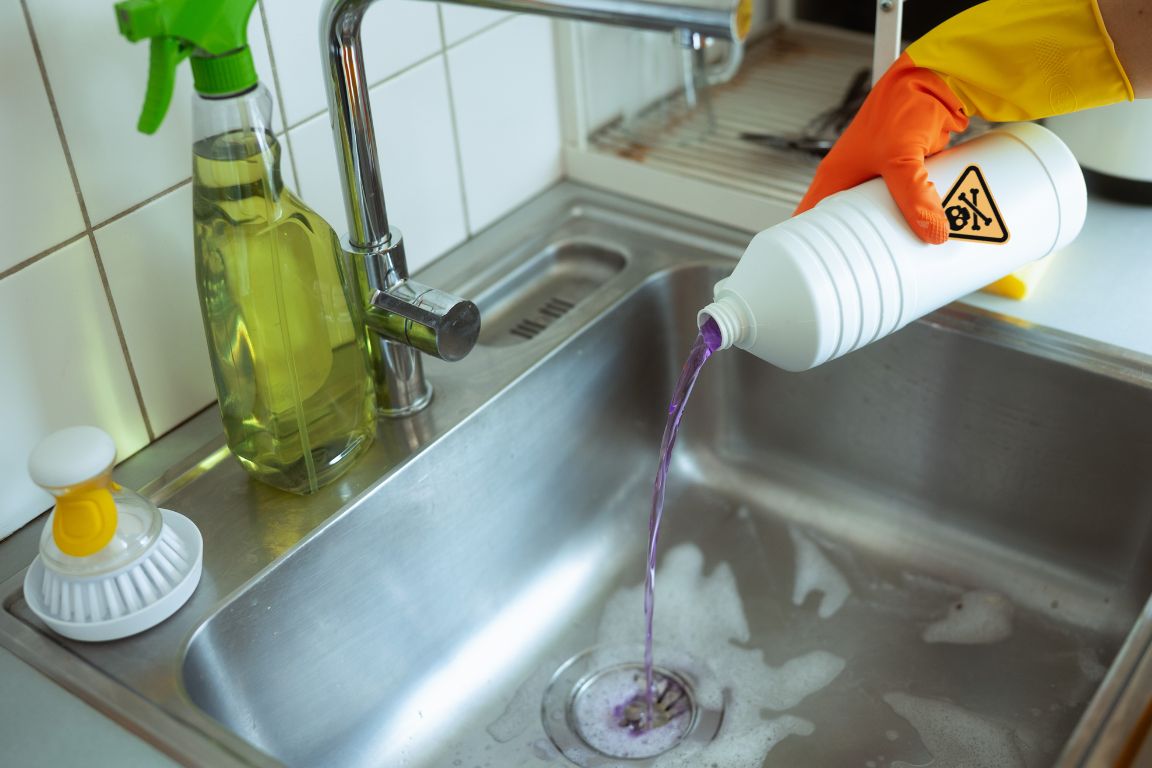
Well-known products: Zep Sulfuric Acid Drain Opener, Liquid Lightning, and professional-grade sulfuric acid.
There’s a reason you rarely find acidic drain cleaners in grocery stores. They’re usually kept on the bottom shelf of a hardware store- often sealed inside a thick plastic bag just in case it leaks.
If the hardware store doesn’t trust acidic cleaners on a metal shelf, you shouldn’t trust them in your house.
Acidic drain cleaning products are the most aggressive, ruthless, and dangerous products available to consumers. Our Master Plumbers strongly advise that you never bring these bottles into your home.
“Throw them out,” says our Responsible Master Plumber Steven Smith (RMP-43457). “No exceptions.”
Acid Hydrolysis: How These Products Work
You probably know how dangerous sulfuric acid and hydrochloric acid are. These are the most common active ingredients in acidic drain cleaners- and they’re highly concentrated.
While caustic bases turn clogs into soap, these products destroy clogs through acid hydrolysis. In simple terms: the acid violently attacks complex molecules- like keratin in hair and cellulose in toilet paper- and it rips them apart.
The organic clog is melted away. These products are extremely good at clearing tough hair clogs and heavy paper blockages. But that raw chemical power comes with catastrophic risks and consequences to your health and your pipes.
Poisoning, Lung Damage, Third Degree Burns and Death
Like lye, sulfuric acid creates a violent exothermic reaction when mixed with water. It generates intense, boiling heat to attack clogs. But this reaction isn’t limited to the clog.
When you pour an acidic cleaner into a sink full of standing water, the acid and water instantly boil. Because the drain is clogged, there’s nowhere for that rapidly expanding, boiling hot steam to go but straight up.
This creates a geyser effect. Boiling, concentrated acid shoots directly out of the drain and into your clothes, arms, hair and face. The blowback creates instant third-degree chemical burns, permanent blindness, and severe lung damage if inhaled.
Medical case studies hosted by the NIH show that drain cleaner blowback causes deep-tissue chemical burns that frequently require surgical skin grafts.
And don’t use acidic drain cleaners in the toilet. If the acid contacts biological waste, it releases toxic hydrogen sulfide fumes into your home that are lethal.
Sulfuric and Hydrochloric Acid Kill Your Plumbing
Using an acidic drain cleaner is a fast way to turn a $299 drain clog into a home repiping emergency.
If the boiling acid doesn't erupt back into your face, it sits trapped inside your pipes. This is a nightmare for your drain pipes and sewer plumbing system:
- PVC: The intense, stagnant heat of the boiling acid will warp the PVC plastic and melt the chemically welded joints that hold your pipes together, creating permanent leaks behind your walls.
- Cast Iron: In older homes with cast-iron plumbing, the sudden, extreme change in temperature causes a reaction called "thermal shock." The brittle iron pipe will simply crack or violently shatter under the stress.
The Verdict: Chemical Drain Cleaners vs Real-World Clogs
When you weigh the chemical science against the severe risks to your health and your plumbing, it becomes very hard to justify pouring these products down your drain.
Here’s how they stack up against the actual clogs in your home.
Chemical Drain Cleaners vs Fats, Oil and Grease Clogs
The Verdict: Average- But Risky
Chemical drain cleaners are most effective against “FOG” clogs and food scraps in your kitchen sink. But we can’t rate them “good” due to the inherent risks.
If you use caustic drain cleaners, the risk isn’t just about your pipes and safety. If the lye doesn’t dissolve the clog to be flushed away, you end up with a bigger, harder brick of fatty soap. This leads to main drain pipe clogs and sewer blockages that require hydro jetting to clear.
Oxidizing cleaners are subpar at best at removing these organic clogs. And while acidic cleaners do rip these blockages apart, they’re just as likely to melt your pipes and your skin.
Chemical Drain Cleaners vs Hair Clogs in Drains
The Verdict: Below Average
Hair mats are the number one cause of bathroom clogs. Hair is made of tough keratin proteins that weave together tightly.
Bleach-based oxidizers and lye-based caustics are simply too weak to break down keratin. Acidic cleaners will melt hair instantly, but they will melt your PVC pipes right along with it.
Because the only products that work (acids) are too dangerous to use, chemicals fail this test.
Chemical Drain Cleaners vs Soap Scum
The Verdict: Poor
Soap scum and synthetic hair conditioners coat the inside of your pipes with a sticky, gummy residue.
A heavy chemical cleaner might burn a small tunnel right through the center of the pipe, allowing water to drain again temporarily. But the chemicals leave the sticky walls behind.
The clog will grab onto the next piece of hair or debris that floats by, and your drain will back up again in 3 to 7 days.
Chemical Drain Cleaners vs Minerals and Debris
The Verdict: Useless
This is a huge misconception our plumbers address, due to the extremely hard water levels in the DFW Metroplex. The mineral scale that builds up on the internal walls of your drain pipes isn’t affected by chemical drain cleaners.
Don’t use them to eliminate scale or attempt to break up debris blockages. They don’t work.
Bacterial Drain Cleaners Are Safer and Actually Work Better
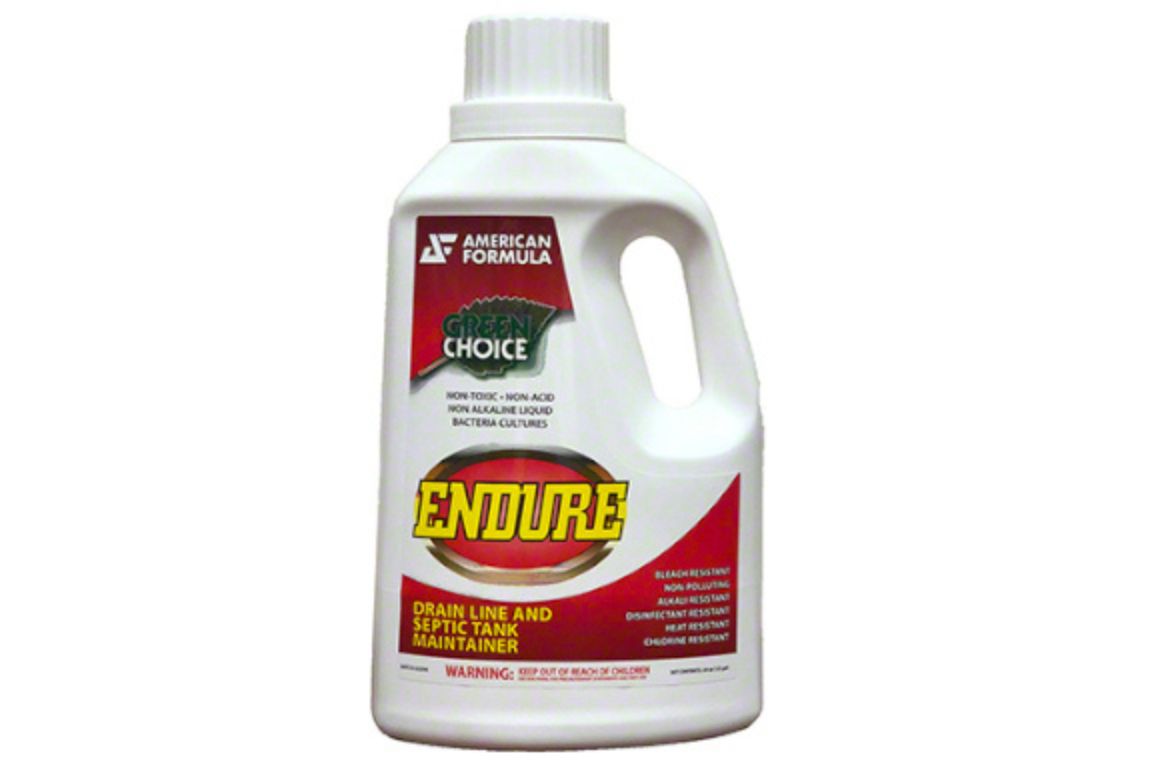
For slow-draining sinks, grease buildup, and routine maintenance, you should use bacterial drain cleaners.
“The only reason people think there’s no alternative to chemical cleaners is good marketing,” Steven says. “We use bacterial products in our customers’ homes and they’re great.”
Bacterial drain cleaners use naturally occurring, safe bacteria to eliminate clogs- no boiling heat or toxic acid. When you pour them down the drain, the good bacteria eats your organic clogs, just like similar bacteria in your gut.
They digest the fats, oil, hair and food scraps. The clog is turned into a mixture of harmless water and carbon dioxide that passes safely out of your home’s drain pipes and into the city sewer system.
The best part: One application of bacterial cleaner works on organic blockages for up to 30 days. It even cleans residue off your pipe walls. Use it once a month and your drains become a quick maintenance item- not a problem.
Our Master Plumbers tested and rated 14 drain cleaning products and ranked Endure- an bacterial drain cleaning product- the best. Learn why we use it- and why we give a bottle to all our drain cleaning customers.
{{best-drain-cleaner-for-grease-buildup="/blogs/best-drain-cleaner-for-grease-buildup"}}
Stop Using Chemical Drain Cleaners- There’s a Better Way

There are safer, non-toxic drain cleaners on the market that actually work longer on organic clogs than chemical products. There’s no reason to bring dangerous acids, bases and oxidizers into your home anymore.
Bacterial cleaners like Endure are a core component of Mother’s fixed-rate $299 drain cleaning service. We include HD sewer and drain camera inspection, comprehensive non-toxic cleaning and a 120-day no clogs guarantee- DFW homeowners can use their sinks and showers in peace.
Want safe, effective drain cleaning in your DFW home? Call Mother 24/7 for expert service on your schedule.
{{drain-cleaning="/services/drain-cleaning"}}