Underground Pipes Frozen? What to Do Right Now
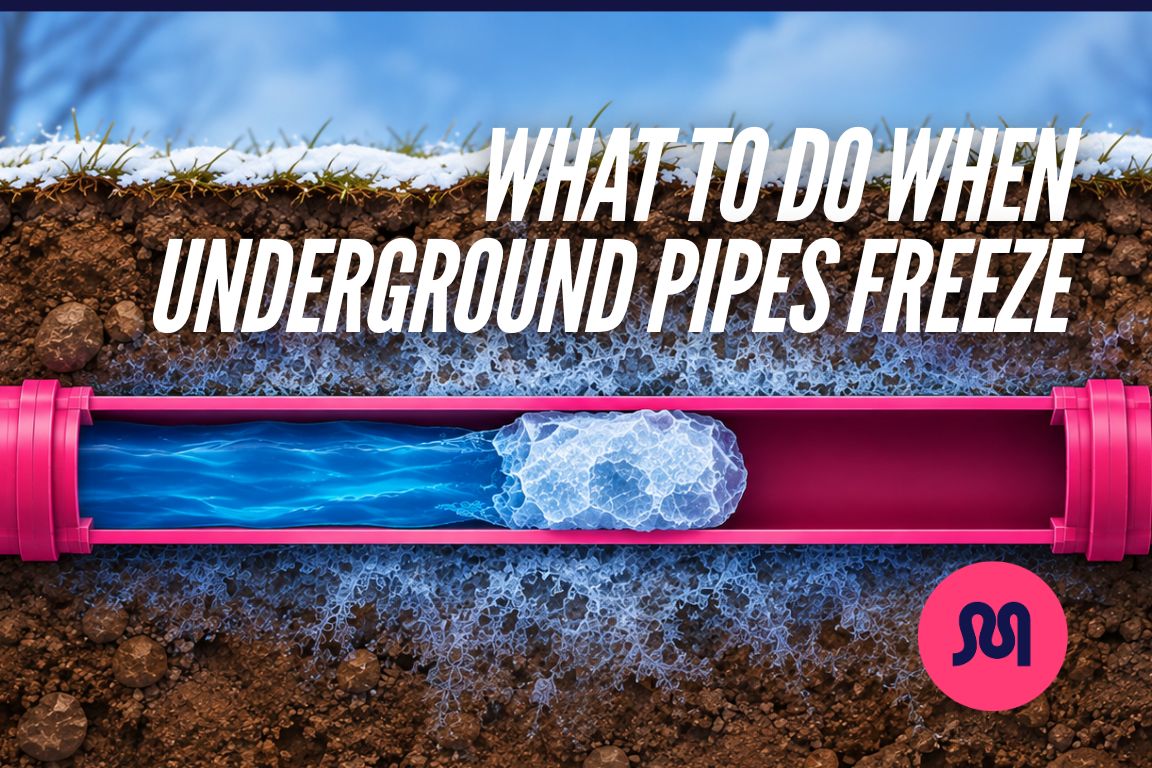


table of contents
table of contents
If your underground pipes are frozen, the first thing to determine is whether it’s your sewer line or water line. The steps you take while you wait for a licensed emergency plumber differ depending on which line is affected.
Hard freezes are becoming more common in the DFW Metroplex (our service area). Our customers are learning what folks up north already knew- the aging buried lines in our backyards are just as vulnerable as uninsulated pipes in the attic.
In this guide, our Master Plumbers help you determine exactly which underground pipe is frozen. Then, we’ll show you what to do to protect your home while you wait for licensed plumbing repair, and tell you why (unfortunately) DIY tactics– like pouring boiling water down the drain- just don’t work.
Frozen pipe emergency in DFW right now? Call Mother’s 24/7/365 emergency plumbing hotline for the first available appointment and expert care.
Step 1: Diagnose the Freeze (Water Main vs. Sewer Line)
Before you call an emergency plumber, let’s quickly determine what parts of your underground plumbing system are frozen. There are two possibilities:
- Your main water supply line is frozen; or
- Your underground sewer main is frozen.
“A frozen underground pipe sadly isn’t something you can save a ton of money on,” says our Responsible Master Plumber Steven Smith (RMP-43457). “But if you figure out which line is affected upfront, you can potentially save some cash on the diagnostics.”
Symptoms of a Frozen Water Main
- Total loss of water pressure: You turn on faucets across the house and get nothing, or just a slow, sputtering trickle- even though your interior pipes are warm and the heater is running.
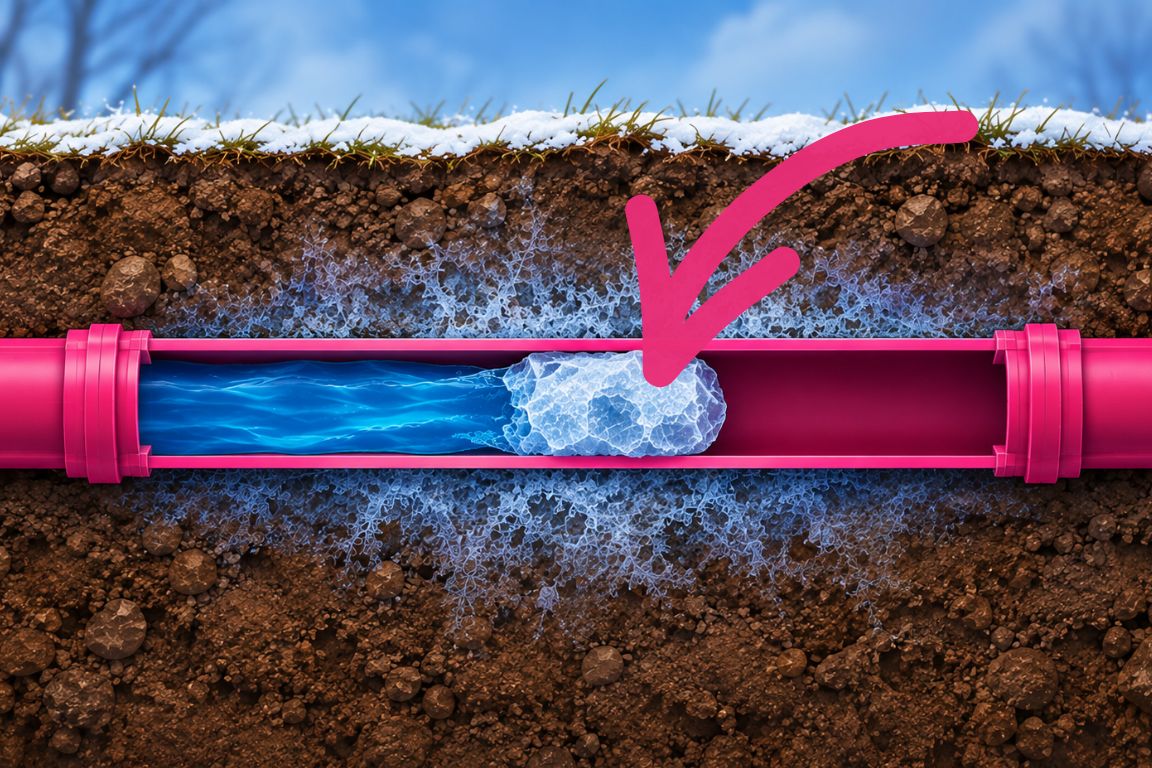
- Zero movement at the water meter: You open a faucet inside the house and check your main water meter at the curb. If the dial is completely still, it means the supply line is blocked by an ice plug before the water can reach your home.
- Frost on the main shut-off valve: If the main water line entering your home or the master shut-off valve is exposed, it may be covered in a thick layer of frost or condensation. “If you don’t get water and there’s frost on the valve, you have your culprit,” Steven suggests.
Symptoms of a Frozen Main Sewer Line

- Simultaneous backups on the first floor: The water turns on fine, but it refuses to drain because the main exit line is plugged with ice. “The wastewater has nowhere to go and flows backward into the lowest fixtures in your home,” Steven explains. “That’s usually the shower or tub on the first floor.”
- Gurgling toilets and fixtures: When you run the bathroom sink or empty the washing machine, your toilet bubbles or gurgles. The ice plug prevents air from escaping down the sewer line, forcing it backward through your fixture's water traps.
- Trapped sewer gas odors: A frozen main line doesn't just stop wastewater- it traps sewer gas. As your fixtures fight for air, they siphon the water out of your P-traps. Without that water barrier, the trapped sewer gas has a direct path into your living space, creating a strong, foul odor.
Step 2: Call a Plumber. There Is No DIY Fix for Buried Pipes.
It’s easy to panic. Resist the urge to “fix it now”. There’s nothing you can do personally to get your water working or your drainage flowing again.
“I’ve seen frustrated people do a lot of weird things to unfreeze buried pipes,” Steven warns. “None of it works, and a lot of them are really unsafe. Please don’t take the risk.”
Call a licensed plumber who offers emergency service for underground water and sewer pipes. If you’re in the DFW Metroplex, give us a call 24/7. We fix dozens of these urgent plumbing issues every winter.
The 3 Worst Things You Can Do: DIY Hacks That Fail
Whatever you do, don’t follow any of the three pieces of terrible advice we’ve seen online.
- Don’t build a fire over the pipe. Lighting a charcoal or wood fire on the frozen ground above your buried water main doesn’t work. The heat won’t permeate the ground fast enough to safely thaw the pipe. All you’ll do is burn up your lawn and landscaping- or risk catching your home’s siding on fire.
- Don’t pour antifreeze or salt down the drain. Neither of these will melt a solid ice plug 50 feet down a sewer line. Plus, dumping antifreeze chemicals into the municipal sewer system is illegal.
- Don’t dig. Hitting frozen soil with a pickaxe or shovel is a great way to throw out your back- especially in North Texas, where the dense clay soil holds moisture and freezes as hard as concrete. You also risk hitting a buried gas or power line- this turns your plumbing repair into a massive, multi-utility crisis.
Step 3: The Only Safe Next Steps
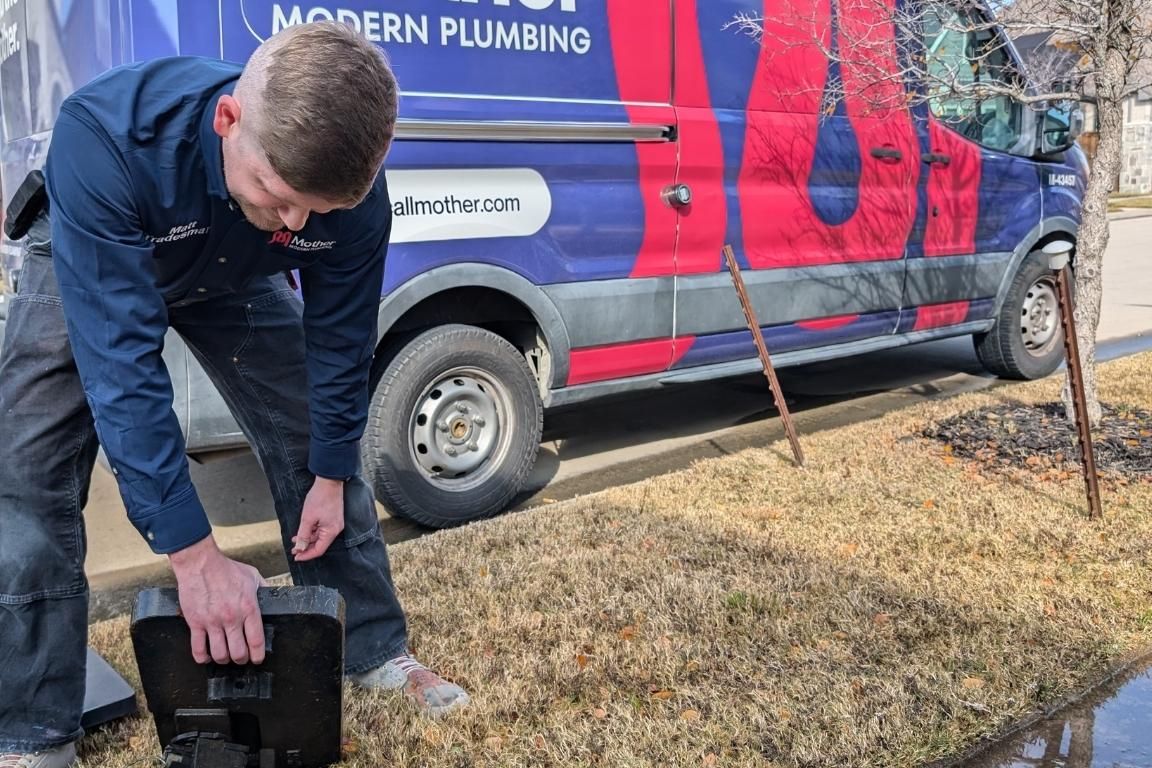
While you wait for your licensed plumber, there are a few things you can do to limit current and future damage to your home and plumbing system. Here’s what to do to secure your home right now if your underground pipes are frozen.
If the Water Main Is Frozen
Turn off your home’s main water shut off valve immediately. In our service area, you’ll usually find it at the curb in a box clearly marked “WATER”. In other areas, it may be in your garage, near the water heater, or along the exterior wall near a hose bib.
There’s a reasonable chance that the solid ice expanding within your water main formed a small crack in the pipe. Turning off the water supply ensures that when the ice plug melts, the pressurized incoming water doesn't blast out of that hidden fracture and cause an underground flood.
“Open all the faucets in your house to relieve any leftover water pressure,” Steven advises.
If the Main Sewer Line Is Frozen
Stop using all water in your house right now. This seems odd considering it’s your sewer line, but think about the drainage. Any backups you’re experiencing will only get worse if you introduce more water to the sewer system.
Turn off your washing machine and dishwasher, and don’t flush any toilets.
Step 4: How the Pros Safely Thaw Underground Pipes

When your plumbing service arrives, ask the technicians how they plan to address your buried frozen pipes. They should reply with one of these methods:
Hot Water Hydro Jetting for Frozen Sewer Lines
Specialized hydro jetting equipment blasts high-pressure hot water down the sewer line. This safely cuts through the ice plug without cracking the pipe itself.
Hot Water Injection Systems for Frozen Water Mains
The line is safely opened from within the home and a small, flexible tube is fed directly into the buried pipe. Warm water is pumped into the tube directly against the ice formation to melt it safely from the inside out.
Post-Thaw Leak Detection
Once your frozen plumbing line is safely thawed and restored, your plumber should test it for leaks with non-invasive equipment. Request a sewer camera for sewer line work, or acoustic leak detection for water line issues.
These underground leak location devices require no digging or property damage. They provide real-time confirmation that your pipe didn’t crack due to freezing.
{{4-best-tools-to-locate-underground-water-leaks-fast="/blogs/4-best-tools-to-locate-underground-water-leaks-fast"}}
Why We Don’t Support Electrical Pipe Thawing
Many old-school plumbers still use electrical welding machines to heat frozen metal pipes. The idea is that these high-amperage machines work fast to thaw out metal.
There are two huge problems with this method:
- Electrocution hazard. If your plumbing is tied into your home’s electrical grounding system (or touches a CSST gas line), sending a high-amp electrical current through the pipe is a massive fire and electrocution risk.
- It only works on metal. Even if you’re willing to take the risk, this method doesn’t work at all on the buried PEX-A or PVC pipes used in most modern underground water lines. It requires a continuous metal system- a metal pipe with plastic joints also fails.
Ignoring a Buried Frozen Pipe Is Dangerous- Don’t Wait
“Some folks assume they can just wait for the ground to thaw and their pipe will go back to normal,” Steven says. “That’s a really bad assumption.”
Here’s how “leaving a pipe to thaw” affects each type of buried frozen line:
Water Mains
Ice expands inside a frozen pipe. It presses against the interior walls and can easily split copper, PVC or degraded cast iron. For now, the only thing plugging that hole in your pipe is the ice itself.
The second the ground thaws, full municipal water pressure re-enters your supply line. It blasts out of any cracks and fissures, washing out your foundation and turning your yard into a sinkhole.
Sewer Mains
When your sewer line is frozen, all drainage flow is blocked. If you continue to use the plumbing, run the dishwasher or flush the toilet, that raw sewage has nowhere to go but backward into your home. Eventually, it’s going to overflow into your first floor drains.
Aging cast iron and clay sewer lines are at even greater risk. Expanding ice shatters these already degraded materials, potentially requiring full sewer line replacement and excavation.
Emergency Frozen Pipe Plumbing Service in Dallas-Fort Worth
If your water line or sewer line is frozen underground, don’t wait for the ice to split your pipes. Call a licensed plumber ASAP. Turn off the incoming water supply and stop using water completely until the lines are thawed to prevent further plumbing issues.
Frozen pipes in Dallas-Fort Worth? Mother’s here 24/7, 365 days a year with the emergency plumbing service you need.