Shower Leaking? What To Do Right Now


table of contents
table of contents
If your shower is leaking, the first thing you must do is isolate the exact location of the breach and its cause. A leaky shower is a symptom, not a diagnosis. Find the source of the problem, and you’ll answer every question you have:
- The severity of your plumbing leak
- The damage it has already caused
- Whether you can DIY leak repairs or need a plumber
- What’s safe and unsafe to attempt yourself
Some shower leaks require urgent burst pipe repair from a licensed plumber. Some just need a $10 part from a hardware store. Our Master Plumbers built this step-by-step guide to help you find the right fix for your situation in 10 minutes or less.
You’ll learn how to separate a surface leak from a major in-wall pipe burst, and the unique symptoms that indicate which is which.
Burst pipe emergency in your house right now? Switch over to our more urgent guide to get help fast and start setting up your insurance claim.
Step 1: DIY Shower Leak Symptom Checker

The most important question to answer immediately: where exactly is the water coming from?
Turn the shower faucet completely off, and locate the precise source of the leaking water. Here are the four most likely scenarios, rated in order of severity:
A Visible Slow Drip With the Water Off
Severity Level: Very Low
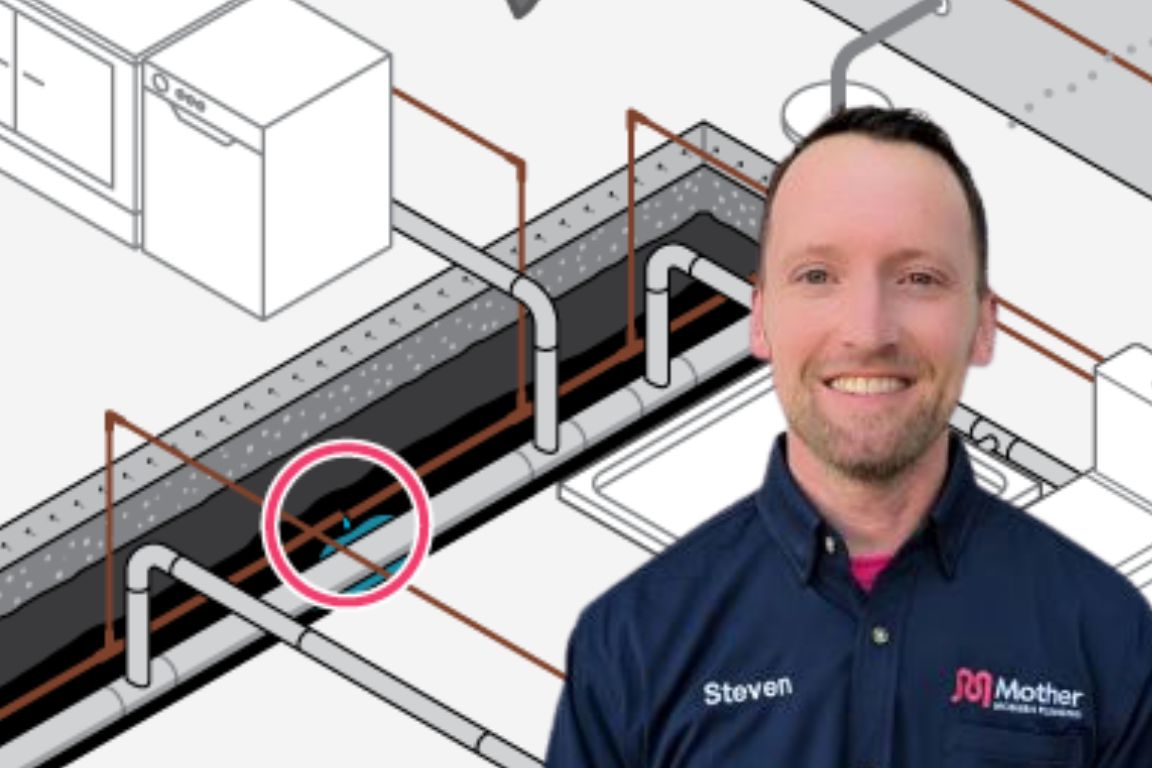
“A slowly dripping showerhead with the water off is like a bratty kid throwing his food on the floor,” says our Responsible Master Plumber Steven Smith (RMP-43457). “It’s annoying and wasteful, but it’s not dangerous.”
The dripping water travels safely down the drain as it’s intended. There’s no inherent risk to your plumbing or your home’s structural integrity.
You still need to get it fixed- a slow drip wastes the same amount of water per month as 5-6 extra dishwasher cycles.
Seeping From the Handle, Faucet or Faceplate
Severity Level: Medium
In most cases, the internal shower cartridge has a failed O-ring, or the caulk around your faceplate is worn out. Both allow water to escape its intended path, which will cause long-term damage that is hard to see.
“The visible leak is half the problem,” Steven explains. “It’s also weeping behind the shower tile and dripping down your wooden framing. That’s going to rot your studs over time.”
Pooling Water Just Outside the Shower Base
Severity Level: High
Standing water destroys everything in your bathroom over time. It warps flooring, wrecks baseboards and rots the subfloor under your feet. It’s also a breeding ground for mildew and mold growth.
This didn’t just happen because someone splashed around in the tub. Water is traveling outside its intended path from somewhere- often a cracked shower pan or a failed rubber sweep on the bottom of your shower door.
Active Dripping Water Through Drywall or Ceiling
Severity Level: Emergency
“Worst case scenario,” Steven says simply. “There’s an active leak in your shower pan or your in-wall plumbing, and it’s causing structural damage to your house.”
The problem with an active drip in drywall or the ceiling is simple: what you see is the tip of a hidden iceberg. There’s more water spraying out behind the walls or into your wood framing.
If you notice this symptom, turn off water to the house right now.
{{fast-plumbing-answers-how-to-turn-off-your-water="/blogs/fast-plumbing-answers-how-to-turn-off-your-water"}}
Step 2: How to Tell if a Hidden Shower Leak Is Serious
If you have a visible slow drip from the showerhead directly into the drain, this step doesn’t apply to you. Go directly to Step 3.
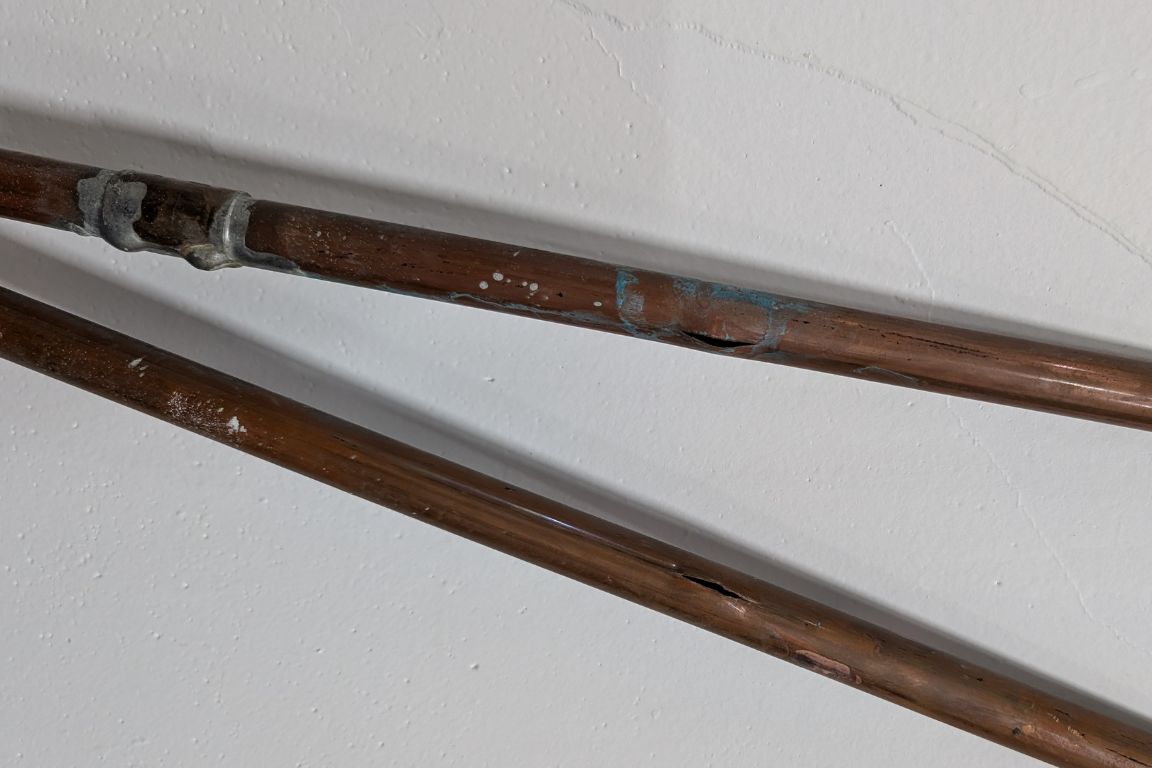
Water trapped behind bathroom tile, under the shower base or under the floor is a serious threat for structural rot. Let’s help you gauge if a “tiny leak” has already caused a major hidden plumbing problem in your shower area.
4 Questions to Guide Your Assessment
1. Do you smell a musty, mildew odor when you step into the bathroom, even when it is dry?
Pro tip: Open the bathroom window and let the space air out for a little while. Then, step back inside and smell again. If the musty odor lingers, there’s likely water damage to your drywall or wood framing.
2. Is the shower pan cracked, or does the floor feel spongy and shifting when you stand on it?
Stop using the shower immediately if you notice a crack in the shower pan. Not only will you avoid further water damage, you’ll avoid injury risk.
“If there’s a soft spot on your bathroom floor, don’t walk on it,” Steven advises. “Fixing a leak is one thing. Falling through a hole in the floor is messy, expensive and dangerous.”
3. Does the drywall around the shower base or handle feel soft, squishy, or look discolored?
Gently press on the wall around your shower base and look closely at the baseboards. If the baseboards are swollen and peeling, or the wall has an instant “squishy” sensation, that’s evidence of an in-wall leak.
If any drywall around your shower is stained or discolored- especially yellowing or graying of white drywall- this also indicates a potential leak behind the shower wall.
4. Is your home's water meter spinning outside even when the shower and all other fixtures are completely off?
Shut off the shower and every other tap in your house. Then, head to your water meter. If the dial continues to spin, there’s a water line leak on your property.
Pro tip: Steven says your answers to questions 3 and 4 offer a bulletproof diagnostic tool to help narrow down where your leak is located.
“If the dial continues to spin, you have a pressurized water line leaking behind your wall,” he explains. “But if the meter is completely still and your wall is squishy, the leak is coming from your shower pan or drain line when the water is running.”
Step 3: DIY Leak Fix or Licensed Plumber?
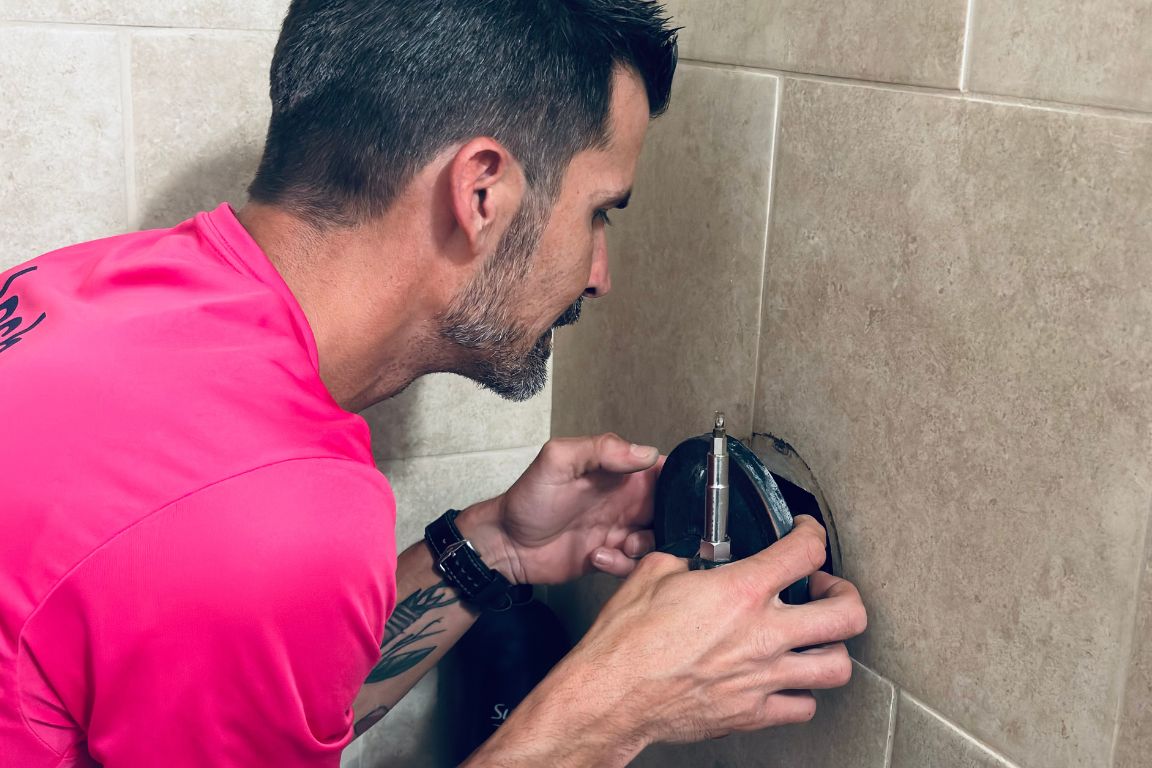
“We’re always here to fix a bathroom plumbing leak,” Steven reassures us. “But with some less severe issues, you don’t need to call us.”
Look at these 3 common leaky shower scenarios, and decide which one best applies to your current plumbing problem. We’ll tell you when to call a licensed plumber, and when to try fixing the issue yourself.
Scenario 1: Dripping Showerhead
If water drips from the head itself when the faucet is off, the showerhead connection is loose, the internal rubber washer is worn out, or hard water scale has built up inside the fixture.
“If the major problem appears to be calcium buildup on your showerhead, you can handle this one yourself,” Steven says.
The Verdict: DIY. You don't need to pay a plumber's dispatch fee for this. Grab an adjustable wrench, a roll of plumber's tape, and a $3 replacement washer from the hardware store. Or simply soak the showerhead in a bag of white vinegar overnight to dissolve the calcium buildup.
Scenario 2: Leaky Shower Handle
If water drips continuously from the handle or seeps out from behind the metal faceplate, the internal shower cartridge has failed and needs to be replaced.
The Verdict: Only DIY if you’re really handy. If you know exactly where your main water shut off valve is and feel comfortable using an Allen wrench to remove the handle and swap the cartridge- go for it.
“Take the old cartridge to the hardware store to ensure you buy the exact matching brand,” Steven suggests.
If you aren’t confident in doing all those things, shower cartridge replacement is a relatively inexpensive plumbing service that’s normally done in under an hour.
{{replacing-shower-cartridges="/services/replacing-shower-cartridges"}}
Scenario 3: Hidden Shower Wall or Ceiling Leak
If water is dripping through the ceiling below, your bathroom baseboards are swelling, or the drywall feels squishy, you have a failed shower pan, a leaking drain, or a busted mixing valve behind the tile.
The Verdict: Call a licensed plumber ASAP. This is an active structural emergency. Do not attempt to DIY this repair. You need a licensed plumber to safely expose the leak, cut out the failing pipe, and install a permanent fix before mold and wood rot take over your home's framing.
Don’t DIY a Shower Leak If You Notice These 3 Signs
Even if the prior section suggests you can DIY the shower repair, there are still boundaries you shouldn’t cross.
Stop trying to fix your leaky shower immediately if you notice any of these 3 red flags:
- You have to forcefully unscrew a corroded showerhead or handle. Stop. The extra torque can snap the pipe behind your wall. Now, a $50 trip to Home Depot is a major plumbing repair bill.
- You want to rip out shower tile or drywall to find the leak. Stop. Our plumbers have non-invasive moisture meters and in-wall leak detection equipment to find hidden leaks without tearing out your tile or drywall. Don’t add extra remediation costs to your issue.
- You don’t know where your main water shut off valve is. Stop. You must kill the water pressure before removing a shower cartridge. If you pull a cartridge with the water on- or if an old valve breaks while you are working on it- water will shoot out of the wall at full pressure.
“If you don't know where the main shut-off is, your house will flood before you can find it,” Steven explains. “Please don’t put yourself through that.”
Step 4: How to Fix Your Shower Leak
Now you know everything you need to make the right decision about fixing your leaky shower. Here’s exactly what to do based on what you found.
If it’s a slow drip caused by calcium buildup: Use our white vinegar remedy to remove the gunky buildup and see if the drip resolves.
If it’s a DIY fix of your shower cartridge or O-ring: Turn off the incoming water supply, document the brand of your broken fixture, and head to the hardware store.
If it’s a heavily corroded shower cartridge: Consider calling a licensed plumber for replacement. You’ll avoid the risk of breaking the pipe in your shower wall.
If it’s a hidden leak, soft wall or failing shower pan: It’s time to call a plumber. Don’t ignore it- the leak will only cause more rot, more damage and a higher eventual repair bill.
The real issue with a leaky shower isn’t the drip you see. It’s the seepage happening behind your bathroom tile and under your shower base. If you’re unsure of its cause, call a plumber and request an immediate diagnostic.
Need emergency bathroom leak repair in DFW? Call Mother 24/7 for same day service, professional assessment and a fixed price quote.
{{faucet-installation="/services/faucet-installation"}}