Water Heater Leaking From Bottom? Figure Out Why


in this article
In this article
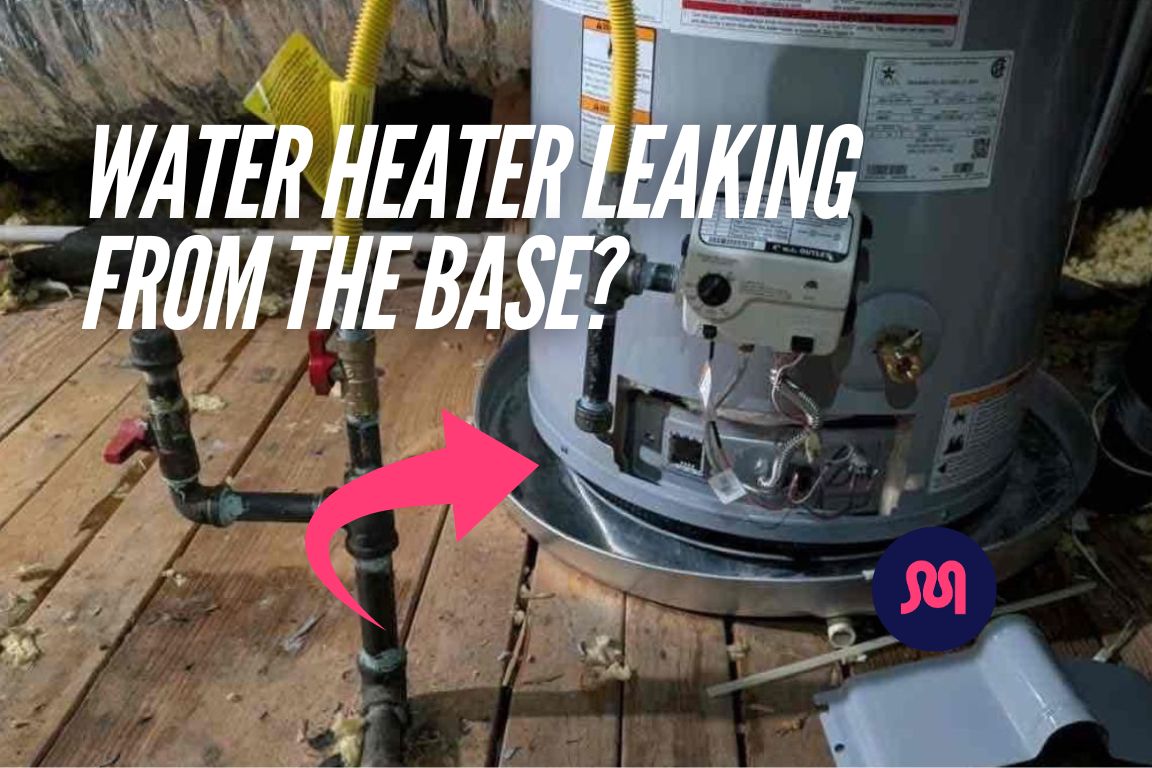
The inside of your utility closet looks like a lower-deck room on the Titanic. Your water heater has a rusty crack at the bottom and water’s slowly filling flooding the space. Your first instinct is to grab a bucket is start bailing out water- but what you should do first is turn off the power.
If water is rapidly gushing and you haven't turned off the water supply yet, stop reading and switch to our Burst Water Heater Emergency Guide right now.
Once you have some breathing room and you’ve called a licensed plumber, there’s one natural question: why the heck did this happen? It’s a good question with three possible answers- one great scenario, one that requires repair, and one where you need to replace your tank.
Let’s take a quick look at each and see what matches your symptoms.
Why Your Water Heater’s Leaking at the Bottom

Figuring out why your water heater is leaking near the bottom tells you exactly how to proceed: whether you need to repair your water heater, replace the tank entirely, or if this is a false alarm.
“When we get a call about a leak at the base of the water heater, it’s usually one of three things,” says our Responsible Master Plumber Steven Smith (RMP-43457). “And one of them isn’t even a leak!”
Here’s what you might be dealing with:
- Condensation (“tank sweating”): not a leak
- Drain valve problems: repairs or parts replacement
- Tank corrosion: water heater replacement needed
Let’s show you how to diagnose each of these- starting with the best case scenario.
Best Case Scenario: Heavy Condensation
This is called “tank sweating”. If there’s enough condensation on the tank, it can drip down the sides and easily mimic a small leak near the base. It’s the best case scenario because there is no actual leak!
Tank sweating happens for a few reasons:
- Incoming cold water when your tank’s in a very humid location
- Heavy continuous use (back-to-back-to-back showers)
- A blocked flue or improper venting on gas units
The Paper Towel Test
Use paper towels for an easy condensation test. Use them to wipe the tank and base completely dry. Then, wrap a dry length of paper towel around the base and tape it shut.
Watch how the paper towel absorbs water:
- If it’s evenly distributed or from the top down, you have a “tank sweating” issue.
- If it’s soaked from the bottom up or along one specific crack, you have a leak.
Middle of the Road: Leaky or Damaged Drain Valve

If you’re sure you have a leak near the base, check the drain valve- it’s definitely a better diagnosis than a cracked tank!
Here’s where you’ll usually find the drain valve on your specific tank:
- Gas or Electric: Most drain valves on standard tanks are on the lower-right or lower-left hand corner of the tank.
- Residential Heat Pump (Hybrid): The very bottom of the tank, front and center.
Look for a threaded brass or plastic spigot that looks a lot like an outdoor faucet.
How to Test Your Drain Valve
Testing your drain valve for cracks or leaks starts a lot like testing for condensation. Grab a roll of paper towels and dry the area completely. This includes:
- The entire valve body
- The opening of the valve spout
- The surrounding valve jacket and area
Here’s how to tell if there’s a leak issue with any part of the heater’s drain valve:
- Check the cap. On most modern drain valves, there’s a cap threaded onto the nozzle. (Sometimes, you’ll see a plug.)
- If you don’t see one, that’s probably the issue. You may just need a replacement!
- If the leak is coming from around the cap, it’s loose or the threadings are bare. Water is weeping past the internal gate and leaking directly out of the valve's spout.
- Try paper towels. Wrap them around the entire valve and underneath the spout. Make sure they’re snug. If the paper is wet after a few minutes, you have your culprit.
- Look at the threadings. Look where the valve connects to the tank wall itself. If water is seeping out following the threading pattern, that’s the problem.
- Carefully twist the handle. Try turning it closed- it may be slightly unseated. Don’t turn it forcefully- if the valve or handle snaps, you’ll turn a leak repair into a larger parts replacement.
Worst Case Scenario: Corrosion Inside or On the Tank
Sorry to be a buzzkill. But if there’s enough flooding to make you do a panicked Google search, this is probably what’s going on.
The water’s pouring out from a hole in the wall of your tank. Sadly, it doesn’t matter whether it’s a pinhole or a crater. We call this the worst case scenario because there’s no saving your existing tank.
Your tank is made of glass-lined steel- if corrosion goes through it, patching doesn’t work.
“Once corrosion tears a hole in your water heater, it’s time to get a new one,” Steven explains.
{{water-heater-installation="/services/water-heater-installation"}}
Comparison: Drain Valve Leak vs Tank Corrosion
Ruled out condensation, but still aren’t sure how to diagnose your leaky tank?
Use this table to compare the symptoms, location and behavior of your water heater leak:
How to Take Photos and Videos for Insurance
“When do I get to clean up?!” you’re probably yelling right now. There’s a good reason we’ve kept all the water on the floor- if you clean it up, your odds of a successful insurance claim go down.
Your insurance provider (and their adjuster) want to see rock-solid evidence of the leak: when it happened, why it happened, where the water went, and what it damaged.
Follow our insurance documentation steps for burst water heater emergencies.
Time to Call a Licensed Plumber
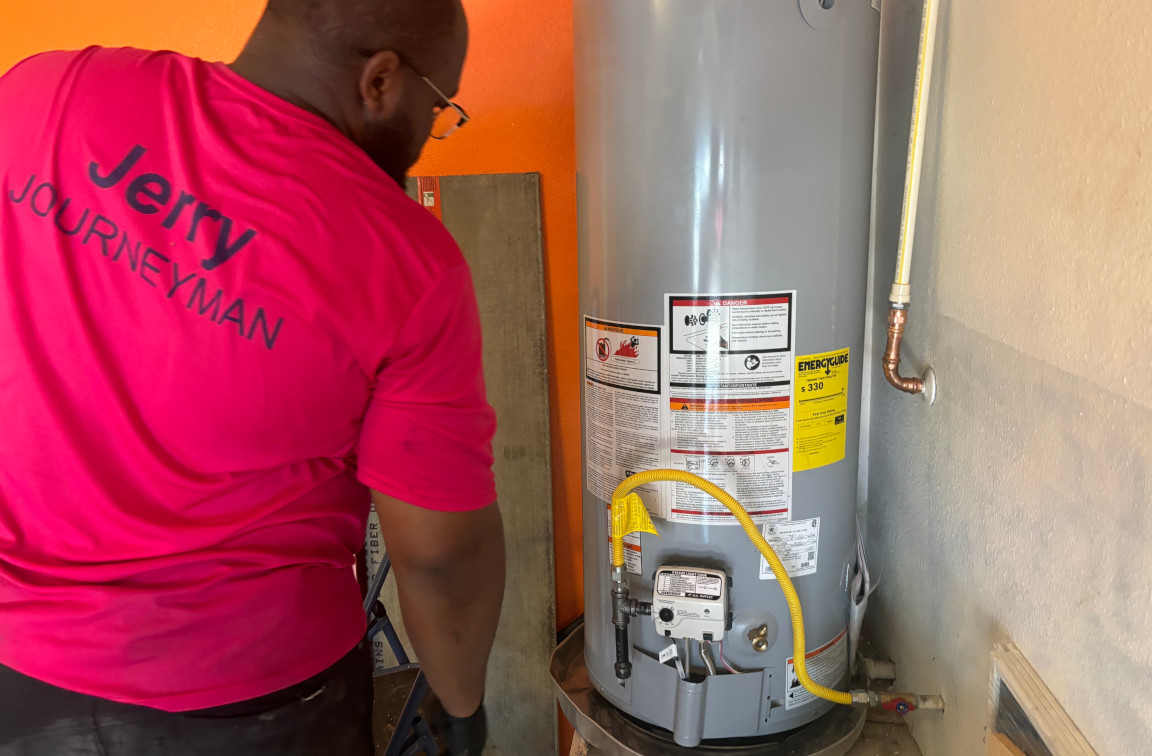
If there’s an issue with your drain valve, or a leak in the tank itself, give a licensed plumber a call.
“You can’t patch a leaky tank,” Steven explains. “That’s a recipe for disaster. And even if you’re just swapping a drain valve, avoid the risk of snapping or breaking it and give us a call.”
Ask for a Water Damage Restoration Reference
During their visit, ask your plumber for their best reference for a certified water damage restoration specialist. You want a company that’s IICRC certified in water damage restoration- not just because they’re the best, but because it helps your insurance claim.
“You want the WRT certification,” Steven says.
The right plumber won’t just fix your leaky water heater. They’ll provide the references, help with insurance documentation, and set you up for a peaceful future full of hot water.
{{water-heater-repair="/services/water-heater-repair"}}