Fast Plumbing Answers: Cold Water Works But Not Hot?


table of contents
table of contents
Your cold water works perfectly fine, but hot water is nowhere to be found. You’re not sure if it’s one broken fixture or if your home’s water heater just kicked the bucket.
Don't worry: we'll answer all your questions in 3 minutes or less.
When cold water works but not hot in Dallas-Fort Worth homes, Mother diagnoses them on a case-by-case basis. The reason for a whole-home “hot water outage” is very different than a single fixture issue- and a freezing event can be the answer to everything.
We’ll walk you through how to diagnose the problem and show you exactly what needs fixing- whether that’s your water heater, a frozen pipe, or a simple faucet or shower cartridge.
Need water heater service in Dallas? Call Mother 24/7- we'll diagnose the issue and restore your hot water fast.
{{water-heater-repair="/services/water-heater-repair"}}
One Simple Test: Is It One Fixture or Multiple?
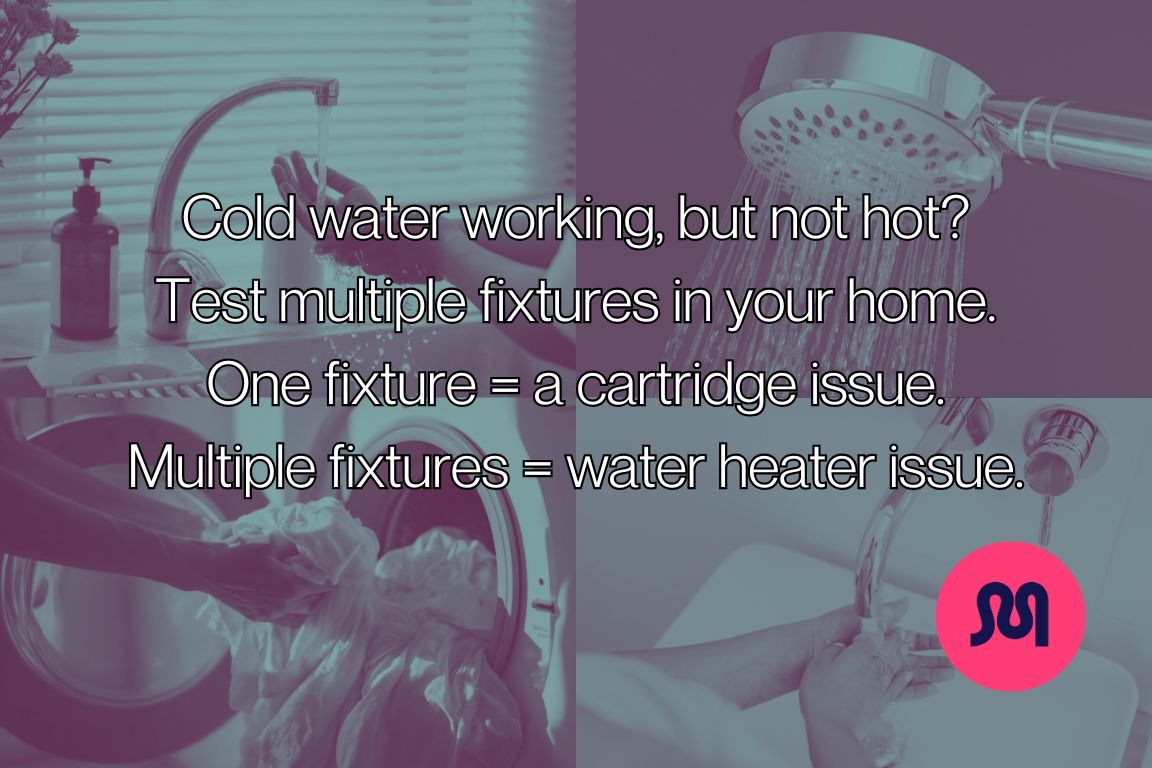
Before you do anything else, walk around your house and test hot water at 3-4 different locations. Choose different locations and fixture types throughout the house- the shower, kitchen sink, washing machine, etc.
Here’s what the results of this easy test tell you:
- If there's no hot water from ANY fixture: Your water heater is the problem. The thermostat failed, the heating element died, or you lost power to the unit. Skip to the next section.
- If ONE fixture has no hot water but others work fine: That specific fixture has a problem. The faucet cartridge or valve inside that fixture is broken. Skip to the "One Fixture" section below.
This step can save you money. We’ve received a few calls from homeowners who thought their water heater was broken- in reality, they just needed a new shower cartridge.
Testing first might save you a costly diagnostic service call.
If It's Multiple Fixtures, There's a Water Heater Issue

If your cold water works but not hot at multiple fixtures and appliances, then your water heater is the problem. The short version: something inside your tank stopped the heating process, and we need to figure out precisely what failed.
The good news: most water heater failures that cause total cold water have straightforward fixes. You're probably not looking at a full replacement.
Want more details on water heater problems? Read our complete guide to water heaters that won't get hot.
{{fast-plumbing-answers-water-heater-is-not-getting-hot="/blogs/fast-plumbing-answers-water-heater-is-not-getting-hot"}}
Most Common Cause: A Failed Water Heater Thermostat
The most common reason for complete hot water loss is a faulty thermostat. Your water heater's thermostat is like the brain that tells the heating system when to turn on. When the thermostat fails, it can't sense that your water is cold, so it never signals the heating element or burner to fire up.
If you have a gas water heater, you have one thermostat built into the gas valve assembly. When it fails, the pilot light might stay lit, but the main burner never fires because the thermostat isn't calling for heat.
Electric water heaters have two thermostats: an upper and a lower. If the upper thermostat fails, neither heating element gets power, and you get zero hot water. The upper thermostat is the most common cause for this issue in electric units.
The fix: A licensed plumber uses a multimeter to test your thermostat to confirm it’s faulty. Replacing the thermostat is simpler on an electric unit- if you have a gas water heater, the entire gas valve assembly needs to be replaced (the thermostat isn’t sold separately).
This repair restores hot water right away, and doesn't require total water heater replacement.
Other Potential Causes of Complete Hot Water Loss from Water Heater
Three other issues can cause every fixture to deliver only cold water, depending on whether you have an electric or gas unit:
Tripped circuit breaker (electric water heaters): Sometimes a lack of water heater function is simply a tripped circuit. Look for a double breaker in your panel- if it tripped, switch it fully off then back on. If it trips again immediately, there’s an electrical issue inside the water heater that requires a licensed electrician.
Failed heating element (electric water heaters): The heating element inside your tank burned out and can no longer heat water. This happens over time as elements corrode from mineral buildup. A plumber can test the element with a multimeter and replace it if it's dead.
Extinguished pilot light (gas water heaters): The small pilot flame that ignites your main burner went out. Check the viewing window at the bottom of your gas water heater. If you don't see a small blue flame, follow the relighting instructions on the label. If the pilot won't stay lit after multiple attempts, call a plumber to replace your thermocouple.
Own a tankless water heater instead? Read our guide to troubleshooting tankless units with no hot water.
{{fast-plumbing-answers-no-hot-water-from-tankless-heater="/blogs/fast-plumbing-answers-no-hot-water-from-tankless-heater"}}
If Hot Water Isn't Working At One Fixture Only
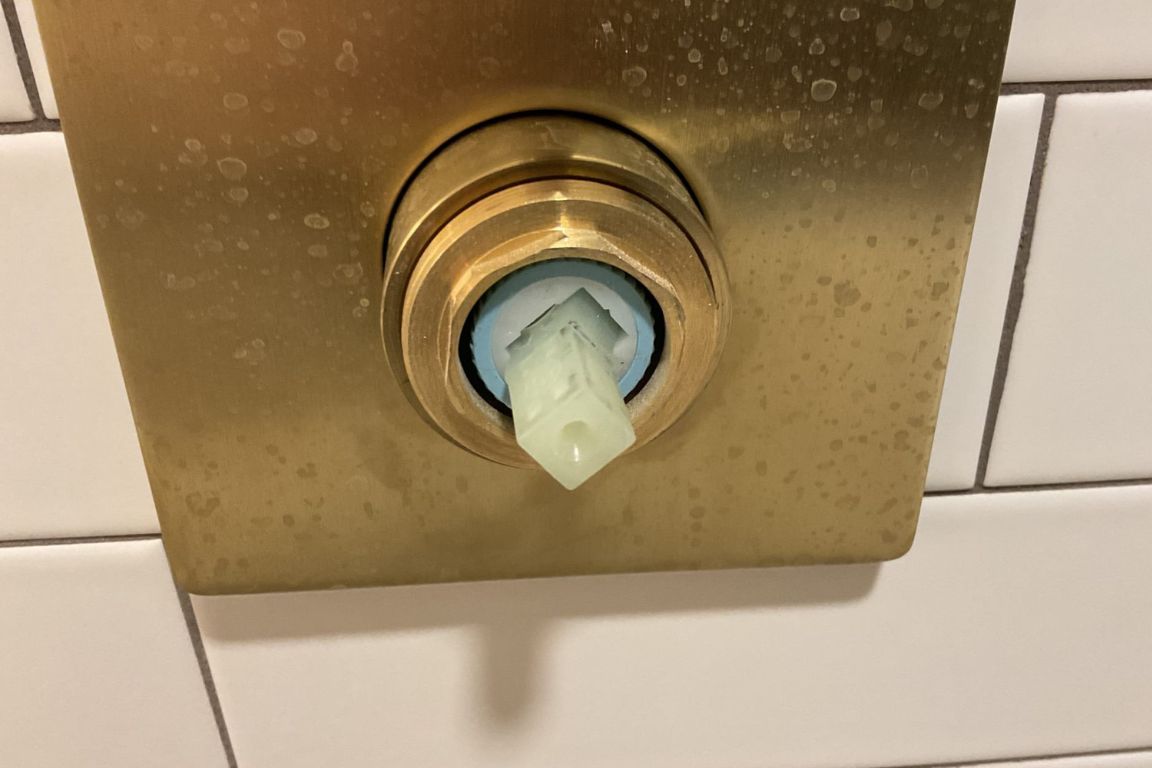
If your test reveals only one fixture isn’t delivering hot water, then rule out your water heater. The problem is inside that one specific fixture, or the line leading directly to it.
Something is blocking or preventing hot water flow to just that tap.
The fix depends on what type of fixture you're dealing with. Each fixture type has a different component that controls water flow and temperature.
Sinks and Taps: Faulty Faucet Cartridge
Kitchen sinks, bathroom sinks, and bar sinks all use cartridges (or valve stems in older faucets) to control water flow and mix hot and cold water. When a cartridge fails, it can completely block hot water while still allowing cold water through.
Think of the cartridge like a traffic controller at an intersection. When it breaks, it might let cars through from one direction (cold water) but block all traffic from the other direction (hot water).
The fix: A plumber removes the faucet handle, takes out the old cartridge, and installs a new one. The cartridge type depends on your faucet brand. Most cartridge replacements take 30-45 minutes.
Shower: Failed Shower Cartridge
Showers use a valve cartridge behind the wall that mixes hot and cold water and controls temperature. When this cartridge fails, you might get only cold water, only hot water, or water that won't turn off completely.
The shower cartridge is similar to a sink cartridge but usually larger and more complex because it has to handle higher water pressure and volume. When it fails, mineral buildup or worn internal seals prevent hot water from flowing through.
The fix: A plumber removes the shower handle and trim plate, pulls out the old cartridge, and installs a new one. Access is trickier than a sink because you're working through a small hole in your shower wall. The repair takes 45-90 minutes depending on the valve type.
Don’t DIY this. If you install the cartridge incorrectly, you can damage the valve body behind the wall, which turns a simple replacement into a costly repair.
Shower has no hot water but other fixtures do? Read our complete guide to fixing shower cartridges.
{{fast-plumbing-answers-shower-cartridge-no-hot-water="/blogs/fast-plumbing-answers-shower-cartridge-no-hot-water"}}
Washing Machine: Broken Inlet Valve
Washing machines have inlet valves that control the incoming flow of water. Each of these valves has separate hot and cold valves (called solenoids) controlled by electricity. When the hot water solenoid fails, only cold water enters the washing machine.
This ruins the effectiveness of hot water wash cycles and doesn't sanitize clothes properly.
The fix: You’ll need to replace the inlet valve assembly, which is on the back of your washing machine. This usually requires an appliance tech instead of a plumber.
If You Have Frozen Hot Water Pipes
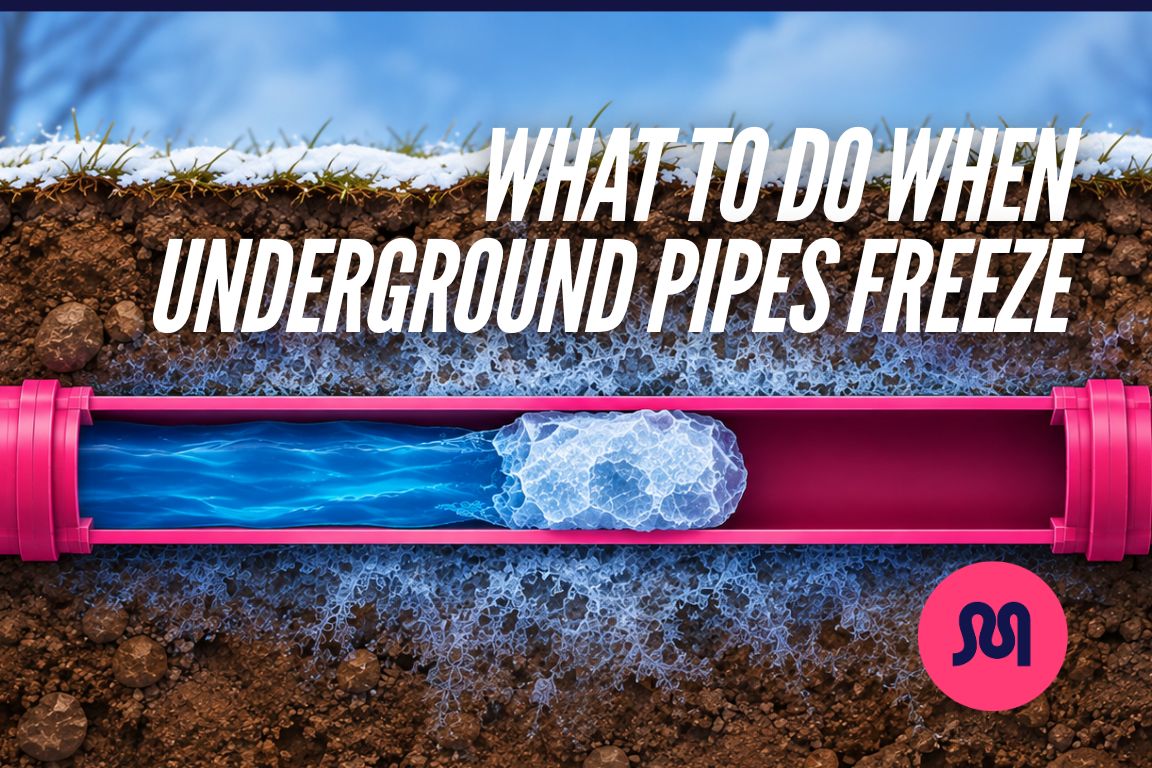
You may be reading this in the middle of January during a hard freeze. A frozen pipe blocks your hot water during extreme “cold snaps” and could be the cause.
Hot water pipes often run in exterior walls or uninsulated walls. The standing water in these pipes freezes easily as temperatures drop overnight.
Cold water pipes are better insulated, as they run through interior walls. That's why you might have cold water working but no hot water during a freeze.
Be careful with DIY fixes. If you have frozen pipes, don't use heat guns, blowtorches, or open flames to thaw them. You can burst the pipes or start a fire.
Instead, turn up your home's heat, open cabinet doors to let warm air reach pipes under sinks, and wait for the pipes to thaw naturally.
The fix: Once pipes thaw, check for leaks everywhere. Frozen pipes often crack when ice expands inside them, but you won't see the leak until the ice melts. If you find leaks, shut off water to that area and call a plumber immediately.
Insulate your pipes to prevent future freezes. Let a slow drip out from faucets during freeze alerts to keep a moving flow of water.
Get Your Hot Water Back - Call Mother Today

When cold water’s working fine but hot water isn’t, test multiple fixtures throughout your home. If there’s no hot water throughout the home, it’s a water heater issue that requires a plumber. If it’s just one fixture, your water heater is likely fine.
Whether it’s a faulty water heater thermostat or a broken shower cartridge, Mother’s team of licensed plumbers identifies and fixes hot water delivery issues on a weekly basis. We'll test your system, identify the exact cause, and get your hot water flowing again.
Cold water works but not hot in Dallas? Call Mother 24 hours a day- we'll restore your hot water at the first possible appointment.
{{water-heater-repair="/services/water-heater-repair"}}