Fast Plumbing Answers: Fixing Multiple Slow Drains



table of contents
table of contents
Your toilet gurgles every time you flush it- but now, the kitchen sink is backing up, too. One slow drain is annoying. Multiple slow drains throughout your house mean something bigger is wrong- and it's not something you can plunge away. Why is this happening?
Don't worry: we'll answer all your questions in 5 minutes or less.
If all the drains in your house are slow, it's not a drain or fixture problem- it's a sewer line issue. There's either a blockage in your underground main sewer line, or a severely cracked or collapsed sewer pipe.
At Mother, we take the mystery and fear out of sewer line issues with plain facts and clear solutions. Here's what's causing your drain problem, why it's affecting your entire house, and what to do about it right now.
Multiple drains backing up in Dallas? Call Mother 24/7- we'll locate the problem fast and provide the single best solution.
{{sewer-line-repair-and-replacement="/services/sewer-line-repair-and-replacement"}}
All Your Drains Are Slow? Here’s Why
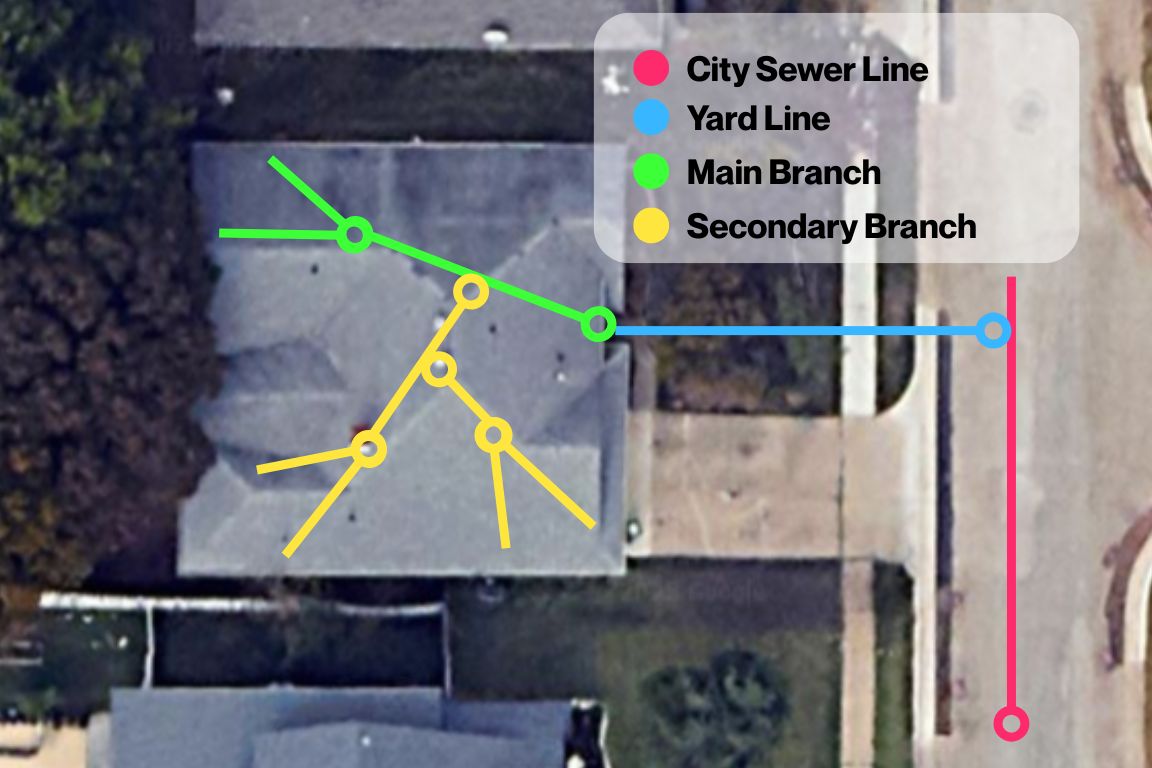
Think of your plumbing like a tree. Each sink or shower is a branch. They all connect to the trunk (your main sewer line) that leads to the city sewer main or your septic. Drainage issues tell you where the problem lies:
- One slow drain: The clog is in a single branch- this happens in tubs and sinks...
- Multiple slow drains: The backup (or damage) is in the trunk.
When your main sewer line is blocked or collapsed, wastewater from every "branch" hits a bottleneck. It has nowhere to go, so it backs up into your lowest fixtures first- usually first-floor tubs and toilets.
There's a silver lining: you're not dealing with five separate clogs that each need individual attention. You have one problem in one location. Fix that, and all your drains flow normally again.
Let’s look at the two most common suspects that lead to all your home’s drains slowing down at once- a sewer line blockage or collapse.
Suspect #1: Main Sewer Line Blockage
The most common cause of multiple slow drains is a blockage in your main sewer line. This large underground pipe runs from your home to the city sewer connection or septic tank. Every drain in your house feeds into it. When it gets blocked, wastewater backs up because it has nowhere to go.
The blockage usually sits 20 to 60 feet from your house. It's caused by grease, soap scum, waste, and debris that accumulates over years. Tree roots accelerate this by growing into pipe cracks and catching debris as it flows past, turning a partial blockage into a complete one.
Symptoms get worse when you use a lot of water at once- running the washing machine, taking a shower, and flushing a toilet within minutes. The surge of wastewater hits the blockage and backs up into multiple fixtures.
How a Main Sewer Line Blockage Forms
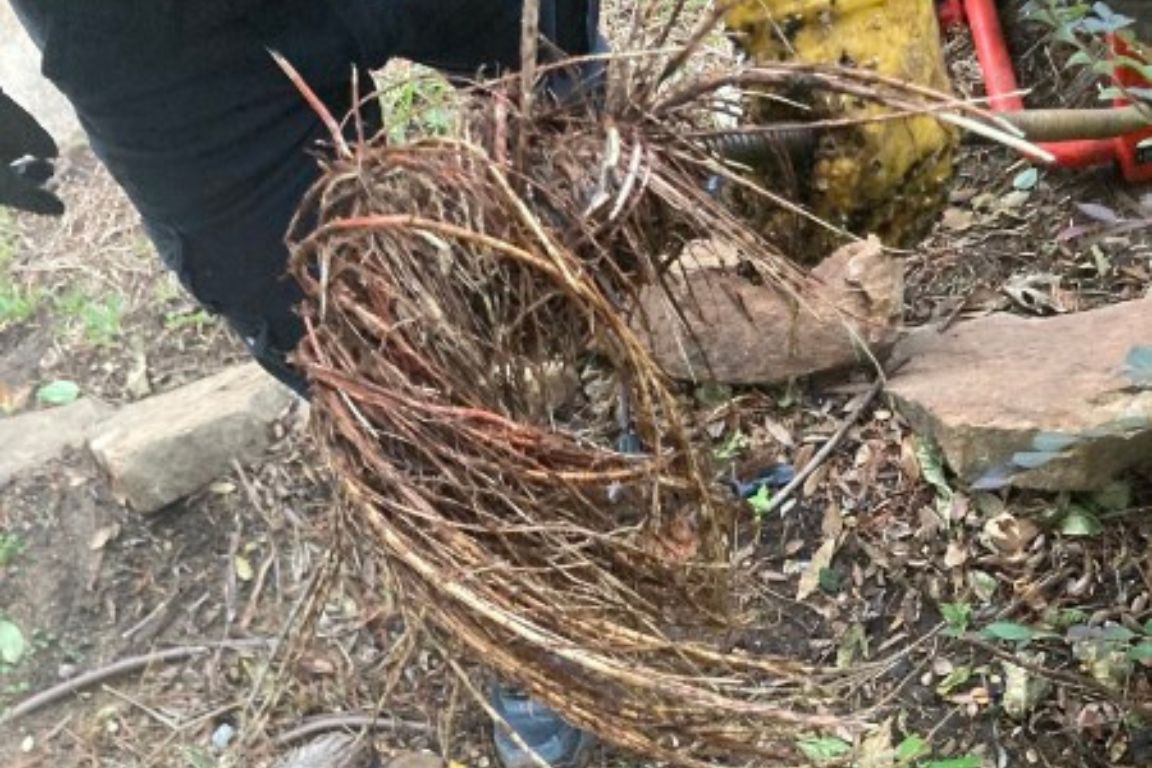
Grease is the biggest contributor. It flows down your kitchen sink as a liquid, then cools and solidifies inside the sewer line. Over time, layers of grease coat the pipe walls and narrow the opening. Soap scum, hair, and waste stick to the grease, making the blockage worse.
Tree roots grow toward water. Live oaks and other DFW trees have aggressive root systems. Roots find hairline cracks in your pipe (often from shifting clay soil), force their way in, and expand. They act like a net that catches debris and builds up a blockage.
Shifting soil stresses older pipes. DFW's clay soil swells when wet and shrinks when dry. This constant movement cracks older cast iron and clay pipes. Debris catches on the rough edges at the crack and accumulates.
By the time you notice slow drains, the blockage typically restricts 70-80% of the pipe's diameter.
Dealing with sewage backing up into your drains? That's a plumbing emergency- here's what to do immediately.
The Single Best Solution for a Main Line Blockage
Hydro jetting clears main sewer line blockages completely. A plumber inserts a high-pressure water hose into your sewer line through the cleanout and shoots water at 3,000-4,000 PSI. The water blasts away grease, scale, roots, and debris along the entire pipe.
Unlike drain snaking, which only pokes a hole through the center, hydro jetting scours the inside walls clean and restores near-original diameter. This prevents quick re-clogging.
After hydro jetting, your plumber runs a sewer camera through the line to confirm the blockage is gone and check for pipe damage. The job takes 1-3 hours, and your drains flow normally immediately.
{{hydro-jetting="/services/hydro-jetting"}}
Vent Stack Blockages: A Rare (But Possible) Reason
In rarer cases, a vent stack blockage is to blame. A bird’s nest, debris or ice prevents air flow from entering your sewer pipes and creates backup in your drains.
Suspect a vent pipe issue? Read our new, quick guide to problems, causes and solutions for your home’s sewer vent system.
{{sewer-vent-problems-cleaning-repairs="/blogs/sewer-vent-problems-cleaning-repairs"}}
Suspect #2: Collapsed or Damaged Sewer Pipe
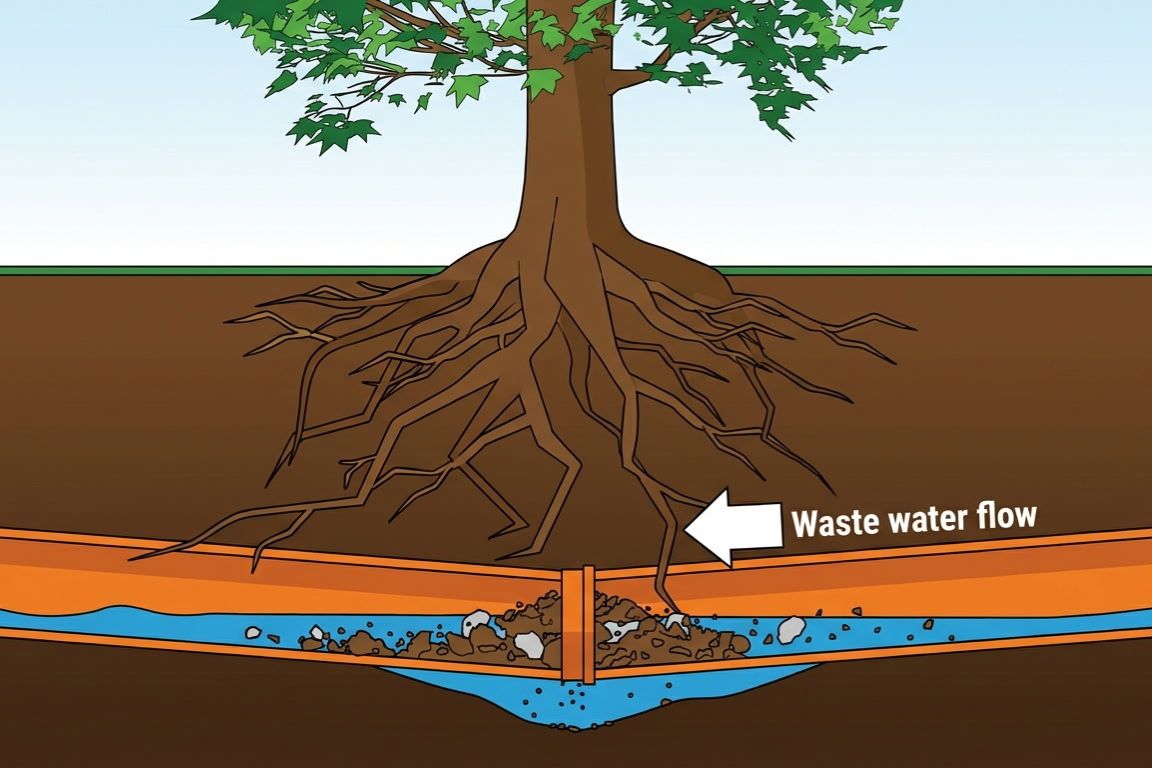
The second most common cause is a collapsed or severely damaged section of your sewer line. The pipe has cracked, broken apart, or caved in. Wastewater can't flow past the damaged section, so it backs up into your drains- but clearing the line won't fix it because the structural failure remains.
A collapsed pipe causes the same symptoms as a blockage: multiple slow drains, gurgling toilets, and sewage backups. The key difference is that a collapse often shows outdoor warning signs- soggy grass patches above the damage, sinkholes in your yard, or sewage smell near your foundation.
How a Sewer Pipe Collapses
Shifting clay soil is the primary culprit in DFW. Clay soil swells when wet and shrinks when dry. This constant pressure cracks underground pipes. Older cast iron and clay pipes eventually separate or collapse under the stress.
Tree roots accelerate collapse. Once roots enter a crack, they keep expanding and act like a wedge, forcing the crack wider until the pipe breaks apart. Dense root balls can fill the pipe and cause surrounding sections to buckle.
Corrosion weakens cast iron pipes. Cast iron sewer lines- common in pre-1980 homes- corrode over decades as wastewater flows through them. Pipe walls thin out and eventually fail, causing sudden or gradual collapse.
Seeing signs of a collapsed sewer line in your yard? Here's how to identify the problem and what to do next.
{{fast-plumbing-answers-signs-of-a-collapsed-sewer-line="/blogs/fast-plumbing-answers-signs-of-a-collapsed-sewer-line"}}
The Single Best Solution for a Collapsed Pipe

A collapsed pipe requires repair or replacement of the damaged section. First, a sewer line camera inspection locates the exact failure point and determines severity. That diagnosis leads to one of three solutions:
- Spot repair works if the collapse is limited to one small section and the rest of the line is good. Your plumber excavates the damaged section and installs new PVC pipe. This is the least invasive and least expensive option.
- Partial sewer line replacement is necessary when a longer section is compromised from multiple cracks, root damage, or collapse-related stress. The damaged section is replaced with Schedule 40 PVC pipe that lasts 50-100 years.
- Trenchless pipe bursting avoids excavating your entire yard. A plumber pulls a new pipe through the old one, breaking apart the damaged pipe and replacing it with a seamless line. This works when the existing pipe hasn't fully collapsed.
The goal is fixing the structural failure so wastewater flows freely and the problem doesn't return.
Choose the best sewer repair option for you! Our master guide breaks down the best use cases for spot repairs, partial replacement and pipe lining.
{{best-dallas-sewer-repair-options="/blogs/best-dallas-sewer-repair-options"}}
More Than One Slow Drain? Act Fast
Multiple slow drains won't get better on their own. The longer you wait, the more expensive the fix- and the higher the risk of sewage flooding your bathroom or basement.
Sewage exposure is a health hazard containing bacteria, viruses, and pathogens that cause serious illness. It also damages flooring and drywall.
If you're seeing multiple slow drains, gurgling toilets, or sewage smells, call a plumber today. This isn't a wait-and-see situation- contact Mother for emergency service.
What Your Plumber Should Do
A licensed plumber responding to multiple slow drains follows a clear diagnostic and repair process. Here are the six steps to expect:
- Ask diagnostic questions upfront. Which drains are slow? When did it start? Any gurgling, backups, or sewage smells? Outdoor symptoms like wet spots? These questions narrow down blockage versus structural damage.
- Locate your sewer cleanout. This access point to your main sewer line- usually a white or black PVC pipe with a cap near your foundation- lets the plumber access your line without removing toilets.
- Run a sewer camera inspection. A waterproof camera shows exactly where the blockage or damage is, what's causing it, and how severe it is. No guessing.
- Determine the best solution. Hydro jetting blasts blockages clear. For breaks and collapses, your plumber determines scope of damage and determines the best repair option- spot repair, partial replacement or trenchless pipe bursting.
- Re-inspect with the camera. After clearing, the camera confirms the blockage is gone and checks for cracks, root intrusion, or weak sections.
- Provide documentation. Good plumbers save sewer camera footage for insurance claims and future reference.
Toilet gurgling or bubbling when other drains are running? Here's why that happens and what it means for your plumbing.
{{fast-plumbing-answers-why-is-my-toilet-bubbling="/blogs/fast-plumbing-answers-why-is-my-toilet-bubbling"}}
Dallas Drain Woes? Call Mother for Lasting Relief
Multiple slow drains throughout your house mean the problem is in your main sewer line- not in individual fixtures. The most common cause is a blockage from grease, debris, and tree roots. The second most common cause is a collapsed or damaged section of pipe.
The fix is straightforward: a plumber runs a camera through your sewer line to locate the problem, then clears it with hydro jetting (for blockages) or repairs the damaged section (for collapses). Your drains flow normally again as soon as the work is done.
Don't wait for this to turn into a sewage backup. Multiple slow drains are your plumbing system's way of telling you something serious is wrong. Act fast, call a plumber, and get it fixed before it gets worse.
All your Dallas drains clogged at once? Call Mother 24/7- whether it’s a clog, blockage or collapsed pipe, we’ll diagnose and fix it right the first time.
{{sewer-line-repair-and-replacement="/services/sewer-line-repair-and-replacement"}}