Fast Plumbing Answers: Gas Leak Outside House


table of contents
table of contents
That dead strip of grass running from your house across the lawn is getting browner every day. Now, there are weird bubbles forming in a puddle right next to it. A quick Google search makes you anxious: there’s a gas leak outside your home. You need to know how it happened, what to do, and who to call.
Don’t worry: we’ll explain everything you need to do in 5 minutes or less.
Outdoor gas leaks are a regular occurrence in the DFW Metroplex (where we live and work). Our local lifestyle revolves around backyard barbecues, fire pits, and outdoor kitchens. Whether you smell rotten eggs near your grill or hear a sharp hissing sound from your pool heater service line, we’ve seen it- and fixed it- hundreds of times.
Let our Master Plumbers guide you through the key sights, sounds, and smells that indicate an outdoor gas leak. Then, we’ll tell you exactly what to do next to protect your family and get the problem fixed for good.
Suspect an outdoor gas leak in DFW? Call Mother 24/7 for same-day diagnostics with no digging, trenching, or property damage.
{{gas-leak-detection="/services/gas-leak-detection"}}
Gas Leak Outside Your Home: Warning Signs to Know
It’s tougher to spot outdoor gas leak symptoms than indoor ones. There aren’t any walls to trap that rotten egg smell or amplify the hissing noise from a leaky line.
To find the red flags, you have to use your eyes, nose, and ears together.
What You’ll See
- Dead Grass or Plants: A natural gas or propane leak outside kills grass and plants by stripping oxygen from the soil. Look for a brown patch or a dead strip in an otherwise green lawn.
- Bubbles in Puddles: If you have a puddle or a wet spot in your yard, look for consistent bubbles rising to the surface.
- Dust Clouds: A high-pressure leak in a buried line can actually blow a small cloud of dust or dirt into the air.
What You’ll Smell
- Sulfur or Rotten Eggs: Utility companies add a chemical called mercaptan to natural gas and propane. It smells like sulfur or rotten eggs. A significant leak will produce this smell, even in the open air.
What You’ll Hear
- Faint Hissing or Whistling: It may be hard to hear a leak outside due to wind or traffic, but a larger break creates a sharp hissing sound. This is especially common near piping joints or grill connections.
If you don’t notice these symptoms, but you still suspect a leak, go with your gut. “Don’t be a hero,” our Master Plumber advises. “If you think you have a leak, you’ve already protected your family. Now it’s time to get out.”
The 5 Most Common Locations of Outdoor Gas Leaks

Your Buried Gas Main
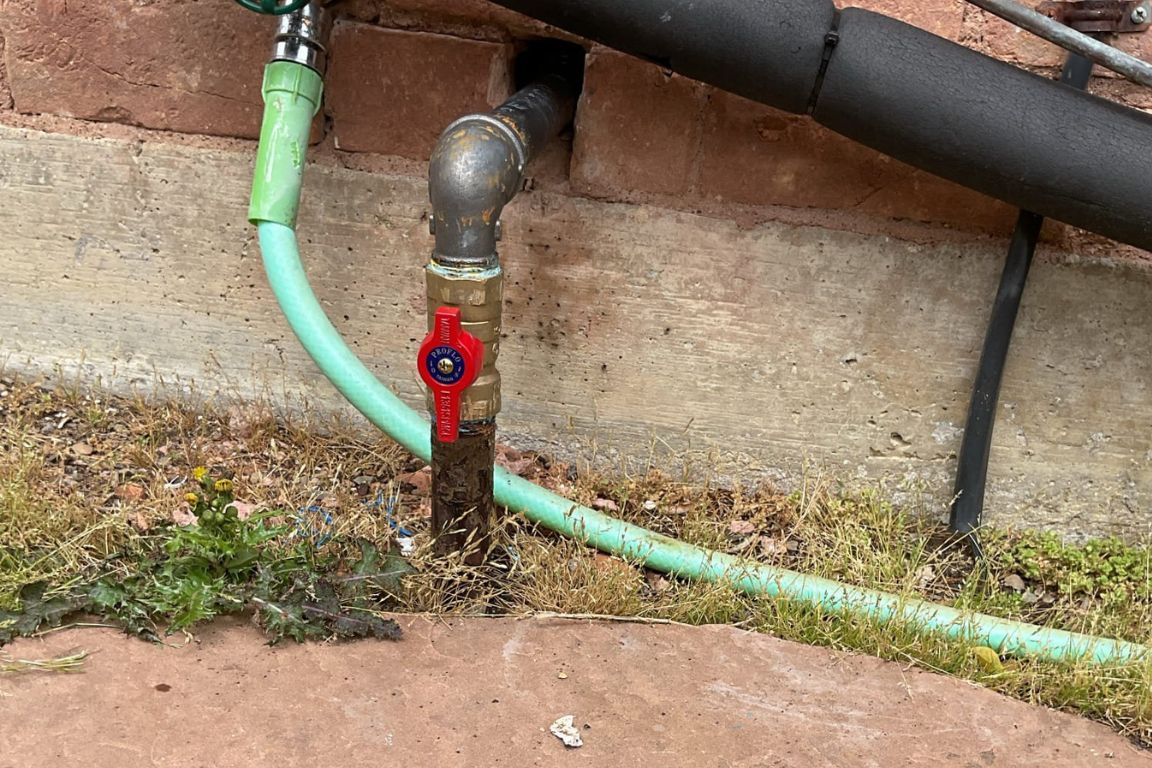
This is the heavy pipe that brings fuel from the street to your home. In North Texas, our shifting clay soil can put stress on these lines, causing them to crack or pull apart. A strip of dead grass above the main is the #1 indicator of this problem.
Your Barbecue or Outdoor Grill
Leaks happen at the grill connections where the flexible hose meets the solid pipe. If you have a propane leak outside near your grill, it’s usually due to a cracked hose or a loose fitting.
{{fast-plumbing-answers-yellow-flame-on-gas-stove="/blogs/fast-plumbing-answers-yellow-flame-on-gas-stove"}}
Your Outdoor Kitchen Area
These areas have many piping joints tucked behind cabinets or under counters. Small leaks here can be hard to smell because they’re tucked away from open air.
Your Fire Pit
Gas lines for fire pits are often buried just a few inches under the ground. Gardening tools or settling pavers can easily damage these shallow lines.
Your Heated Outdoor Pool or Spa
Pool heaters require a large amount of gas. The vibration of the pool pump and heater can sometimes loosen the connections on the service line over time.
Outdoor Gas Leak: What To Do Right Now
“People need to know outdoor leaks are just as dangerous as indoor ones,” our Master Plumber stresses. “You’re not breathing in as many fumes, but there’s a lot of concerns.”
Whether it’s a spark, embers from a fire pit or pressurized oxygen, there are plenty of outdoor dangers that turn a gas leak into a fire or explosion.
If you suspect a gas leak outside your home, do these four things right now:
- Leave the Area Immediately: Get off your property and stop using any gas-powered or electronic devices. Do not use your garage door opener, your grill, or your cell phone. Even if the leak is outside, don’t use indoor appliances either. There’s no way to know how extensive your leak is.
- Call the Gas Company: Get at least a block away before you use your phone. In the Dallas-Fort Worth area, call the Atmos Energy emergency line at 866-322-8667. They will turn off the gas supply at the street.
- Warn Your Neighbors: Now’s the worst time for your neighbor to walk by your house with a lit cigarette or using his cell phone.
- Call a Licensed Plumber: Once the area is safe, call a plumbing service that uses modern outdoor gas leak detectors to find the exact spot of the break.
{{atmos-energy-red-tag-what-to-do-now="/blogs/atmos-energy-red-tag-what-to-do-now"}}
What to Expect From Your Gas Leak Detection Services

Hire a licensed plumber with a positive public review history of gas leak detection service. Here are the tools, tests and business ethics to look for (and avoid) when fixing your outdoor gas line or gas main.
Modern Gas Leak Location Equipment
A professional team should arrive with portable electronic sniffers and a combustible gas leak detector. They also use digital manometers to test the pressure of the system. These tools find the leak with precision and require zero property damage.
No Soapy Water Tests
Avoid any plumber who tries to find a leak using only a soap bubble test. These tests are outdated and ineffective at finding small leaks. The chemicals in the soap cause corrosion on modern stainless steel gas lines and clog up your regulators.
It’s a messy and slow way to do a precision job- especially when better technology exists.
No Pressure Sales or Scare Tactics
Gas leaks are serious, but they’re never a reason for a contractor to use scare tactics. We’re here to fix the problem and give you peace of mind. If a plumber tries to pressure you into buying extra services, find a more compassionate contractor.
Mother’s natural gas technicians offer the one right repair solution for you- clean and simple.
{{repair-or-replace-gas-line-master-plumber-advice="/blogs/repair-or-replace-gas-line-master-plumber-advice"}}
Outdoor Gas Leak in DFW? Mother Finds It Fast
Identifying a gas leak outside house starts with looking for dead grass, listening for hisses, and smelling for sulfur. These leaks often happen at grill connections, fire pits, or in the buried main line under your lawn.
If you suspect a leak, leave the area, call Atmos Energy, and then call a licensed expert for help.
Look for a licensed plumber that uses a portable electronic sniffer and avoids messy, damaging soap tests. Mother is the authority on residential gas leak location in North Texas. We find the problem fast and restore your outdoor living space to safety and stress-free enjoyment.
Gas leak in your outdoor kitchen or main line? Call Mother 24/7 for precision, same-day gas detection service Atmos Energy trusts.
{{gas-leak-detection="/services/gas-leak-detection"}}