.svg)
Fast Plumbing Answers: Hissing Sound Near Gas Line
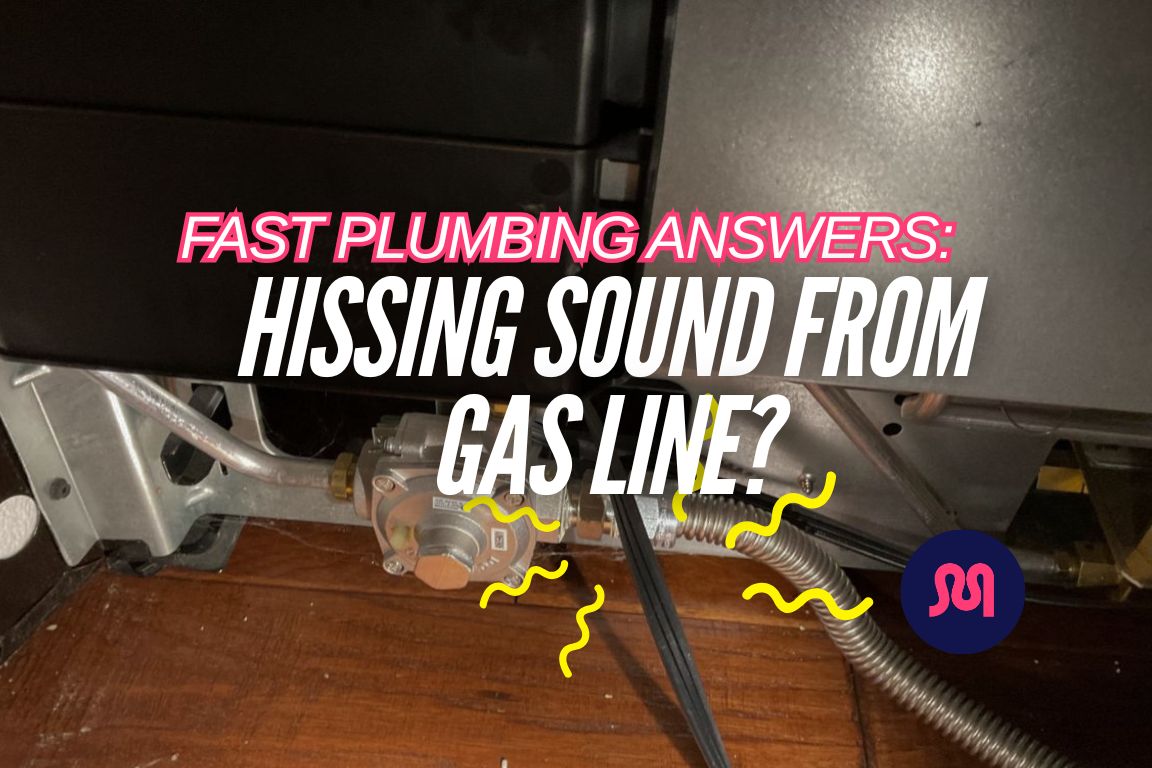


table of contents
table of contents
You’re standing near the kitchen, and you hear it- a faint, sharp hissing sound that grows louder as you get closer to the stove. By the time you reach the wall, it sounds like a snake hiding behind your cabinets. Suddenly, your home feels like a danger zone.
You need to know exactly what to do, who to call, and how serious the situation is- right now.
Don’t worry: we’ll answer all your questions and give you a clear path to safety in 3 minutes or less.
Gas leaks require the highest level of urgency- especially when they produce a hissing sound. The sound is a signal of a high-pressure breach that requires immediate action, no matter what time it is.
Suspect a gas leak in your Dallas-Fort Worth home? Call Mother 24/7 for emergency gas leak detection and repair.
{{gas-line-repair="/services/gas-line-repair"}}
This Is An Emergency: Do These 4 Things Right Now
There is no middle ground when you can hear gas escaping. Do not try to find the leak yourself. Do not try to tighten a valve or put tape over a pipe.
“Don’t be a hero,” our Master Plumber urges. “You heard the hiss- that’s a huge win. Your only job now is to get you and your family out of the house and then make two phone calls.”
Here’s what to do if you hear a hissing noise from your gas line:
- Evacuate. Stop only to open a window if you have time. Otherwise, grab the people you live with and get out of the house- at least a block away.
- Do not use electronics in or near the house. Don’t turn lights on or off. Do not use your garage door opener. Do not use your cell phone until you are safely away from the house.
- Call your gas company. In DFW, this is Atmos Energy. Their 24/7 emergency number is (866) 322-8667. Request an immediate shutoff of your gas service.
- Call a licensed plumber with gas leak location equipment. Look for a certified emergency plumber with commercial-grade equipment, not just a “soap bubble test” (more on this in a moment).
Now that you’re safe, let’s talk about what the hissing means, where it’s happening, and what you need to do next.
What the Hissing Sound From Your Gas Line Means
You’re used to hissing sounds meaning a small pinhole leak in water pipes. But the same sound from gas lines means a larger system failure.
Natural gas is kept under pressure so it can travel through your home to reach your stove, water heater, and furnace. When a pipe or a connection point breaks, that pressurized gas is forced out through the opening.
The louder the hiss, the larger the volume of gas entering your home. Unlike a slow smell that might drift in and out, a hissing sound means the gas is entering the room rapidly.
This is an emergency because natural gas is highly flammable. If the concentration in the air gets high enough, even a small spark from a light switch or a phone could be catastrophic.
Four Most Common Places Gas Leaks Occur
While a leak can happen anywhere in your lines, there are a few common spots where our technicians find failures most often:
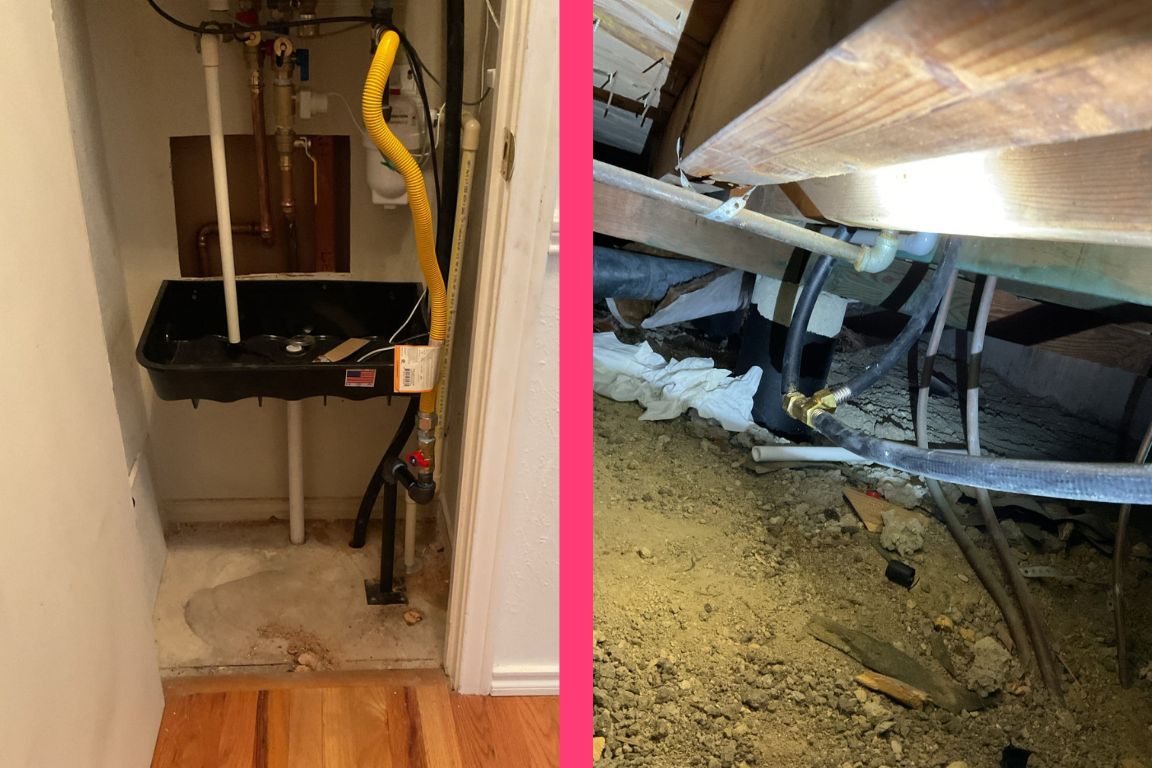
- Appliance Flex Lines: These are the flexible, corrugated tubes that connect your stove or dryer to the wall. If they are old or were kinked during installation, they can crack.
- Corroded Pipe Joints: In older DFW homes, the threaded joints on black iron pipes can corrode or loosen due to home settling.
- Gas Valves: The shut-off valve behind your appliance can fail internally, allowing gas to hiss out from the handle area.
- The Attic: Shifting soil in North Texas can put stress on the pipes in the bones of your house, leading to breaks in the main supply lines in the attic.
Suspect a gas leak outside your house? Learn what to look for (and what to do) in our 5-minute guide.
{{fast-plumbing-answers-gas-leak-outside-house="/blogs/fast-plumbing-answers-gas-leak-outside-house"}}
The Equipment Your Plumber Should Own
When the plumber arrives, they should not be guessing. You are paying for technical accuracy. A reputable service provider will arrive with high-level investigative tools:
- Calibrated Combustible Gas Indicators: These are electronic sensors that can detect gas molecules in the air at levels far below what a human can smell. They should have a current certification of accuracy.
- Manometers: These digital gauges measure pressure decay. By attaching this to your gas system, the plumber can see exactly how fast your system is losing pressure.
- Technical Leak Solutions: These are specialized liquids used for final visual confirmation once the electronic tools have narrowed down the location.
Why Soap Bubble Tests Aren't Good Enough Anymore
If a plumber shows up with nothing but a bottle of dish soap and a rag, call a different plumber. While the soap bubble test can confirm a leak once you already know exactly where it is, it is a terrible way to find a leak.
Relying on bubbles is an outdated practice that leads to unnecessary holes in your drywall and a higher bill for you. Mother uses the same investigative equipment the utility companies use because your safety is worth the investment in better technology.
“We have technology to find the precise location of a gas leak behind a wall or under a floor, down to parts per billion,” our Master Plumber explains. “The soap bubble test isn’t just inefficient, it’s lazy.”
Ask Your Plumber for 3 Things

Once the leak is located, the process is not over. Because your gas has been turned off by the utility company, there are legal steps that must be followed to get your service restored.
Your plumber should handle all the city permits required for the repair. After the fix is complete, the plumber must perform a standing pressure test to prove to the city inspector that the system is 100 percent tight.
Only then will you receive a green tag, which allows the gas company to turn your service back on. (Mother also acquires the green tag from Atmos for you.)
Ensure your plumber provides you with full documentation in writing and photos of the repair. You are dealing with enough stress; your plumber should handle the red tape for you.
Get the best solution for your gas line repair. Now isn’t the time to compare options. You need this to be the first and last time the line is compromised. Your plumber must provide you with the clearest path to long-term home safety- no haggling, no mark-ups.
Solve Your Noisy Gas Line ASAP
If you hear a hissing sound near your gas line at 2 AM, it can’t wait until morning. Leave the house, make the necessary phone calls, and let the experts handle the danger. (And don’t use the phone inside your home!)
A hiss is a warning that the infrastructure of your home has failed, but with the right investigative tools, it can be fixed quickly and safely. You will be back in your sanctuary with the stove running and the water heater hot before you know it.
Need help with a gas leak in Dallas-Fort Worth? Call Mother 24/7 to schedule emergency leak detection and repair anywhere in the Metroplex.
{{gas-line-repair="/services/gas-line-repair"}}