Fast Plumbing Answers: Electrolysis in Copper Water Pipes
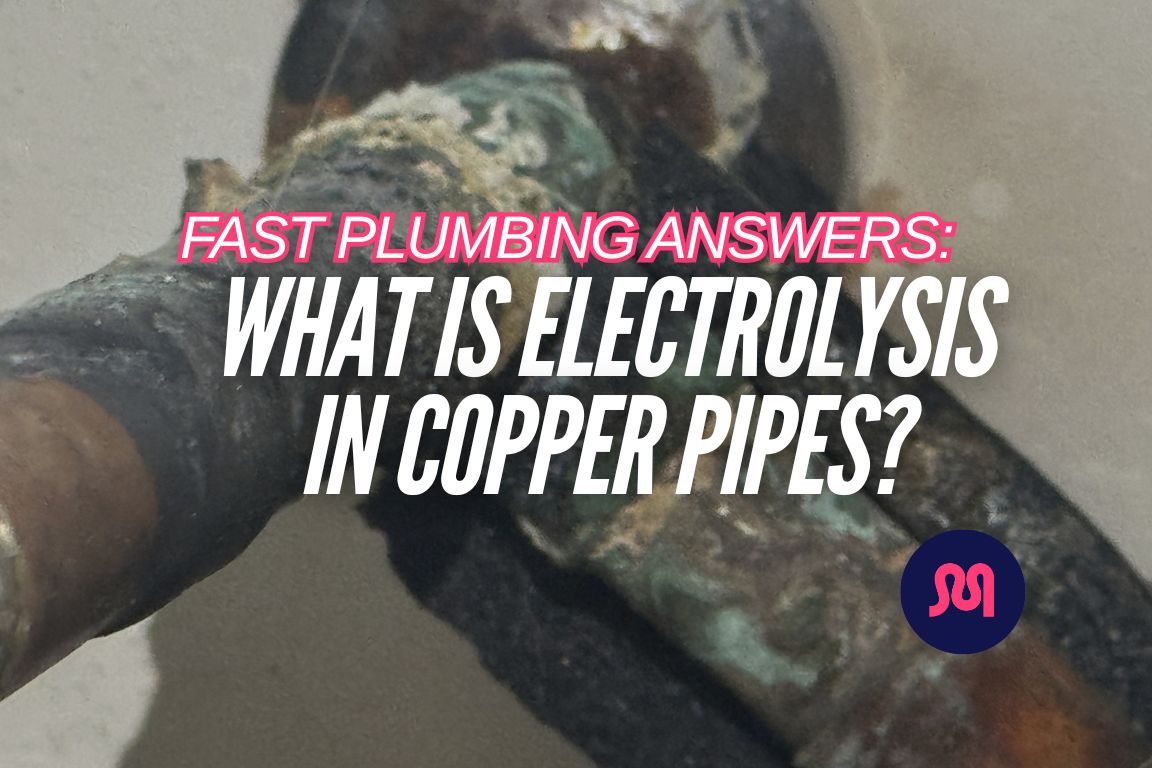


table of contents
table of contents
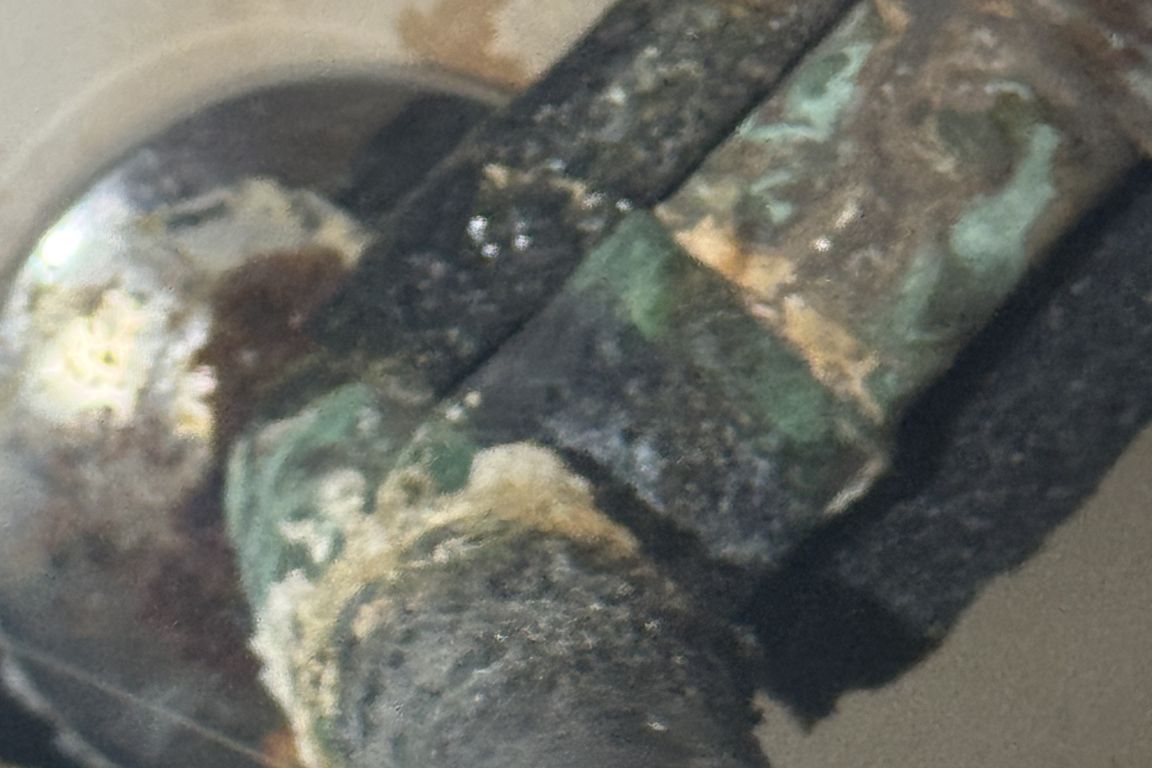
You’re standing in your utility room looking at a mysterious wet spot on the floor. When the flashlight hits the copper line, you see something that looks like it belongs on the bottom of a sunken ship: a crusty, green, fuzzy growth around a pipe joint.
You try to wipe it off with a rag, only to find that the metal underneath is pitted and leaking even faster. Your plumber looks at it and says you have a bad case of electrolysis. But what is it, and what do you do next? Is replacement the only option?
At Mother, we believe in a forensic first approach. We want you to understand the why behind your pipe failure so you can make a smart repair choice. This guide explains exactly what is happening to your copper pipes and why this chemical reaction is so common in our neck of the woods.
Dealing with copper water line damage in Dallas? Call Mother 24/7 for expert repairs.
{{water-line-break="/services/water-line-break"}}
What is Electrolysis in Water Lines?
Think of electrolysis like this: your copper pipe turned into a battery by accident. Electrolysis happens when two different types of metal are joined together in the presence of water. In a perfect world, your plumbing would be made of one single material from the city meter to your faucet. But in the real world, copper pipes often meet steel brackets or galvanized iron fittings.
When these two different metals touch, and water flows through them, a tiny electrical current is created. This is not enough electricity to turn on a lightbulb, but it is enough to move atoms. The electrical current pulls molecules away from the weaker metal and moves them toward the stronger metal.
When copper and steel battle, the copper loses. Electricity eats away at the copper pipe wall until the metal becomes as thin as a piece of paper. This process is called pitting corrosion, and it’s the reason your solid copper line suddenly looks like a piece of Swiss cheese.
How to Spot It in Your Home’s Copper Water Pipes
You don’t need a science degree to diagnose electrolysis- you don’t even need to be a plumber. The chemical reaction that causes it leaves behind very specific evidence:
- Blue-Green Crust: When copper corrodes due to electrolysis, it creates a byproduct called copper sulfate. It looks like a teal or green crust that grows around a joint. If you see this fuzz on your pipes, the metal underneath is actively being dissolved.
- Mismatched Metals: Look closely at where the leak is happening. Is there a silver-colored steel pipe screwed directly into a copper pipe? Is there a copper line resting directly on a steel foundation stake? If you see two different colors of metal touching, you found what’s causing the problem.
- Localized Pitting: If you wipe away the green crust and see tiny, jagged craters in the copper, that is pitting corrosion. Unlike a normal wear-and-tear leak, electrolysis creates random, circular holes anywhere the electrical current is most active.
- Ghost Leak: Sometimes you will see the green crust, but the pipe is not dripping yet. This is a ghost leak. The mineral buildup is actually acting like a temporary plug. The moment you touch it, that crust will fail and a flood begins.
Why Electrolysis Happens in DFW Homes
In the Dallas-Fort Worth Metroplex, we have a perfect storm of conditions that makes electrolysis common. If you live in a home built during the 1970s or 1980s in Plano, Richardson, or Irving, your home is at a higher risk.
Clay Soil: Our soil is famous for shifting, but it is also highly conductive. Our clay is rich in minerals and moisture. If a copper pipe under your slab foundation is pressed against a steel rebar stake or certain type of mineral-heavy soil, the ground itself can complete the electrical circuit. This causes slab leaks that are actually caused by the soil eating the pipe.
Inexperienced Handyman Work: During building booms, many houses were put up fast. Quick repairs made over the last 30 years involved mixing materials. A previous owner might have used a galvanized steel nipple to connect a new water heater to old copper lines. That simple, five-dollar part created a chemical time bomb that is causing the green crust you see today.
Stray Currents: In many older DFW homes, the electrical system is grounded to the copper water pipes. While this is a standard safety practice, if there is a small leak in your home’s electrical system, that stray current travels through your water lines. This speeds up the electrolysis process, turning a 50-year pipe into a 20-year pipe.
Do Not Clean Electrolysis Damage: It’s Dangerous
When a homeowner sees that green crust, the natural instinct is to grab a wire brush and some cleaner to shine it up. This is the most dangerous thing you can do. The green crust is not dirt sitting on top of the pipe; it is the pipe itself.
The copper atoms have left the wall of the pipe and turned into that crust. When you scrub away the green fuzz, you are scrubbing away the only thing keeping the water inside.
You Must Replace Copper Pipes With Electrolysis Damag

Electrolysis leads to holes in your copper pipes, every time. The chemical reaction causes the metal to become porous. Even if the pipe looks okay after you clean it, the molecular structure has been changed. It is no longer a solid, watertight tube- it is a brittle, thinned-out shell.
Attempting to patch a pipe suffering from electrolysis is like trying to put a bandage on a wet cracker. The material around the patch is too weak to hold the water pressure.
Here's How to Fix It For Good
Here’s how the plumbing experts at Mother handle replacement of copper water lines with electrolysis damage:
- Dielectric Insulation: We must use a special dielectric union or a plastic spacer to ensure two different metals never touch again. If the metals still touch, the battery is still on, and the pipe will leak again in six months.
- The PEX-A Pivot: If we find electrolysis in one part of your home, it is usually happening in others. This is why we often recommend transitioning failing copper sections to PEX-A. PEX is a high-tech polymer. It is physically impossible for plastic to suffer from electrolysis. It does not conduct electricity and does not care about DFW’s soil chemistry.
Solve the Copper Pipe Crisis: Call Mother
If you are looking at green, crusty copper pipes, do not wait for a flood to happen. That teal growth is a warning that your plumbing is losing a war with electrolysis.
You cannot clean it, you cannot ignore it, and you should not just patch it. You need a professional look at why the reaction is happening. Whether it is a mismatched fitting or a stray electrical ground, we find the source of the chemical reaction and shut it down.
At Mother, we don’t just fix your pipes. We protect the sanctuary of your home. We use modern materials like PEX-A and professional-grade insulators to ensure your plumbing stays silent, solid, and leak-free for years to come.
Notice electrolysis on your copper lines? Call Mother 24/7 for a fixed-rate diagnostic and a permanent solution to electrolysis.
{{water-line-break="/services/water-line-break"}}