Fast Plumbing Answers: How To Find a Water Leak Under Slab



table of contents
table of contents
Your water bill just spiked by $90- it’s time to search the house for a leak. You check the toilets, the walls, and even the irrigation in the backyard, but everything is bone dry. Now a plumber is telling you the leak is underneath your house, and the only way to find it is to start digging holes in your floor.
This is a nightmare scenario for any homeowner. You need to find a water leak under your slab without turning your living room into a construction site.
Don’t worry: we’ll show you a better way to find that leak in 4 minutes or less.
At Mother, we invest in modern leak detection technology that locates the issue with no digging and no property damage- even under your concrete slab. Let’s guide you through the non-invasive equipment reputable plumbers use to detect even the smallest pinhole leak near your foundation.
Suspect a slab leak in Dallas-Fort Worth? Call Mother 24/7 for non-invasive leak location service.
{{slab-leak-repair="/services/slab-leak-repair"}}
Yes, You Can Find a Slab Leak Without Digging

This is the question you're really asking. There’s no need to cut open your floor, dig trenches in the yard or jackhammer into the concrete to find a slab leak.
In the past, plumbers had to rely on "best guesses" based on where the floor felt the warmest or where a wall was cracking. This led to unnecessary property damage and high labor costs for holes that didn't even lead to a leak. Plumbers who still rely on these methods are literally stuck in the past.
Today, modern technology allows our technicians to find a water leak under concrete with pinpoint accuracy.
{{fast-plumbing-answers-warning-signs-of-a-slab-leak="/blogs/fast-plumbing-answers-warning-signs-of-a-slab-leak"}}
Beware Plumbers Who Recommend Exploratory Digging
If a plumber suggests digging a trench or cutting your slab just to "see what's going on”, it’s a clear signal they don’t have the modern equipment or expertise necessary to find your leak.
Exploratory digging is an outdated practice that leads to a massive increase in your final bill. It’s much easier for them to charge you for five hours of digging than it is for them to invest in the training and tools required for high-tech detection. When a plumber flies blind, you are the one who pays for the property damage.
There are multiple non-invasive slab leak location tools available to find the issue with pinpoint accuracy before a single piece of tile is ever removed.
Make sure you’re getting a fair quote with our updated Dallas Slab Leak Repair Cost Guide.
{{dallas-slab-leak-repair-cost-updated-guide="/blogs/dallas-slab-leak-repair-cost-updated-guide"}}
Find a Water Leak Under The Slab Without Damage
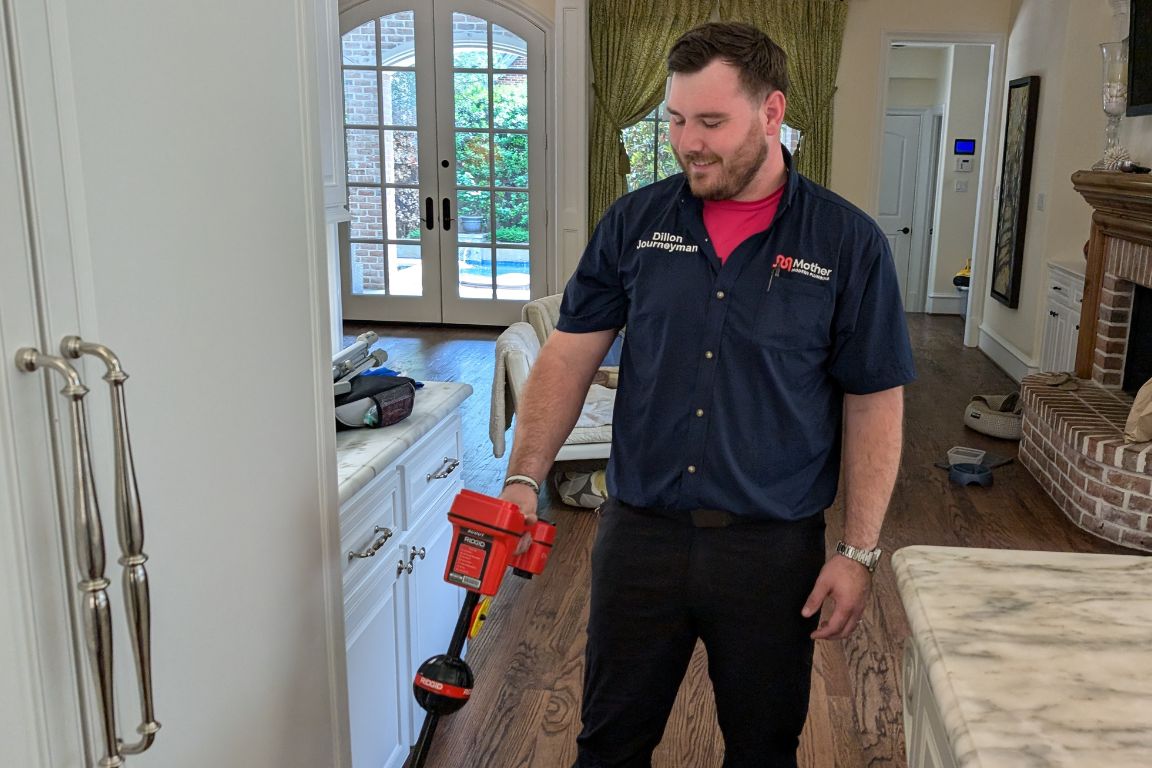
To properly detect water leak under slab, a technician must use a combination of tools that "see" through solid concrete and dense soil- especially our North Texas clay. We use these specialized devices to find the exact coordinates of the failure:
- Acoustic Listening Devices
- Electronic Leak Detectors
- Infrared Thermal Imaging
Got a hidden water leak somewhere else in the yard? Use our guide to find the best locator equipment for the job.
{{4-best-tools-to-locate-underground-water-leaks-fast="/blogs/4-best-tools-to-locate-underground-water-leaks-fast"}}
Acoustic Listening Devices: Hear What You Can’t See
This is the most effective tool for slab-specific leaks. When water escapes a pressurized pipe under a concrete slab, it creates a specific frequency that sounds like a “whoosh”. We use highly sensitive microphones and amplifiers to listen through the floor and pick up that sound.
By mapping the decibel levels across your home, we map the exact spot where the sound is loudest. This allows us to find a water leak under concrete slab without even moving your furniture.
Electronic Leak Detectors: Tracking Wet Spots
Electronic detectors are used to find wet areas underneath the house that haven't reached the surface yet. These tools sense changes in the conductivity of the soil and the materials around the pipe.
Since wet clay conducts electricity differently than dry clay, we easily track the moisture back to the source of the break.
Infrared Thermal Imaging: Perfect for Hot Water Leaks
If the leak is on your hot water line, thermal imaging is a game changer. We use infrared cameras to see the heat signature radiating through your floor.
A hot water leak increases the soil temperature under the concrete that is invisible to the naked eye but clear as day on a thermal screen. This is one of the fastest ways to find a water leak under slab when the hot side is failing.
{{fast-plumbing-answers-warm-spot-on-floor="/blogs/fast-plumbing-answers-warm-spot-on-floor"}}
Water Leak Detection Under the Slab: What to Expect

When you hire a reputable plumber with slab leak location skills, you can expect a systematic process. We don't just walk in and start listening. We follow a strict process to ensure accuracy:
- Pressure Audit: We perform a hydrostatic test to confirm the plumbing system is actually losing pressure.
- Manifold Isolation: We isolate different sections of your plumbing to determine if the leak is in the front, back, or middle of the house.
- Location Equipment Use: Once the general area is known, we use acoustic and electronic tools to zero in on the specific pipe.
- Marking and Verification: We mark the exact spot on the floor and provide a report of our findings so you can make an informed decision on the repair.
If there’s a leak, you’ve found it without ruining a square inch of your property- all while gaining the info you need to make the best decision for your slab repairs.
How Slab Leak Location Differs From Other Leak Detection Services
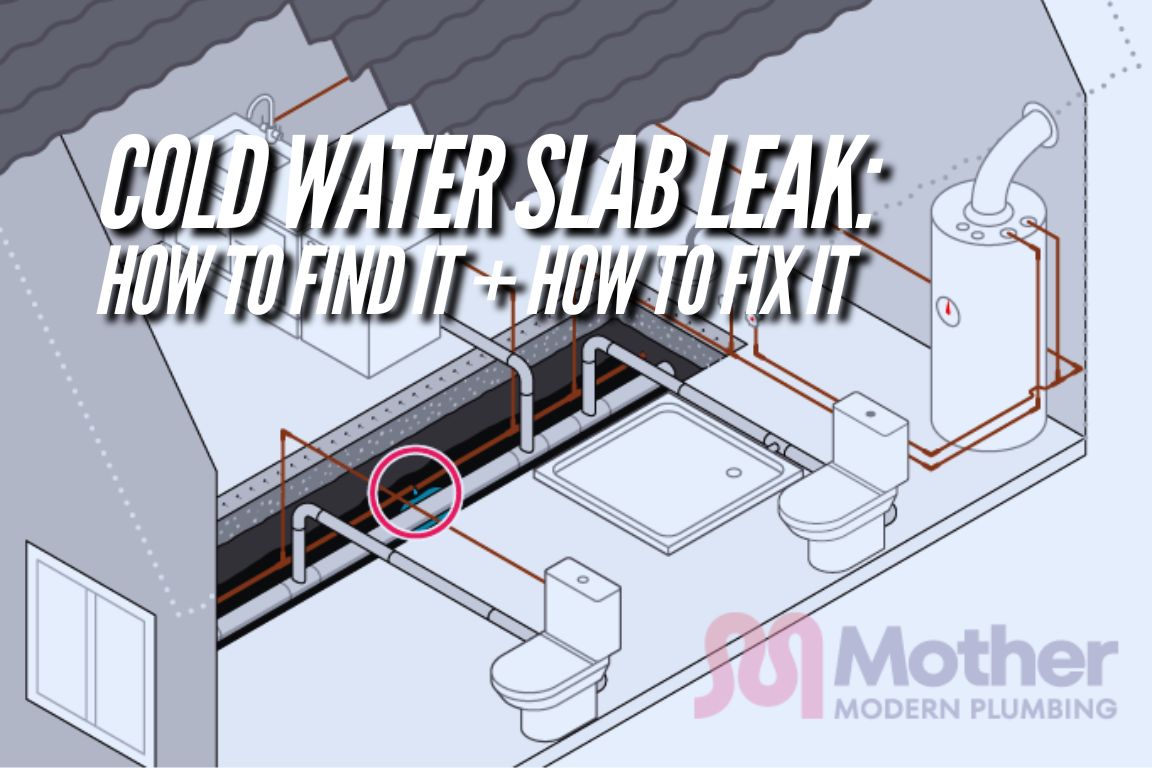
Finding a leak under your home's slab foundation is different from finding a leak in a wall or a yard. In a wall, you can usually see a water stain. In a yard, the grass gets extra green.
But a slab leak is buried under four to six inches of concrete and several feet of dirt. The concrete acts as a megaphone for some sounds and a silencer for others.
This service requires a much higher level of precision because the cost of being off by two feet could mean an extra day of tunneling or a much larger hole in your foundation.
Hire a Leak Detection Expert to Assess Your Slab
There’s no reason to settle for exploratory digging- the tools exist to avoid it. Modern slab leak detection prioritizes the integrity of your home. By using acoustic, electronic, and thermal tools, we can find the problem with precision.
This allows you to choose the best repair option, whether that is a precision spot repair or a complete pipe reroute.
If your water bill is high for no reason and you suspect a hidden problem, start with a professional location service. It is the only way to turn a nightmare scenario into a manageable, fixed-price solution.
Need slab leak detection service in the DFW Metroplex? Call Mother 24/7 for no-dig solutions.
{{slab-leak-repair="/services/slab-leak-repair"}}