Sewage Coming Up In Yard? What to Do Right Now
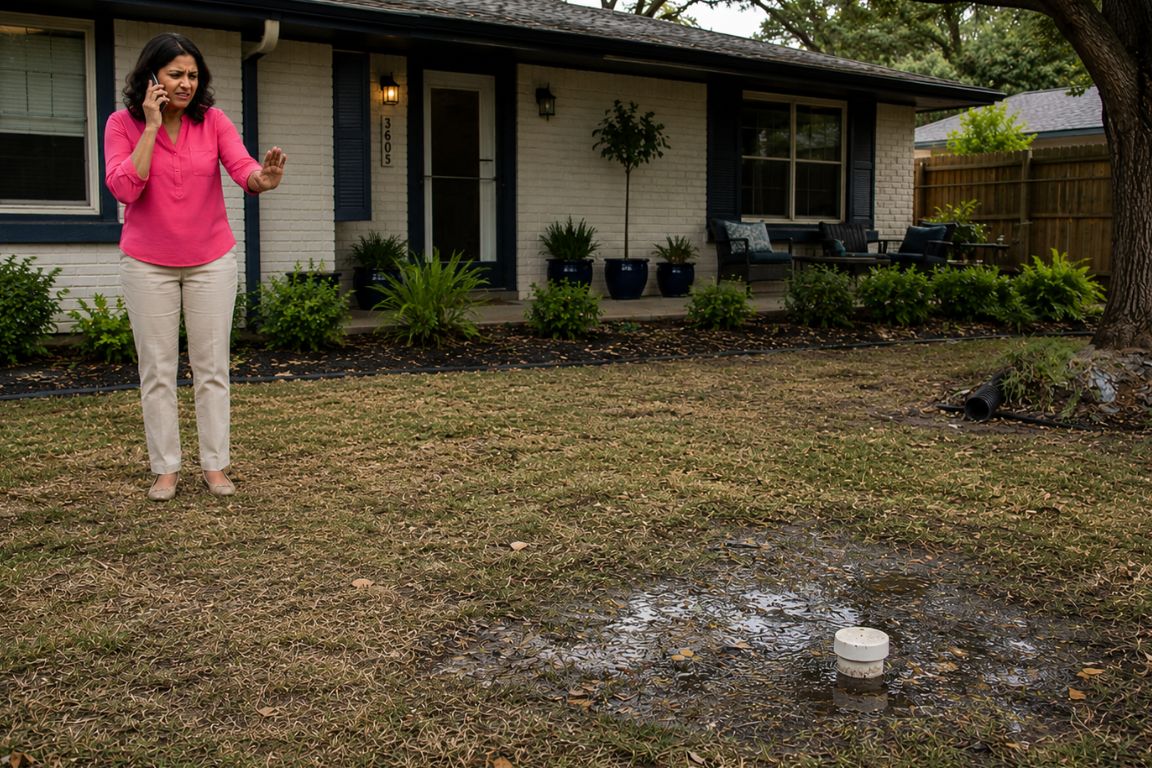


table of contents
table of contents
The first thing to do if there’s sewage coming up in your yard is get everyone away from the area. Don’t touch, clean up or try to contain the wastewater. And stop using water outside and inside the house- your taps all lead to the same problem spot and only make it worse.
Most backyard sewage overflows occur when underground sewer lines are infiltrated by aggressive tree roots or crushed by shifting clay soil. Once the sewer pipe fails, wastewater leaving your home hits a dead end and has nowhere to go but straight up into your lawn.
Our Master Plumbers outline what to do in the first 10 minutes after you discover a sewage overflow in your yard. We’ll tell you how to safely diagnose the problem, why using water is a no-go, and the phone calls you need to make.
{{sewer-line-repair-and-replacement="/services/sewer-line-repair-and-replacement"}}
Before You Start: Is It Actually Sewage?
Use your nose and eyes (from a distance) to figure out if there’s wastewater in the yard without approaching the area:
- Smell: A broken sewer line emits the smell of rotten eggs and waste. A fresh water leak (from your sprinklers or water supply line) smells like damp soil.
- Water color: Murky, grayish-black puddles of water indicate sewage. You may also see white pieces of toilet paper or wipes. Clear water usually isn’t wastewater.
- Lush grass: A strip of lush green grass where the water’s coming up is a clear indicator of sewage- especially if surrounding grass or plants are brown or parched.
Not Sure? Use the Simple Food Coloring Test
Empty a small bottle of red or blue food coloring into your home's toilet and flush it once. Wait 30 minutes. If the yard puddle turns that color, there’s definitely a sewage emergency coming from your property.
1. Keep Family and Pets Out of the Yard Entirely
Don’t let anybody into your yard unless it’s a city inspector, a licensed plumber or a wastewater cleanup and remediation professional. Keep your kids, pets and housemates out.
Sewage is labeled as Category 3 Black Water. That’s the fancy way of saying it’s full of bacteria, viruses and chemicals. There’s a reason professional remediation teams need two certifications to handle and dispose of it- stay away.
Sewage Creates Physical Injury Risks, Not Just Contamination
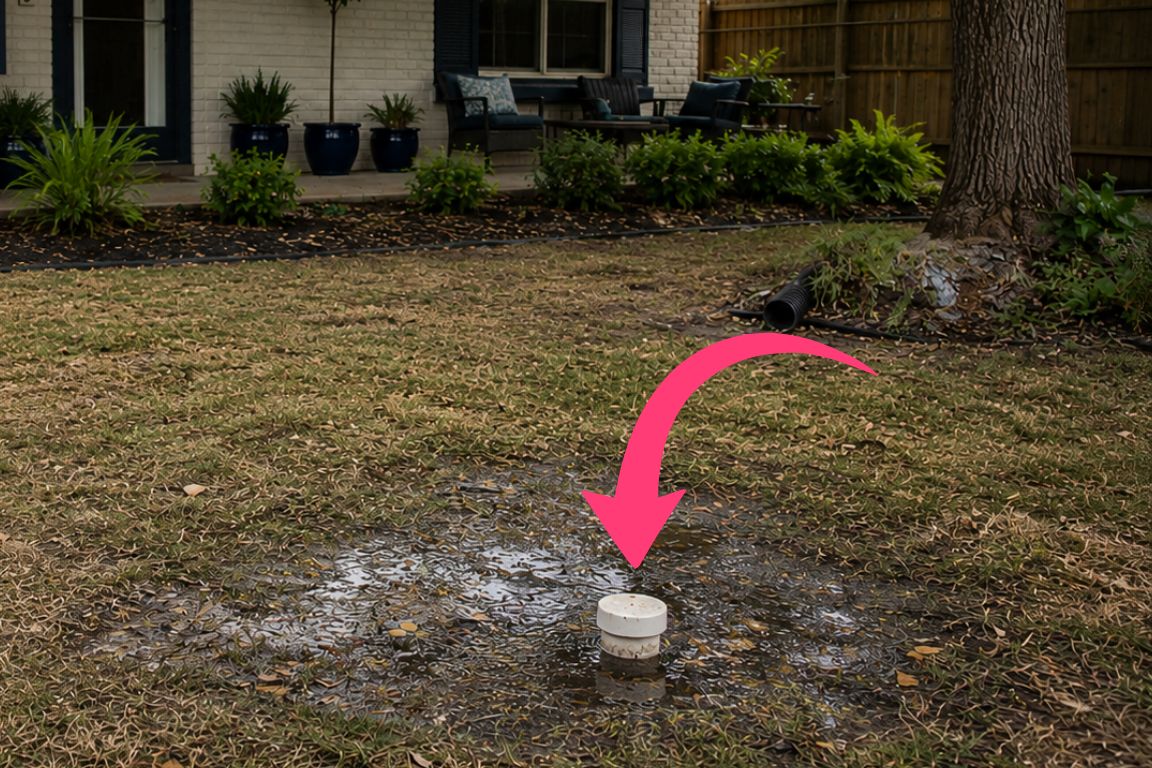
Many sewage backups in residential backyards come from the exterior sewer cleanout. Wastewater gushing out of your cleanout isn’t just gross- it’s an injury risk.
“Soil waterlogged by sewage creates dangerous sinkholes under your grass," warns our Responsible Master Plumber Steven Smith (RMP-43457).
"A curious kid or an older relative walking near an overflowing cleanout isn't just a contamination risk- it's a severe fall hazard if the ground caves in. Keep everyone away.”
If you notice your lawn sinking along with a sewer smell, stay away.
2. Don’t Try to Clear or Contain the Sewage Yourself
Our Master Plumbers urge you to stay away from the wastewater in your yard. Being in an open air environment doesn’t make the situation less unhealthy and dangerous.
“I don’t care if you put on two pairs of gloves and a hazmat suit,” Steven continues. “Please don’t try to clean sewage out of your backyard yourself.”
Here’s what you risk coming into contact with:
- Bacteria: E. coli and salmonella are rampant in wastewater.
- Viruses: You can catch Hepatitis A from sewage contact.
- Parasites: Parasitic worms, cryptosporidium, and giardia are all present.
- Airborne particles: You’re exposed to eye and lung irritants.
- Germs: Any small open wound or scratch is an open invitation.
3. Stop Using Water and Drains Inside Your House

Immediately stop using water on your property if there’s sewage backing up outside. This includes inside your house.
“People know to not run the sprinklers if there’s a sewage leak outside,” Steven says. “It might not make sense to you, but all water usage on your property needs to stop right away.”
Tell everyone who lives with you that toilets are off-limits. No washing hands, no showers or baths, no loads of laundry or cleaning the dishes.
If you or your kids are tempted to use the water, shut off the water supply to your house.
If sewage is also backing up into your home, switch over to our emergency guide.
{{sewage-backing-up-into-house-what-to-do-right-now="/blogs/sewage-backing-up-into-house-what-to-do-right-now"}}
Why This Matters (Even Though the Overflow Is Outside)
Your home’s drainage pipes are one long, gravity-fed system. That means that smelly puddle in the grass actually has a lot to do with your farmhouse sink.
If there’s wastewater bubbling up in your yard, there’s a problem between your home’s water-using appliances and fixtures and the city sewer main (or your septic tank).
“Every drop of water you send down an indoor drain is going directly into that sewage coming up in your yard,” Steven warns. “One washing machine cycle pumps up to 40 gallons of raw sewage straight into your landscaping.”
Short version: Your drainage plumbing is a dead end street until a licensed plumber clears the blockage and/or repairs the broken pipe. Every time you turn on the water, you’re actively flooding your own yard.
4. Call a Licensed Plumber and the City
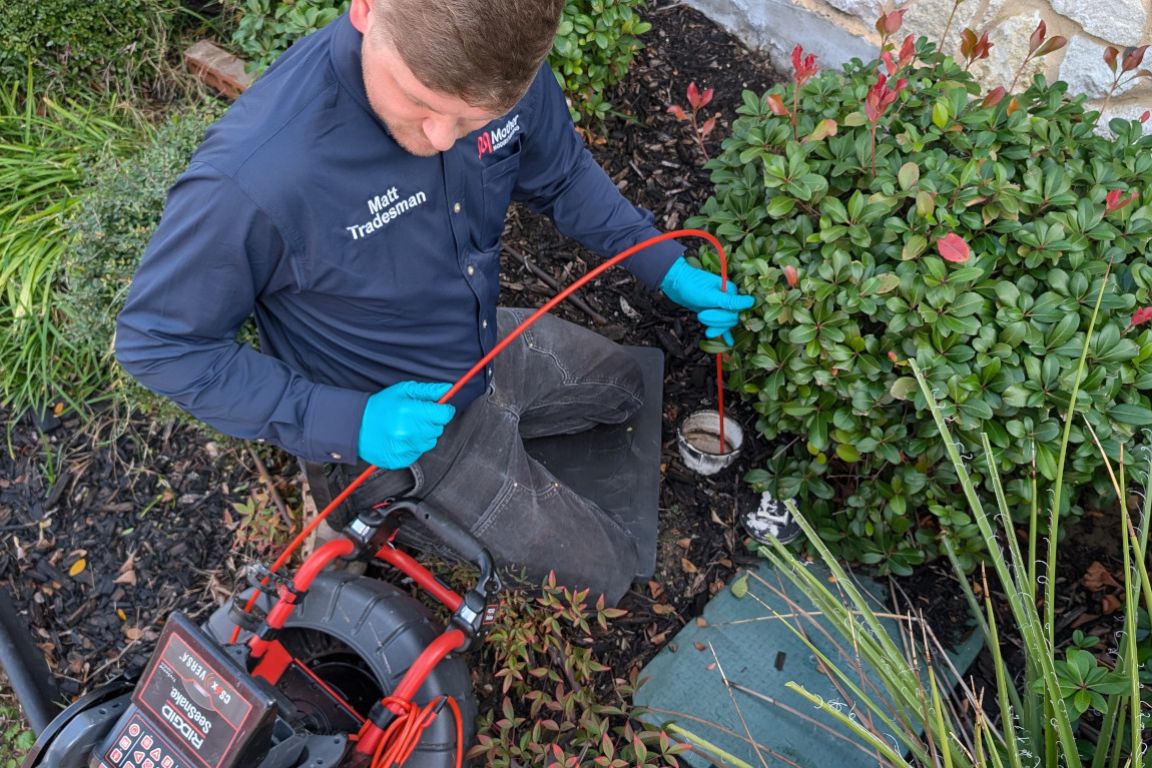
The order in which you call them depends on the location of your outdoor sewage backup.
“If the overflow’s coming from your sewer system, call a plumber first and the city later,” Steven advises. “But if the issue might be on the city side or in your neighbor’s yard, the right first call is to the city.”
So how do you figure out which call to make sure?
When to Call a Plumber First
Call a licensed plumber first if either of these scenarios apply to you:
- Sewage is overflowing from your exterior cleanout (the white PVC pipe near your foundation). This means the blockage is downstream in your lateral line.
- There are no signs the backup is coming from the city street or a neighbor's yard.
Be sure the plumbing service you call is licensed, insured, and specializes in residential sewer services. Review your sewer quote to ensure specific repair methods and materials are listed.
When to Call the City First
Follow these two steps to determine if the wastewater backup is on your neighbor’s property or the city side of your property line. If it is, call the city first to report the issue- they’re likely on the hook for the bill.
If there’s sewage coming out of your exterior cleanout, walk to your property line where it meets the city side. If manhole covers are leaking water or your neighbors have similar issues, the problem is on the city side- not yours.
If there’s no sewage overflow at your cleanout and it’s not a city problem, check any uphill neighbors. If there’s pooling water near your shared property line coming downhill, the issue is likely with their sewer lateral.
5. Four Services Your Plumber Must Provide In This Emergency
Home sewer repair and cleaning service options are a long list. And in an urgent sewage situation like this, simple is always better.
Our Master Plumbers highlighted the four sewer services your licensed plumber must provide if there’s wastewater in the yard:
- Sewer camera inspection. A preliminary sewer camera inspection reveals whether your outdoor sewage backup requires cleaning, sewer pipe repairs, or a combination of both.
- Sewer line locating. Non-invasive radio frequency locators (sondes) allow us to map your underground sewer main without digging any holes in the yard.
- Sewer line cleaning. If the backup is caused by a deep blockage in the main sewer line, hydro jetting and chain knocking are the best options to clear the impediment.
- Sewer line repair. Wastewater seeping out of pinhole leaks from root intrusions, joint separations or sewer bellies? You need targeted pipe repair from a sewer specialist.
Wastewater Cleanup is a Separate Phone Call
A licensed plumber identifies the cause of your backyard sewage overflow, maps the best possible access path, and fixes the issue with precision sewer cleaning or repairs.
You’ll need to call a professional biohazard remediation company to clean and remove the wastewater from your property. Choose a service that’s licensed in water damage restoration by the IICRC.
“Pick a provider from the IICRC list,” Steven advises. “They’re trained, tested and certified to get sewage off your property, plus prevent health hazards associated with wastewater.”
Need Emergency Sewer Line Service in DFW? Call Us
A yard sewage overflow is stressful. The experience you have with a licensed plumber shouldn’t be.
Expect a fixed-rate quote for sewer inspection, access and repairs. This number should be in writing and presented before any work is done. Choose a contractor who warranties their work- Mother offers a 6-year warranty on sewer repairs and a 120-day no clogs guarantee on sewer line cleaning work.
If you’re dealing with a sewer plumbing emergency in Dallas, we’re here to help. Call us 24/7 to schedule same day service with a licensed sewer specialist.
{{sewer-line-repair-and-replacement="/services/sewer-line-repair-and-replacement"}}