Fast Plumbing Answers: Is There a Water Leak In My Wall?
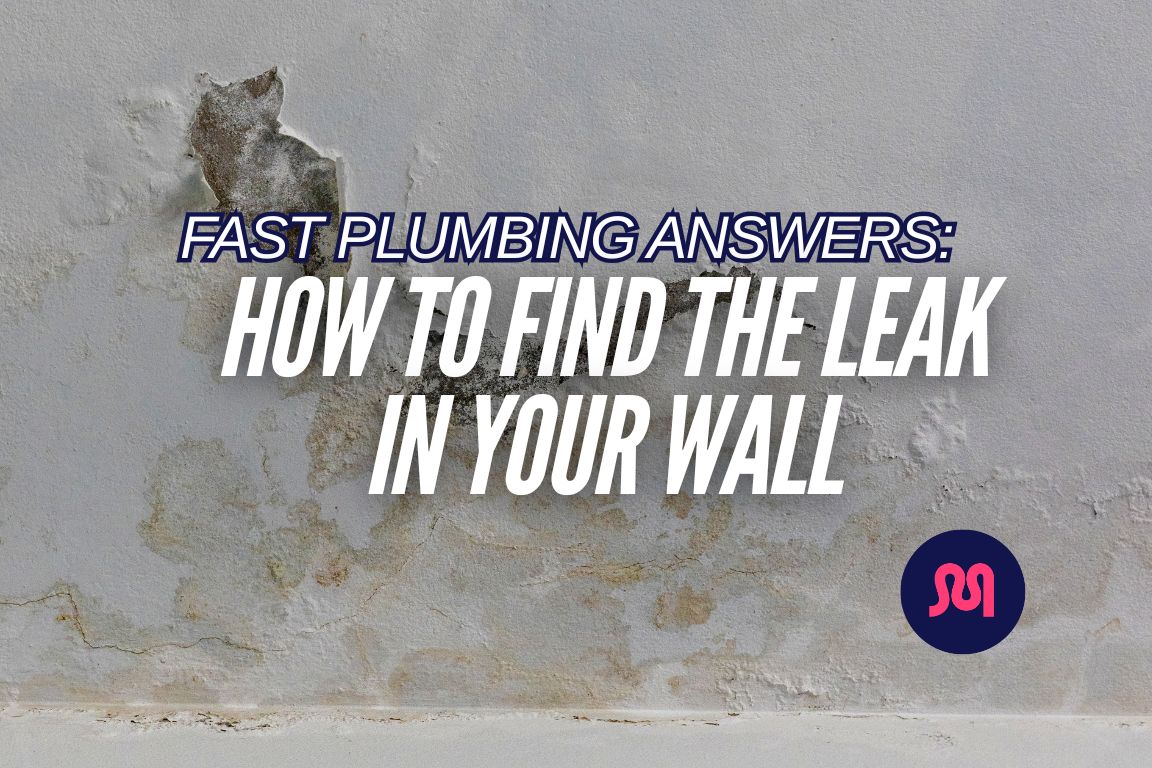


table of contents
table of contents
That patch of drywall in your bathroom didn't look like that yesterday. Maybe it’s a yellow stain on the wall that seems to be expanding, or maybe there is a section of bubbling paint that feels soft to the touch.
You already know something is wrong. You aren't looking for a basic list of symptoms: you are looking for a definitive answer. You need to know if that wet spot on the wall is a simple plumbing fix, a major pipe burst, or a roof leak that doesn't require a plumber.
Don’t worry: we’ll answer all your questions in 3 minutes or less.
In this article, Mother’s Master Plumbers go beyond a generic list of "look for water," but we are going to dive deeper. We’ll help you tell the symptoms of an in-home leak apart from other causes before you spend money on a plumber.
Dealing with an in-home water leak? Call Mother 24/7 for fast, accurate location services and read our burst pipe action guide.
{{leak-detection="/services/leak-detection"}}
Fast Answer: The 3 Telltale Visual Signs of a Wall Leak

As a material, drywall is remarkably honest. It’s a combination of gypsum and paper that acts like a sponge. When water is introduced to the inside of the wall ( between the studs), the drywall will wick that moisture through its entire thickness.
By the time you see a symptom on the exterior, the interior of the wall has often been saturated for days or even weeks. Here are the three surefire symptoms of a plumbing leak behind your drywall.
A Yellow or White Stain on the Wall
The most common early warning sign. These stains are caused by minerals in the water and the tannins in the drywall paper being pulled to the surface as the moisture evaporates.
If you have shower or wall tile (like a backsplash), this stain appears like chalky white residue (like the photo above).
If the stain has a noticeable ring around it, it often indicates an intermittent leak, such as a drain line that only leaks when someone is showering. If the stain is consistent and growing, you are likely dealing with a pressurized water line.
Bubbling Paint (And The Paint’s Not New)
Bubbling paint from a water leak happens because the water has reached the interface between the drywall and the paint film. Since most modern interior paints are latex-based, they act like a plastic skin. The water builds up behind this skin, creating a blister.
Here’s the test: If you pop one of these bubbles and water comes out, you have an active, pressurized leak. If the bubble is dry but the drywall underneath is crumbly, you have a slow, chronic leak that is slowly rotting the infrastructure.
A Cool, Wet Spot on the Wall
A wet spot on the wall that feels cool to the touch is a sign of immediate saturation. In the Dallas-Fort Worth area, our shifting soil often puts stress on the vertical riser pipes inside your walls. This stress creates pinhole leaks that spray a fine mist, eventually soaking large sections of insulation and drywall.
{{fast-plumbing-answers-damp-crack-in-your-wall="/blogs/fast-plumbing-answers-damp-crack-in-your-wall"}}
The Real Question: Is It a Plumbing Leak or a Roof Leak?

Other plumbing articles stop at the symptoms- but that doesn’t truly answer your question. Sure, there’s moisture behind the wall… but where is the water coming from?
Is it behind your wall, or dripping down between the studs from the roof?
This is the differentiator that every homeowner needs to know. When you see water damage on a wall, your first instinct is to call a plumber, but it might actually be a roofing issue.
Here’s how to tell the difference between a plumbing leak and a roof leak in 3 steps:
Step 1: Check the Forecast
First, look at the weather. A roof leak is seasonal and reactive. If the yellow stains only appear or get darker during a North Texas thunderstorm, the culprit is likely a failed shingle, a rusted flashing, or a clogged gutter. However, if the wet spot on the wall remains damp during a week of 100-degree sunshine, you are dealing with a plumbing leak. Plumbing leaks are relentless because your water lines are under constant pressure.
Step 2: Top, Center or Bottom?
Second, consider the location. Roof leaks almost always start at the top of the wall or on the ceiling. If you see a stain in the middle of a wall, or near the baseboards, it is almost certainly a pipe. Water follows the path of least resistance, often running down a vertical stud. If the leak is near a "wet wall" (a wall that contains pipes for a bathroom or kitchen), the odds shift heavily toward a plumbing failure.
Step 3: Check the Water Meter
Finally, check your water meter. If you turn off every faucet in the house and your water meter is still spinning, you have a plumbing leak. A roof leak will never move your water meter. This simple check can save you hundreds of dollars in unnecessary service calls.
Still Can’t Tell? Use Your Nose and Ears
If the visual signs are too subtle to decipher, your other senses will pick up the slack.
A water leak behind drywall often announces itself through sound before it creates a visible stain.
A pressurized pipe leak typically creates a "hissing" or "rushing" sound. It sounds like a faucet is left on slightly somewhere in the distance. This happens because the water is being forced through a tiny hole or a cracked joint at 60 to 80 PSI. A leaking drain line will create a "dripping" or "clunking" sound that only occurs when water is being used.
{{fast-plumbing-answers-i-hear-water-running-in-my-walls="/blogs/fast-plumbing-answers-i-hear-water-running-in-my-walls"}}
The smell is your final clue. Because the space inside your walls is dark and poorly ventilated, moisture leads to mold growth very quickly. If you notice a musty, "old basement" smell in a specific room, it is often a sign that water is trapped behind the drywall.
Mold can begin to grow in as little as 24 to 48 hours after a pipe breach. If you smell it, you must find it, as mold poses a significant risk to your family's health and the structural integrity of your home.
How Our Plumbers Find a Water Leak Behind Drywall
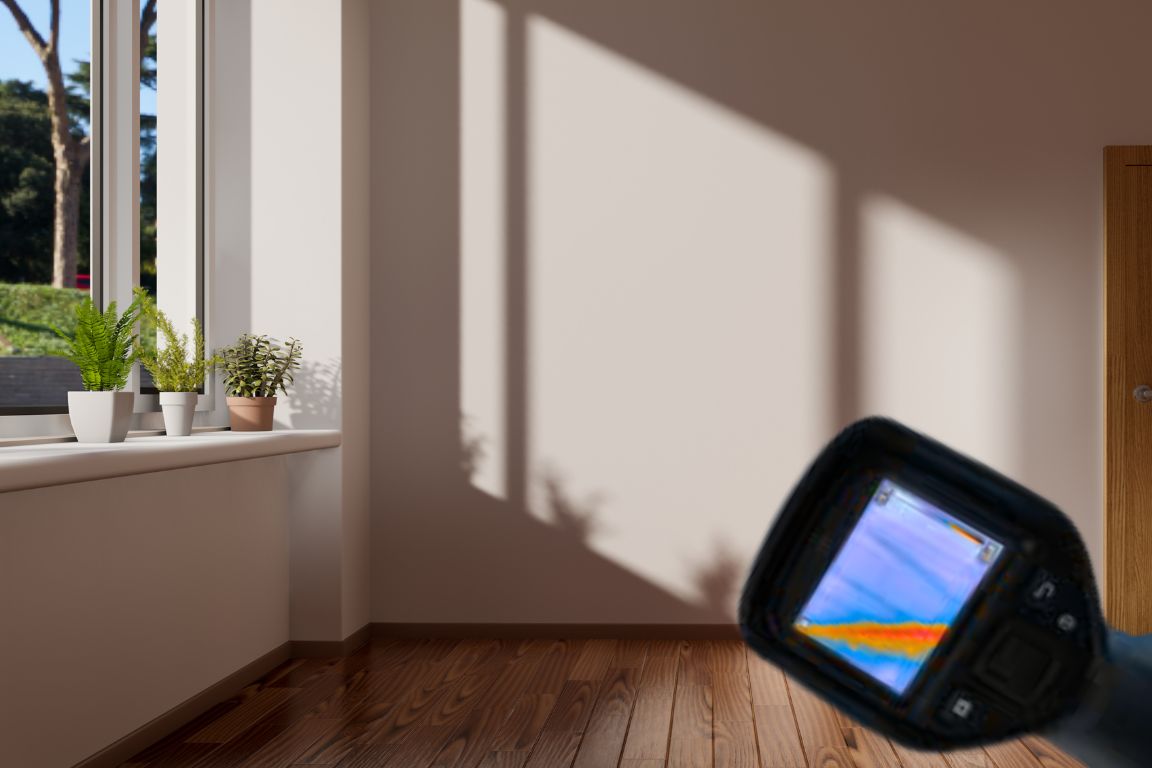
In the past, the only way to find a wall leak was to start cutting holes in the drywall until the pipe was found. This "exploratory" method is messy, expensive, and unnecessary.
At Mother, we use a tech-driven approach to locate the failure without destroying a single square inch of your home. (That leak’s already causing enough damage.)
We rely on two non-invasive tools to do it:
1. Infrared Thermal Imaging
Water changes the temperature of the materials it touches. A wet patch of drywall will actually be several degrees cooler than the dry areas around it.
Using an infrared camera, we “look through” the surface of the wall. The leak will appear on our screen as a dark blooming shape. This allows us to track the water back to the exact point where it is entering the wall, giving us a map of the damage before we ever pick up a saw.
2. Acoustic Listening Devices
As we mentioned, pressurized leaks create a high-frequency sound. While your ear might only hear a faint hiss, our acoustic microphones can amplify and isolate that sound.
By placing these sensors against the wall, we triangulate the exact coordinates where the sound is the loudest.
This is particularly effective for pinhole leaks in copper pipes, which can be incredibly difficult to find with the naked eye even if the wall were open. By combining thermal and acoustic data, we can identify the leak with surgical precision.
{{fast-plumbing-answers-electrolysis-in-copper-water-pipes="/blogs/fast-plumbing-answers-electrolysis-in-copper-water-pipes"}}
The Verdict: Is There a Water Leak in Your Wall?
If you see bubbling paint that’s moist when you pop it, a persistent yellow stain on the wall, or a wet spot on the wall that doesn't go away when the sun comes out, you have your answer. You are dealing with an active failure in your home's freshwater plumbing system.
Ignoring these signs only leads to more expensive problems: rotted studs, ruined flooring, and widespread mold. The smart decision is to catch the leak while it is still a small repair.
Once the leak is found using thermal or acoustic tools, the actual plumbing fix is often the easiest part of the job. The real value is in the diagnostic precision that prevents you from having to repaint and re-texture your entire home.
At Mother, we treat your home like our own. We don't do "exploratory" damage. We use non-invasive location equipment to find the leak behind your drywall, so you can get back to living in a dry, safe sanctuary.
Suspect a hidden leak behind your walls? Call Mother 24/7 for non-invasive leak detection in the DFW Metroplex.
{{leak-detection="/services/leak-detection"}}