Fast Plumbing Answers: How to Unclog a Shower Drain


table of contents
table of contents
You're standing in the shower and notice water pooling around your ankles. A half-inch of soapy water sits at your feet, draining slower than it should. You've got a clog - and you want to fix it yourself before calling a plumber.
Don't worry: we'll answer all your questions in 4 minutes or less.
You can DIY most shower drain clogs. Hair and soap scum sitting just below the drain cover come out easily with basic tools. But some clogs sit too deep to reach, and attempting to clear them yourself wastes time and can make the problem worse.
Let’s cover the steps to try at home- and why you should never use Drano or baking soda and vinegar. We’ll show you the signs of a deeper sewer blockage that requires a plumber’s help, and when you can clear the clog yourself.
Shower drain clogged in Dallas? Call Mother 24/7 for safe, effective drain cleaning without harsh chemicals.
{{drain-cleaning="/services/drain-cleaning"}}
Before You Start: What's Clogging Your Shower Drain?

Diagnosing the cause of your shower clog helps you choose the right removal method. Clearing a hair clog at the drain opening requires different tools than breaking up soap scum buildup deeper in the pipe - and both are different from dealing with a sewer line blockage that's beyond DIY.
Most shower clogs sit within the first few feet of your drain line. They're caused by hair, soap, and debris that accumulate over weeks or months. These are the clogs you can usually clear yourself. Deeper clogs - caused by mineral scale, tree roots, or sewer line issues - require professional equipment.
{{fast-plumbing-answers-why-is-my-tub-draining-slowly="/blogs/fast-plumbing-answers-why-is-my-tub-draining-slowly"}}
Ranking The 5 Biggest Shower Clog Culprits
- Hair - The #1 cause of shower clogs. Hair binds together with soap and forms a dense mat that blocks water flow.
- Soap scum - Soap combines with hard water minerals and creates a sticky residue that coats pipe walls and traps hair and debris.
- Mineral buildup (scale) - Hard water leaves calcium and magnesium deposits inside pipes that narrow the opening and slow drainage over time.
- Small objects - Razor caps, earring backs, shampoo bottle caps, and other items fall into the drain and create catch points for hair and soap.
- Sewer line blockage - The worst-case scenario. A clog in your main sewer line affects multiple drains, not just your shower, and requires professional clearing.
How to Unclog Your Shower: 7 DIY Steps

Most people can unclog their shower drain without calling a plumber. Our Master Plumbers provided input to ensure you're removing the blockage as safely as possible. Follow these steps in order:
- Remove the drain cover. Unscrew the drain cover to access the drain opening. You'll likely see visible hair and debris right at the surface.
- Pull out surface hair and gunk. Use your fingers (wear gloves) or needle-nose pliers to pull out the hair sitting just below the drain opening. This solves more than half of all shower drain clogs.
- Use a drain snake. If surface removal doesn't clear the clog, insert a small drain snake 6-12 inches into the drain. Twist and pull to hook hair and debris deeper in the pipe.
- Flush with hot water. After removing visible debris, run hot water for 2-3 minutes to flush out any remaining soap scum and loose particles.
- Try a non-toxic enzyme drain cleaner. If the drain is still slow, use an enzyme-based cleaner like Endure. These products digest organic matter (hair, soap scum) without damaging pipes or creating toxic fumes. Let it sit overnight for best results.
- Test drainage. Run water for a few minutes to confirm the clog is cleared and the drain flows normally.
- If the clog persists, stop. If you've followed these steps and the shower still drains slowly or not at all, the blockage is too deep or too stubborn for DIY methods. Call a plumber for professional drain cleaning.
{{fast-plumbing-answers-toilet-backing-up-into-shower="/blogs/fast-plumbing-answers-toilet-backing-up-into-shower"}}
Never Use a Chemical Drain Cleaner in the Shower
Chemical drain cleaners like Drano are dangerous in showers for two specific reasons:
- You don't want them touching your skin. Showers are where you stand barefoot with wet, sensitive skin. Chemical drain cleaners cause chemical burns on contact. If the cleaner doesn't clear the clog, it sits in standing water where you'll be standing. Residue left behind can burn the bottom of your feet or anywhere else your skin touches the tub.
- You don't want them entering your drain pipes. Chemical cleaners generate extreme heat to break down clogs. This heat softens PVC pipes, accelerates corrosion in metal pipes, and weakens pipe joints. Repeated use degrades your plumbing and creates leaks.
PRO TIP: Chemical cleaners also don't work well on hair clogs - they're designed for organic matter like food, not protein-based blockages.
Baking Soda and Vinegar: It Doesn’t Actually Work
Many online articles suggest pouring a combination of baking soda and vinegar down the drain to resolve a clog. This is “copy and paste’ advice that doesn’t work in the shower.
This “DIY hack” is all show and no results. Don’t let the fizzing fool you, it’s not actually doing anything. It creates a salt byproduct that can actually make hair clogs worse. Don’t use it in the shower.
Shower Still Clogged? When It's Time to Call a Plumber
If your DIY efforts didn't clear the clog, or if you're seeing symptoms of a deeper problem, it's time to call a professional. Attempting to force a stubborn clog can damage your pipes or push the blockage deeper into your drain line.
Signs Your Shower Clog Is Too Deep to DIY
- Water backs up in other drains when you use the shower. This indicates a main line blockage affecting multiple fixtures, not just your shower drain.
- Multiple drains in your home are slow at the same time. Slow draining in your shower, sink, and toilet points to a sewer line issue beyond your shower.
- The clog keeps coming back within days. If you clear the clog and it returns quickly, there's a deeper blockage catching debris and reforming the clog.
- You smell sewer gas coming from the drain. A persistent sewage smell means sewer gas is escaping through a blockage or break in your drain line.
- Gurgling sounds from the shower drain. Gurgling indicates air trapped in your drain line - usually a sign of a blockage further down the system.
- Standing water won't drain at all, even after DIY attempts. A complete blockage that doesn't respond to snaking or flushing requires professional hydro jetting or mechanical snaking.
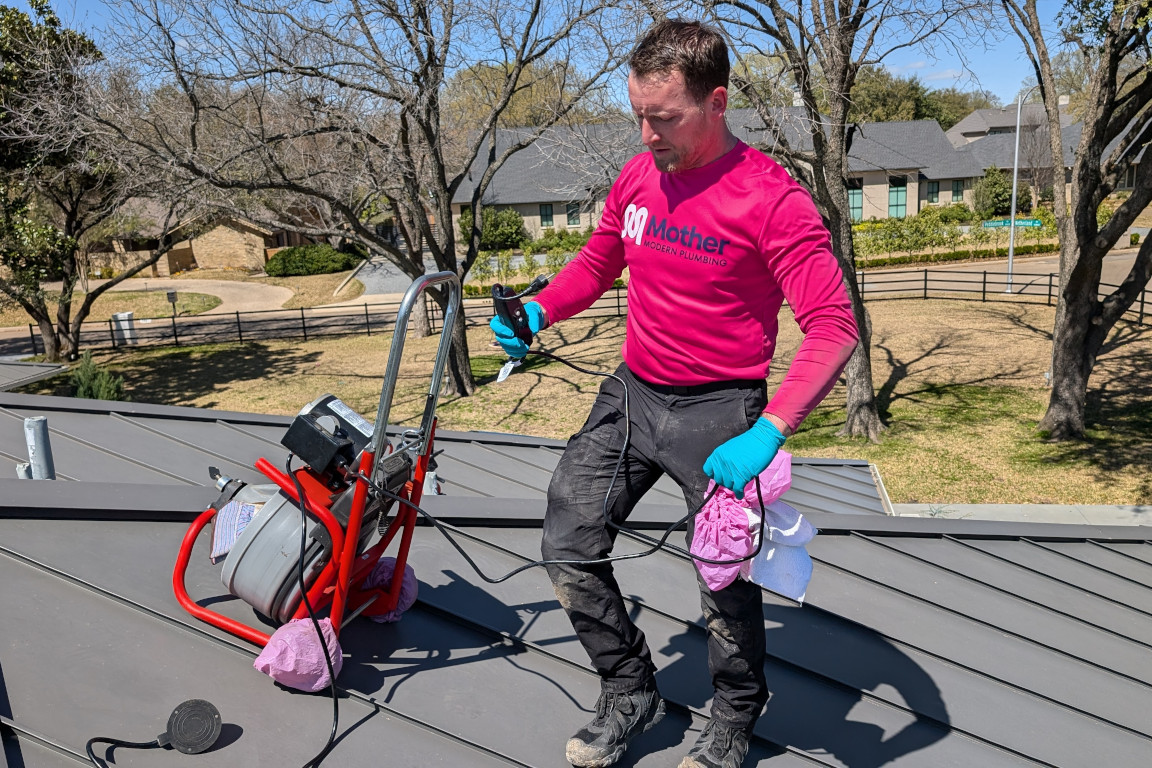
A plumber uses a motorized drain snake that reaches 50-100 feet into your drain line, or hydro jetting to blast stubborn clogs clear. They'll also run a camera through the line to identify the cause and confirm the blockage is fully removed.
Clear Your Shower Drain Once and For All
Most shower drain clogs are caused by hair and soap scum sitting just below the drain cover. You can usually clear these yourself by removing the drain cover, pulling out the hair mat, flushing with hot water, and using a non-toxic enzyme cleaner if needed.
Never use chemical drain cleaners in your shower - they burn your skin and damage your pipes. Stick with enzyme cleaners for safe, effective cleaning.
If you're seeing signs of a deeper blockage- multiple slow drains, gurgling, or sewer smells- call a plumber. Some clogs are too deep for DIY tools, and forcing it makes the problem worse.
A slow shower drain is fixable - either by you in 15 minutes, or by a plumber in an hour. Don't let it turn into standing water and a flooded bathroom.
Shower backup in DFW? Call Mother 24/7 for same-day drain cleaning results that last.
{{drain-cleaning="/services/drain-cleaning"}}