PEX vs Copper For Water Lines: Why PEX Is Superior


table of contents
table of contents
You called out a plumber because your water bill spiked $80 this month. Bad news: corrosion caused multiple pinhole leaks in your existing copper lines. Their quote included new sections of PEX pipes, but you’re used to copper- should you really switch?
At Mother, we’ve repaired and replaced (X) residential water lines over the last 3 years. PEX is universally superior to copper as a water line material due to its flexibility, non-corrosive nature and fewer pipe joints.
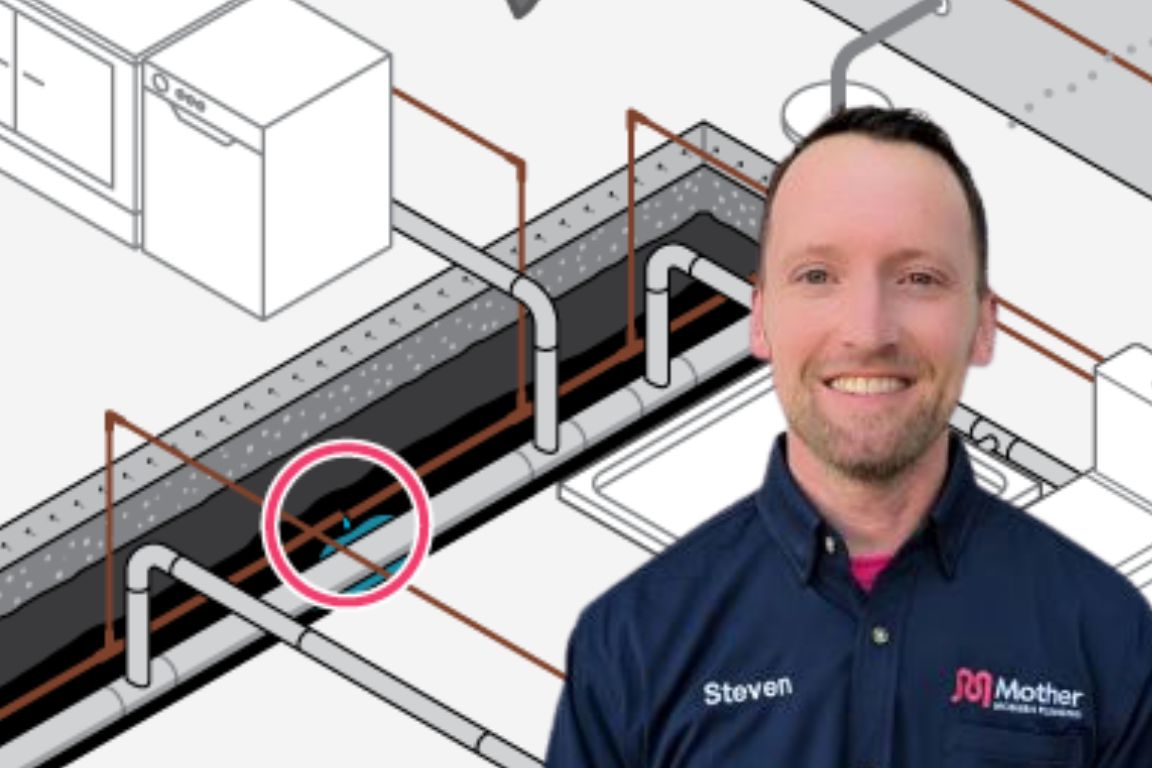
All these benefits also make PEX water lines cheaper to install in your home than copper. In this article, our Master Plumber Steven Smith helps break down the pros and cons of each material, and explain why “PEX vs copper” isn’t really a debate at all.
Old, leaky water pipes in your DFW home? Call Mother 24/7- our licensed techs will diagnose the specific issue, then repair or replace the damage with modern PEX.
{{water-line-break="/services/water-line-break"}}
PEX vs Copper Water Lines: The Quick, Expert Analysis
Don’t have time to read the full article? Use this helpful chart to directly compare PEX and copper as water line materials in your home:
Remember Why You Need New Water Line Materials
You’re replacing the water lines in your house for a reason- usually one of these four:
- Widespread corrosion caused by internal rusting and electrolysis
- Recurring pinhole leaks and breaks due to inflexible pipe materials
- Chronic low water pressure created by internal scale and rust buildup
- Outdated pipe materials, like galvanized steel or polybutylene
We bring this up for a simple reason: at least three of these problems remain an issue if you reinstall copper pipes. None of them apply to PEX materials.
PEX Water Lines: Modern, Flexible and Resilient
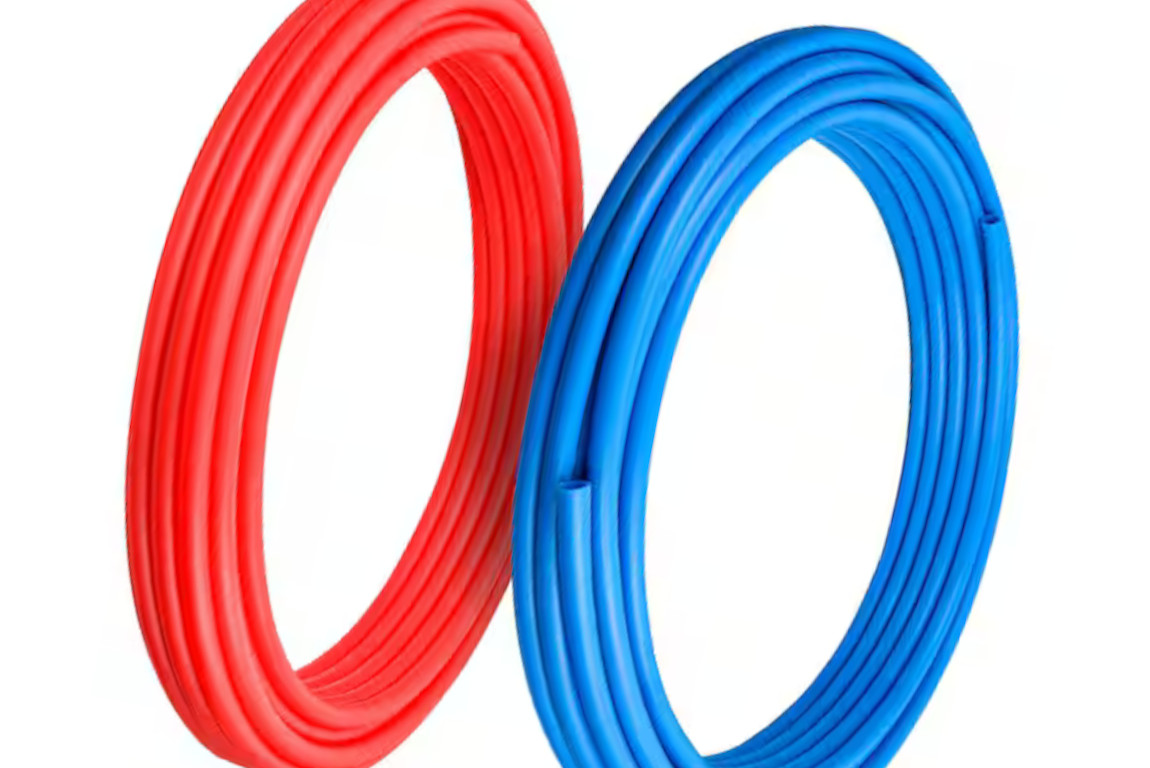
PEX is a high-tech plastic tubing that was invented in the 1980s. Today, it is the most popular choice for new homes and big repairs. Think of it like a long, super-strong straw that can bend around corners.
Because PEX is flexible, a plumber can run one single piece of pipe from your water heater all the way to your bathroom. Our Responsible Master Plumber Steven Smith calls this a game changer.
“With copper pipes, every time you turned a corner it meant a new joint,” he explains. “When you put in a PEX system, those extra joints don’t happen. Especially not in the middle of your wall.”
5 Advantages of Using PEX Water Pipes
- No corrosion or mineral buildup. In areas with hard water, copper pipes often get pitting, where the water eats tiny holes through the metal from the inside out. With PEX, that is physically impossible. Your water pressure stays high because the inside of the pipe stays smooth for decades.
- Excellent freeze resistance. When water freezes, it expands. Copper pipes are rigid, so when the ice grows, the metal splits open like a soda can in the freezer. PEX is more like a rubber band: it stretches to make room for the ice and then shrink back to its normal size when things thaw out. This can save you from a massive flood during a cold snap.
- Faster, cheaper installs. A plumber can fish a line through your attic and down into a wall in a few minutes. Because it's so much faster to put in than copper, you pay for fewer hours of labor. This is one of the biggest reasons PEX is easier on your wallet.
- Amazing flexibility. Copper requires a plumber to cut the pipe, fit it together, and use a torch to solder it every time the pipe turns. Each of these joints is a new opportunity for a leak. PEX simply bends around the corner. Fewer connections mean fewer chances of a "Nightmare Scenario" leak inside your walls.
- PEX is quiet. Have you ever heard a loud bang in the walls when someone turns off a faucet? That’s a water hammer. Copper pipes are a megaphone for that sound. PEX is a softer material that absorbs the vibration, so your plumbing runs much quieter.
{{fast-plumbing-answers-can-you-bury-pex="/blogs/fast-plumbing-answers-can-you-bury-pex"}}
PEX’s One Weakness: Ultraviolet Light
PEX sounds a lot like Superman, but it does have its own “kryptonite”- UV light. The UV rays in sunlight break down the chemical bonds in PEX- this makes it brittle and prone to shattering.
This happens quickly. It only takes about a month for UV exposure to destroy a PEX pipe.
Copper Water Lines: Classic, Reliable But Flawed

Copper has been the king of plumbing for over 70 years. It is a solid metal system that plumbers are very used to working with. It feels sturdy, and for a long time, it was the only way to get water through a house reliably.
However, just because it’s a classic doesn't mean it’s the best for a modern home. Copper has some "personality flaws" that can become very expensive as the house gets older.
5 Reasons Copper Isn’t The Gold Standard Anymore
- Corrosion. This is the big one. Hard water or high acid levels in your water will eat away at the copper. This leads to pinhole leaks that can drip behind your walls for weeks before you ever notice them.
- Freeze damage requires total replacement. If a copper pipe freezes and splits, there is no "fixing" it—you have to cut that section out and replace it. In a bad freeze, you could be looking at dozens of these breaks all over the house.
- Tough labor, higher costs.To put in copper, a plumber has to use a torch and fire to "weld" (solder) every single connection. This takes a lot of time and requires a high level of skill. You are paying for that extra time on your final bill.
- Rigid pipes = more fittings. Because copper can't bend, every corner needs a new part. More parts mean more work for the plumber and more places for a leak to start in the future.
- Electrolysis. If copper touches a different kind of metal, like a galvanized steel pipe, it creates a chemical reaction that causes the pipe to rot even faster- this is called electrolysis. PEX doesn't have this problem because it isn't a metal.
{{fast-plumbing-answers-electrolysis-in-copper-water-pipes="/blogs/fast-plumbing-answers-electrolysis-in-copper-water-pipes"}}
It’s Up to 60% Cheaper to Install PEX Than Copper
When you look at the final quote for a pipe repair or a whole-home "re-pipe," PEX almost always wins on price. There are two simple reasons for this:
- PEX is cheaper to buy. Copper is an expensive metal, and the price changes all the time. PEX is a plastic tubing that is much more affordable to manufacture.
- PEX is much faster to install. Think about a simple 20-foot run of pipe. In copper, a plumber might have to cut, fit, and solder five different joints to get around studs and corners. That takes a lot of time. With PEX, the plumber can pull one long roll of pipe through the attic in a few minutes and make only two connections at the ends.
Less time spent under your foundation or in your attic means fewer billable hours. When you combine the lower price of the materials with the fact that it takes about half the time to install, choosing PEX can save you up to 60% on your total bill compared to a full copper system
3 Situations Where Installing Copper Is Still Necessary
PEX dominates most water line applications, but three specific situations still require copper pipe.
- Existing copper pipes under your slab foundation: Steven explains, “If the system under your slab is already copper, you need to keep copper.”
- Grounding the system during a repipe: “You need 10 feet of copper pipe to properly ground the system in a whole home repipe,” Steven says. This pipe has to be buried. Even in a full PEX repipe, a short section of copper pipe connects to your electrical panel's grounding wire to meet code requirements.
- Outdoor and exposed lines. Any pipe that runs outside the house and is exposed to the elements- like a hose bib- must be copper. PEX cannot be exposed to direct sunlight.
DFW Pro Tip: Rodents in the attic? Get rid of them before you install PEX up there- they love nibbling on new PEX water pipes.
The Verdict? PEX Beats Copper In Most Cases

The "PEX vs copper" debate ended years ago for professional plumbers. PEX won. It outperforms copper in flexibility, corrosion resistance, freeze tolerance, installation speed, and total cost.
The only scenarios where copper still makes sense are underground repairs to existing copper systems, pipes exposed to sunlight, and electrical grounding requirements.
Mother Modern Plumbing installs PEX water lines in almost all of our residential repairs and repipes. Our Master Plumbers will tell you honestly if your situation requires copper - but in most cases, PEX delivers better performance at lower cost with fewer future problems.
Water line problems in DFW? Call Mother 24/7 for modern PEX pipe solutions.
{{water-line-break="/services/water-line-break"}}