How to Replace Sink & Toilet Shut-Off Valves in DFW


table of contents
table of contents
Who stops to think about the tiny valves under the sink or behind the toilet? No one, until the kitchen faucet blows a high pressure line or your guest toilet overflows at 11 pm. The handle on your shut-off valve won’t budge- or worse, it’s spraying water all over the cabinets.
Plumbers call these small-but-vital components angle stops, but you probably call them shut-off valves. Our technicians live and work in the Dallas-Fort Worth Metroplex- here, these valves are the guardians standing between a minor failure and a nightmare flood that ruins your cabinets and floors.
If your toilet or sink shut-off valves are over ten years old- or if they look crusty, green or corroded- it’s time to consider an upgrade. Our Master Plumbers tell you why quarter-turn ball valves are the modern standard, and how to ensure a professional replacement.
Need your sink and toilet shut-off valves replaced? Call Mother 24/7 for prompt, expert service anywhere in the DFW Metroplex.
{{emergency-shutoff-valves="/services/emergency-shutoff-valves"}}
What is an Angle Stop (or Shut-Off Valve)?

An angle stop is a specific type of shut-off valve designed to connect your home’s internal water lines to your fixtures. The name comes from the 90-degree angle the valve creates to move water from the pipe inside your wall to the flexible line leading to your faucet or toilet.
In most DFW homes built between 1970 and 2010, the original builders installed multi-turn shut-off valves. These are the valves with the oval-shaped handles that require several full rotations to close.
While they were the industry standard for decades, they have a fatal flaw: they rely on a rubber washer and a threaded stem that are constantly submerged in water. There’s a better solution for modern home plumbing- the quarter-turn ball valve.
Multi-Turn vs. Quarter-Turn Shut-Off Valves
When it comes to replacing your valves, you have two choices- but only one makes sense as a long-term modern solution. Let’s examine the difference between types of sink valves.
Multi-Turn Valves: The Outdated Standard
Multi-turn valves work like a tiny outdoor garden spigot. When you turn the handle, you are screwing a rubber washer down onto a metal seat to block the water.
Because the rubber washer stays in the water for years without moving, it eventually becomes brittle or welded to the seat.
When you finally try to turn a multi-turn valve after 4-5 years of disuse, the rubber often disintegrates. This is why these old valves leak from the stem the moment you touch them.
There is one scenario where it’s better to keep existing multi-turn valves. If we can repair the existing multi-turn without fully replacing the part- especially in an older home- some homeowners prefer the cheaper repair option.
Quarter-Turn Ball Valves: The Modern Solution
A quarter-turn valve uses a polished brass ball with a hole through the center. When you turn the handle 90 degrees, the ball rotates to either allow or completely block the water flow. There are no rubber washers to rot, and no long threaded stems to get stuck.
Plumbers call these “positive shut-off valves”. That means they create a 100% watertight seal which is mechanically guaranteed to stop all flow.
In nearly all cases, quarter-turn angle stops work perfectly even after years of sitting idle. Mother recommends quarter-turn ball valves for every residential replacement because they offer the most reliable stink shield against flooding.
How We Replace Angle Stops Under The Sink

Replacing an old shut-off valve requires technical precision to ensure the new connection is watertight for decades. Here is the step-by-step process Mother follows for a professional replacement:
- Main Water Shut-Off: We begin by shutting off the main water supply to the house and draining the lines to prevent any pressure surges during the swap.
- Removal of the Existing Valve: We carefully remove the old, corroded valve from the copper or PEX riser. This is a critical moment where we inspect the pipe for any signs of thinning or electrolysis.
- Pipe Preparation: We clean and deburr the pipe to ensure a smooth, clean surface for the new seal. Any mineral scale or oxidation must be removed to prevent a slow leak later.
- Installation of the New Valve: We set the new quarter-turn ball valve using high-quality fittings.
- Fixture Connection: We install a new, high-quality supply line from the valve to the sink or toilet.
- Pressure Testing: We restore water to the home and perform a forensic check on the new connection, testing it under full residential pressure to verify the integrity of the seal.
{{emergency-shutoff-valves="/services/emergency-shutoff-valves"}}
Mother’s Above and Beyond Assurance: Premium Parts We Love
We prefer compression fittings or sweat connections for our valve installations. While push-to-connect fittings are popular for DIY repairs, they rely on a single O-ring that can fail over time.
A compression fitting creates a mechanical, metal-to-metal seal that’s far more secure.
We always replace your supply lines with braided stainless steel. This ensures that the weakest link in your plumbing system is as strong as the bones of the house.
Why DFW Hard Water Kills Your Valves
If you live in a city like Richardson, Plano, or Dallas, you know our water is hard. This means it is loaded with minerals like calcium and magnesium. While these minerals are safe to drink, they are a nightmare for plumbing infrastructure.
Mineral scale builds up on the internal moving parts of your shut-off valves. On an old multi-turn valve, this scale acts like sandpaper, shredding the rubber seal as you turn the handle. It also builds up on the threads of the stem, freezing the valve in place.
In our North Texas conditions, hard water can reduce the useful lifespan of a builder-grade valve to 7-10 years.
{{why-does-dallas-have-hard-water="/blogs/why-does-dallas-have-hard-water"}}
Learn When to Replace Your Shut-Off Valves
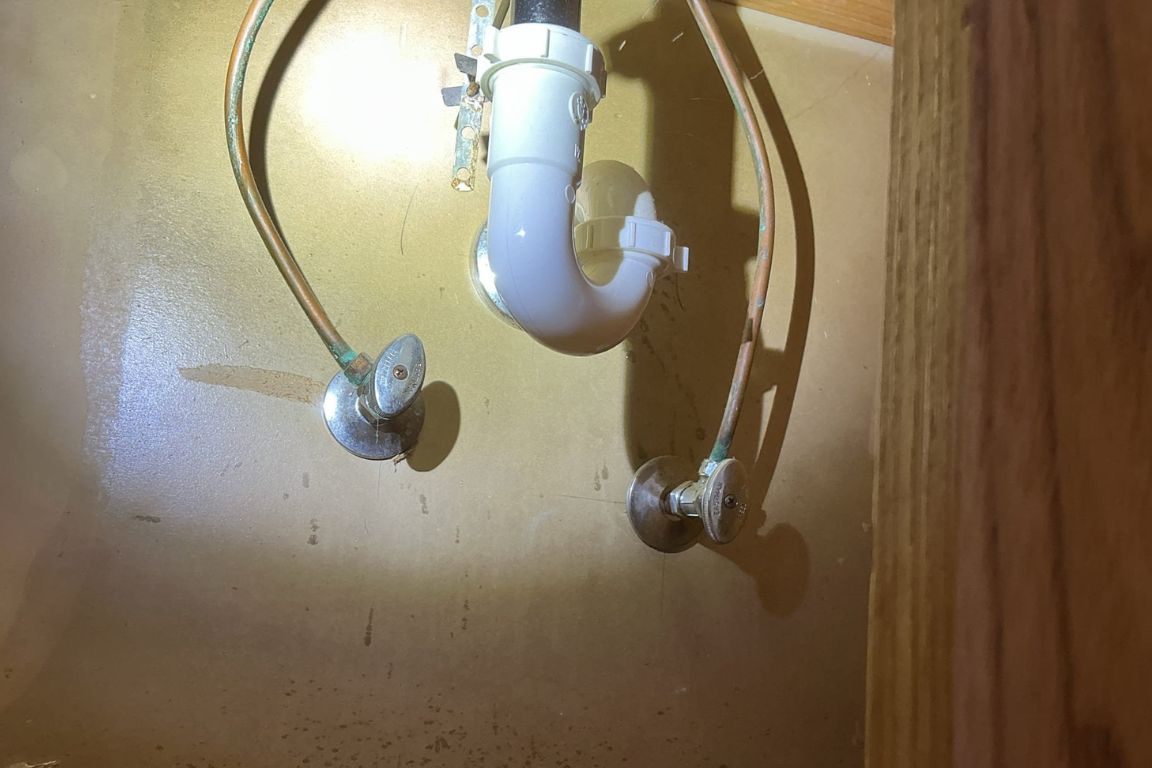
Visually inspect your toilet and sink shut-off valves every six months. You do not need a plumber to tell you when a valve is failing- the evidence is usually right there in your cabinet.
- The Green Crust: If you see teal or green oxidation on the copper pipe or the valve body, you are dealing with a slow weep leak.
- The Frozen Handle: If you give the handle a gentle tug and it doesn’t move easily, do not force it. This is a sign that mineral scale has locked the internal components.
- Original Plastic Sleeves: If your home has PEX piping and uses the original push-pull plastic valves integrated into the wall, they’re notorious for failing. Replace these with high quality brass quarter-turn valves for a permanent fix.
Don't Wait for the Drip: Replace Your Shut-Off Valve
Replacing your sink and toilet shut-off valves is one of the most cost effective ways to prevent catastrophic water damage. It’s a forward-thinking move that transforms your sink plumbing from a ticking bomb into a reliable system.
If you are struggling with a frozen valve or noticed a ghost leak under your sink, it’s time for a modern upgrade. Choosing a high quality quarter-turn ball valve today, and stop worrying about whether your water will actually turn off when you need it to.
Ready to replace your old shut-off valves? Call Mother 24/7 for a professional audit and replacement of your sink and toilet components.
{{emergency-shutoff-valves="/services/emergency-shutoff-valves"}}