Fast Plumbing Answers: Low Water Pressure in Kitchen Faucet


table of contents
table of contents
Your kitchen faucet water pressure is so low, you cannot even wash a dish properly. Instead of a powerful stream, you get a weak trickle that makes rinsing a single plate take forever. You need to know why this is happening, and how to solve it before the kids get home for dinner.
Don’t worry: we’ll answer all your questions in 3 minutes or less.
At Mother, we deal with the stress of mineral buildup in kitchen faucets every single day. The DFW Metroplex has some of the hardest water in the country- the calcium in that water is what’s ruining the pressure to your sink. We’ll show you how it happens and the DIY steps you can try before calling a plumber.
Problems with your kitchen faucet in Dallas? Call Mother 24/7 for same-day diagnosis and fixture replacement solutions.
{{faucet-installation="/services/faucet-installation"}}
Scale Buildup Is Killing Your Faucet's Water Pressure

We’re told that calcium is good in our water. That's only half-true. It’s great for human health- but for plumbing health, not so much.
“Hard water” means your water carrying a heavy load of dissolved minerals, primarily calcium and magnesium. As this water travels through your faucet, those minerals settle out and stick to the surfaces they touch.
Over time, these minerals harden into a crusty substance called scale. This buildup acts like a narrowing of the arteries in your plumbing system. As the layers of scale grow inside the narrow passages of your faucet, there is less room for water to flow.
This is what’s causing that frustrating drop in pressure.
Hard Water vs DFW Kitchens: An Ongoing Battle
Hard water is a common issue across America, and North Texas is a major hotspot. Our region has the sixth hardest water in America. Every week, our technicians see faucets that are completely choked by mineral deposits- long before the metal parts of the fixture have actually worn out.
This is a particularly aggressive problem in DFW-area cities like Plano, Frisco, and Wylie. In these areas, heavy mineral scale turns a brand-new kitchen faucet into a low-pressure nuisance in just a few years.
{{why-does-dallas-have-hard-water="/blogs/why-does-dallas-have-hard-water"}}
The 2 Kitchen Faucet Components Causing Your Problem
The mineral scale issue reducing your water pressure is almost always occurring in two distinct components: the aerator and the cartridge.
Low Water Pressure Caused by Faucet Aerator
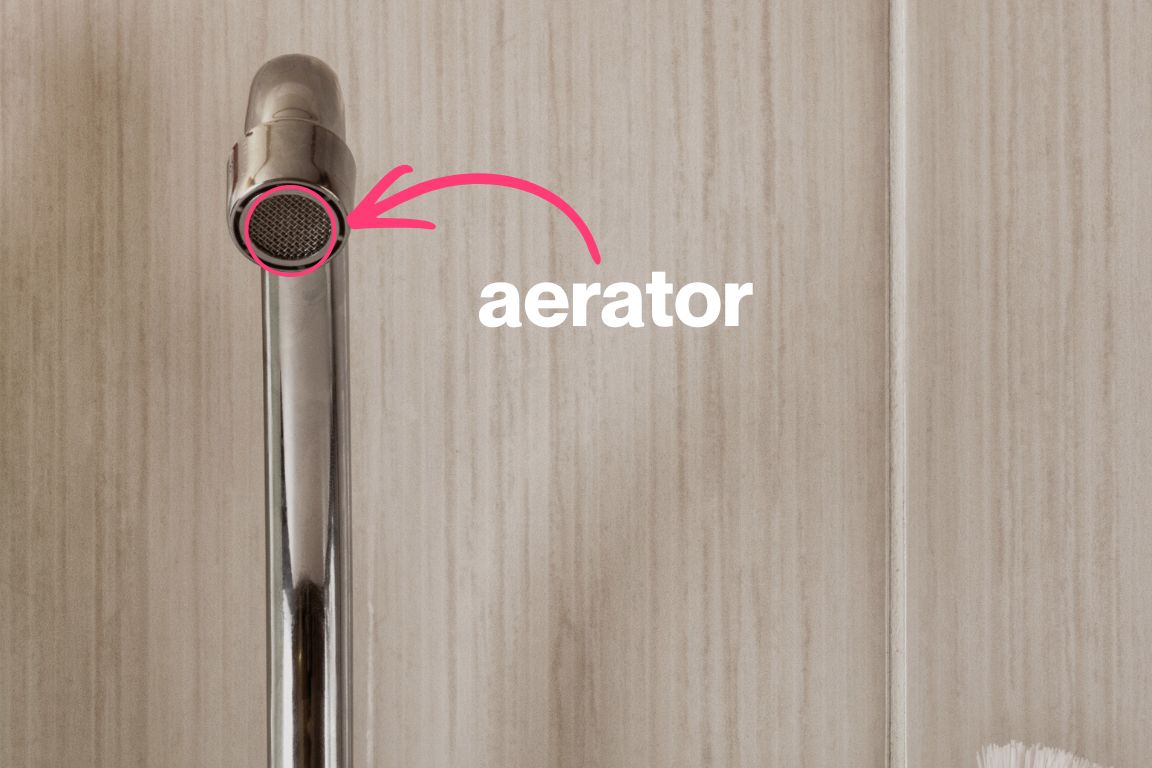
The aerator is the small, screened piece at the tip of your faucet spout. Its job is to mix air with the water to create a smooth, splash-free stream.
Because it is a fine mesh screen, it acts like a filter for the water. It is the most common place for mineral buildup to occur. Even a small amount of calcium can clog these tiny holes, effectively gagging the faucet and killing your pressure.
Clogged Faucet Cartridges and Water Pressure Problems
The cartridge is the internal engine of your faucet located under the handle. It controls the flow and temperature of the water. Because it contains very small openings and moving parts, it is a prime target for scale.
When minerals build up inside the cartridge, they do more than just reduce pressure- they can also make the handle difficult to turn or cause the faucet to drip constantly.
How to Solve Low Water Pressure in Your Kitchen Faucet
Solving this problem often starts as a simple home project, but it can quickly become a professional task depending on how far the mineral buildup has traveled into your plumbing lines.
Fixing Aerator Scaling
If only one faucet has low pressure, start here. It is a quick and simple fix.
- Unscrew the aerator: Use your hand or a pair of pliers- use a cloth to protect the finish- to twist the tip of the faucet off.
- Soak in vinegar: Submerge the aerator in a small bowl of white vinegar for 30 to 60 minutes. The vinegar naturally dissolves the calcium.
- Rinse and reinstall: Brush away any remaining bits with an old toothbrush, rinse it well, and screw it back on.
- When to call a plumber: If the aerator is fused to the spout by scale and won’t budge, do not force it. A plumber is needed to remove the component without snapping the spout or ruining the finish of an expensive fixture.
Important Safety Note: Don’t use CLR or similar harsh chemicals to clean the aerator screen. If these chemicals are not thoroughly removed, you risk ingesting or breathing in poisonous sodium hydroxide.
This can lead to serious health issues, including respiratory irritation and internal chemical burns. Stick to food-grade white vinegar for a safe, effective clean.
Solving a Clogged Faucet Cartridge
If the aerator is clean but the pressure is still low, the problem is likely the cartridge.
- Shut off the water: Turn off the shut-off valves under the sink.
- Remove the handle: Use an Allen wrench to remove the handle and the decorative cap.
- Swap the cartridge: Pull the old cartridge out and replace it with a new one from the hardware store.
- When you need a plumber: Faucet cartridges are usually held in place by a brass retaining nut that can become seized by mineral scale. If you cannot easily pull the cartridge out, call a plumber. Forcing a stuck cartridge can break the internal valve body- this turns a cheaper repair into a full faucet replacement.
{{how-to-remove-calcium-deposits-on-faucets="/blogs/how-to-remove-calcium-deposits-on-faucets"}}
How to Prevent Scale Buildup In Your Kitchen Faucet

You do not have to wait for your pressure to drop to take action. A few simple maintenance steps can keep your sink blasting gunk off your plates for years.
- Monthly vinegar rinses: Once a month, tie a plastic bag filled with vinegar over your faucet spout and let it sit overnight. This prevents scale from hardening in the aerator mesh.
- Annual flushing: Once a year, have a professional flush your water heater and lines. This removes the mineral sediment that eventually makes its way into your faucet cartridges.
- Water softening: The only permanent solution to hard water is a whole-home water softener. By removing the minerals at the source, you protect every faucet, showerhead, and appliance in your house from scale buildup.
{{home-water-softener-savings="/blogs/home-water-softener-savings"}}
Keep Your Kitchen Faucet Clean and Clear
Low water pressure in a kitchen faucet is rarely a sign that you need to repipe your entire house. Most of the time, it is simply a case of mineral buildup getting stuck in the aerator or the internal cartridge.
The fight against hard water and mineral scale in your kitchen faucet is winnable. Follow the maintenance steps in this article, and you will be blasting gunk off your dinner plates in no time. If the DIY steps do not do the trick, it is a sign that the blockage is deeper in the fixture or your supply lines.
Need help with your Dallas kitchen faucet? Call Mother 24/7 to schedule same-day service anywhere in the Metroplex.
{{faucet-installation="/services/faucet-installation"}}