Tankless Water Heaters DFW: The Ultimate Decision Guide
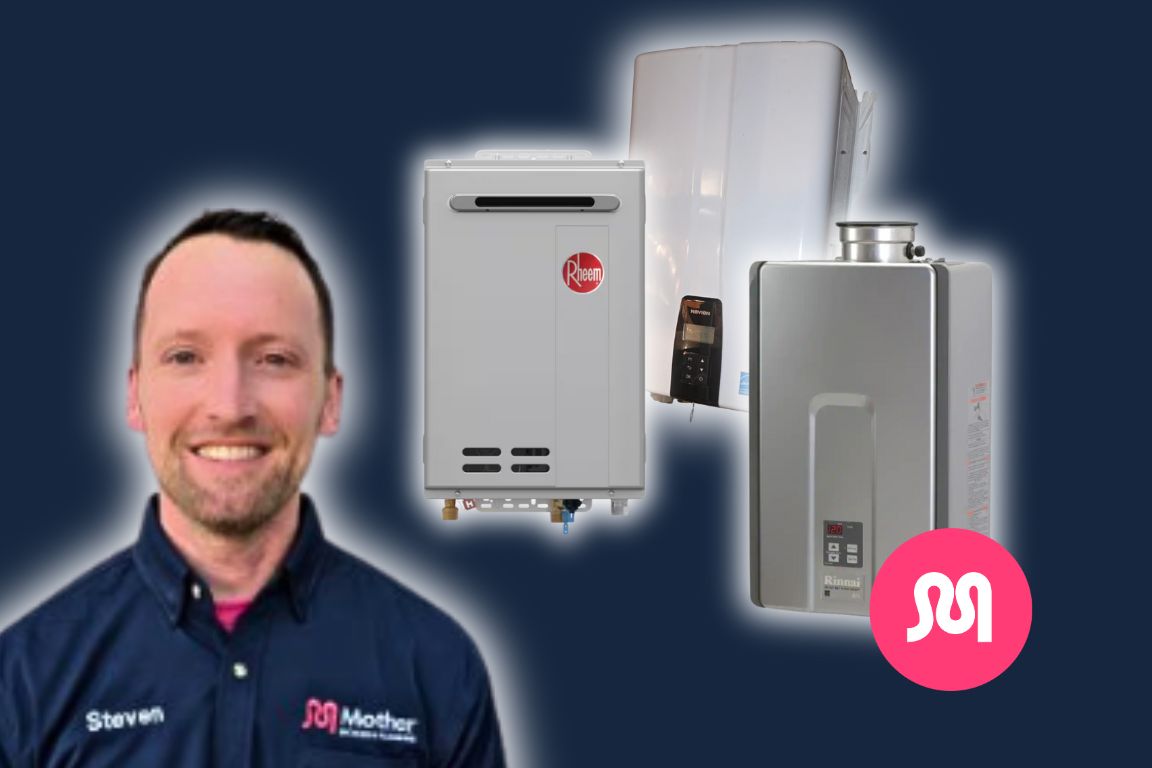


table of contents
table of contents
You’re ready to make the switch from a conventional water heater to a tankless system. You’ve already made that big decision- we built this guide to make every remaining choice simpler.
Mother’s licensed technicians have installed hundreds of tankless water heaters in DFW homes. We work with gas and electric units from Rinnai, Navien, Rheem and other top brands on a weekly basis. We've seen what works, what doesn't, and what homeowners wish they'd known before they spent $5,000 on the wrong system
Consider this your ultimate guide to choosing a tankless in Dallas-Fort Worth. From fuel type to product selection to ownership concerns, our Master Plumbers answer all your tankless questions in one convenient article.
Ready to install a tankless in Dallas? Call Mother- we’re here 24/7 to answer your call and pair you with a certified tankless water heater expert.
{{tankless-water-heater-installation="/services/tankless-water-heater-installation"}}
Start Here: Define Your Reason For Going Tankless

Endless hot water? Energy savings? Define your reason for going tankless.
Your journey towards a new tankless water heater starts with a simple question: What’s your primary reason for wanting a tankless unit?
Most of our DFW customers respond to this question with one of 3 answers:
- I want endless hot water.
- I want to lower my monthly energy bills.
- I think it’s a better long-term investment than a conventional water heater.
Let’s take a look at the reality behind these decision points.
Endless Hot Water vs. Lower Monthly Bills
Most people think they want tankless for the energy savings. The marketing materials show 20-30% lower utility bills, and that sounds great. But here's the truth: in Dallas-Fort Worth, the primary reason to go tankless isn't the money you'll save each month. It's the lifestyle upgrade.
Think about your busiest morning. Three kids getting ready for school, all taking showers within 30 minutes of each other. Your spouse runs the dishwasher while someone's still in the bathroom. With a traditional 50-gallon tank, the third person gets a cold shower. With tankless, everyone gets hot water- always.
The energy savings are real, but they're the bonus, not the main event. You'll save $15-$30 per month on your gas or electric bill. What you can't put a price tag on is never hearing "Dad, the water's cold again!" or planning your morning around who showers when.
DFW Home Size Plays a Role
If you live in a home with 3+ bathrooms and more than 2,500 square feet, tankless starts to make serious sense. Homes in Plano, Allen, McKinney, and Southlake are often 3,500-4,500 square feet with 4-5 bathrooms. A traditional tank water heater can't keep up with that kind of demand during peak usage.
Here's a simple test: On a typical weekday morning, how many hot water sources run simultaneously in your home? Count showers, dishwashers, washing machines, and bathroom sinks. If the answer is three or more, your current tank is probably struggling. You've just adapted to the cold water problem by scheduling around it.
Smaller homes (under 2,000 square feet with 2 bathrooms) can absolutely benefit from tankless, but the lifestyle upgrade is less dramatic. You're paying for endless hot water you might not actually need.
The 20-Year Investment Perspective
Traditional tank water heaters last 8-12 years in Dallas-Fort Worth. Hard water accelerates corrosion, sediment buildup kills efficiency, and eventually the tank rusts through and leaks. You replace it, spend $1,500-$2,500, and start the clock over.
Tankless water heaters last 20+ years with proper maintenance. They don't have a tank to corrode. The heat exchanger can be descaled. The parts can be replaced individually without replacing the whole unit. When you factor in the lifespan, the math changes significantly.
A $5,000 tankless installation that lasts 20 years costs you $250 per year. A $2,000 tank replacement every 10 years costs you $200 per year. Add in the energy savings ($15-$30/month = $180-$360/year), and tankless becomes the better long-term value.
But only if you maintain it. We'll get to that.
Still deciding between tankless and tank? Read our complete comparison of both systems and when each makes sense.
{{replacing-water-heater-with-tankless="/blogs/replacing-water-heater-with-tankless"}}
Tankless Installation: Gas Homes Yes, Electric No

Natural gas tankless water heaters are ideal for Dallas-Fort Worth homes.
Let’s be clear: tankless water heater installation only makes sense in Dallas area homes that run on natural gas or propane.
We don’t recommend electric tankless installs for most homeowners. The cost to upgrade your electrical panel and infrastructure is simply too great to ever see true payback on your initial investment. Plus, the added energy needed means you don’t see energy savings.
Here’s an outline of why natural gas users get so much value out of their tankless systems, and the (very) few instances where electric can make sense.
Natural Gas is Ideal for Tankless Water Heaters
Down here in North Texas, gas tankless is the gold standard. Over 95% of the tankless installations we do at Mother are gas-powered, and there's a good reason for that. Natural gas is abundant, infrastructure is already in place in most neighborhoods, and gas tankless units deliver better performance in our climate.
A gas tankless water heater can heat water faster and hotter than an electric unit. This matters when you're running multiple showers and a dishwasher simultaneously. Gas units also handle temperature swings better- when incoming water is 55°F in winter, a gas unit can still deliver 120°F hot water to three fixtures at once.
Most homes built in the last 30 years in Plano, Frisco, McKinney, Allen, Southlake, Colleyville, and Fort Worth already have natural gas service. If you have a gas furnace or a gas cooking range, you're good to go. The question becomes whether your existing gas line can handle the additional demand of a tankless unit.
When Gas Tankless Works Best
Your home is a great candidate for gas tankless if you can answer "yes" to these 3 questions:
- Does your home have natural gas service? Check your utility bill or look for a gas meter outside.
- Is your current gas line 3/4-inch diameter or larger? Most modern homes have this, but older homes may need an upgrade.
- Do you have adequate ventilation options? Gas tankless requires proper venting to the exterior, either through an existing chimney or new PVC venting.
If you answered "yes" to all three, gas tankless is your best option. If you answered "no" to the first question, you're looking at electric tankless or sticking with a traditional tank.
Want the full story on gas tankless systems? Read why natural gas systems are the right choice for most DFW households.
{{yes-gas-tankless-water-heaters-are-good="/blogs/yes-gas-tankless-water-heaters-are-good"}}
Electric Tankless Rarely Makes Sense in Dallas-Fort Worth
We get asked about electric tankless a lot. Homeowners see them at Home Depot for $500 and wonder why we're recommending a $3,000 gas unit instead. Here's the truth: electric tankless water heaters work fine in warm climates with low hot water demand. Dallas-Fort Worth is neither of those things.
Electric tankless units struggle in two specific ways here:
- They can't keep up with demand in larger homes. A whole-home electric tankless requires 100-150 amps of dedicated electrical service. Most homes don't have that kind of capacity available, which means you need a major electrical panel upgrade before you can even install the unit. That upgrade costs $2,000-$4,000 on top of the tankless unit itself.
- Electric tankless performance drops further when incoming water is cold. In January, when your incoming water temperature is 50-55°F, an electric unit has to work much harder to heat water to 120°F. This reduces flow rate significantly. You might get enough hot water for one shower, but two simultaneous showers? Forget it.
We occasionally install electric tankless in very specific situations:
- Small homes with no gas service, point-of-use applications (like a single bathroom or kitchen sink), or
- As a booster for solar hot water systems.
But for whole-home applications, electric tankless isn't worth the cost in North Texas.
Tankless Installation Costs: The Total Picture
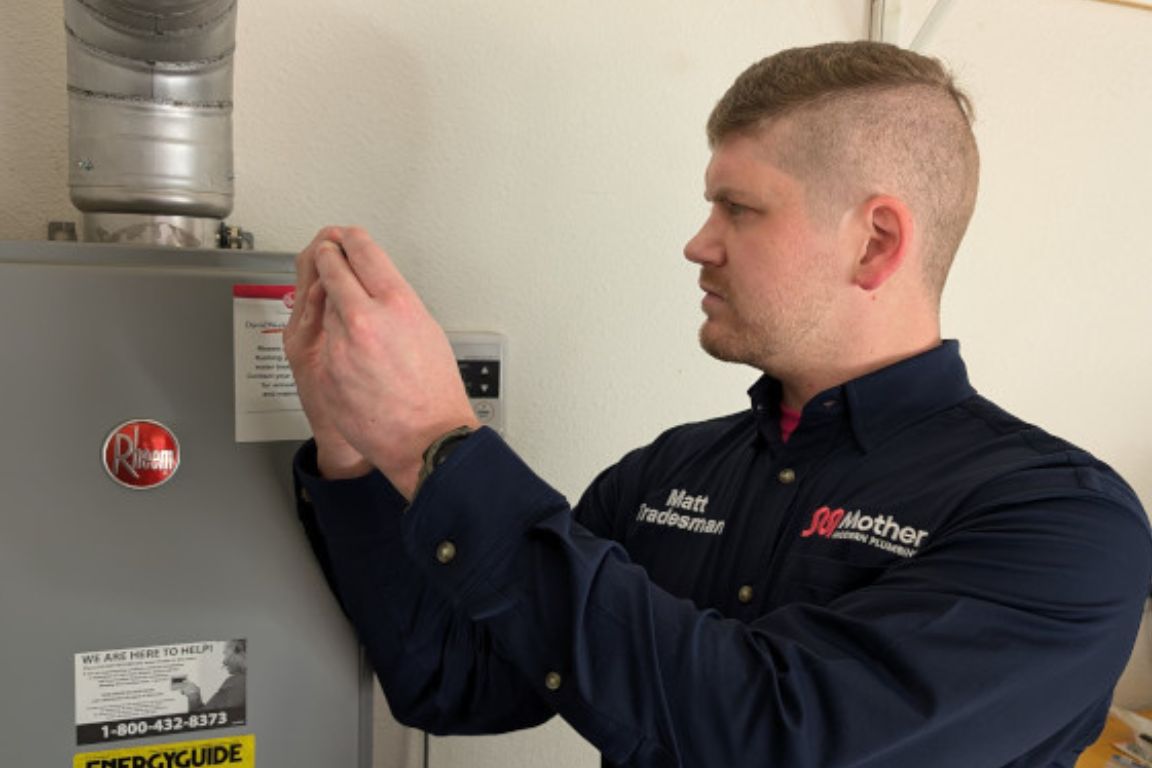
Installation is the prmary cost driver of tankless water heaters in Dallas.
The primary cost driver of purchasing a tankless water heater is the installation, not the unit itself. This is due to the competitive labor prices in DFW, along with the cost to upgrade your home’s existing energy infrastructure.
Here’s everything you need to know about the all-in cost of adding a tankless system to your home.
Installation Costs More Than the Unit Itself
When homeowners call us about tankless installation, the first question is always "How much does it cost?" The answer: more than you think, but probably less than you've been quoted elsewhere.
A complete tankless water heater installation in Dallas-Fort Worth typically costs $6,000-$12,000. That's 3-4 times more than replacing a traditional tank water heater.
But here's what most people don't realize- you're not just buying a water heater. You're buying a system.
A high-efficiency condensing tankless unit from Rinnai, Navien or Rheem costs $1,500-$2,500 depending on the model and size. The rest of the cost covers 5 essential installation components:
When you see a "$500 tankless water heater" at a big box store, that's just the unit (and a very low quality one at that). It doesn't include any of the infrastructure work required to make it function safely and efficiently.
The Gas Line Upgrades Nobody Mentions
This is where most tankless quotes get confusing. More than half of homes we work with in Dallas-Fort Worth need gas line upgrades before we can install a tankless unit.
Think of it like this: your current gas line is like a garden hose. It delivers enough water (gas) for your furnace and your old tank water heater. But a tankless unit is like trying to run a fire hose through that same garden hose connection. The pipe diameter isn't large enough to deliver the volume of gas the tankless needs.
A quality tankless unit requires 150,000-199,000 BTUs to operate. Your existing 1/2-inch gas line probably maxes out around 100,000 BTUs when you account for your furnace and other gas appliances. We need to run a new 3/4-inch line from your gas meter to the tankless location.
This isn't a "nice to have" upgrade. It's required for the unit to function properly. Without adequate gas supply, your tankless will underperform, shut off during high demand, or trigger error codes constantly.
And that’s not all: Plumbing code requires your gas line be sized to run all appliances at once. You may need to upgrade multiple parts of your gas system.
Venting Adds Complexity and Cost
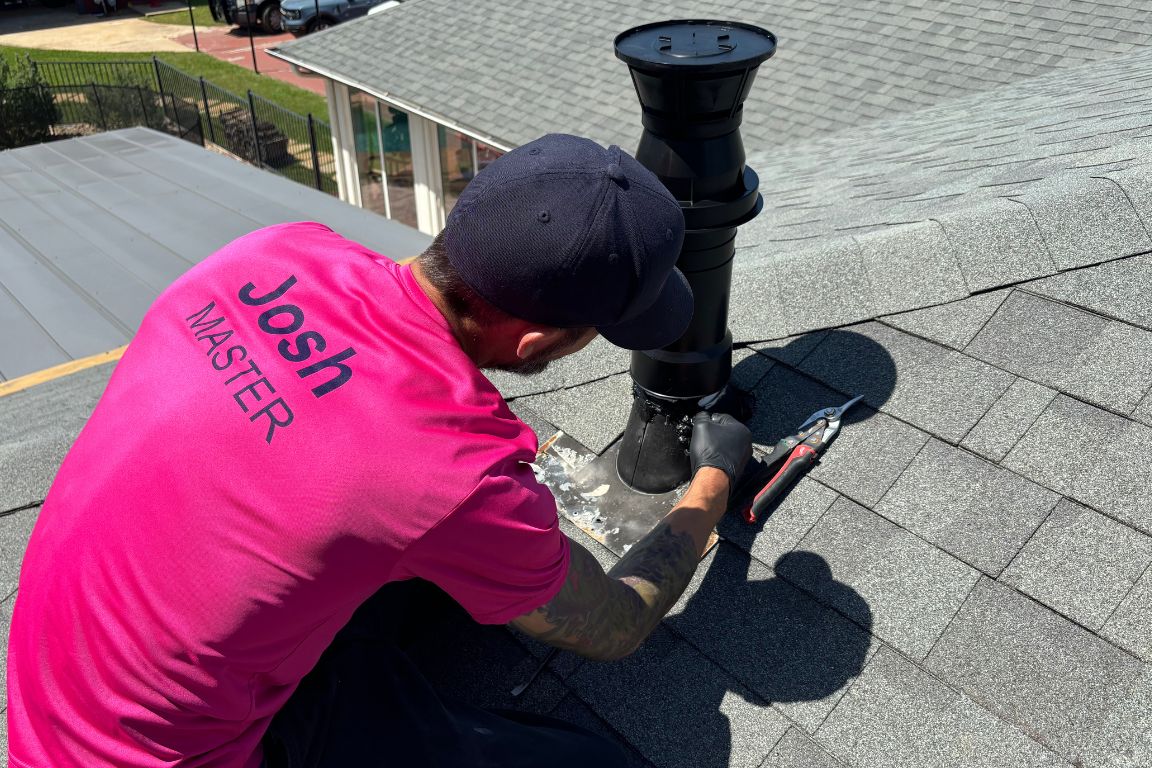
The second hidden cost in tankless installation is venting. Gas tankless units produce exhaust that needs to be safely vented outside your home. You have 3 options, and each has different costs:
Option 1: Concentric PVC venting- The most common method for new installations. We run a 3-inch or 4-inch PVC pipe through your exterior wall. This pulls in combustion air and exhausts fumes through the same pipe. Clean, efficient, and code-compliant.
Option 2: Existing chimney venting- If your old tank water heater vented through a chimney, we can sometimes adapt that for tankless. This requires a stainless steel liner insert and proper sizing. Not all chimneys are compatible.
Option 3: Separate intake and exhaust venting- Required in some installations where we can't use concentric venting. We run two separate PVC pipes- one for air intake, one for exhaust.
Your home's layout determines which venting option works. We can't always use the cheapest option if your water heater is located in an interior closet far from an exterior wall.
The Long-Term Value Math
Let's talk numbers. A tankless installation costs more upfront. But over 20 years, the math swings in a gas tankless's favor- if you maintain it properly.
Here's a side-by-side comparison for a typical 3,500-square-foot home in Plano:
Traditional Tank (replaced every 10 years):
- Initial installation: $2,000
- Replacement at year 10: $2,000
- Total equipment cost over 20 years: $4,000
- Estimated energy cost over 20 years: $18,000
- Total 20-year cost: $22,000
Gas Tankless (maintained annually):
- Initial installation: $5,500
- Annual maintenance for 20 years: $2,000 ($100/year)
- Total equipment and maintenance cost: $7,500
- Estimated energy cost over 20 years: $12,500 (~30% savings)
- Total 20-year cost: $20,000
The tankless system saves you about $2,000 over 20 years while delivering endless hot water the entire time.
The value proposition improves significantly if you're replacing a failing tank. If you're already spending $2,000 on a new tank, spending $5,500 on a tankless that lasts twice as long starts to look pretty smart.
Want exact pricing for your home? Read our complete breakdown of tankless water heater installation costs in Dallas.
{{true-cost-to-install-tankless-water-heater-in-dallas="/blogs/true-cost-to-install-tankless-water-heater-in-dallas"}}
Choosing a Brand: Rinnai vs. Navien vs. The Rest
Our Master Plumbers recommend Rinnai gas tankless water heaters for most homes.
When you're shopping for a tankless water heater in Dallas-Fort Worth, the conversation almost always comes down to two brands: Navien and Rinnai. These aren't the only brands we install at Mother- we also work with Rheem, A.O. Smith, State, and Bradford-White- but Navien and Rinnai represent a huge majority of our installations.
Why? Because they've earned the reputation. Both brands build reliable units, both have strong warranty coverage, and both have local parts availability when something needs repair. In a market where some brands take 3-4 weeks to ship replacement parts, that local availability matters.
Our Master Plumbers rate Rinnai’s SENSEI RX199iN as the best overall tankless water heater for gas-powered homed. It’s our top-rated ultra high-efficiency condensing model, with Navien’s NPE-240A2 coming in second place.
While Rinnai is Mother’s preferred brand due to its long-term reliability and fewer repair calls, there are instances where Navien provides stronger value. It's about which is better for your specific home, your venting situation, and your maintenance preferences.
Rinnai: The Reliable, Durable Veteran
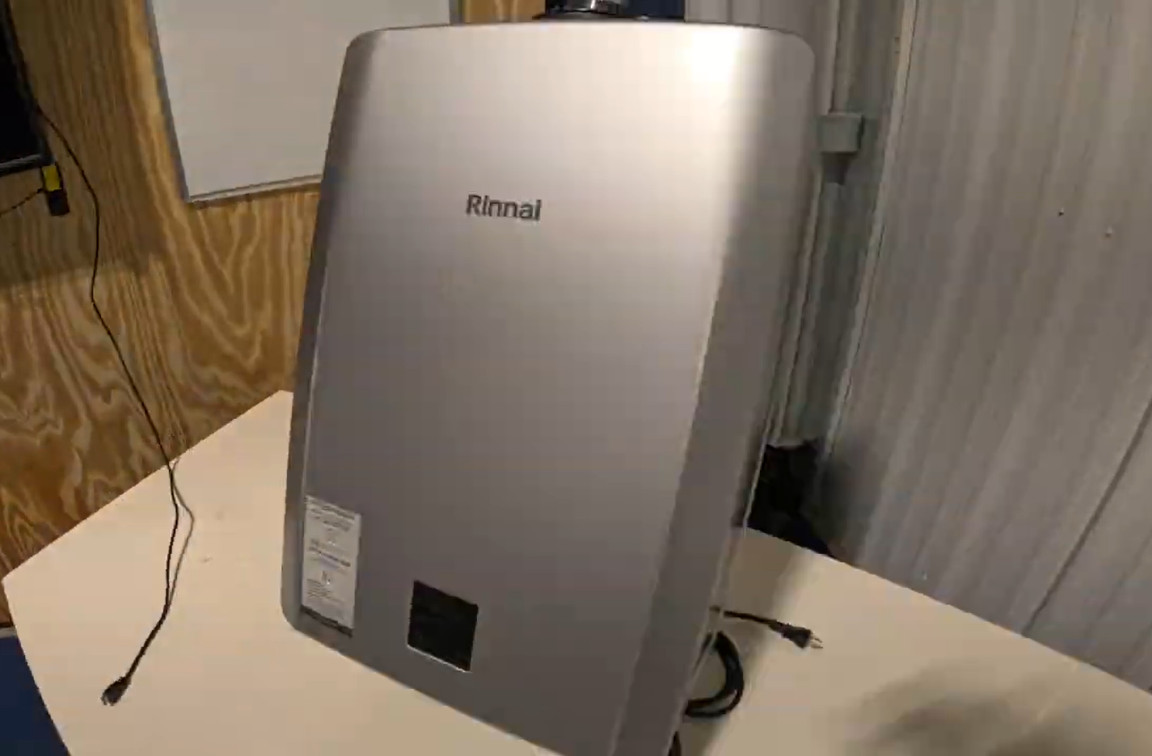
Rinnai has been building tankless water heaters longer than almost anyone else. Their units are simpler by design- fewer bells and whistles, but also fewer potential failure points. Plumbers love Rinnai because they're easy to service and parts are always in stock.
The RX199iN is Rinnai's flagship residential model, and it's the unit we recommend most often for larger homes in North Texas. It delivers up to 199,000 BTUs, which translates to enough hot water for 3-4 simultaneous showers plus a dishwasher or washing machine.
Rinnai's biggest strength is consistency. These units just work. Our Responsible Master Plumber, Steven Smith, reports we’ve received zero repair calls for Rinnai units over the last 3 years (other than standard descaling maintenance).
If you value simplicity and proven reliability over cutting-edge features, Rinnai is your brand. If you want built-in recirculation, upgrade to the RXP199iN unit.
{{rinnai-rx199in-tankless-water-heater-review="/blogs/rinnai-rx199in-tankless-water-heater-review"}}
Navien: The Tech-Forward Choice
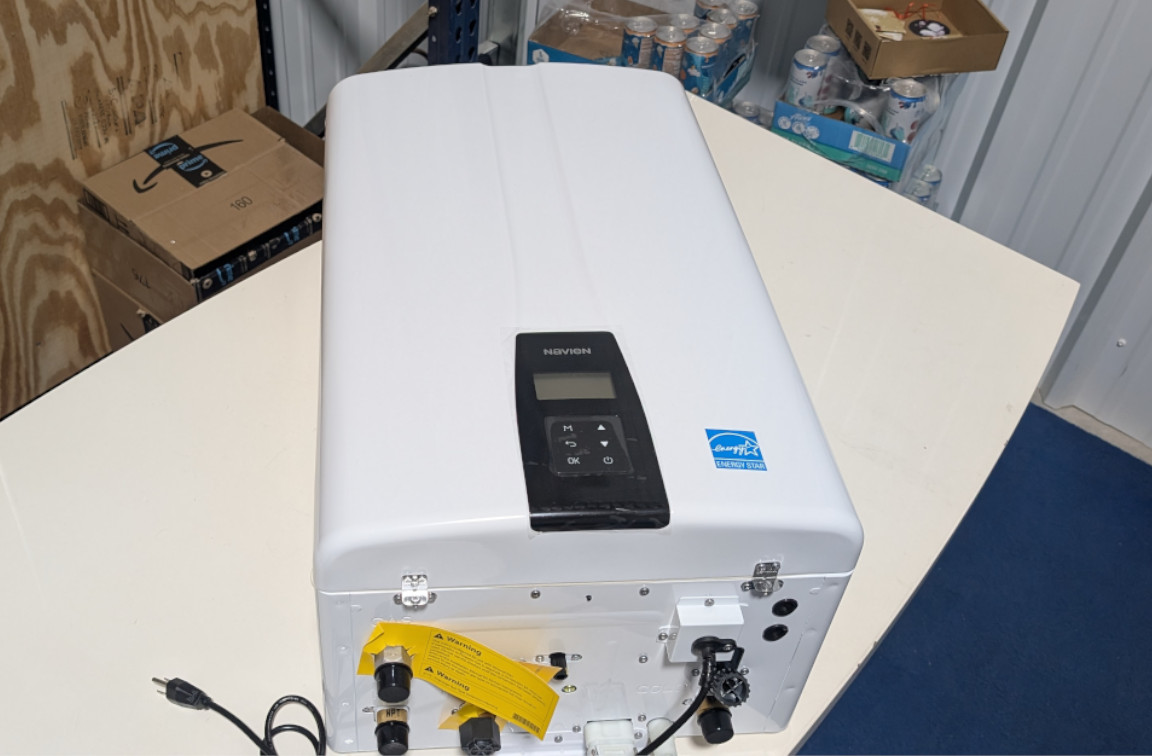
Navien is the newer player in the tankless market, but they've made a big impact. Their units come loaded with features that other brands charge extra for or don't offer at all. The biggest difference: built-in recirculation pumps and buffer tanks.
Think of the recirculation pump like this: instead of waiting 30-60 seconds for hot water to travel from your water heater to your shower, the pump keeps hot water circulating through your pipes. You turn on the tap, you get instant hot water. This solves the "cold water sandwich" problem that frustrates a lot of tankless owners.
Navien's other advantage is their stainless steel heat exchanger. Most brands use copper heat exchangers, which work fine but are more susceptible to corrosion from hard water. Navien's stainless steel design holds up better in Dallas-Fort Worth's mineral-heavy water supply.
The tradeoff: Navien units have more components, which means more things that can potentially need service. Their control boards are more advanced, which is great when everything works but more expensive to replace if something fails.
We see higher service call rates on Navien units compared to Rinnai, most due to scaling issues in internal components and worn-out gaskets.
{{navien-npe-240a2-tankless-review="/blogs/navien-npe-240a2-tankless-review"}}
Other Brands Worth Mentioning
A.O. Smith is better known for traditional tank water heaters, but their tankless line has improved significantly in recent years. We recommend them for budget-conscious homeowners who still want a quality product.
Bradford-White offer excellent commercial-grade options that work well in residential applications. If you're building a large custom home with high hot water demands, these are worth considering.
Rheem makes solid tankless units that fall somewhere between Navien's feature set and Rinnai's simplicity. (They also make “big box store” tankless units that are pretty terrible.)
How We Choose the Right Brand for Your Home
At Mother, we don't push one brand over another. We ask about your home first:
- How many bathrooms do you have, and what's your peak simultaneous usage?
- Where is your water heater located, and what venting options are available?
- Are you willing to install a recirculation system for instant hot water?
- What's your budget for the complete installation?
Based on your answers, we recommend 2-3 specific models and explain the tradeoffs. Most of the time, the decision comes down to whether you want Navien's extra features or Rinnai's simpler reliability. Both will give you endless hot water for 20+ years if you maintain them.
A Dallas Homeowner Reviews Mother
{{thomas-bosco="/review/thomas-bosco"}}
Hot Water Delivery: What Your Home Needs
Tankless hot water delivery is measured by its flow rate in gallons per minute (GPM).
If you’re switching from a conventional tank, forget what you know about sizing. When it comes to a tankless system, we’re not talking about the gallons it can hold- we’re talking about the gallons it can deliver per minute.
TL;DR: We’re talking speed of delivery, not storage.
Flow Rate: The One Stat You Need to Know
The speed at which your tankless can produce and deliver hot water is called its flow rate. It’s the maximum quantity your unit can create at once to serve the demand of your hot water using appliances and fixtures- showers, dishwashers, and so on.
Gallons per minute (or GPM) is how we measure the flow rate of a tankless water heater. It’s the easiest way for us to understand whether a tankless can satisfy the instantaneous flow rate of all running fixtures.
For example:
- A shower needs about 2.5 GPM
- Dishwashers need 1.5 GPM
- Washing machines need 2.0 GPM
Think about the busiest time of day in your home. If you have 2 kids showering before school while you run a load of laundry, you need a minimum flow rate of 7 GPM to cover your bases.
When in doubt, choose a unit 0.5-1 GPM higher than your peak usage rate.
Our Handy Flow Rate Chart
Use this chart to determine the appropriate tankless water heater size for your home.
Need more sizing info? Read our quick guide to sizing a tankless water heater and find the best solution for your household.
{{fast-plumbing-answers-how-to-size-a-tankless-water-heater="/blogs/fast-plumbing-answers-how-to-size-a-tankless-water-heater"}}
Hard Water and Your Tankless Water Heater
Our plumber Matt prepares to descale a tankless water heater in Fort Worth.
If you've lived in North Texas for more than a year, you already know about hard water. You see it on your shower doors, in your faucet aerators, and around your toilet bowls. Those white crusty deposits aren't dirt- they're calcium and magnesium minerals that come from our limestone-heavy aquifers.
We're dealing with water that's 5-10 times harder than most of the country. The Dallas area averages 12-16 grains per gallon (GPG) of water hardness. Anything above 10 GPG is considered "very hard." For context, cities like Seattle or Portland have 1-3 GPG.
This matters for tankless water heaters because those minerals don't just build up on your shower door. They build up inside your heat exchanger. Think of it like cholesterol in your arteries- over time, the mineral deposits restrict flow, reduce efficiency, and eventually cause the system to fail.
A tankless water heater in Southlake or Plano will fail in 5-7 years without scale protection or regular descaling. That's not a manufacturing defect. That's the reality of operating a high-heat appliance with Dallas-Fort Worth water.
The Three Maintenance Options You Need to Know
You have 3 ways to deal with hard water and tankless systems. One of them is required- you can't skip this and expect your warranty to stay valid.
Mandatory maintenance: Annual descaling service- The most common approach. Once per year, a plumber connects a descaling pump to your tankless and circulates a mild acidic solution through the heat exchanger. This dissolves the mineral buildup and restores full efficiency.
This is the minimum maintenance required by most manufacturers to keep your warranty valid. Skip it, and when your heat exchanger fails at year 6, the manufacturer will deny your warranty claim because you didn't maintain the unit.
Option 1: Inline scale prevention system- A water conditioning system installed before your tankless that prevents minerals from building up in the first place. These systems use physical media or electromagnetic waves to alter the mineral structure so it doesn't adhere to metal surfaces.
Think of it like taking a daily vitamin versus waiting until you're sick and then going to the doctor. Prevention costs more upfront but requires less ongoing maintenance.
Option 2: Whole-home water softener- The most effective solution but also the most expensive. A water softener removes calcium and magnesium from your water completely, protecting not just your tankless but also your fixtures, appliances, and plumbing throughout your home.
If you're already considering a water softener for other reasons (better skin and hair, cleaner dishes, longer-lasting appliances), adding a tankless water heater to the protected system makes perfect sense.
Descaling is Non-Negotiable
Let's be clear about what descaling actually involves. This isn't something you can skip or "do every few years." In Dallas-Fort Worth, you need to descale annually. Period.
We see homeowners try to stretch it to 18-24 months, and the results are always the same: reduced flow rate, error codes, and a heat exchanger that's so clogged it needs replacement instead of just cleaning. A $200 descaling service becomes a $1,500 heat exchanger replacement.
The good news: descaling is straightforward. We connect a pump and hoses to the service valves on your tankless, run descaling solution through the system for 45 minutes, flush it with clean water, and test everything. Total time: about 90 minutes.
Some homeowners DIY this process. You can buy a descaling kit online for $150-$200 and handle it yourself if you're comfortable working with your plumbing. We wrote a step-by-step guide if you’re going to try this.
Most of our customers prefer to schedule descaling with us annually and not think about it- especially since homeowner damage voids your product warranty.
Want to never descale your tankless again? Learn about exciting new scale prevention solutions that reduce or eliminate annual maintenance.
{{3-ways-to-never-descale-your-tankless-water-heater-again="/blogs/3-ways-to-never-descale-your-tankless-water-heater-again"}}
Understanding Hot Water Delivery Time
Tankless water heaters still require time to deliver ot water through your pipe run.
Endless hot water doesn’t mean instant hot water.
This is the disconnect that surprises new tankless owners more than anything else. There's a difference between “endless” and “instant”, and it matters.
When you turn on your shower, hot water has to travel from your tankless unit through your pipes to the shower head. If your master bathroom is 60 feet from where your water heater sits in the garage, you're waiting 30-60 seconds for hot water to arrive- just like with a traditional tank.
The physics of water moving through pipes doesn't change based on how the water is heated. Tankless solves the "running out of hot water" problem, not the "waiting for hot water to arrive" problem. Those are two separate issues that require two separate solutions.
The Cold Water Sandwich Problem
Here's the specific issue that annoys tankless owners: the cold water sandwich. You turn on the shower, wait for hot water, get in, and everything's fine. Then you soap up and turn the water off for 20 seconds. When you turn it back on, you get a burst of cold water before the hot water resumes.
This happens because the hot water that was sitting in your pipes cooled off during those 20 seconds. When you restart the flow, that lukewarm water comes out first, followed by cold water from the supply line, and then finally hot water from the tankless unit again.
It's not a defect. It's how tankless systems work when you have long pipe runs between the heater and the fixtures. You can adapt to it (don't turn the shower off), or you can fix it with a recirculation system.
{fast-plumbing-answers-tankless-cold-water-sandwich="/blogs/fast-plumbing-answers-tankless-cold-water-sandwich"}}
Recirculation Pumps Solve the Wait Time Problem
A recirculation pump keeps hot water moving through your pipes in a continuous loop. Instead of hot water sitting in the pipes and cooling off, it's constantly circulating back to the water heater and getting reheated.
When you turn on a faucet with a recirculation system, hot water is already waiting in the pipe near that fixture. No wait time. No cold water sandwich. Instant hot water, just like you expected tankless to deliver in the first place.
You have 2 recirculation options:
- Built-in recirculation- Some tankless units (like many Navien models) come with recirculation pumps already integrated into the system. You install a crossover valve under your furthest sink, and the pump circulates hot water through your cold water line back to the heater. Simple to install, efficient to operate.
- External recirculation pump- For tankless units that don't have built-in pumps, we can install a separate recirculation pump on your hot water line. This requires a dedicated return line or a crossover valve, plus wiring for the pump. More complex installation, but it accomplishes the same goal.
Recirculation pumps do use a small amount of energy to run (about $3-$8 per month depending on your settings), but the convenience factor is worth it for most homeowners. You can set the pump to run only during peak usage hours (6-9 AM and 5-10 PM) to minimize energy consumption.
When Recirculation Makes Sense
Not every home needs recirculation. If your tankless is located centrally (like in a utility closet in the middle of your house) and your furthest fixture is only 20-30 feet away, the wait time is minimal. You're looking at 10-15 seconds for hot water, which most people find acceptable.
Recirculation becomes important in these four situations:
- Master bathroom is 50+ feet away from the water heater location
- You have a large two-story home with bathrooms on opposite ends
- You have a dedicated guest suite or pool house with its own bathroom
- You value convenience and instant hot water more than the small energy cost
We typically recommend recirculation for homes over 3,000 square feet or homes with complex layouts where pipe runs exceed 40-50 feet.
Tankless taking forever to deliver hot water? Learn why your system is slow and how to fix the wait time.
{{fast-plumbing-answers-tankless-water-heater-takes-forever="/blogs/fast-plumbing-answers-tankless-water-heater-takes-forever"}}
Your Tankless Maintenance Expectations
Mother's handy tankless water heater maintenance checklist.
Tankless water heater maintenance is non-negotiable. Not only is descaling crucial to maintaining your warranty, but annual maintenance is crucial to fulfilling your unit’s 20+ year lifespan.
Traditional tank water heaters are slightly more forgiving. You can skip maintenance for years, and the worst that happens is the tank fails a few years earlier than it should have. (Of course, this makes a greater impact since tanks fail more frequently than tankless systems.)
Tankless water heaters don't work that way. Skip annual maintenance in Dallas-Fort Worth, and you will have problems. The hard water here is too aggressive and the heat exchangers are too sensitive.
The Life Cycle of Tankless Maintenance
Here's what proper tankless maintenance looks like over the life of your system:
Years 1-5: Annual descaling, visual inspection, and filter cleaning. This is basic preventive maintenance that keeps everything running at peak efficiency. Most issues during this period are covered under warranty.
Years 6-10: Annual descaling continues, plus occasional component replacements. Ignitors, sensors, and control boards can fail during this period. These are normal wear items, similar to replacing a furnace ignitor or a capacitor in your AC system.
Years 11-15: More frequent component replacements as the system ages. The heat exchanger should still be fine if you've maintained it properly, but pumps, valves, and electronic components may need attention.
Years 16-20+: The system is reaching the end of its expected lifespan. Heat exchanger efficiency may decline even with regular descaling. You're in the "repair vs. replace" decision zone.
The Annual Maintenance Checklist
Every tankless water heater needs these maintenance tasks performed annually:
Most homeowners bundle all of this into a single annual service call. At Mother, we offer maintenance plans that include annual tankless service plus priority scheduling for any repairs needed throughout the year.
{{tank-vs-tankless-water-heater="/blogs/tank-vs-tankless-water-heater"}}, {{your-easy-tankless-water-heater-maintenance-checklist="/blogs/your-easy-tankless-water-heater-maintenance-checklist"}}
DIY Maintenance vs. Professional Service
Some tankless maintenance you can handle yourself:
- Cleaning the inlet filter (easy- just unscrew it, rinse it, screw it back in)
- Checking for error codes and resetting the system if needed
- Monitoring your hot water performance and flagging any changes
- Visual inspection of your unit and any vent blockages
Other maintenance requires professional tools and expertise:
- Descaling the heat exchanger (requires a descaling pump and proper solution)
- Testing and replacing ignition components
- Diagnosing error codes and repairing electronic controls
- Inspecting gas line connections and venting systems
We encourage homeowners to handle the simple stuff and call us for the technical work. That's the most cost-effective approach and keeps your system running reliably.
Want a complete maintenance plan? Download our easy tankless water heater maintenance checklist and schedule.
{{your-easy-tankless-water-heater-maintenance-checklist="/blogs/your-easy-tankless-water-heater-maintenance-checklist"}}
The Honest Bottom Line: When to Go Tankless
Bottom line: tankless units are great for larger homes powered by natural gas or propane.
You've made it through 8 sections of information about tankless water heaters in Dallas-Fort Worth. Now comes the actual decision: is tankless right for your home, or should you stick with a traditional tank?
Here's the answer: tankless is the better long-term choice for most DFW homes with 3+ bathrooms and natural gas service, but only if you're willing to maintain it properly.
If your home fits that description and you commit to annual descaling, you'll get 20+ years of endless hot water, lower energy bills, and a better daily experience. The upfront cost is higher, but the value over two decades makes sense.
If you're in a smaller home (2 baths or fewer) and your current tank keeps up with demand just fine, replacing your tank with another tank is the simpler, more cost-effective choice. Tankless will work, but you're paying for capacity you don't need.
If you have an all-electric home with no gas service, tankless probably isn't worth the electrical upgrades required. Stick with an electric tank or consider adding gas service if you're doing a major renovation anyway.
Tankless Installation in DFW? Call Mother
Call Mother for expert tankless water heater installation in DFW.
“Going tankless” means thoughtful consideration of your unique lifestyle: your hot water usage patterns, your maintenance willingness, and your budget. We've installed tankless systems in hundreds of Dallas-Fort Worth homes, and we know which questions matter most.
What matters most is working with a plumber who takes the time to understand your home and recommend the system that actually fits your needs- not just the system with the highest profit margin.
At Mother, our Master Plumbers and licensed team have the expertise to guide you through this decision with transparency and honesty. We confidently install and maintain tankless systems from Rinnai, Navien, Rheem, A.O. Smith, State, and Bradford-White throughout Dallas-Fort Worth- and we’d love to make your home our next success story.
Ready to install a tankless water heater in Dallas-Fort Worth? Call Mother 24/7 for honest guidance, transparent pricing, and expert installation.
{{tankless-water-heater-installation="/services/tankless-water-heater-installation"}}