Best Pipe Material for Sewer Line: Plumber Rankings
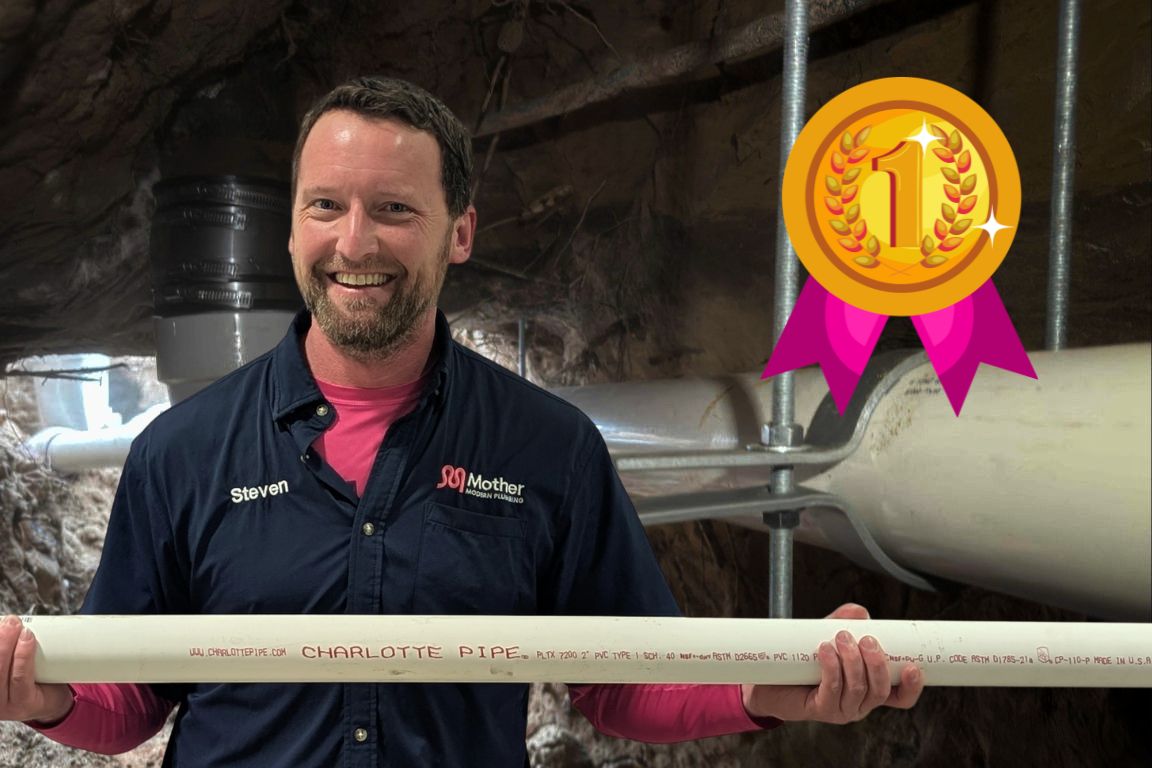


table of contents
table of contents
The best pipe for sewer line use is Schedule 40 PVC, followed closely by HDPE (high-density polyethylene). Schedule 40 PVC earns the top sewer pipe ranking for its durability in shifting soil conditions, resistance to external and internal stressors, and superior expected lifespan.
Schedule 40 PVC pipe also edges HDPE pipe material due to its performance in open trench sewer system installation and repairs. Homeowners should be sure solid core Schedule 40 PVC is being used, and not flimsier cellular core alternatives.
Do not install any sewer pipe material other than Schedule 40 PVC or HDPE in your backyard. Most other materials are not code-compliant- and even if they are, they don't provide a sound, sustainable main sewer line that lasts.
Mother’s current team of seven Master Plumbers evaluated seven modern and legacy options on six criteria to determine the right sewer pipe material for most homeowners.
{{sewer-line-repair-and-replacement="/services/sewer-line-repair-and-replacement"}}
Quick Results: Mother's Sewer Line Material Ranking
Don't feel like reading the whole article? No problem- here's an overview chart of our findings, and how our Master Plumbers ranked common sewer line materials.
*SDR-35 PVC pipe and ABS pipe routinely do not meet their listed lifespan in underground conditions.
The Sewer Pipe Materials We Reviewed In Our Study
Our Master Plumbers took a comprehensive look at seven current and legacy sewer line materials:
- ABS (Acrylonitrile Butadiene Styrene)
- Cast Iron
- Clay Tile
- HDPE
- Orangeburg
- Schedule 40 PVC
- SDR-35 PVC
Mother's staff felt it was important to include older clay, Orangeburg and cast iron pipe materials for the millions of homeowners still living with them in their residential sewer systems.
“A lot of folks out there still have pre-1980s plumbing in the backyard,” explains our Responsible Master Plumber Steven Smith (RMP-43457). “They need a current look at how their existing pipes stack up to modern materials.”
We primarily studied 4” pipe materials, the base code standard for single-family homes in most American regions.
The Plumbing Experts Who Ranked Them
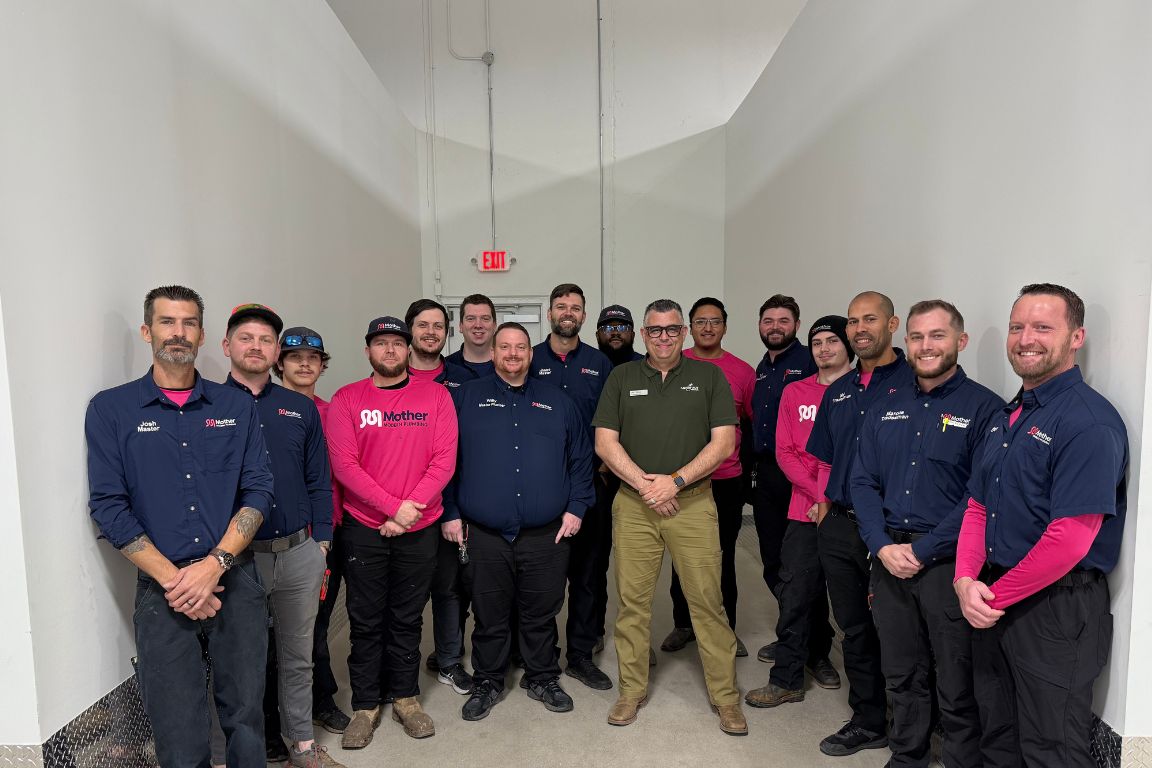
As of this publication, Mother's staff is led by Steven Smith and six other certified Master Plumbers. They have over 50 years of residential plumbing experience, most of it in Texas. In particular, Steven and Willy Dayton (M-46449) specialize in DFW sewer line repair, replacement, and trenchless repair service.
The research team is supported by Mother’s Journeyman Plumbers. Together, they combined hands-on sewer repair and installation experience in the field with an in-office study of the four modern sewer line pipes on our list.
How We Chose the Best Pipe for Residential Sewer Lines
We focused our study specifically on residential sewer applications. Our plumbers weighed six distinct ranking criteria to create Mother's Sewer Line Material Ranking system.
- Underground Drainage Pipe Use. Most homeowners researching this topic need to repair or install a new main sewer line underground. We focused our ranking metrics on these situations, not in-home branch lines.
- Versatility. Many modern sewer material guides focus heavily on trenchless sewer line replacement applications. Not all properties have the soil stability and existing pipe integrity for trenchless solutions. We gave equal weight to traditional excavation methods.
- Lifespan. The expected lifespan of each material in normal-to-mildly stressful conditions.
- External Durability. This includes environmental and biological factors that affect most underground installations- soil type, groundwater and tree root intrusion.
- Internal Durability. How well each material withstands stressors inside the pipe walls. These include natural acids in wastewater, debris, fats and grease blockages.
- Cost. The cost per linear foot to purchase each material. We only analyzed current market prices for modern sewer piping. We did not factor cost into the overall ranking of pipe effectiveness- it’s listed for informational purposes only.
We Ranked These Materials for Homeowners, Not Other Plumbers
“The pipe's going in your backyard,” Steven asserts. “Our rankings need to be about what's best for you, not other plumbers.”
We focused less on what other contractors like about each pipe material. Our concern was the real-world longevity and performance of each material once it's installed.
“Nobody cares about trade industry trends when there's sewage backing up in their house,” Steven adds.
Schedule 40 PVC: The King of Home Sewer Line Materials
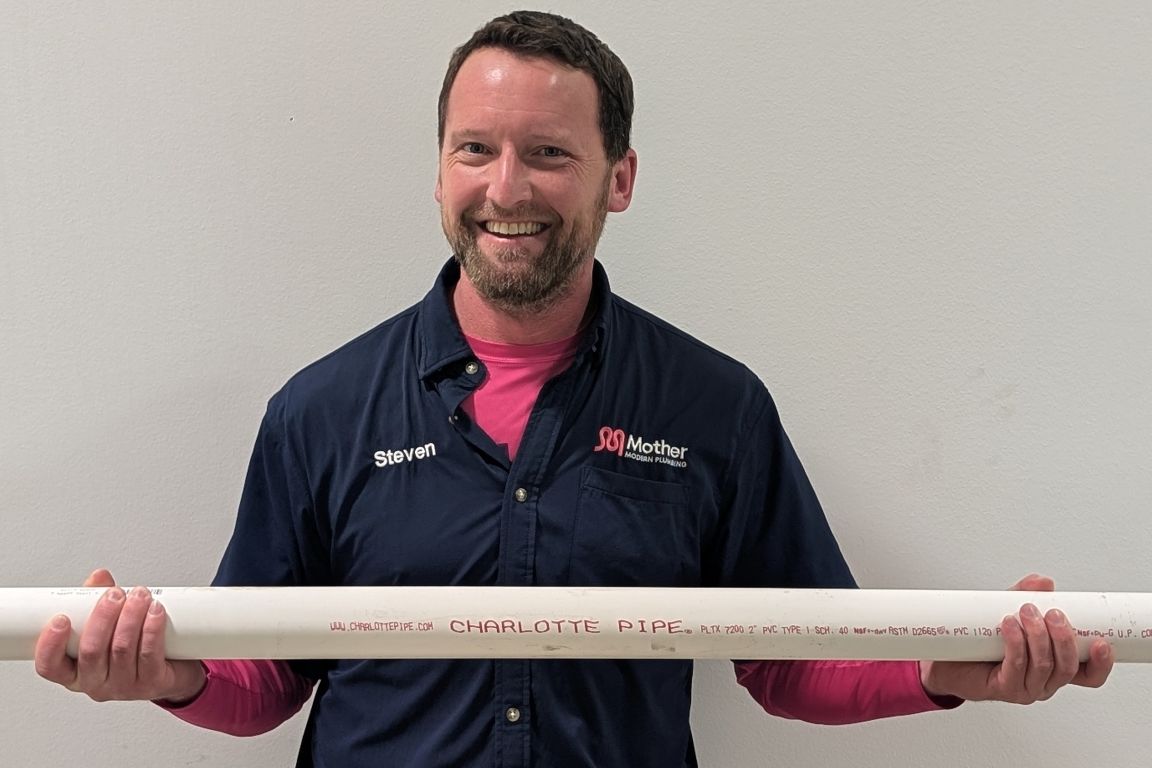
Our seven Master Plumbers unanimously rated solid core Schedule 40 PVC as the best overall sewer pipe material for most homes.
Most homes use gravity-fed sewer systems with a code-established grade running downhill (¼” of fall per foot) from the house to the city sewer or septic system. Schedule 40’s rigid, thick-walled nature shines in these applications. When applied on aggregate bedding with riser clamps, it maintains an ideal, straight-line slope.
Modern home interior drain, waste and vent plumbing systems (DWV) are almost always Schedule 40 PVC. Extending the same material to the main sewer line in your yard creates a seamless, solvent-welded transition.
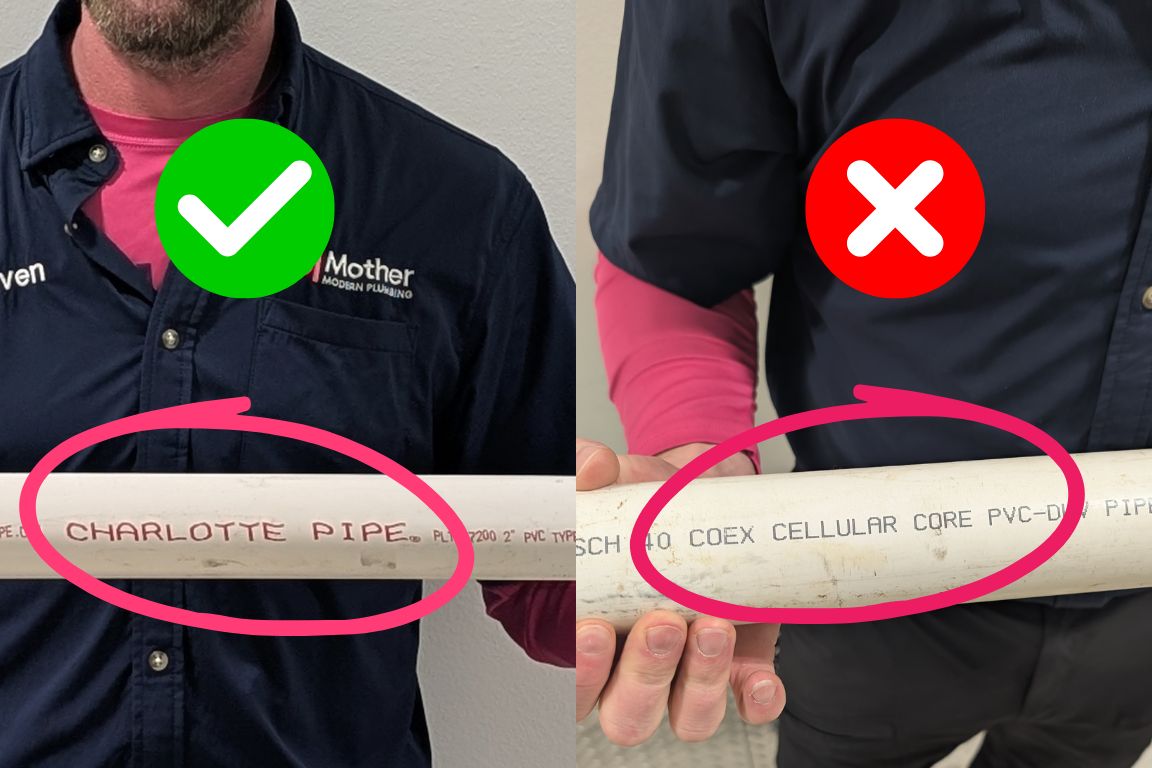
Important note: We rate solid core Schedule 40 PVC best in class for residential sewer line applications. Cellular core does not achieve the same results.
Look for Schedule 40 PVC clearly marked in Charlotte lettering on the pipe material. This differentiates it from cellular core material which is marked Cellular Core or COEX.
Why Schedule 40 PVC Won
Our Master Plumbers like Schedule 40 PVC most for its superior durability in volatile soil conditions. Our Dallas service area is defined by Blackland Prairie soil, which has clay content well above 50%. This clay causes extreme shrink-swell cycles that wreak havoc on underground pipes.
“When it rains, damp clay soil expands and puts over 10,000 pounds per square foot (PSF) of pressure on sewer pipes,” Steven explains. “Droughts leave cracks and voids under buried lines. Schedule 40 doesn’t sag or dip when this happens.”
Solid core construction is crucial to Schedule 40 PVC’s success. A 4” Schedule 40 pipe achieves a greater pressure rating (220 PSI) than its closest HDPE equivalent, HDPE SDR-11 (200 PSI)- while having pipe walls 42% thinner. This allows Schedule 40 PVC material to achieve greater durability at a slightly lighter weight.
COST: $2.50-$4.00 per linear foot
Schedule 40 PVC Pipe: Pros and Cons
Pros:
- Superior durability in solid core form
- Best in class for open trench sewer system projects
- Highly resistant to acids in wastewater and heat expansion
- 50-100+ year lifespan from date of installation
- Cheaper per linear foot than HDPE
Cons:
- More rigid material than HDPE
- Improperly used solvent cement leads to tree root intrusion at joints
HDPE Pipe: Great for Trenchless, But Second Best Overall
We rate HDPE SDR-11 pipe as second best for most residential sewer lines. Its pliable nature offers the best resistance to heavy loads of all materials we tested. It also provides best-in-class flow velocity- the speed at which wastewater can flow through a pipe safely.
Current sewer pipe material guides laud HDPE for its performance in trenchless repair and replacement settings. Its excellent flexibility and seamless heat-fused joints make it ideal.
HDPE also scored highly in temperature resistance once installed. However, it’s vulnerable to initial heat during open trench installation.
HDPE's Benefits Are a Double-Edged Sword
While its flexible nature withstands shifting soil nicely, that same elasticity presents issues post-installation.
The pliable material has some “memory”. Previously rolled or coiled HDPE will undulate in an open trench if the bedding isn’t perfectly compacted.
If no trench exists, HDPE is the best trenchless sewer installation material for most American homes. This status does come with two caveats:
“HDPE is a great trenchless pipe material,” Steven states. “But realistically, trenchless isn’t an option for everyone. And if you’re doing CIPP sewer lining, you’re not using HDPE anyway.”
COST: $3.50-$6.00 per linear foot
HDPE Pipe: Pros and Cons
Pros:
- Simple trenchless sewer repair application
- Thick pipe walls with high chemical resistance
- Higher flow velocity limit vs. Schedule 40 PVC
- Withstands heavy loads without fatigue and cracking
- 50-100+ year lifespan from date of installation
Cons:
- Connection to in-home PVC pipes requires weak rubber gaskets
- Smaller interior pipe diameter vs. Schedule 40 PVC
- Sewer belly risk in poorly compacted bedding
- More expensive per linear foot than Schedule 40 PVC
Editor's Note: We do not recommend any material for residential sewer line use ranked below HDPE in this article. Read on to learn why.
SDR-35 PVC: A Budget Material (For a Reason)
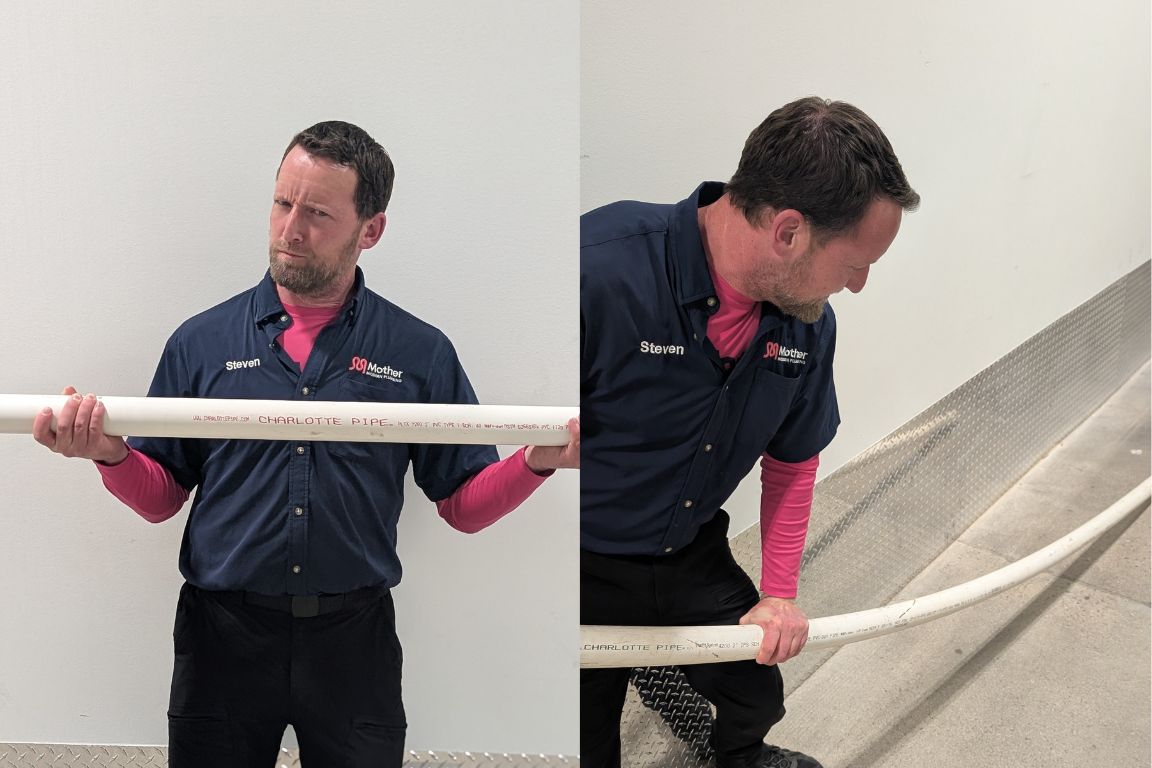
SDR-35 is a thin-walled, cellular core PVC pipe that lacks the performance and durability of its Schedule 40 relative.
You’ll often see SDR-35 in green and white. It’s heavily used in city sewer and municipality settings for sprawling, deeply-buried sewer grids. It’s also pushed by budget contractors for its lower price point- but for homeowners, you get what you pay for.
“You save a buck per linear foot, but you trust your sewage to cheap plastic,” Steven states. “Definitely not worth the trade off.”
Pro Tip: Don’t accept “equal substitution of materials” clauses in sewer repair bids. This allows unethical sewer plumbers to swap out quality piping for SDR-35 and pocket the cash.
SDR-35 Doesn’t Meet the Schedule 40 Pipe Standard
If Schedule 40 PVC and HDPE are pro athletes, SDR-35 PVC got cut from the junior varsity team in high school.
“SDR” means Standard Dimension Ratio- meaning its pipe walls are proportional to its diameter. This makes SDR-35’s walls half as thick as Schedule 40 PVC.
That’s fine for a city main buried deep under streets and urban infrastructure. Closer to the surface, it cracks in clay soil, is broken by intrusive tree roots, and crushed by heavy loads under driveways and near slab-on-grade foundations.
"We pull crushed SDR-35 out of yards all the time," Steven notes. "It just doesn't have the backbone to fight back when clay soil and tree roots attack. People end up with backyard sewage overflows."
COST: $1.75-$2.50 per linear foot
SDR-35 Pipe: Pros and Cons
Pros:
- Cheaper than Schedule 40 and HDPE
- Lighter and easier to handle for installers
- Highly resistant to internal chemical and wastewater corrosion
Cons:
- Highly susceptible to crushing in shifting soil
- Subpar load capacity under driveways, patios, foundations
- Subpar performance against aggressive tree root intrusions
- Poor performance in shallow open trench conditions
- Common “bait and switch” material by unlicensed plumbers
ABS: An Indoor Pipe That Should Stay Indoors
You’ll recognize ABS pipe (acrylonitrile butadiene styrene) as the black plastic pipe in the interior of older home plumbing systems. It’s also used heavily in RV and mobile homes.
You shouldn’t see it outdoors or underground. Ever.
“ABS pipe isn’t a main sewer line material, period,” says Steven. “It’s probably against your local plumbing code.”
ABS Pipe’s Indoor Benefits Don’t Translate Underground
ABS has virtually zero resistance to sunlight, heat or UV exposure. This factor alone makes it a terrible choice for outdoor sewer system use.
A short span of time sitting in the sun awaiting installation is enough to warp the pipe material. Once underground, it bellies more frequently than other modern materials. Aging ABS can also undergo delamination- the inner and outer plastic shell debonds from the foam middle layer.
Sewer backups are common in improperly used ABS sewer lines. Drain cleaning won’t fix these issues, and most sewer cleaning methods will rip underground ABS apart.
COST: $2.00-$3.50 per linear foot
Pros:
- Good impact resistance in freezing temperatures
- Smooth interior walls promote healthy wastewater flow
- One-step cement process, easier to glue than PVC pipe
Cons:
- Banned by many local plumbing codes as an underground sewer material
- Highly prone to softening, warping and bowing in hot climates
- Documented history of material separation and delamination
- Poor performance against root intrusions and shifting soil
- Poor performance against even minor external stress
Legacy Sewer Pipe Materials: Outdated and Outshined
Cast iron, clay tile and Orangeburg pipe materials still exist in many American homes built before 1980. Before we discuss any pros and cons of these materials, please note:
Every existing sewer pipe made from these materials is past its rated lifespan and should no longer be in your sewer system. Our Master Plumbers advise you replace them immediately.
Cast Iron Pipe
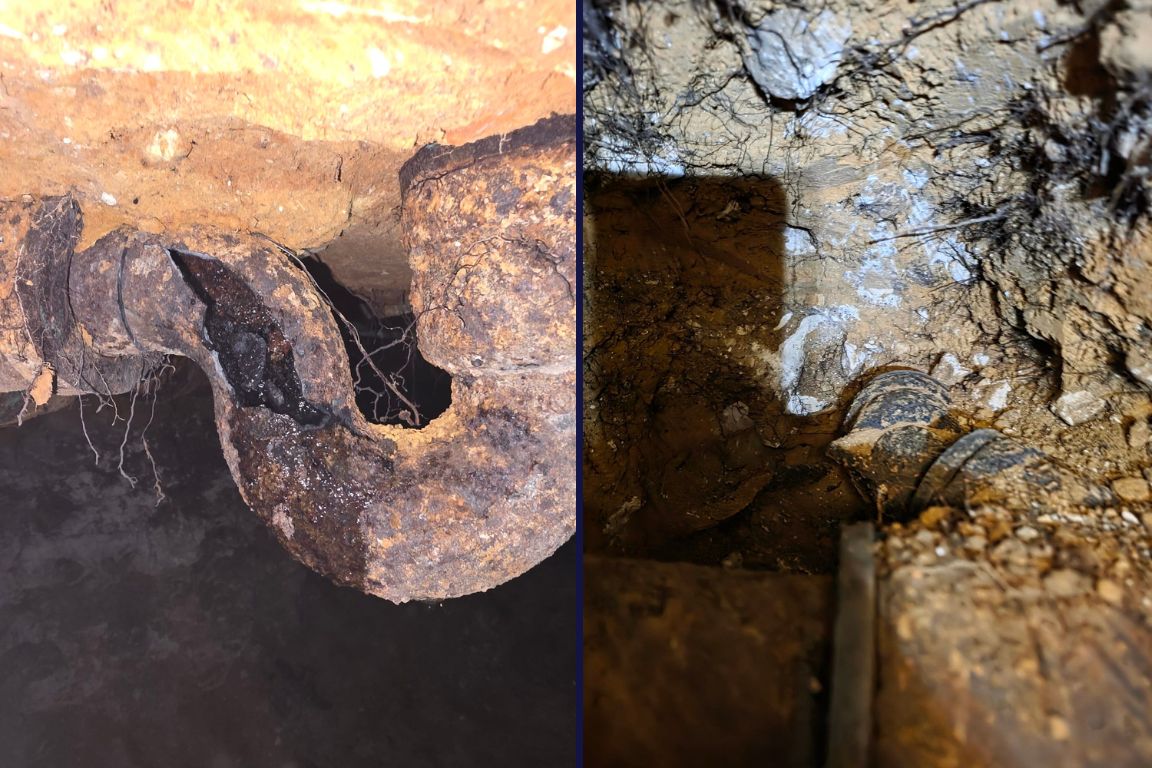
Cast iron pipe systems were the standard in the 1960s and 1970s. Once prized for their weight and perceived durability, they quickly fell out of favor by 1980 due to cast iron’s inherent flaws as a sewer line material.
Cast iron is easily pitted and corroded by the acids in wastewater, as well as long-term exposure to chemical cleaners. These create catchpoints for debris and heavy blockages, as well as easy entry points for intrusive tree root systems.
While cast iron was initially rated to last 50 years from installation, most residential systems in the DFW Metroplex degraded sooner. All existing cast iron should be replaced.
Pros:
- Dense, heavy walls create quiet drainage
- Pre-corrosion, able to withstand extreme pressure and bear heavy loads
Cons:
- Channel rot formed by acidic wastewater flor
- Rust and scaling on internal pipe walls creates blockages and breaks
- Vulnerable to thermal shock with age and exposure to boiling water
- Incredibly heavy and labor-intensive to dig and move
- Connection to modern PVC requires shielded mechanical couplings
- Expired material
Clay Tile Pipe
Vitrified clay pipe (VCP) is perhaps the oldest pipe material in the world. It was widely used in the early 20th century in residential sewer lines due to its chemical resistance and perceived longevity.
“100 years ago, plumbers said clay pipe would last if it was never touched moving soil or roots,” Steven explains. “But when does that ever happen?”
Existing VCP is extremely brittle, cannot be hydro jetted, and breaks against virtually any tree root.
Pros:
- Chemical immunity against the acids in sewage
Cons:
- Dozens of joints due to 2-4 foot sections
- Decaying joints allow seepage of raw sewage into yards
- Little to no resistance against tree root intrusions
- Zero flexibility to shifting clay soil
- Cannot be cleaned using modern equipment
- Expired material
Orangeburg Pipe
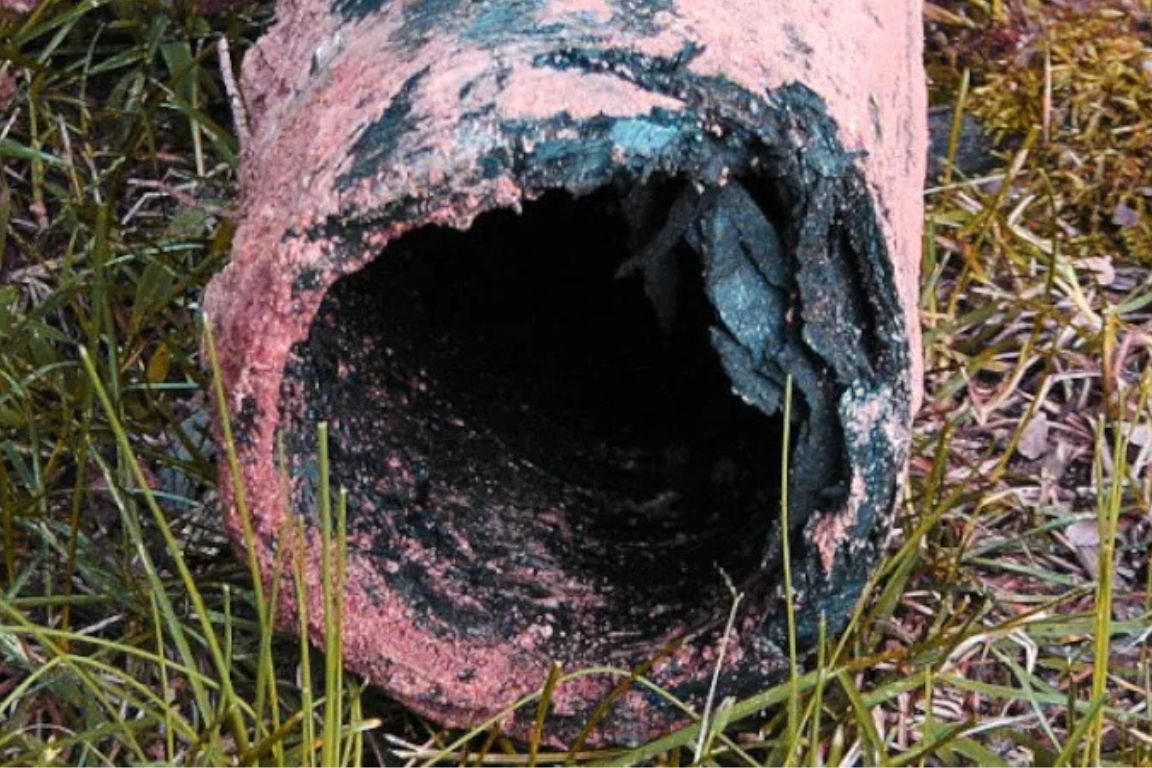
Orangeburg sewer pipes are the most dangerous material to have in the backyard. A budget material in World War II era construction, Orangeburg is a mix of coal pitch and tar- it’s literally a combination used to make cardboard.
It was cheap. It was lightweight. And it failed within 10 years of installation in many residential sewer systems. If it’s still under your house, it needs to come out immediately.
Pros:
- None
Cons:
- The equivalent of using cardboard as a sewer pipe
- Damp soil creates conditions for total sewer collapse
- Extremely vulnerable to heat and extreme cold
- Zero resistance to tree roots
- Inner layers of tar paper strip away over time
- Cannot withstand any form of sewer line cleaning
- Expired material
The Bottom Line for Your Sewer Line Material
If you’re repairing or replacing your home’s main sewer line, Schedule 40 PVC is the right sewer pipe material for the job. Its mix of durability, lifespan, and resistance to internal and external stress is unparalleled for most projects.
Homeowners considering trenchless sewer replacement may also opt for HDPE for its flexibility and seamless nature. SDR-35 PVC pipe and ABS pipe should not be used underground. Orangeburg, clay and cast iron pipe should be replaced as soon as possible.
Always choose durability and lifespan over cost- the price difference between premium materials and poor ones isn’t much, anyway. Be sure to compare quotes from licensed plumbers with decades of local sewer repair experience to ensure proper soil compaction, bedding and slope.
Need your sewer line fixed in DFW? Call Mother 24/7 for Master Plumber oversight and Schedule 40 PVC materials, backed by our warranty.
{{sewer-line-repair-and-replacement="/services/sewer-line-repair-and-replacement"}}