
Slab Leak Repair + Detection in Fort Worth

What's included:
- 6-Year Slab Leak Repair Warranty
- No Dig Foundation Leak Detection Equipment
- Video and Photos Kept on File for Your Claim
- Get Same Day Service!
- Family Owned and Operated
- Fix Your Issue 100% Guaranteed



Emergency Slab Leak Repair and Detection in Fort Worth
Beneath your slab, Fort Worth’s Washita Prairie clay soil is putting 10,000 PSF (pounds/square foot) of pressure on your underground plumbing pipes. A leak under the slab threatens the stability of your home- you need a licensed, local plumbing service that can fix it fast.
Mother Modern Plumbing provides same day slab leak detection and repair service from our Fort Worth office on Muirwood Trail. Our Master Plumber's two decades of Fort Worth plumbing experience guides our advanced approach to complete under-slab solutions.
We back every slab leak repair with Mother's 6 year warranty on parts and labor.
Mother Modern Plumbing specializes in surgical slab leak repairs. We identify the breach through non-invasive electronic detection and thermal imaging before discussing the best path forward. Our technicians provide a repair that accounts for your home’s age, the aggressive nature of Tarrant County soil, and your long-term property value.
Call Mother 24/7 for rapid slab leak detection and comprehensive Fort Worth slab leak repair.
Start With Non-Invasive Slab Leak Detection
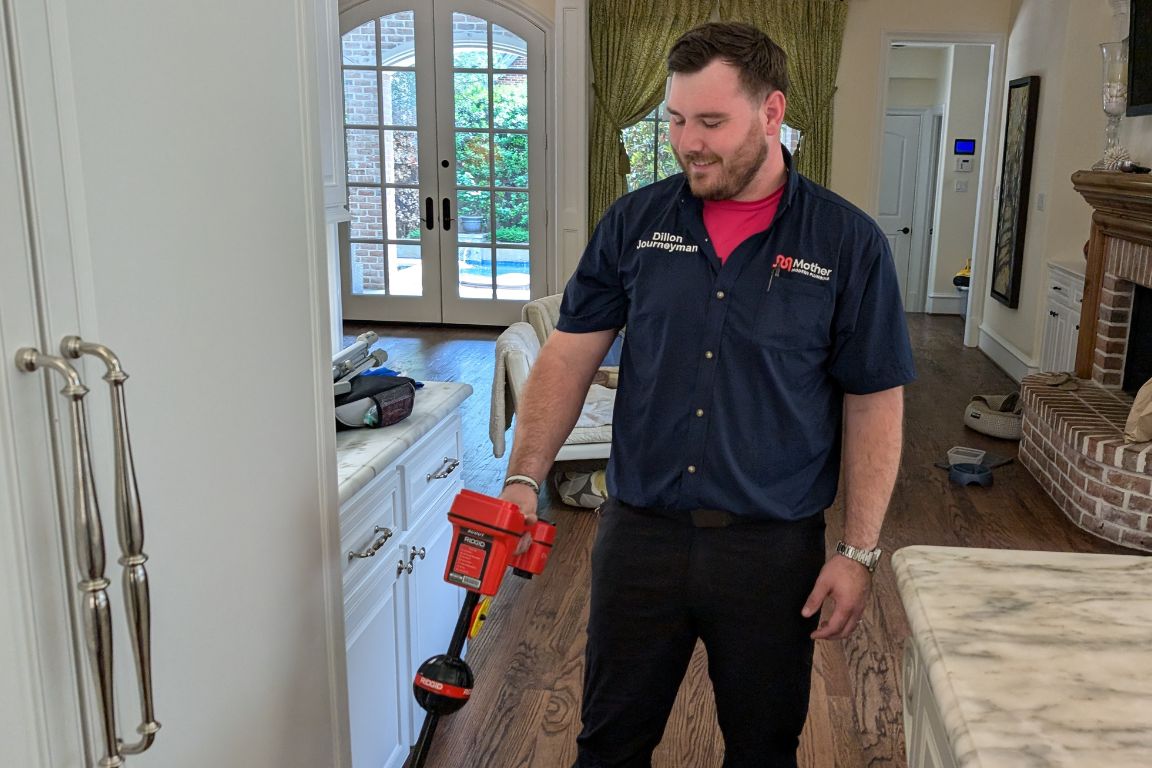
Slab leaks are messy enough- Mother doesn't add to the damage. We use thermal imaging to verify heat plumes and acoustic sensors to triangulate the break before we ever dig a hole.
- Infrared thermal cameras detect temperature changes around and underneath your foundation. Color mapping allows us to detect the exact location of your slab leak, and whether hot or cold water is escaping.
- Acoustic leak location equipment uses powerful microphones to locate the sound waves caused by pressurized water escaping a leaky pipe under the slab.
No shovels. No "exploratory digging". We find your slab leak and show you the proof before discussing repair options.
Slab Leak Repair Designed for Fort Worth Homes
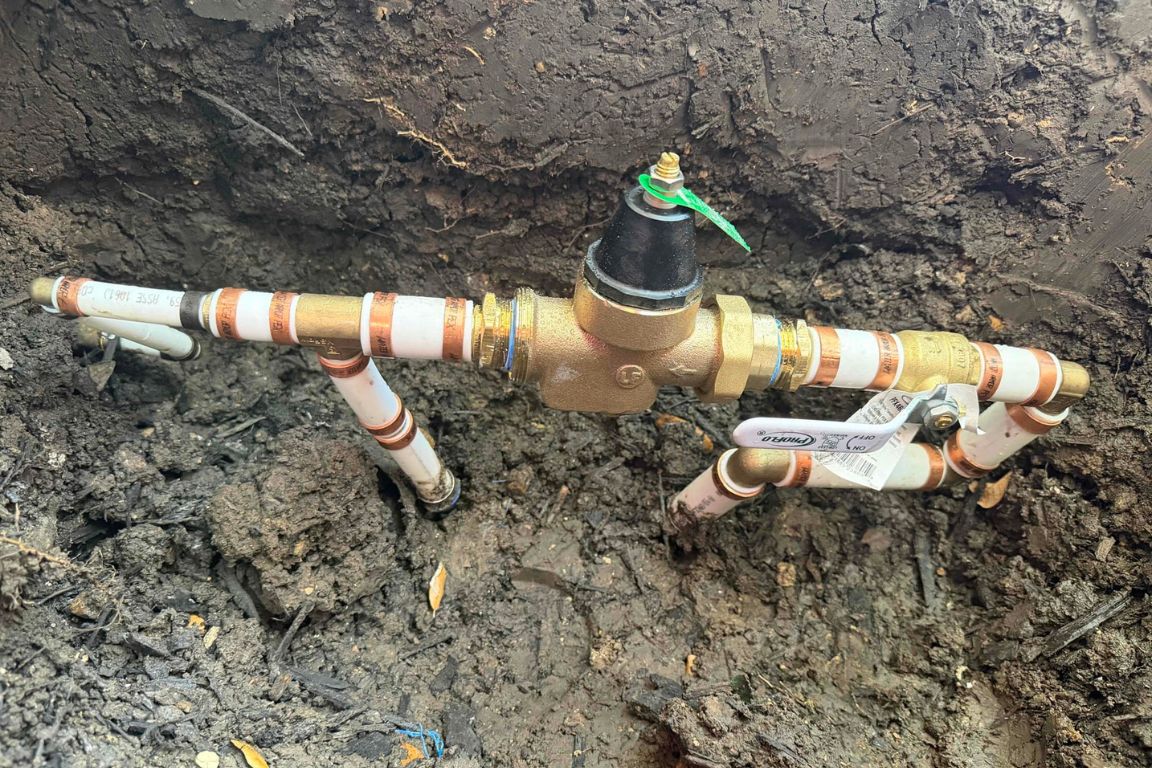
Once the problem is pinpointed using electronic leak detectors and infrared cameras, we provide three methods to fix your slab leak for good.
- Spot Repair: This involves cutting a small access hole (typically 24 inches) through the slab to reach the specific breach. We remove the failed section of copper and replace it with new, high-quality pipe. This is often the most cost-effective choice for newer homes or isolated failures.
- Attic Reroute: In many Fort Worth neighborhoods, like Ridglea or Wedgwood, the safest path is to abandon the under-slab line entirely. We run new supply lines through the attic or walls, bypassing the foundation altogether. This ensures that a future soil shift won't cause another leak in that same line. It is highly recommended for post-tension slabs where cutting concrete is risky.
- Full Repipe: If your home has multiple leaks or aging galvanized pipes, a full repipe replaces the entire supply system with flexible PEX or new copper manifold systems. This is the ultimate way to protect your home's equity and stop the cycle of recurring slab leaks.
Materials and Compliance Standards
We utilize materials designed to survive the Fort Worth environment. PEX (cross-linked polyethylene) is a favorite for reroutes because it is flexible enough to handle minor foundation movement and is immune to the chloramine disinfection used in our city water.
For spot repairs, we use Type L Copper, which has thicker walls than standard pipe to provide a longer service life.
Mother manages the entire permit process through the City of Fort Worth's Accela portal.
Fort Worth Soil vs. Your Concrete Slab: Why The Leak Happened
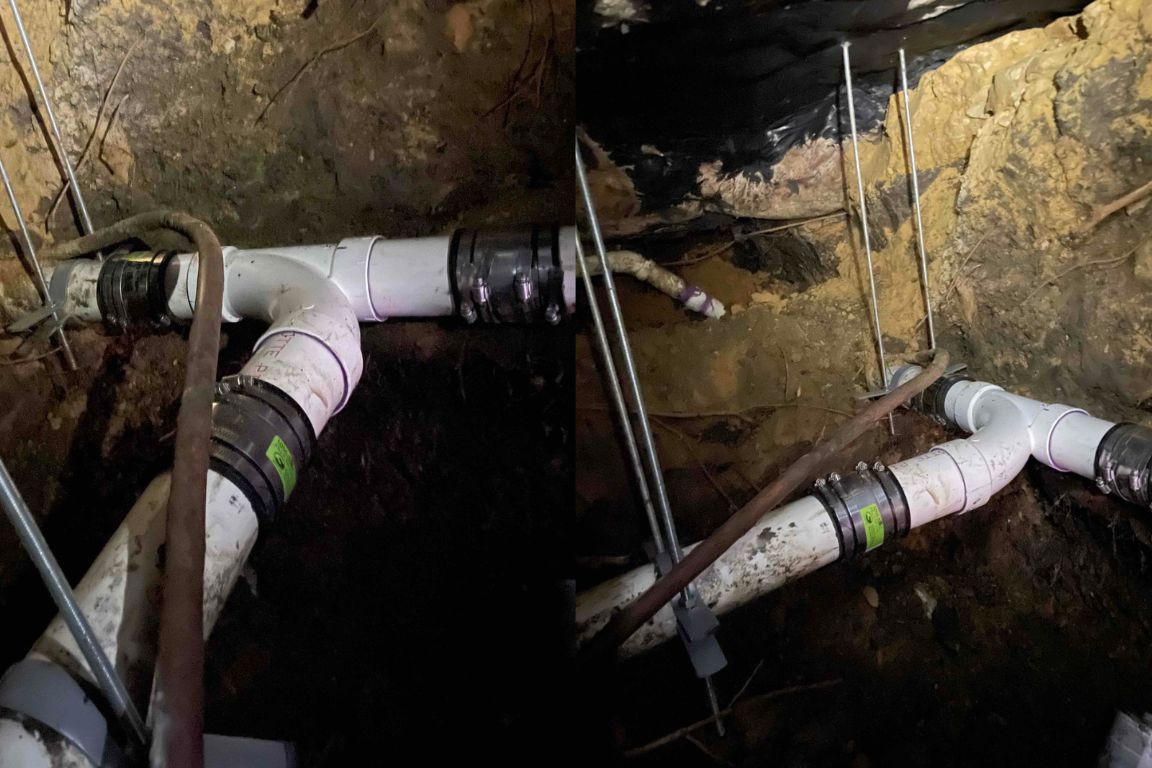
Fort Worth sits on Washita Prairie clay soil. In plain English: this soil has an extreme "shrink-swell" capacity. During a North Texas drought, the clay contracts and pulls support away from your foundation. When the rain returns, it swells with enough force to heave a concrete slab several inches.
Copper pipes embedded in your foundation are not flexible. As the ground moves, the pipe stays still- until the stress reaches a breaking point, usually at a joint or an elbow. This seasonal cycle fatigues your plumbing infrastructure year after year.
Neighborhoods near the Trinity River or local lakes face even more pressure due to higher groundwater levels and more dramatic soil shifting.
Fort Worth Neighborhoods at Risk
- Tanglewood: Many homes here feature extensive under-slab plumbing networks and large concrete footprints. With original copper from the 1970s, these properties face higher failure rates as the original materials reach their 50-year mechanical limit.
- Fairmount: In this historic district, the concrete foundations are often decades old and may lack modern moisture barriers. We frequently see original galvanized lines or early copper struggling against the shifting clay in these established lots.
- Lake Worth: Homes located near the water deal with significant hydrostatic pressure. The proximity to the lake means the soil remains more saturated, leading to aggressive "heaving" cycles that can snap sub-slab lines more frequently than in drier parts of the city.
Peace of Mind: Your Fort Worth Slab Leak Warranty
Mother provides a comprehensive 6 year warranty on all slab leak repair projects in Fort Worth. This guarantee covers all parts and labor associated with your service.
Serving Fort Worth Neighborhoods with Expert Slab Leak Repair
Slab leak repair is essential for homeowners in Arlington Heights, where historic homes built between the 1920s and 1940s line the streets near Camp Bowie Boulevard and the Fort Worth Cultural District. The aging foundations and original plumbing in these charming brick residences make them particularly susceptible to slab leaks, requiring experienced technicians familiar with older construction methods.
### Berkeley
Residents near Elizabeth Boulevard and Park Hill Drive in Berkeley Place often need slab leak repair due to the neighborhood's early 20th-century housing stock featuring one and two-story brick and stucco homes. Located south of downtown Fort Worth near the Fort Worth Zoo, these historic properties with ornamental streetlights and mature trees frequently have aging cast iron or galvanized pipes beneath their foundations that are prone to corrosion and leaks.
### Cheyenne Ridge
Slab leak repair services in Cheyenne Ridge address the needs of newer single-family homes and townhouses built primarily after 2000, located near Bonds Ranch Road and Fossil Creek in northwest Fort Worth. While these modern constructions feature updated plumbing, shifting North Texas clay soils can still cause foundation movement and subsequent slab leaks in this growing community.
Arlington Heights
Slab leak repair is essential for homeowners in Arlington Heights, where historic homes built between the 1920s and 1940s line the streets near Camp Bowie Boulevard and the Fort Worth Cultural District. The aging foundations and original plumbing in these charming brick residences make them particularly susceptible to slab leaks, requiring experienced technicians familiar with older construction methods.
Berkeley
Residents near Elizabeth Boulevard and Park Hill Drive in Berkeley Place often need slab leak repair due to the neighborhood's early 20th-century housing stock featuring one and two-story brick and stucco homes. Located south of downtown Fort Worth near the Fort Worth Zoo, these historic properties with ornamental streetlights and mature trees frequently have aging cast iron or galvanized pipes beneath their foundations that are prone to corrosion and leaks.
Cheyenne Ridge
Slab leak repair services in Cheyenne Ridge address the needs of newer single-family homes and townhouses built primarily after 2000, located near Bonds Ranch Road and Fossil Creek in northwest Fort Worth. While these modern constructions feature updated plumbing, shifting North Texas clay soils can still cause foundation movement and subsequent slab leaks in this growing community.


Michael Stucker
Steven helped us nail down the source of an intermittent slab leak. He clearly communicated what the problem was and what our options were to solve it. He was able to limit drywall cuts to relatively small openings in the garage, and left the area spotless when he was done. Will definitely call Mother again whenever we have plumbing needs.
December 2023
Christopher Taylor
Slab leak repair. Mother Modern Plumbing educated us on what was happening with our plumbing and made repair recommendations. They did not try to upsell us with unnecessary repairs. It was a good experience; they did what they said they would do and at the quoted price.
May 2025
Ronnie Harle
SND was my second plumbers my first just could not get the job done I called SND truly professional they knocked out a huge tunneling job and replumbing the whole house in a week I was amazed. They will be my plumbers from now on out
May 2023
Do you offer emergency slab leak detection in Fort Worth?
Are Fort Worth slab leaks covered by insurance?
How do you find slab leaks in Fort Worth?
Are Plano slab leaks covered by homeowner's insurance?
How can you tell if you have a slab leak?


-(27).webp)
-(22).webp)
-(16).webp)
-(8).webp)





.webp)