Sewer Leak or Water Leak Under House: How to Tell
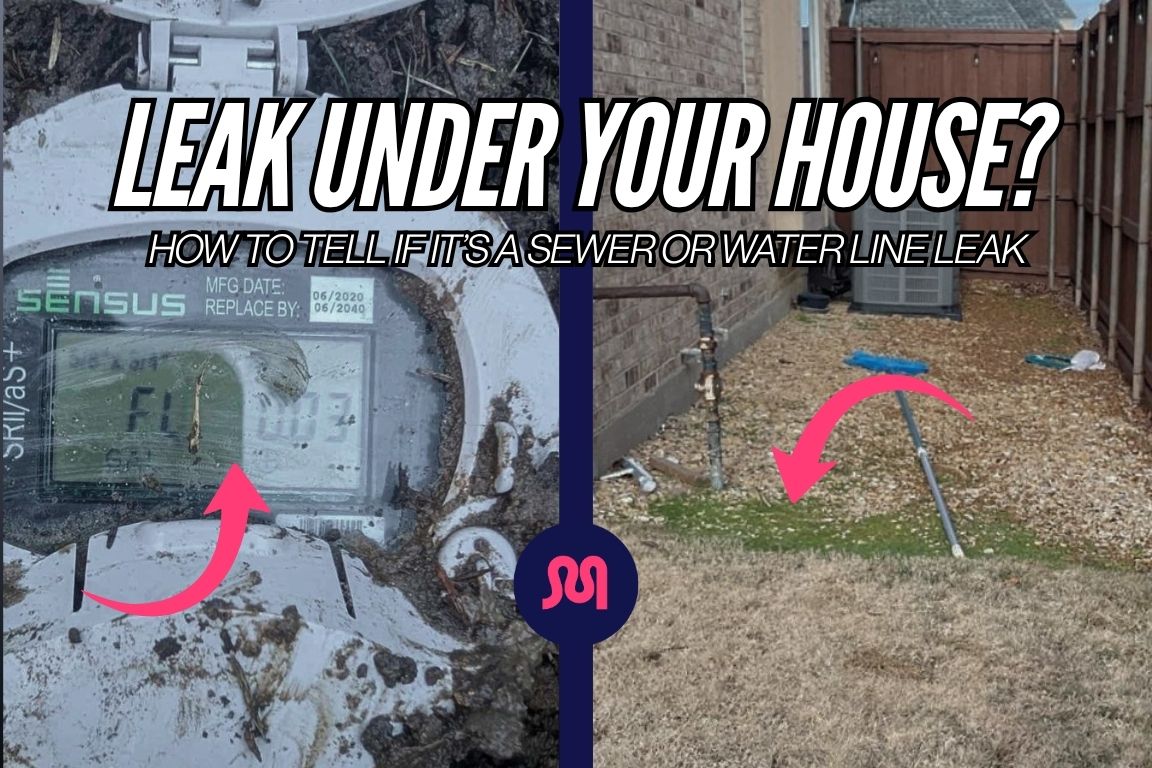


table of contents
table of contents
In North Texas, almost all our homes sit on concrete slab foundations. Because of this, a leak under the house is completely synonymous with a slab leak.
Once you’re sure there’s a leak directly beneath your house, the next question is simple: is it a sewer drain leak or a water supply line leak?
Diagnosing the type of pipe leak underneath your home comes down to understanding the physics of your plumbing. A fresh water leak is pressurized, while a wastewater leak is in a gravity-fed sewer line.
Our Master Plumbers outline the distinct symptoms that separate a water leak from a sewer leak under your slab. We’ll start you with a simple DIY test at the water meter, help you identify your specific plumbing issue, and tell you when it’s urgently important to call a licensed plumber for repairs.
{{slab-leak-repair="/services/slab-leak-repair"}}
Simple DIY Sewer or Water Leak Test: Check the Water Meter

“It’s important to call a plumber ASAP if you have a leak under your house,” says our Responsible Master Plumber Steven Smith (RMP-43457). “But there’s a quick DIY test you can perform first that makes detection and repair much easier.”
If you suspect a foundation leak, or the city called about a hidden leak on your property, head to the water meter first. Follow this simple 3-step DIY test, and you’ll likely discover if you have a fresh water or sewage leak:
- Turn off every water fixture, faucet and water-using appliance inside and outside your home.
- Find and go to your municipal water meter (usually near the curb).
- Look for the low-flow leak indicator on the meter. This is either a small spinning triangle, a red gear/star, or a digital flow rate displayed as a number.
The Verdict: Is the Indicator Spinning or Not?
If the indicator is spinning with all water off, you have a fresh water leak in your pressurized incoming water supply line.
If the indicator isn’t moving but you know a leak exists, the breach is in your drainage system- a sewer line under your house or the main drain pipe that connects your in-home drainage plumbing to the main sewer line.
4 Signs You Have a Freshwater Leak Under Your Slab
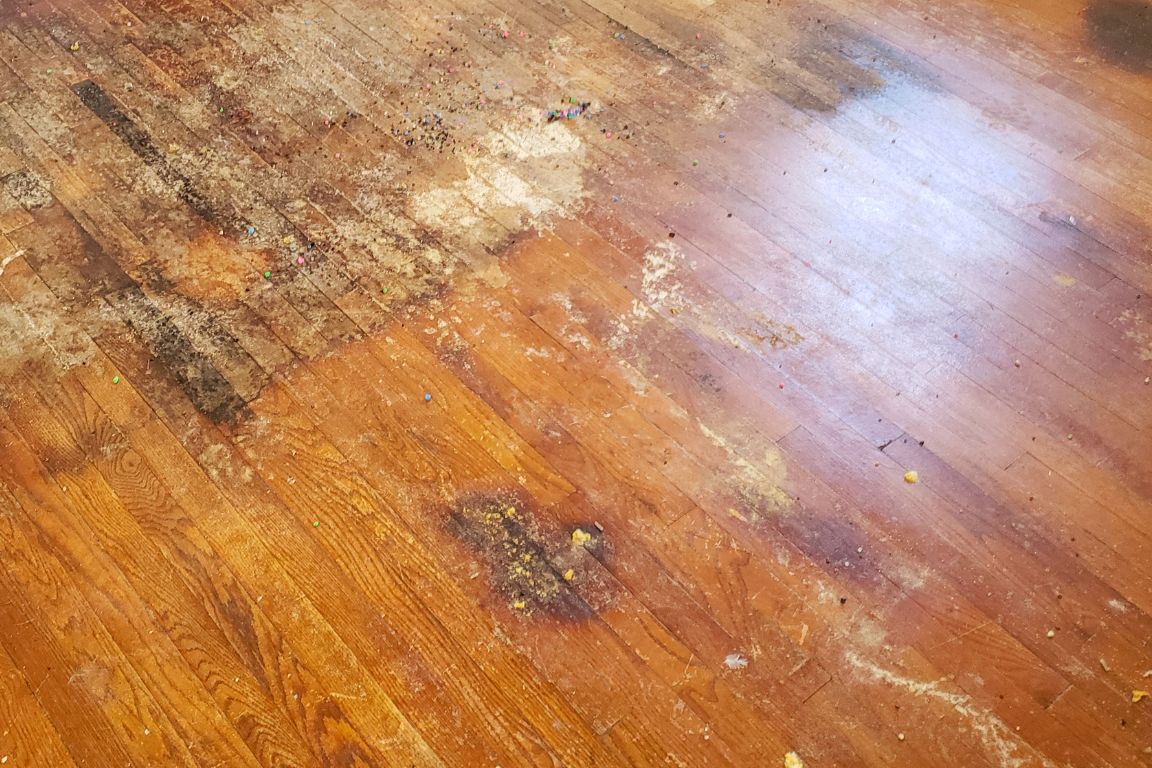
If your water meter test was inconclusive, don’t worry! There are clear symptoms and visual indicators that separate a water leak under the house from a broken sewer line.
Steven outlines four clear red flags there’s a hidden water leak in or under your foundation:
Unexplained Water Bill Increases
Pressurized supply lines run 24/7, whether your faucet is turned on or off. A leak in the water line wastes thousands of gallons per month- those show up on your water bill whether you actually “used” the water or not.
“A sudden jump in your monthly bill without using more water in your household is the most common sign of a hidden supply line leak,” Steven notes.
The Sound of Running Water Behind Walls or Under Floors
Ever hear a rushing or hissing water sound in your walls or under your floors at night? That’s the sound of pressurized water spilling out of a damaged pipe.
“If you hear a whoosh or a hiss under the first floor of your house, we usually find a buried water line leak,” Steven says.
Warm Spots on Your Flooring
A warm spot on the floor is a troubling symptom, but it has a silver lining- it narrows down the potential source of your leak to one thing.
“If you feel a warm patch in your floor, you have a hot water line leak,” Steven explains. “Hot water escapes from the pipe, and heat rises- that’s what’s making your floor hot.”
A Sudden Drop in Home Water Pressure
When a main supply line breaks under the foundation, it dumps massive amounts of water into the soil around the slab. The EPA reports even a small underground water leak wastes 6,300 gallons per month.
When water leaves the pressurized line, the water pressure goes with it. Weak showers and dribbling sink faucets are common indications of an underground water leak.
4 Signs Your Slab Leak Is Caused by a Sewer Drain Break

Unlike a water leak, a sewer leak under the house doesn’t reduce your water pressure or leave hot spots on the floor. But there are still signature warning signs there’s a drainage issue under the slab.
“Sewer and main drain leaks are a little trickier to spot,” Steven states. “But if you know what to look for, they’re still pretty easy to spot. And they’re definitely easy to smell.”
Foul, Musty Odors in the House
Wastewater trapped beneath the slab releases hydrogen sulfide gas, which seeps up through the concrete and floorboards into your living space.
“If weird spots in the house stink- like a laundry room sewer smell- there’s definitely a drainage issue happening somewhere,” Steven says.
Foundation Heaving in Isolated Sections
Sewage dumping into one concentrated area is trouble in regions like the DFW Metroplex, where expansive clay soil retains moisture and swells rapidly. This forces nearby sections of your concrete foundation upward and creates uneven flooring in specific rooms.
Pro tip: Water pooling near your foundation could indicate multiple plumbing issues. But when that water smells really bad, it’s likely a sewer break near the slab.
New Pest or Drain Fly Infestations
Pooling raw sewage under a foundation creates an ideal, moisture-rich breeding ground for pesky drain flies, roaches, and rodents.
These pests work their way into the broken pipe and up into your floor drains and sink drains.
Multiple Slow or Backed Up Drains
A broken sewer main creates a “wastewater traffic jam” throughout your house. Your drainage system relies on gravity to flow properly. When the path is blocked and airflow is restricted, wastewater has nowhere to go but back up the line.
This causes toilets to gurgle and multiple tubs/sinks to drain sluggishly at the same time. A break near the slab- right where the main drain pipe connects to your sewer line- is a terrible place for this backup to occur.
This is how wastewater ends up in your shower, or why multiple sinks are clogged on different floors of your house.
{{sewage-backing-up-into-house-what-to-do-right-now="/blogs/sewage-backing-up-into-house-what-to-do-right-now"}}
The Visual Test: What Does Your Leak Damage Look Like?
A final DIY step in separating a drain line slab leak from a water line slab leak is looking at the damage itself.
Here’s what you’ll see in each case:
- Freshwater Damage:
- Clear water seeping through floorboards
- Damp carpets with no foul odor
- Clean puddles forming against the exterior foundation
- Sewer Damage:
- Dark or grayish seepage
- Severe sewer odors
- Patches of unusually lush, green grass near the foundation edge (while the rest of the yard is dry)
Remember: slab leaks are invisible until symptoms arise. Assume any visual signs of an underground pipe leak mean the problem’s been there for days, if not weeks.
It’s vital to act quickly once you notice the red flags.
You Must Act Fast- No Matter Which Underground Leak It Is
Once you’ve checked your water meter and noted the symptoms of your under-home leak, your DIY job is done. There’s nothing more you can do without risking further damage to your home- and trying to repair or access the leak yourself can ruin your insurance claim.
(If there’s water or wastewater damage in your house, take these pictures for insurance instead.)
Steven lists three specific reasons why calling a licensed plumber is the right move at this critical moment:
- Foundation risks. Whether it's fresh water or sewage, excess moisture destroys the structural integrity of the soil around your slab, leading to catastrophic foundation heaving or sinking. This is especially true in North Texas with its high clay soil content.
- Health hazards. Standing water under a slab breeds toxic black mold inside walls within 48 hours, while sewer leaks introduce raw biohazards and Category 3 black water.
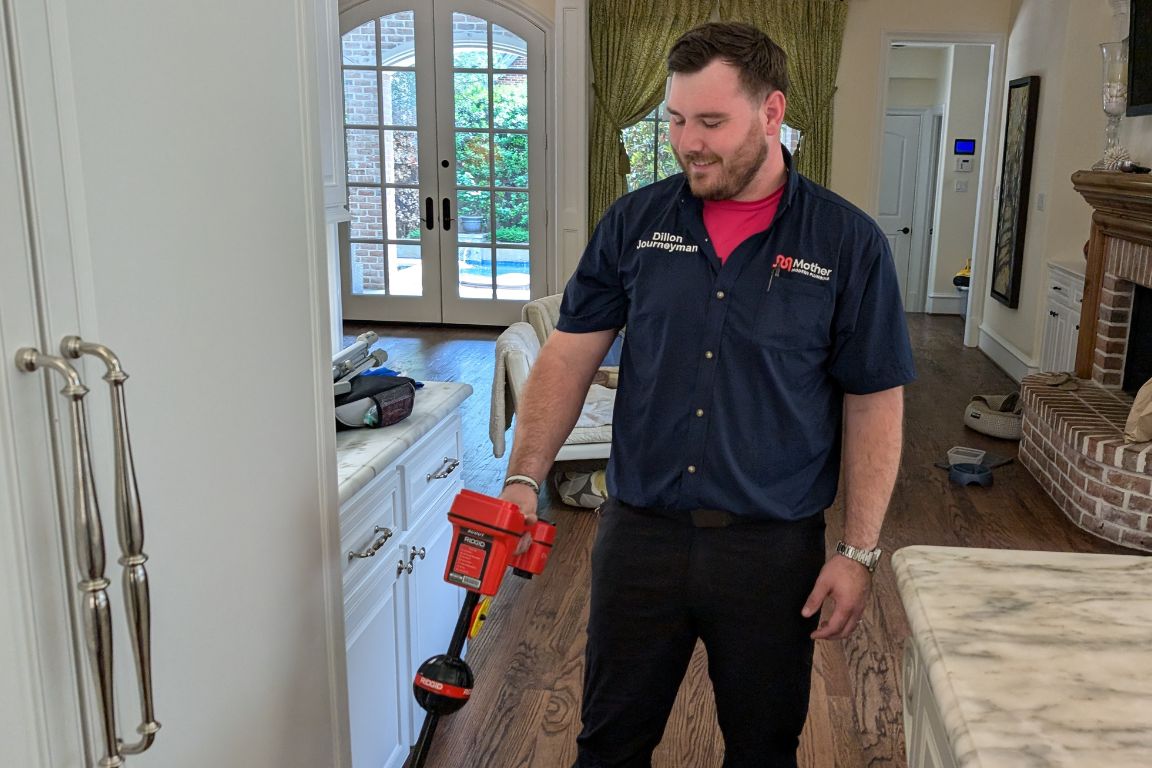
- You don’t have the tools. Do not start pulling up floorboards or guessing where the break is. It is time to immediately call a licensed plumber who specializes in slab leak detection- they have the equipment to find the leak without destroying your property.
Why Non-Invasive Slab Leak Detection is Essential
Hire a licensed plumber who owns and operates advanced slab leak location equipment that requires no digging or home damage to find your buried leak.
Here’s how this non-invasive technology saves you time, stress and money:
- Plumbers no longer need to blindly jackhammer your living room floor to find a broken pipe under the subfloor.
- For freshwater leaks, plumbers use highly sensitive acoustic leak detection equipment to hear the exact location of the leak through solid concrete.
- For sewer leaks, our plumbers use a fiber-optic camera with a radio frequency transmitter, allowing us to trace its exact path and depth from above ground.
- This technology ensures zero unnecessary property damage during the diagnostic phase of slab leak location and repairs.
Call Mother for Non-Invasive Slab Leak Detection in DFW
A DIY water meter test and specific symptoms help you identify whether that water leak under your home is a fresh water supply line or sewer drain line breach.
Spinning water meter dials when all your taps are closed is a clear indicator of a pressurized water line leak under the house. Rotten smells and pests in floor drains point to a sewer leak.
The steps your licensed plumber takes to locate and repair that leak should be just as straightforward- and every bit as damage-free.
“Guesswork costs homeowners thousands in unnecessary flooring repairs and landscape restoration,” Steven says. “Make sure your plumber uses damage-free location equipment to find your underground leak- whether it’s fresh water or sewage.”
Call Mother 24/7 for same day slab leak detection in the DFW Metroplex. Whether it’s a sewer or water leak under the house, we provide emergency scheduling.
{{slab-leak-repair="/services/slab-leak-repair"}}