What Is a Slab Leak, and Why Do They Happen?


table of contents
table of contents
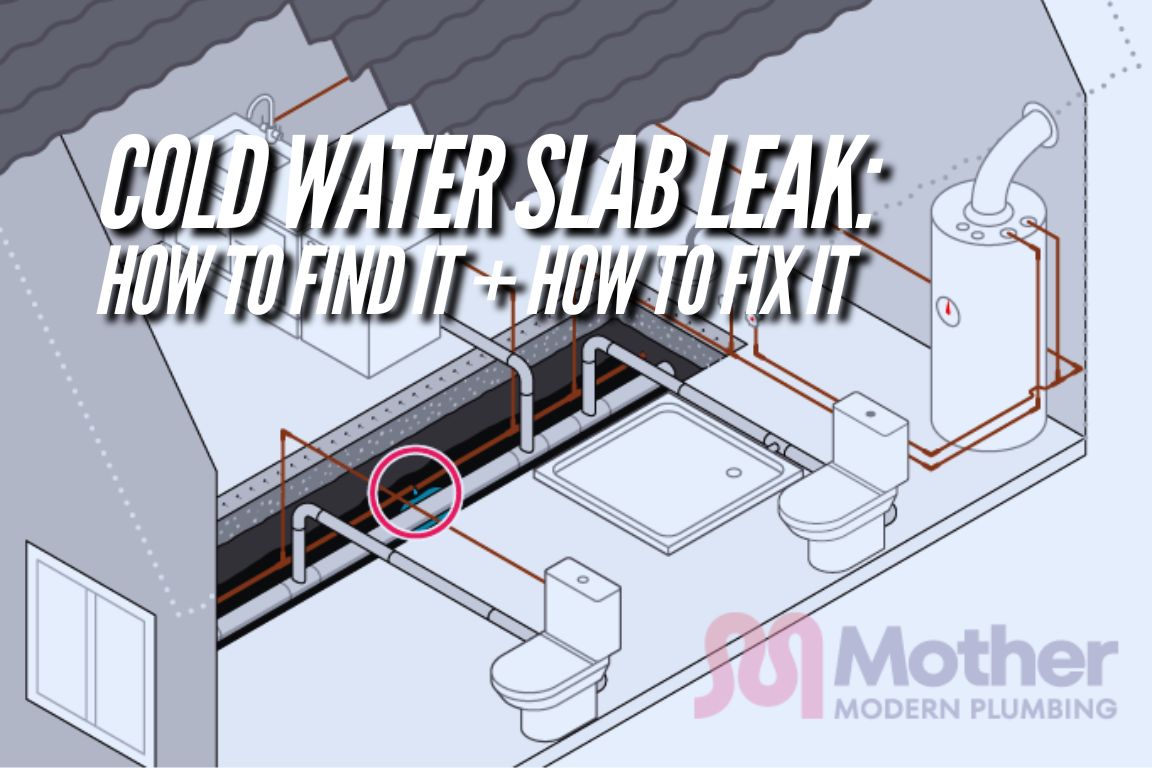
Slab leaks occur when a buried plumbing pipe breaks underneath a home’s concrete slab-on-grade foundation. If you’re reading this article, you’re likely dealing with a leak under your slab. So how did it happen, and why did it occur at your home?
Your slab leak is caused by a broken pressurized water supply line or a gravity-fed sewer line. Because the affected plumbing line is buried beneath inches of concrete foundation and compacted dirt, these leaks remain invisible until the water forces its way up through the floorboards or causes the foundation to settle.
Most slab leaks are caused by four specific stress factors:
- Extreme soil movement
- Aging pipe corrosion
- Hot water pipes and thermal expansion
- Mistakes in original construction and installation
Our Master Plumbers guide you through each of these four primary reasons for a slab leak, ranked by how common they are in the Dallas-Fort Worth Metroplex. We’ll explain why they happen, and the types of homes at greatest risk.
{{slab-leak-repair="/services/slab-leak-repair"}}
What Is a Slab Leak?
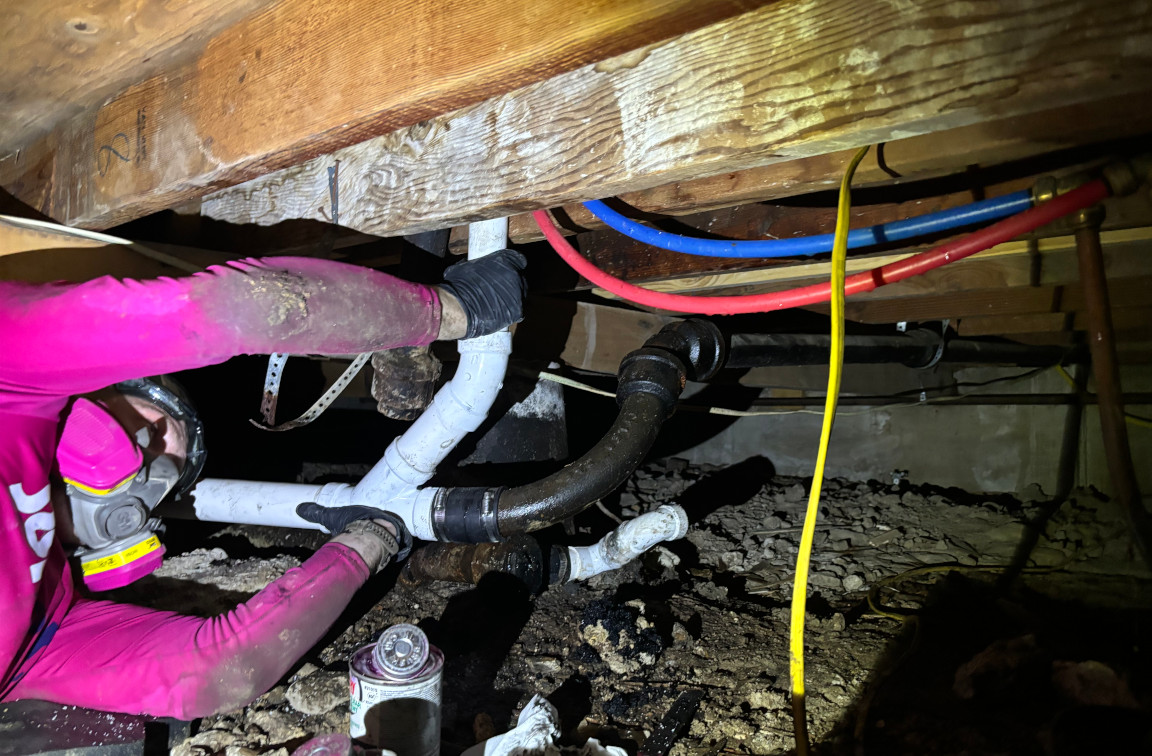
A slab leak happens when a pipe breaks beneath or inside a home’s concrete slab foundation.
There are two types of slab leaks:
- A water line leak in a buried copper or PEX-A water line
- A drain line leak in your sewer pipes between the home and your sewer main
If the city called you and said there’s a leak on your side of the property line, but you can’t find it anywhere, a slab leak is likely to blame.
1. Most Slab Leaks Are Caused by Extreme Soil Movement
A majority of slab leaks aren’t caused by the pipes under your foundation themselves. They’re brought on by the shifting soil around them.
“Most times we get called to fix a slab leak, soil caused the broken pipe,” explains our Responsible Master Plumber Steven Smith (RMP-43457).
The DFW Metroplex sits on a bed of expansive Black clay soil that folks here call “black gumbo”. When there’s high clay content in your soil, the ground interacts intensely with water.
When it rains, the clay absorbs water and puts up to 10,000 pounds per square foot (PSF) of pressure on your buried pipes. During droughts and dry months, the clay shrinks and cracks.
“Soil moisture around your foundation is a big deal,” Steven continues. “If it’s rainy or you live near a lake, everything expands. When it dries out, it cracks and recedes. That leaves big pockets of empty space under your pipes and your slab.”
This violent, constant shrink-swell cycle causes heaving and foundation settling- the heavy concrete slab rises up with moist soil and sinks back into dry, depressed areas. The rigid plumbing pipes inside or beneath your slab can’t bend with the concrete’s movement.
Eventually, these huge swings in pressure shear the pipes in half or snap their joints apart.
{{fast-plumbing-answers-how-to-find-a-water-leak-under-slab="/blogs/fast-plumbing-answers-how-to-find-a-water-leak-under-slab"}}
Homes at Risk of Foundation Settling in Shifting Soil
- Foundation: Slab-on-grade without deep pier-and-beam support.
- Soil Type: Built directly over untreated, highly expansive clay.
- Age: Common in both 1970s builds and newer 2000s builds, particularly those with poor exterior yard drainage or inconsistent foundation watering habits.
2. Old, Corroded Cast Iron Pipes Leak Under Your Foundation
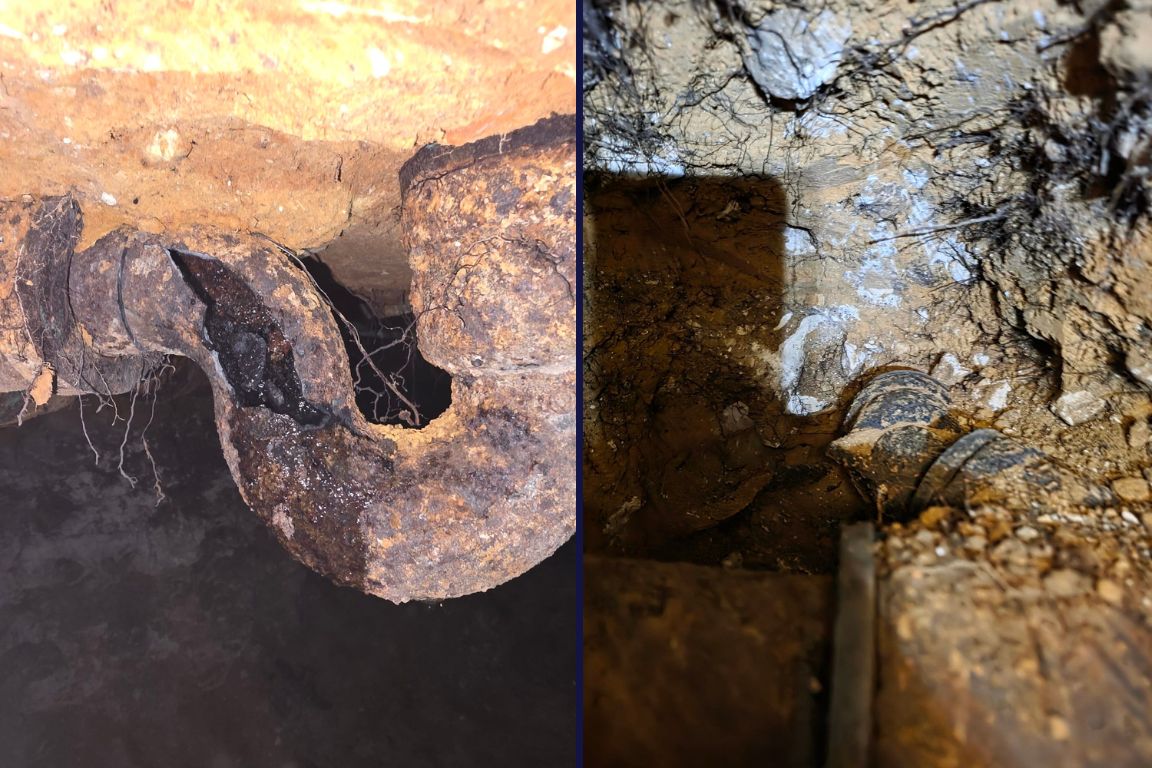
Modern pipe materials are better suited to withstand underground plumbing conditions- PEX-A and Type K Copper for water lines and Schedule 40 PVC for main sewer lines.
Before these became industry standard, builders relied on cast iron for sewer mains and thinner-walled forms of copper for water supply lines. While highly durable for their era, both types of metal pipes are outdated and susceptible to damage and corrosion:
- Underground cast iron pipes rust from the inside out due to the acids in your wastewater. Their outer walls corrode from moisture in the soil. As the bottom of the cast iron pipe rots away (channel rot), raw sewage spills into the dirt under your slab.
- Aging copper pipes buried in or under your slab experience “pitting” over decades of use. This is a chemical reaction where hard water minerals eat away at the metal until pinhole leaks form. (This also occurs in areas with highly acidic soil.)
“We normally see these issues in older homes built before 1980- about when cast iron stopped being used,” Steven says. “Historic neighborhoods down here like University Park are full of cast iron slab leaks.”
Homes at Risk of Slab Leaks Caused by Corroded Pipes
- Age: Homes built prior to 1980.
- Plumbing Material: Original cast iron sewer lines or un-sleeved copper water lines buried directly in the dirt.
- Slab Status: Original slabs that haven’t undergone trenchless or traditional repiping, or pipe rerouting.
3. Hot Water Slab Leaks and Thermal Expansion
This is a specific water line issue dealing with hot water delivery to your home- you won’t find it in sewer line slab leaks.
Hot water causes copper pipes to naturally expand, while cold water causes them to contract. As water flows through the system for weeks, months and years, the pipes begin to grow and shrink.
“Modern underground copper pipe installations have protective plastic sleeving to prevent thermal expansion,” Steven explains. “Without it, there’s a big problem.”
Hot water slab leaks form when unsleeved copper pipes are buried tightly against the concrete slab or rest directly against steel rebar. As hot water expands the metal pipe, it rubs back and forth against the slab or steel every time.
Decades of this constant friction wear away at the copper pipe’s outer walls until it develops small leaks or bursts open entirely.
Homes at Risk of Slab Leaks Caused by Thermal Expansion
- Age: Mid-1980s through late-1990s builds.
- Plumbing Material: Copper hot water supply lines.
- Construction Flaw: Pipes embedded directly into the concrete or strapped to rebar without protective, friction-reducing sleeves.
4. Poorly Installed Under-Slab Pipes and Construction Errors
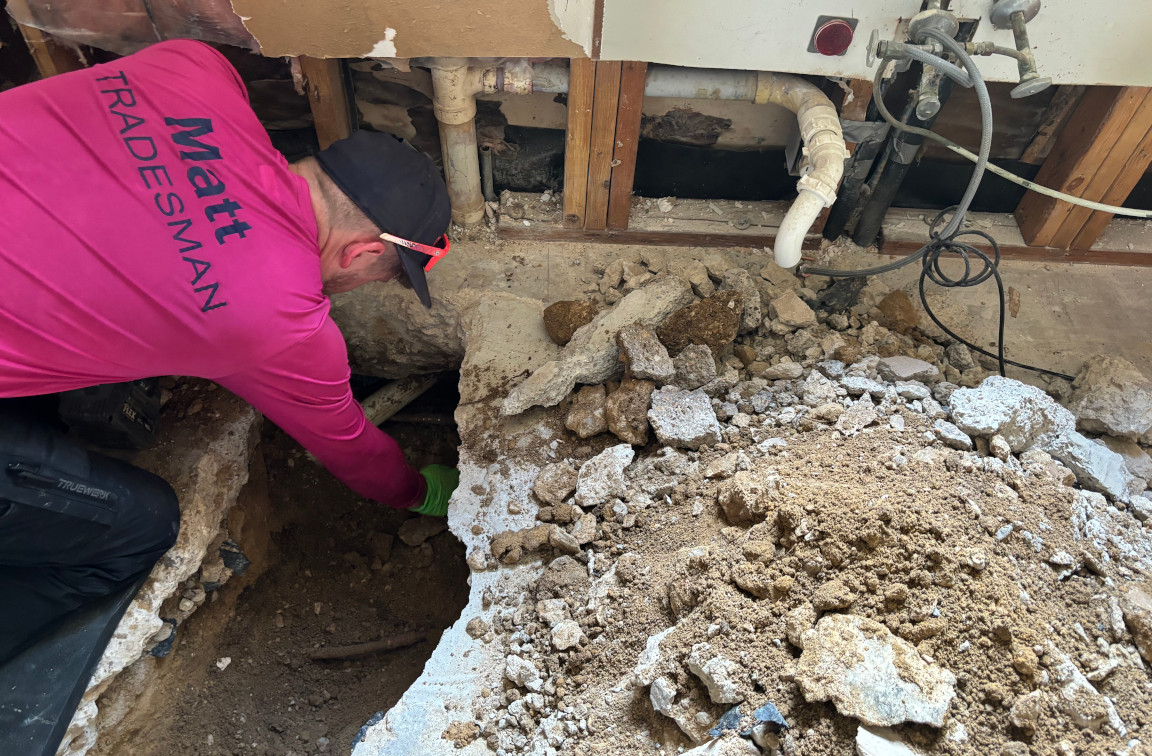
Not all slab leaks take decades to form. Sometimes, the catalyst for a leak occurs on the same day the house was built. Unfortunately, this is more common in newer builds than older homes. This is due to rushed construction on new developments under tight delivery timeframes.
“Most contractors are really careful with installing underground plumbing lines,” Steven notes. “But accidents happen- and sadly, sometimes shoddy work happens, too.”
During a standard home build process, plumbing lines are laid in the dirt before the concrete foundation is poured over them. Laying a foundation isn’t gentle- it involves heavy machinery, tensioned steel, and thousands of pounds of wet, rocky concrete.
When a foundation crew rushes the job or cuts corners, the pipes at the bottom of the wooden forms bear the brunt of the damage:
- Direct impact damage. Wet concrete is heavy enough. Dumping it into place without proper care crushes and bends the plumbing underneath.
- Poor soil compaction. The dirt pad beneath the house must be heavily compacted and precisely leveled before concrete is poured- especially in clay soil regions like North Texas. If the soil is loose or not level, pipes immediately sink and joints break.
- Machinery errors. A distracted worker operating heavy machinery can easily nick or dent a plastic or PVC pipe.
- Rebar damage. If the installation crew carelessly lays heavy steel rebar directly on copper piping, the soft metal doesn’t stand a chance.
- Post-tension cable pinching. Hydraulics are used to pull post-tension steel cables tight. If they’re routed too closely to vertical pipes, they slice through the plumbing.
Homes at Risk of Slab Leaks from Installation Errors
- Age: New construction or recent builds (post-2010).
- Timeline: Leaks that present themselves within the first one to five years of occupancy.
- Plumbing Material: Copper or PVC lines that were improperly fitted, insufficiently glued, or physically damaged prior to the foundation pour.
{{fast-plumbing-answers-warning-signs-of-a-slab-leak="/blogs/fast-plumbing-answers-warning-signs-of-a-slab-leak"}}
Suspect a Slab Leak in DFW? Call Mother for Expert Care
A leaky pipe in or underneath your slab-on-grade foundation presents a host of issues. Water leaks cause spikes in your utility bill, mold growth and warm spots in your floors. Sewer leaks under your slab create health hazards, ruined flooring and sewage in the yard.
Both types of slab leaks create unstable living conditions and cracks in your slab due to foundation settling and erosion.
Whatever caused your slab leak, act quickly to limit the damage it causes. If you’re in the DFW Metroplex, call Mother Modern Plumbing 24/7 for emergency response and priority scheduling for slab leak detection and repair service.
{{slab-leak-repair="/services/slab-leak-repair"}}