How to Fix a Slab Leak Without Jackhammering Your Floors
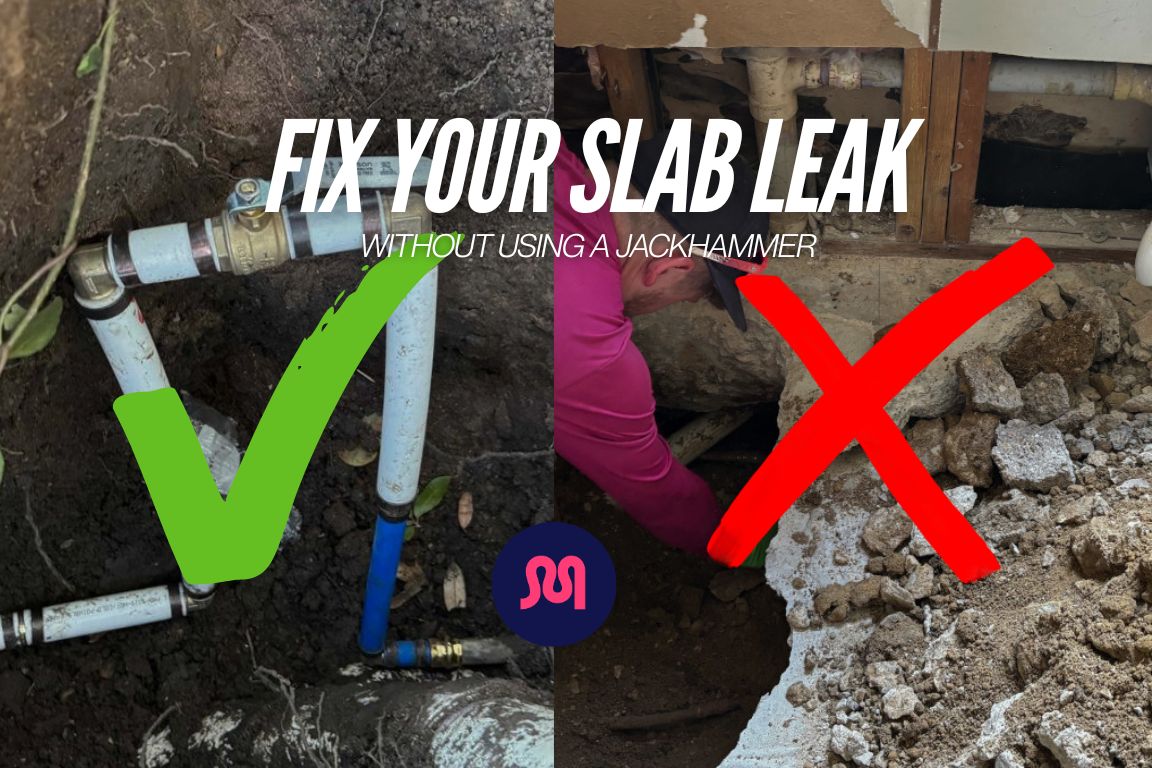


table of contents
table of contents
You need to fix a slab leak under the concrete foundation of your house. But the thought of a jackhammer ripping apart your hardwood or chipping away your master bath tile keeps you up at night. There has to be a way to avoid jackhammering your floors to fix the leak, right?
Breathe easy. Breaking through your concrete slab with a jackhammer is a last resort, not a primary option. Modern plumbing technology has evolved- and many slab leak repair solutions don’t require much property damage at all.
Our Master Plumbers explain why breaking the slab to fix an underground pipe leak isn’t usually necessary. We’ll show you three better, less invasive options. And if you have to use a jackhammer, we’ll reveal the silver lining- homeowner’s insurance access coverage.
Need non-invasive slab leak repair in DFW? Call Mother 24/7 and talk to a live phone concierge about trenchless and rerouting options.
{{slab-leak-repair="/services/slab-leak-repair"}}
Jackhammering Your Foundation Is Always a Last Resort
Trust our pros on this one: the last thing a licensed plumber wants to do is use a jackhammer during slab leak repairs.
“We just don’t want to destroy people’s floors,” says our Responsible Master Plumber Steven Smith (RMP-43457). “It’s messy, it’s invasive, and we don’t want heavy machinery inside your house if it’s unnecessary.”
Steven advises homeowners to be wary of plumbers who lead with breaking the slab as their suggestion for buried pipe repair- especially if they haven’t performed a thorough diagnostic.
“What we find during the detection process almost always points us in a better direction, whether that’s trenchless or rerouting,” Steven continues. “And nobody breaks concrete just to search for a broken pipe anymore.”
Good Slab Leak Detection Never Breaks Concrete
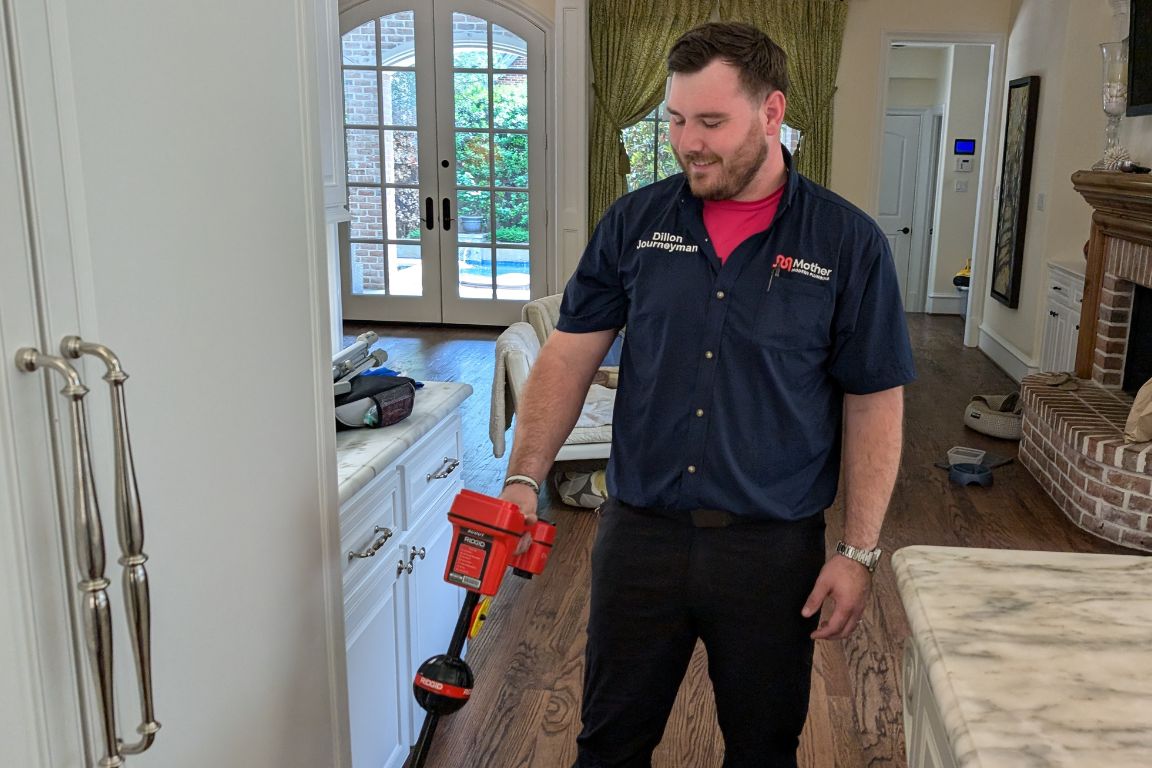
Modern slab leak location equipment is completely damage-free. It requires no digging, no tearing up drywall, flooring or subfloors.
“If your plumber says he needs to dig to find a slab leak, find another plumber,” Steven says.
Acoustic listening devices, fiber-optic sewer cameras and thermal imaging with infrared cameras avoid property damage during the detection process entirely.
3 Ways to Fix a Slab Leak Without Breaking Concrete
Let’s get rid of your jackhammer nightmares and introduce three much better ways to repair a slab leak underneath your home’s foundation. We’ll start with the least invasive.
See the current cost to fix a slab leak for each of these repair methods in our updated guide.
1. Pipe Rerouting for Fresh Water Leaks
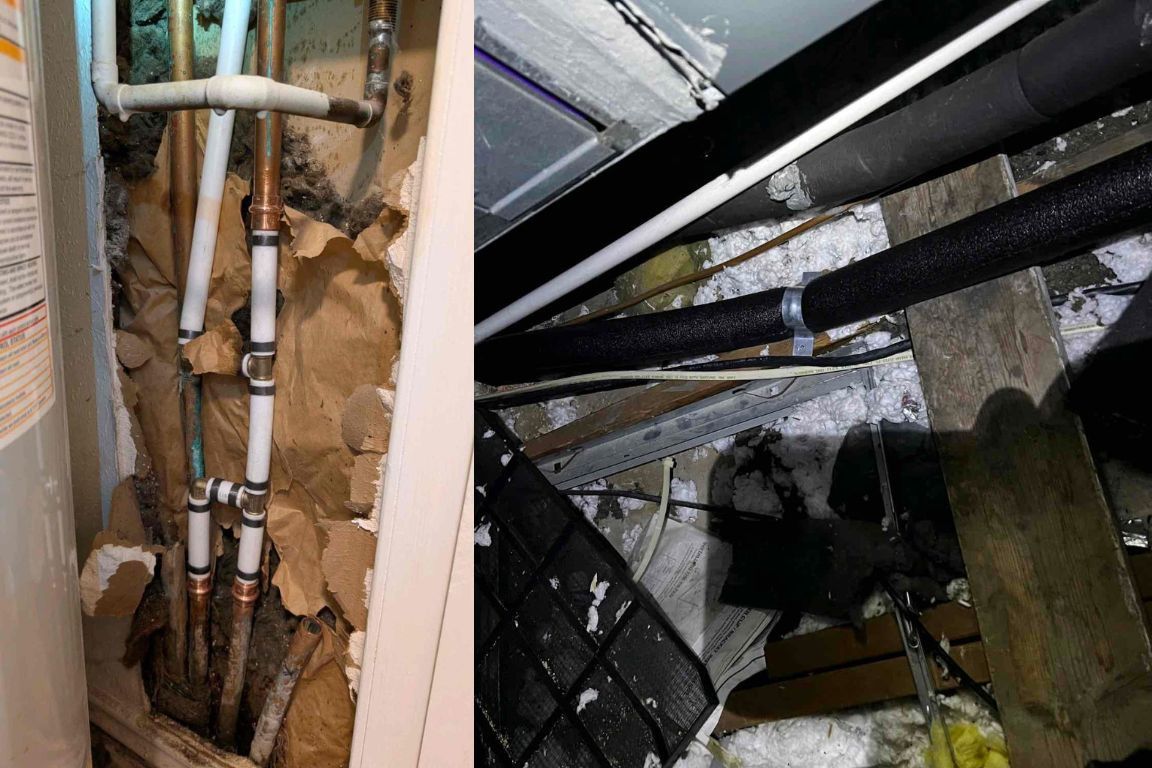
The method: A complete bypass of your damaged water supply line.
Sometimes, access to your broken copper pipe is limited or impossible- especially if it’s buried inside the concrete slab itself. Rerouting is a great alternative to breaking the slab open.
Your plumber completely abandons the damaged pipe in place and caps it off from the main water supply line. A flexible PEX-A water line is laid in an entirely new path- either run through the attic or inside the walls of your home. This new pipe is connected to the incoming supply line and delivers water to the affected branch line in your bathroom or kitchen.
“We solve the leak with zero damage to your floor,” Steven says. “As long as you have sufficient space in the attic or exterior walls, a reroute is a strong repair contender.”
2. Trenchless Pipe Lining for Sewer Leaks

The method: Trenchless insertion of a new epoxy liner inside the damaged pipe section.
Cured in place pipe lining (CIPP lining) is an ideal trenchless slab leak repair method for damaged sewer pipes near the foundation. This works well in two scenarios:
- The main drain pipe that connects your in-home drainage system to the main sewer line is damaged; or
- The sewer main is sheared or broken where it exits the foundation due to the shifting of DFW's expansive clay soil.
A flexible, epoxy-soaked resin liner is inserted into the buried pipe through a convenient access point- ideally, an exterior sewer cleanout.
“If you have a two-way cleanout, CIPP is a completely trenchless repair solution,” Steven advises. “If you don’t, we only need to dig a small access pit.”
The liner is inflated in the damaged sewer pipe, then hardened and cured to its interior walls. This seals leaks and protects against minor channel rot without a shovel hitting the dirt- or a jackhammer touching the floor.
Not sure if you have an under-slab sewer or water leak? Use our guide to find out.
{{sewer-leak-or-water-leak-under-house-how-to-tell="/blogs/sewer-leak-or-water-leak-under-house-how-to-tell"}}
3. Under-Slab Tunneling from the Exterior
The method: Targeted excavation limited to a single, direct access tunnel.
When CIPP lining and attic reroutes aren’t good options, there’s still one more way to avoid the jackhammer. A targeted tunnel is excavated from the outside perimeter of your concrete to the exact location of your under-slab leak.
“The crew works entirely underground and starts from the outside in,” Steven says. “The interior floors are untouched, and your family can stay safely inside while we conduct repairs.”
While an excavation crew digging into the yard isn’t ideal, it’s certainly better than breaking through your floors in most scenarios.
Mother’s updated slab leak solutions guide explains when to reroute and when to excavate.
{{slab-leak-repair-when-to-tunnel-vs-when-to-reroute="/blogs/slab-leak-repair-when-to-tunnel-vs-when-to-reroute"}}
When Is Jackhammering Actually Necessary?
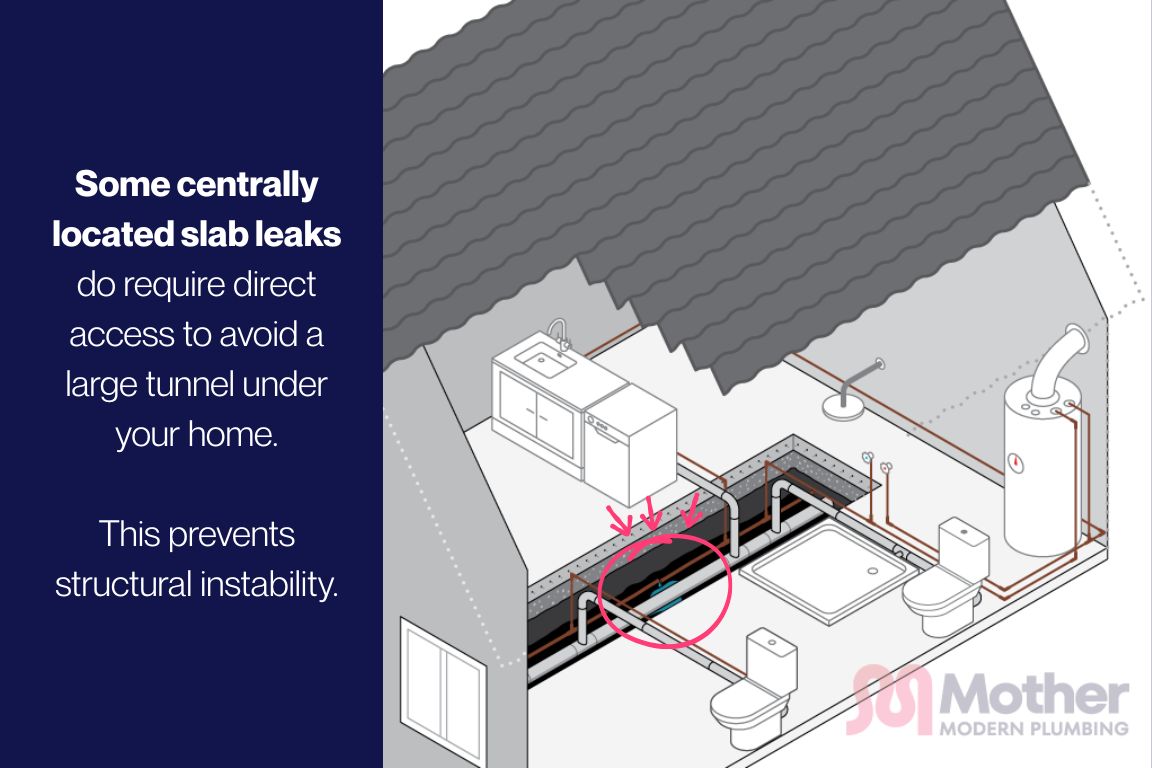
There are three situations where using a jackhammer to access a slab leak’s location is absolutely necessary. They’re not the norm- but sometimes, it’s unavoidable.
“We only break the slab if it’s the only safe or logical option to repair the leak permanently,” Steven states. “Either an old pipe fully collapsed, your home doesn’t provide rerouting or trenchless access, or the leak’s in the worst possible location.”
1. A Collapsed Sewer Line Under the Foundation
If an old cast iron pipe is completely flattened by the weight of your concrete slab or crushed by decades of shifting soil, a trenchless pipe liner can’t pass through it to establish a new pipe.
“Direct access is usually required here,” Steven says.
2. Your Home Architecture Requires Direct Access
Rerouting your damaged under-slab water line requires ample space in the walls and attic for the new pipe material to exist. Homes with flat roofs, vaulted or cathedral ceilings aren’t good candidates for attic reroutes.
If you have a great deal of outdoor hardscaping next to your home- patio, pergola, pool deck, outdoor dining space- tunnel access also becomes less feasible.
3. A Leak in the Dead Center of Your Slab
If a leak is located right in the middle of a large home footprint, your options are limited. Tunneling to fix it is risky- structural integrity is compromised if you excavate too far under the footprint of your house.
In these cases, a fresh water line is simply too far away to conduct a clean attic reroute without massive drywall damage.
“Cost is also a factor here,” explains Steven. “Tunneling to the center of the foundation under a 4,000 square foot house is way more expensive than a localized breakout through the kitchen floor.”
The Insurance Silver Lining for Direct Slab Repair Access
Here’s the good news. Even if your worst fear becomes reality, the cost of breaking through your floor and foundation to fix a slab leak is often covered by comprehensive homeowners insurance policies.
“Your insurance policy usually won't cover the cost of the plumbing pipe repair itself,” Steven explains. “That is considered home maintenance. But getting covered for the access and egress costs is pretty common.”
If a localized breakout is necessary to perform under-slab plumbing repairs, and you have the proper water damage endorsements, your policy frequently pays for:
- Concrete removal
- Cleanup
- Replacement of damaged flooring
If you document the damage properly with your plumber, you may get a brand new floor subsidized by your insurance provider.
Because coverage is strictly tied to your specific policy language and endorsements, always call your insurance agent to review your plan before work begins.
{{does-homeowners-insurance-cover-slab-leak-repair="/blogs/does-homeowners-insurance-cover-slab-leak-repair"}}
Call Mother for Damage-Free Slab Leak Solutions in DFW
Breaking through your floors with a jackhammer to fix a slab leak is a last resort- and thanks to modern equipment, it’s usually unnecessary.
And don’t ever let a plumber damage your home or yard in search of an underground leak. Non-invasive slab leak detection equipment finds buried pipe damage and provides acoustic, thermal and visual proof.
“We exhaust every non-invasive detection and repair option before a jackhammer’s ever discussed,” Steven concludes.
Get slab leak repair without the jackhammer in DFW. Call Mother 24/7 for non-invasive detection and repair solutions to save your floors.
{{slab-leak-repair="/services/slab-leak-repair"}}