Why Cast Iron Slab Leaks Happen So Often
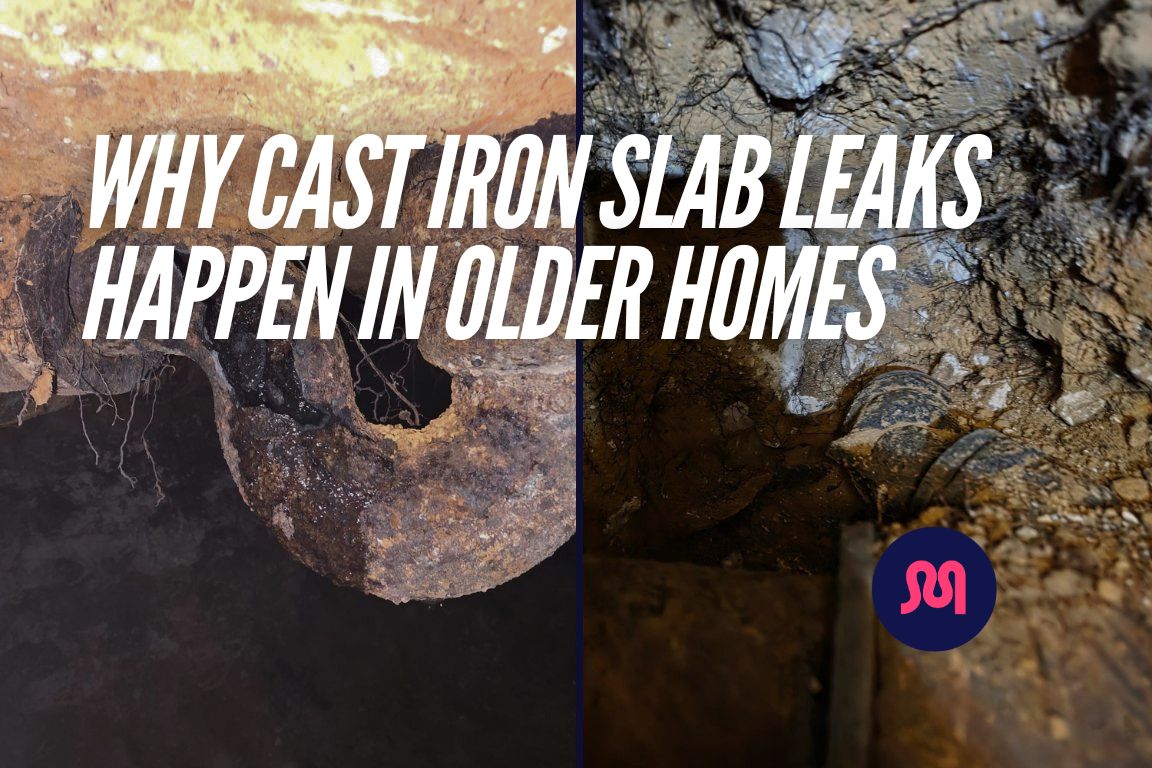


table of contents
table of contents
Owning a vintage, historic or mid-century home comes with huge perks- charm, elegance and curb appeal. It also comes with its fair share of problems, most of which are caused by aging infrastructure.
A cast iron slab leak is one of the most common plumbing emergencies our Master Plumbers encounter in older DFW neighborhoods. Their original underground sewer lines and drain pipes have reached the end of their expected lifespan. Homeowners experience the corrosion, pitting and channel rot that come with it.
These buried cast iron problems are worst near home foundations, especially concrete slabs. The combination of foundation heaving and settling, soil pressure and decades of moisture damage makes under-slab sewer leaks a frequent, urgent issue.
Our Master Plumbers explain how cast iron slab leaks happen, why they’re particularly dangerous to older homes, and four simple ways to keep an eye on the problem.
Already dealing with a cast iron leak under your DFW home? Call Mother 24/7 for non-invasive slab leak detection and precision care for vintage properties.
{{slab-leak-repair="/services/slab-leak-repair"}}
Buried Cast Iron Pipes Are Past Their Expiration Date
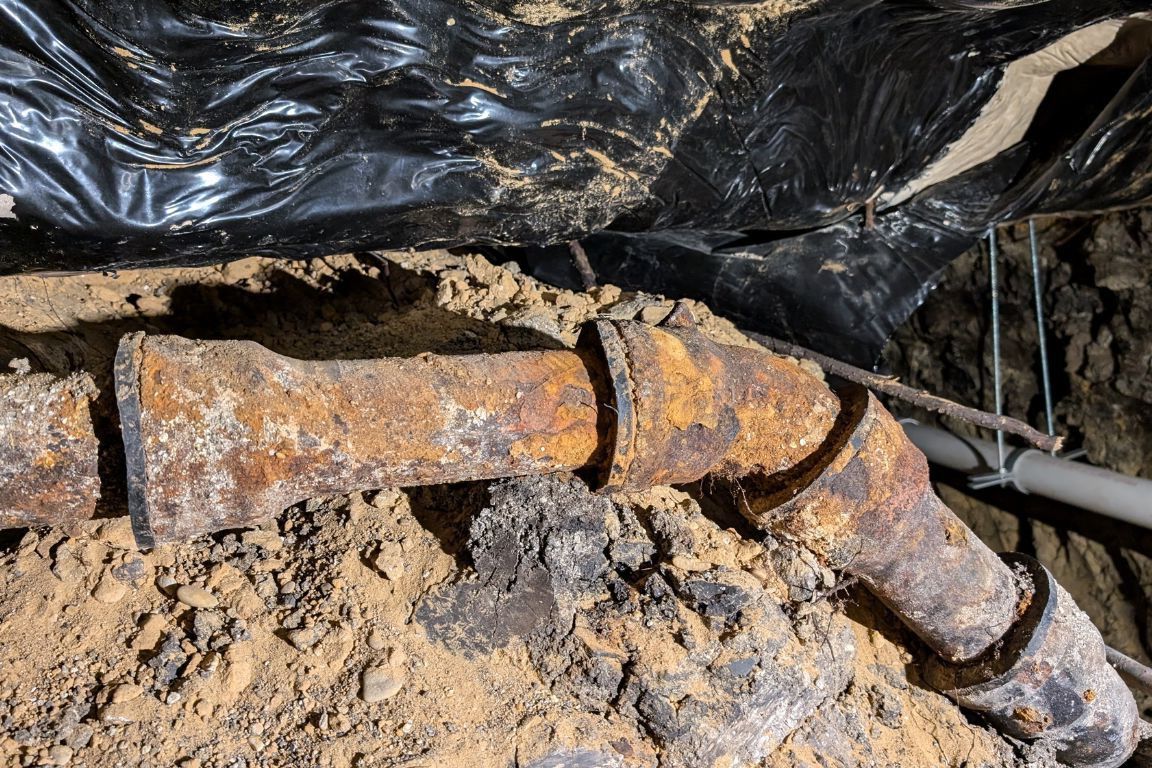
Cast iron was the gold standard for home sewer systems prior to 1980. It was prized for its perceived strength and durability. As time went on, plumbers and homeowners learned together that “heavy pipes” don’t always equal strong ones.
Moisture causes long-term damage to cast iron- bad news for a pipe material expected to perform well underground. Even worse, the acids present in wastewater eat away at the metal.
Today, we know the maximum lifespan for underground cast iron sewer lines is about 50 years. Since plumbers stopped installing cast iron pipes around 1980, that means every buried sewer line made from the material is expired.
3 Reasons Cast Iron Fails Even Faster Under a Slab Foundation
The 50-year lifespan of cast iron sewer mains is based on ideal conditions. The stress and pressure of existing near or underneath a home foundation reduces that number.
“We started seeing cast iron fail under slabs after about 35, 40 years of service,” says our Responsible Master Plumber Steven Smith (RMP-43457). “It got really bad around 1980- a big part of the reason plumbers stopped installing them.”
Steven lists three key reasons why cast iron sewer pipes fail faster than expected when they’re near slab-on-grade foundations. Each problem directly causes the next:
- The immense weight of the concrete
- The inflexibility of cast iron pipe materials
- The shearing pressure of foundation settling
1. Old Cast Iron Pipes vs the Weight of Your Slab
Most homes in our service area (the DFW Metroplex) are built on slab-on-grade foundations. This means virtually every cast iron pipe under a mid-century or historic home in the area is under 25 to 75 tons of weight- while it’s on its last legs.
“The average concrete foundation weighs 50,000 to 150,000 pounds,” Steven explains. “Cast iron’s really strong. But it’s not Superman.”
2. Cast Iron Is Too Rigid to Withstand Shifting Soil
Modern Schedule 40 PVC is the preferred material for sewer lines because of its combination of durability and mild flexibility.
“Schedule 40 PVC doesn’t bend a ton,” Steven says. “But it does enough to flex with moving soil and slight shifts in your concrete. Cast iron won’t do that.”
Instead, aging cast iron pipes don’t budge an inch.
3. Foundation Settling Shears Old Metal Pipes
When a heavy concrete slab settles or shifts even a fraction of an inch in volatile soil, it puts immense pressure on the brittle cast iron trapped beneath it.
Instead of bending, the weakened, rusty metal snaps or gets crushed by the weight of the house.
“Cast iron breaks around the slab usually aren’t small pinhole leaks,” Steven notes. “They’re sheared clean through- that’s what makes the water damage so bad, so quickly.”
How a Cast Iron Slab Leak Actually Forms
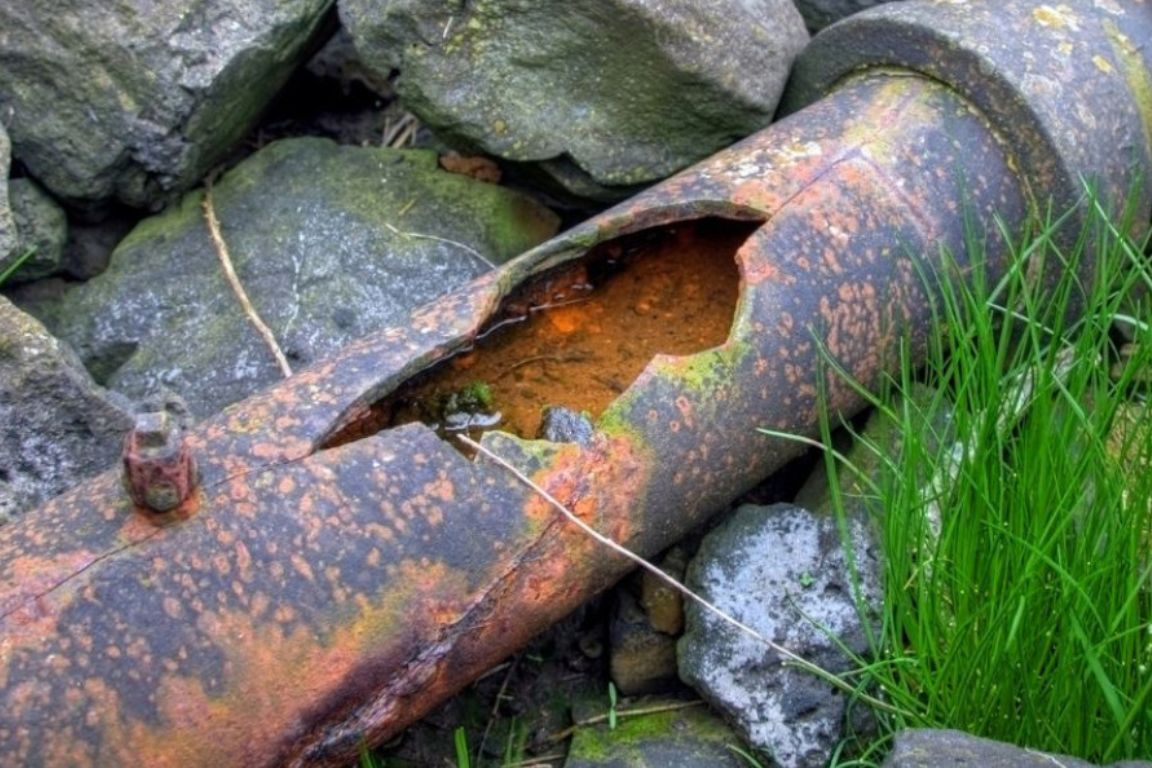
In its original form, cast iron doesn’t shear and crack so easily. So how did your old sewer line get to such a degraded condition?
No matter where you live, the worst trait of cast iron as a sewer material is its lack of long-term resistance to moisture. Here’s how the material breaks down over decades, both inside and outside the pipe walls:
Channel Rot (Internal Corrosion)
Hydrogen sulfide gas and acids that are naturally present in your home’s wastewater eat away at the metal from the inside out. Over decades, this creates a condition called “channel rot”, where the entire bottom of the pipe rots away.
“It’s your sewer main’s job to carry sewage away from your house,” explains Steven. “But cast iron just isn’t up to the task after decades of use. When we see channel rot under vintage homes, most times the bottom of the pipe’s just gone.”
External Rust from Soil Moisture
Bare metal buried in damp dirt will inevitably rust from the outside in, no matter how strong it is.
“Even if the acids in sewage don’t rot your pipe from the inside, eventually the groundwater will do the damage,” Steven says.
Over decades, groundwater causes pinhole leaks and weakens key joints in the pipe. In the case of cast iron slab leaks, this occurs where the main sewer line connects to the main drain pipe leaving the home.
High-Risk Zones: Where Cast Iron, Slabs and Clay Soil Collide
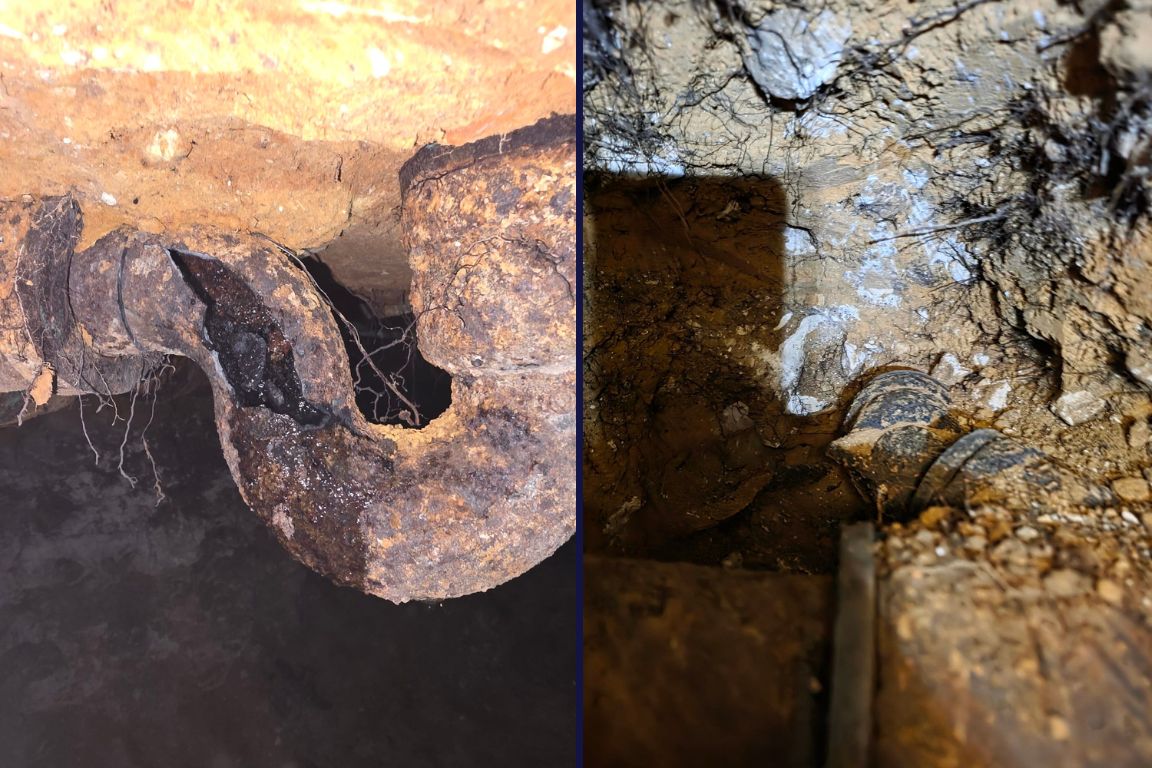
Extreme soil movement causes slab leaks in most cases. Volatile clay soil causes concrete foundations to heave and settle more frequently- and more noticeably- than in regions with more stable soil content.
When weakened cast iron sewer systems exist in these “high-risk zones”, it’s a tailor-made recipe for broken pipes under your slab.
The “Black Gumbo” Clay Soil Threat in DFW
The DFW Metroplex sits on a bed of Houston black clay soil, known locally as “black gumbo”. Texas A&M studies show that black gumbo, a type of vertisol, contains at least 40% clay.
Soil with high levels of clay reacts aggressively to changes in moisture. An increase in groundwater- from rain, a nearby lake or river- causes clay in the soil to expand. This places up to 10,000 pounds per square foot (PSF) on your underground pipes and slab-on-grade foundation.
When the soil dries out- either in a drought, dry season, or post-thaw- the clay shrinks just as quickly. Voids and air pockets are left under your pipes and around your slab.
“That’s the shrink-swell cycle you hear about in clay soil,” Steven notes. “Moisture causes foundation heaving, dryness causes foundation settling.”
Combine a 50-year-old rusted cast iron pipe with 10,000 PSF of soil pressure, and a slab leak is almost guaranteed.
Mid-Century and Historic Neighborhoods At Risk
Neighborhoods built between 1940 and 1980 are at the greatest risk of cast iron slab leaks.
“Cast iron really got popular right after World War II, and was used heavily until 1980,” Steven explains. “We see most cast iron slab issues in homes built in this era- or who had their first sewer line replaced in the ‘60s or ‘70s.”
Steven highlights three DFW neighborhoods where our plumbers encounter the most slab leaks caused by cast iron pipe breaks:
- University Park. Located in the historic section of the Park Cities, the homes around TCU are often 80+ years old. Houses updated in the 1960s here are rife with aging cast iron plumbing issues.
- Wedgwood, Fort Worth. This master-planned neighborhood was predominantly built in the 1950s and 60s. Cast iron sewer pipes were the underground standard.
- Briarwood Estates, East Plano. Folks started moving into new builds here around 1964 as part of early Plano suburban expansion. Most homes on Meadowcreek and Briarcreek have cast iron drains and sewer lines.
4 Ways to Monitor the Health of Your Cast Iron Pipes
If you’re not ready to spend money on a forward-thinking repipe around your concrete, it’s important to check in on the health and stability of your underground cast iron pipes.
Steven outlines four simple ways that owners of aging and historic homes can monitor their aging sewer line materials without digging.
Read our slab leak symptoms guide for a full list of red flags.
1. Watch for Recurring Drain Backups
“A single clog is a fluke,” Steven says. “If the lowest drains in your house are backing up every 2-3 months, your cast iron pipes are flaking. They’re either snagging debris on sharp internal edges, or channel rot has started.”
2. Look Down at Your Flooring
Look for sudden cracks in the drywall right above your doors, sticky door jambs, or isolated damp or warm soft spots on the floor in your house.
3. Check for Foundation Cracks
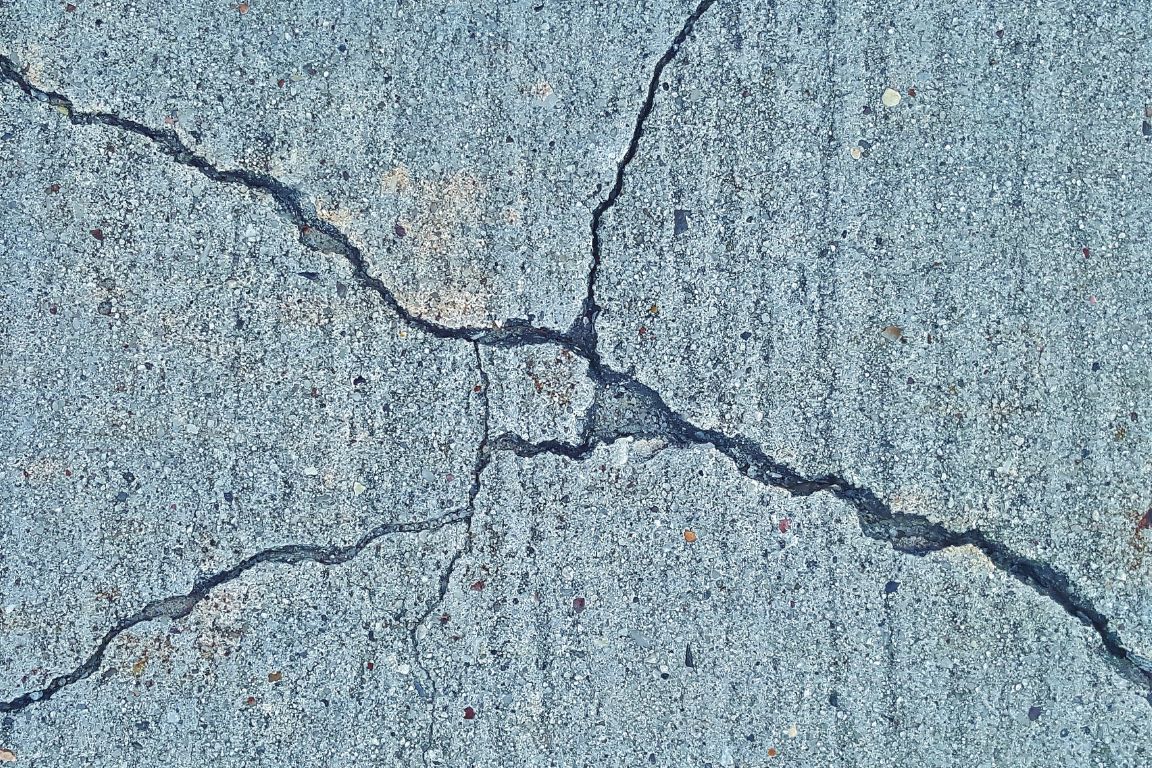
It’s hard to notice subtle foundation heaving. But if your slab is moving, cracks will inevitably begin to form in spider-like patterns.
4. Schedule a Preventative Sewer Camera Inspection
If you’re concerned about a potential slab leak but unsure of its presence, a sewer camera inspection is the ultimate peace of mind.
A licensed plumbers runs a HD fiber-optic camera on a flexible cable down your sewer line to visually check for leaks, cracks, and blockages. You’ll see proof of any slab leaks, channel rot or tree root intrusions in real time- before the pipe collapses.
{{camera-inspection="/services/camera-inspection"}}
Catching a Cast Iron Slab Leak Early Saves Money
Catch a slab leak early- especially a severe one caused by channel rot- and you’ll save thousands of dollars in slab repair costs.
“Getting a jump on a slab leak usually means the pipe’s not totally shot,” Steven advises. “It’s the difference between cost-effective trenchless pipe repair or rerouting options, versus having to take a jackhammer to your living room floor.”
Suspect a Cast Iron Slab Leak? Here’s What to Do Next
A collapsed cast iron sewer line under your slab is the equivalent to a ticking clock for foundation damage.
If you have existing cast iron underneath your home, keep a close eye on telltale red flags like chronic drain backups and damp spots in your floorboards. Annual sewer line camera inspections keep you one step ahead of slab leak damage.
Mother’s Master Plumbers use non-invasive sewer camera equipment to diagnose cast iron degradation with precision. If there’s an active under-slab leak, we offer permanent slab leak repair solutions (traditional, trenchless and rerouting) backed by a 6-year warranty.
Cast iron slab leak under your DFW home? Call Mother 24/7 for same day slab leak detection, and the best repair solution for your specific conditions.
{{slab-leak-repair="/services/slab-leak-repair"}}