Fast Plumbing Answers: Why Is My Water Heater Leaking?
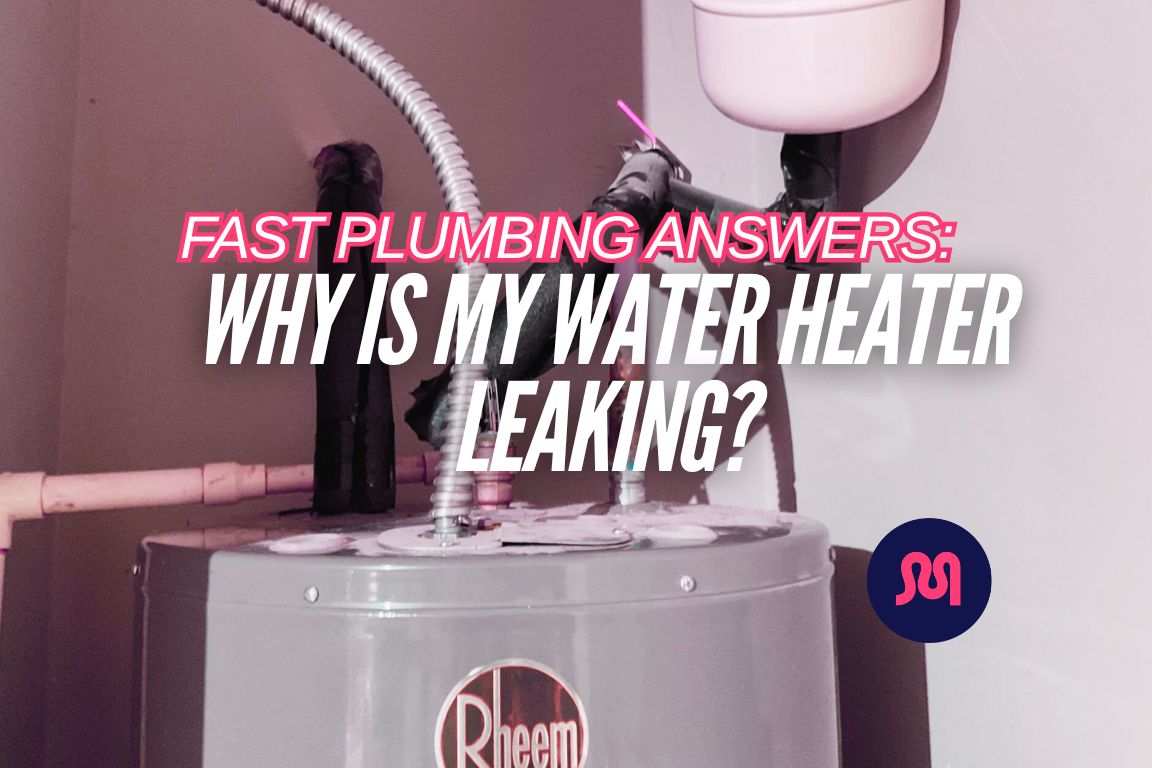


table of contents
table of contents
You spotted a puddle under your water heater this morning. Now you're trying to figure out if it's a quick fix or an emergency tank replacement - because the last thing you need is a flooded garage or no hot water for a week.
Don't worry: we'll answer all your questions in 3 minutes or less.
At Mother, we handle water heater leaks daily throughout Dallas-Fort Worth. The most common cause is tank corrosion: internal rust that eats through the steel and creates a leak that can't be repaired. If it's not the tank, you're likely dealing with a faulty temperature and pressure (T&P) relief valve or a leaking drain valve.
We'll walk you through each cause, where to look, and the single best solution for each problem.
Need emergency water heater service in Dallas? Call Mother 24/7 - we'll have a licensed plumber at your home ASAP.
{{water-heater-installation="/services/water-heater-installation"}}
Most Water Heater Leaks Mean the Tank Has Failed

Our Master Plumber says tank corrosion causes most water heater leaks.
The #1 reason conventional water heaters leak is tank failure due to internal corrosion. This is the worst-case scenario because it means your water heater needs to be replaced - there's no repair option once the tank itself has rusted through.
"When we get called for a leaking water heater, it's usually the tank," says our Responsible Master Plumber Steven Smith. "Hard water and age eat away at the steel lining inside. Once it corrodes through, you've got an active leak that only gets worse."
Here's what's happening: Your water heater tank is lined with a glass coating and protected by an anode rod that sacrifices itself to prevent rust. Over time, especially in areas with hard water like DFW, this protection breaks down.
Sediment builds up at the bottom of the tank, creating hot spots that accelerate corrosion. Eventually, rust eats through the steel and water starts leaking out.
Water heater burst right now? Read our emergency guide and learn what to do while you call a plumber.
Where tank leaks appear
Tank leaks most commonly appear at the bottom of the unit where sediment accumulates and corrosion is worst. You'll see:
- Water pooling around the base of your water heater
- Rust-colored water in the puddle
- Visible rust on the outside of the tank, especially at the bottom
- Dampness or moisture running down the sides of the tank
In less common situations, tank leaks develop along the sides or seams of the unit. Regardless of location, if the tank itself is leaking, the unit is almost always done.
The only solution: Replace your water heater
There is no repair for a leaking tank. The steel has corroded through, and attempting to patch it is temporary at best and dangerous at worst.
"Once the tank leaks, it's time for a new water heater," Steven states. "We've seen people try to patch them with epoxy or sealants. It never works. The corrosion keeps spreading, and you're just delaying the inevitable while risking major water damage."
A licensed plumber will help you choose between a conventional tank replacement or upgrading to a tankless system. Tank water heater replacement typically costs $1,450-$2,800 installed, depending on tank size and fuel type (gas or electric).
How to prevent tank failure: Annual maintenance including flushing sediment and replacing the anode rod can extend your tank's life to 10-12 years. Without maintenance, expect 6-8 years in areas with hard water.
Considering an upgrade? Learn the pros and cons of replacing your conventional water heater with a tankless system.
{{replacing-water-heater-with-tankless="/blogs/replacing-water-heater-with-tankless"}}
Not the Tank? Check Your T&P Relief Valve

A faulty T&P valve causes leaks from the side of your water heater.
If water is leaking from the side of your water heater rather than the bottom, your temperature and pressure (T&P) relief valve is the likely culprit. This is actually good news: T&P valve leaks are repairable and much less expensive than tank replacement.
The T&P valve is a critical safety device. It opens automatically if pressure or temperature inside your tank gets too high, releasing water to prevent the tank from exploding. When this valve fails or becomes corroded, it can leak continuously.
Where you’ll find a T&P valve leak
The T&P valve is located on the side or top of your water heater with a discharge pipe running down toward the floor. Signs of a T&P valve leak include:
- Water dripping from the valve body or along the discharge pipe
- Constant small puddles near the water heater
- Mineral deposits or rust around the valve
- Hissing or popping sounds from the valve
Sometimes the valve is working correctly and releasing water because your tank pressure is genuinely too high. Other times, the valve itself has failed and needs replacement.
The best solution: Test, then replace if necessary
First, determine if the leak is from a faulty valve or high tank pressure:
- Check your water temperature. If your thermostat is set above 120-130°F, lower it and see if the leak stops.
- Test the valve. Lift the test lever on the T&P valve. Water should discharge, then stop completely when you release it. If it continues dripping, the valve has failed.
- Look for sediment. Sometimes mineral buildup prevents the valve from sealing properly.
If the valve is faulty, call a licensed plumber for a quick replacement. This is a straightforward repair that takes less than an hour.
"T&P valve leaks are small but have big risks," Steven warns. "If the valve fails completely and pressure builds up, you're looking at a potential tank rupture. That's catastrophic water damage."
Last Resort: Check For a Leaking Drain Valve
If the leak isn’t coming from your tank or the T&P valve, check the drain valve.
The drain valve, located at the bottom of your tank, is the third most common leak point on conventional water heaters. This valve is used to flush sediment from the tank during maintenance. Over time, the valve can corrode, loosen, or fail to seal properly.
Where drain valve leaks appear
The drain valve is a small spigot at the base of your water heater, usually made of plastic or brass. Signs of a drain valve leak:
- Slow drip directly from the valve
- Water pooling at the base, but only near the valve location
- Mineral buildup around the valve threads
- Loose valve that turns easily
Drain valve leaks are often slow and can go unnoticed for weeks, causing gradual water damage to your floor or water heater platform.
The best solution: Tighten or replace the valve
If you catch it early, tightening the valve may solve the problem. Use a wrench to gently snug the valve, but don't overtighten, which can crack plastic valves.
If tightening doesn't work, the valve needs replacement. A plumber can install a new brass drain valve for a few hundred bucks. Brass valves are more durable than plastic and worth the small upcharge.
DIY option: If you're handy, you can replace a drain valve yourself. Turn off power and water to the tank, drain enough water to expose the valve, unscrew the old valve, apply thread sealant to the new valve, and screw it in. Be prepared for some water spillage, and take care not to damage the unit- you risk voiding your product warranty.
Don't Wait on That Leak - Call Mother Today

Most conventional water heater leaks come from the tank itself, which means replacement is your only option. If you catch it early and the leak is from your T&P valve or drain valve instead, you're looking at a simple, affordable repair.
Never ignore a water heater leak, even if it seems minor. Tank leaks worsen fast and can dump 40-50 gallons of water into your home. T&P valve failures can lead to dangerous pressure buildup. Even small drain valve drips cause gradual damage to flooring and subflooring.
The best time to address a water heater leak is the moment you spot it. Mother Modern Plumbing's licensed plumbers respond to water heater emergencies throughout Dallas-Fort Worth with speed, expertise, and straightforward guidance on repair vs. replacement.
Water heater leaking in Dallas? Call Mother anytime - we'll diagnose the issue and get you back to reliable hot water fast.
{{water-heater-installation="/services/water-heater-installation"}}