Fast Plumbing Answers: Why Does My Water Heater Stink?


table of contents
table of contents
The smell in your garage is so bad, you think an animal died in there. Turns out, that gross rotten egg smell is coming from your water heater. You’re not sure how to get rid of the stench- you can’t even get near the tank without holding your breath.
Don’t worry: we’ll answer all your questions in 2 minutes or less. (Especially this time- it’s a pretty simple fix.)
At Mother, we provide direct answers to real-world plumbing problems that homeowners face every day. Rotten egg and sulfur smells from conventional water heaters is a complaint we get on a regular basis- most homeowners are surprised to learn it has nothing to do with their natural gas or propane delivery.
Your smelly water heater is caused by sulfates and bacteria in your water- especially when they interact with a corroded or faulty anode rod in your system. Most of these issues are fixed with a simple water heater flush- we’ll walk you through the steps.
Need a water heater flush in Dallas? Call Mother 24/7- we’ll have a licensed plumber there to handle annual maintenance within 24 hours.
{{water-heater-flush="/services/water-heater-flush"}}
Your Water Heater Stinks Because of Sulfur-Eating Bacteria
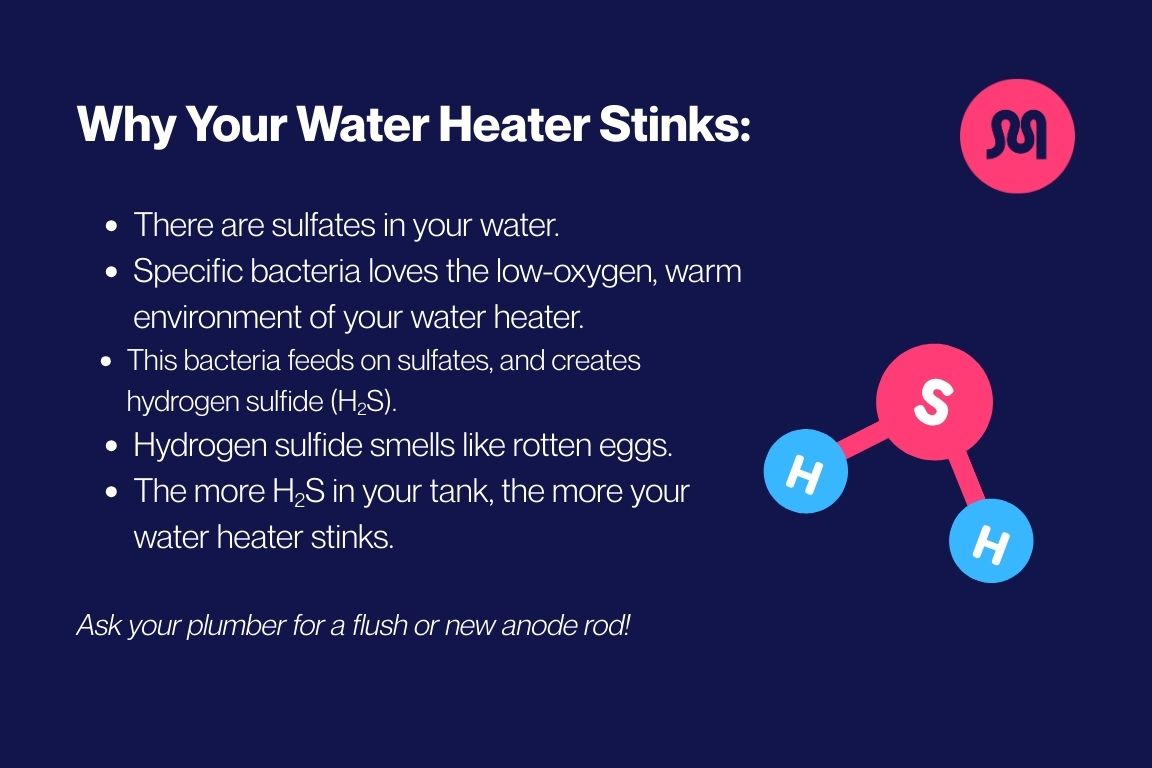
The water supply entering your home contains sulfates. They’re dissolved salts of natural minerals and pose no risk to your health in normal levels.
The warm water and low-oxygen environment inside your water heater tank is perfect for sulfur-reducing bacteria to form. These bacteria get energy by transforming sulfates into hydrogen sulfide.
When water sits in your tank, the sulfur-reducing bacteria start “feeding” on the sulfates. As they become hydrogen sulfide– which produces that awful rotten egg smell. But in those concentrations, the smell usually isn’t bad enough to make you queasy.
A Corroded Anode Rod Makes The Smell Worse
In order for the rotten egg smell from your conventional water heater to become unbearable, another element- magnesium- has to come into play.
Our Responsible Master Plumber, Steven Smith, says there’s one culprit responsible for most of these issues: a corroded anode rod.
“Anode rods have magnesium,” Steven says. “When they break down, that magnesium creates a situation where the sulfur smell gets worse and worse.”
Magnesium encourages the reaction between sulfur-reducing bacteria and sulfates. The levels of hydrogen sulfide in your tank get higher and higher- when you turn on the hot water, it’s like boiling a pot of bad eggs.
Dealing with more water heater problems? Diagnose them all in our complete troubleshooting guide to traditional water heater repair!
{{dfw-water-heater-repair-guide="/blogs/dfw-water-heater-repair-guide"}}
How to Fix a Smelly Water Heater: Your 3 Best Options
The good news: most stinky water heaters have a simple fix. And even if you have to go the extra step (replacing an anode rod or sanitizing your tank), the task is easily done.
Here’s your 3-step guide to getting rid of that sulfur smell in your traditional water heater:
- Schedule a water heater flush
- Sanitize your water heater tank
- Replace your anode rod
Step 1: Flush your water heater
You should schedule an annual water heater flush no matter what- it’s crucial to the health and performance of your unit. Flushing the system rids it of the sediment and hard mineral scale that causes corrosion, pinhole leaks and inefficient performance.
It also gets rid of the built-up bacteria that interact with the sulfates in your water.
“Unless the smell is unbearable, you’ll probably get rid of it with a flush,” Steven explains.
Step 2: Sanitize your tank
If you notice lingering smells after you flush your water heater, use a sanitizing solution to kill any remaining bacteria clinging to the tank.
You can find water heater sanitizing solution in most big box stores, but it’s not really necessary. A diluted mixture of 3% hydrogen peroxide works for most people- use a 10:1 ratio of water to hydrogen peroxide (10 pints of water for every 1 pint of hydrogen peroxide).
Important DIY note: Always turn off the power and gas to the water heater before sanitizing your tank. Then, drain the tank and remove the anode rod before sanitizing.
Step 3: Replace your anode rod
If the smell persists after you flush and sanitize your tank, there’s likely a corrosion issue with your anode rod. Call a licensed plumber to replace the rod.
If you’re worried about future smell issues, ask your plumber to install an aluminum or zinc rod. Steven says aluminum anode rods are good for hard water conditions, while zinc anode rods provide relief for homeowners who have persistently stinky water heaters.
Call Mother for Dallas Water Heater Maintenance
If your water heater stinks, it’s due to bacteria in the tank turning sulfur into hydrogen sulfide (which smells like rotten eggs). Corroded anode rods make the situation worse, adding magnesium which makes the smell worse.
Most smelly water heaters are easily fixed with a simple flush. If the issue persists, use our recommended hydrogen peroxide solution to sanitize the tank. An aluminum or zinc replacement anode rod protects your system from future smells.
If you live in Dallas-Fort Worth, we’re here to provide fast, lasting water heater maintenance options. At Mother, we focus on the single best solution for every homeowner- after all, your water heater is stinky enough. Your service shouldn’t be.
Need water heater service in DFW? Call Mother 24/7- we’re always here to pick up the phone.
{{water-heater-flush="/services/water-heater-flush"}}