Fast Plumbing Answers: Water Heater Turning On and Off?


table of contents
table of contents
You hear your water heater fire up. Two minutes later, it shuts off. Then it fires up again. This cycle repeats over and over, and you're wondering if something is seriously wrong. Your water heater keeps turning on and off like it can't make up its mind.
Don't worry: we'll answer all your questions in 3 minutes or less.
At Mother, we fix cycling water heaters daily throughout Dallas-Fort Worth. Most are caused by an improperly set thermostat- which is a pretty simple fix. There may also be an issue with your circuit breaker connection or the high-limit safety switch on your unit.
Need water heater service in Dallas? Call Mother 24/7- we'll have a licensed plumber at your home ASAP.
{{water-heater-repair="/services/water-heater-repair"}}
Water Heater Cycles On and Off: Why It’s a Problem
When your water heater keeps turning on and off repeatedly, it's almost always because your thermostat is set too high and your water is overheating. The safety system kicks in, shuts everything down, then starts it back up when the water cools slightly.
This constant cycling wastes energy and shortens your water heater's life.
Besides your unit consistently turning on and off, this creates 4 other issues:
- Increased energy bills. Constant cycling can increase your monthly bills by 15-30%.
- Component stress. Your heating element, thermostat and gas valves wear down faster.
- Inconsistent hot water. You may notice cold bursts of water in the shower.
- Shorter lifespan. You’ll need to replace your water heater more frequently.
Most Common Reason: Your Thermostat Is Set Too High

The #1 reason your water heater keeps turning on and off is simple: your thermostat is set too high. When water temperature climbs above safe levels, your water heater's safety systems force it to shut down. Once the water cools a bit, the system fires back up to heat it again. This creates the endless on-off-on-off cycle you're hearing.
"Think of it like cooking on high heat when you only need medium," says our Responsible Master Plumber Steven Smith. "The pan gets too hot, you pull it off the burner, it cools down, you put it back on. When your thermostat’s too high, the same thing happens with your water heater."
Here's what happens: Your thermostat tells your water heater to heat water to a specific temperature. If that setting is 140°F or higher, the water gets dangerously hot.
Your water heater has a safety device called a high-limit switch that cuts power when water temperature exceeds safe levels (usually around 150°F for most units). The water cools slightly, the switch resets, and the heating cycle starts again.
Why this wastes money and damages your water heater
Every time your water heater cycles on and off, it uses energy. Rapid cycling means you're burning gas or electricity constantly without actually using hot water. Your utility bills go up while your water heater works overtime.
Worse, constant cycling stresses internal components. The heating element or burner, the thermostat, and the high-limit switch all wear out faster when forced to turn on and off dozens of times per day.
The best solution: Lower your thermostat to 120°F
Walk to your water heater and find the thermostat. For most units, it's behind a small panel on the front or side of the tank. The ideal temperature setting is 120°F- hot enough for comfortable showers and cleaning, but not so hot that it triggers safety shutoffs.
Turn the dial down to 120°F and wait 2-3 hours for the water temperature to stabilize. The cycling should stop completely. If you have an electric water heater, you may have two thermostats (upper and lower)- set both to 120°F.
"120°F is the sweet spot," Steven explains. "Hot enough for everything you need, cool enough to be safe and efficient."
If lowering your thermostat doesn't stop the cycling, your thermostat or high-limit switch has failed and needs replacement.
Water heater not producing hot water at all? Learn the three most common causes and solutions.
{{fast-plumbing-answers-water-heater-is-not-getting-hot="/blogs/fast-plumbing-answers-water-heater-is-not-getting-hot"}}
A Tripped Breaker Can Cause On-Off Cycling, Too
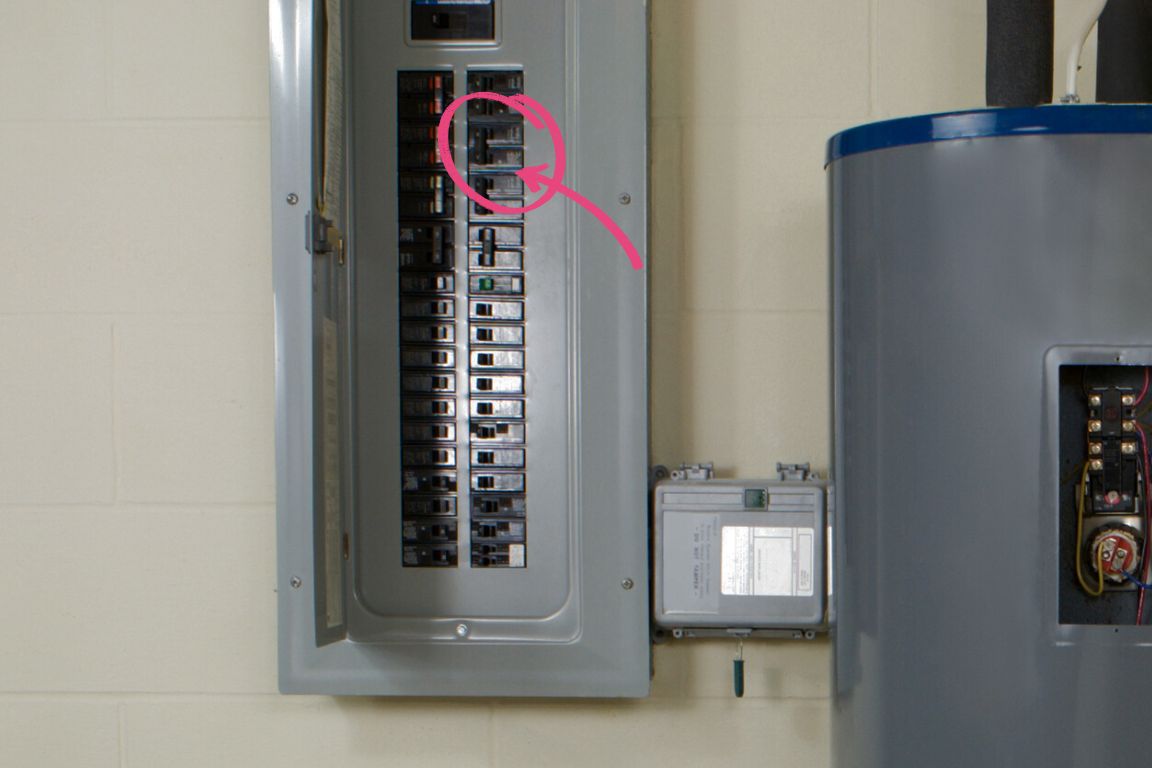
Less common but still possible: a loose circuit breaker connection can make your water heater turn on and off. This looks different from the other cycling problems because the entire water heater loses power and goes completely silent when the breaker trips, then fires back up when the connection reestablishes itself.
Think of it like a lamp with a loose plug- it flickers on and off as the plug loses and regains contact with the outlet.
This happens when the breaker connection to the electrical panel becomes loose over time. As the connection heats up from carrying electrical current, it expands slightly and loses contact, cutting power to your water heater. It cools, reconnects, and the cycle repeats.
How to spot a breaker connection problem
Look for these clues that point to an electrical issue rather than a thermostat problem:
- Complete power loss when cycling occurs (no sounds, no lights on the unit)
- Burning smell near your electrical panel
- Warm or discolored breaker in your panel
- Other electrical problems happening simultaneously in your home
A loose breaker is a serious fire hazard and requires immediate attention from a licensed electrician.
The best solution: Call an electrician to inspect your panel
An electrician inspects your circuit breaker connections, tightens any loose connections, and tests the breaker under load. If the breaker itself has failed, they replace it with a new one rated for your water heater's electrical requirements.
Never attempt to work inside your electrical panel yourself- this is dangerous work that requires professional expertise and tools.
Own a tankless water heater with breaker problems? Learn why your tankless keeps tripping the breaker and how to fix it.
{{fast-plumbing-answers-tankless-tripping-your-breaker="/blogs/fast-plumbing-answers-tankless-tripping-your-breaker"}}
High-Limit Switch Failure: The “False Alarm” Cause
A failing high-limit switch is just like a smoke detector with a bad battery- it keeps beeping even when there's no smoke. Your high-limit switch keeps "seeing" a problem that doesn't exist, shutting down your water heater over and over again.
If your thermostat is already set to 120°F and your water heater still cycles on and off constantly, your high-limit switch has likely failed. This safety device is supposed to shut down your water heater only when water gets dangerously hot. When it breaks, it trips at normal temperatures and causes the cycling problem.
How to identify a failed safety switch
Look for these signs that point to a faulty high-limit switch rather than a thermostat setting problem:
- Cycling happens even at 120°F thermostat setting
- Reset button on the switch keeps popping out (usually a red button near the thermostat)
- Water temperature is normal when you test it at faucets
- Problem started suddenly rather than gradually
The high-limit switch is a small device usually located near the thermostat on your water heater. It has a reset button that pops out when it trips. You can press it back in to reset it, but if the switch is bad, it will trip again within minutes or hours.
The best solution: Replace the safety switch
A licensed plumber tests your high-limit switch to confirm it's faulty, then replaces it. This repair is straightforward- the plumber shuts off power to the tank, removes the access panel, disconnects the old switch, and installs a new one.
Replacing a failed high-limit switch stops the cycling immediately and restores normal operation. These switches typically last 8-10 years before they wear out and need replacement.
Want every answer to water heater problems? Check out our complete DFW water heater repair guide.
{{dfw-water-heater-repair-guide="/blogs/dfw-water-heater-repair-guide"}}
Stop the Cycling- Call Mother Today

When your water heater keeps turning on and off, start by checking your thermostat setting. Lower it to 120°F and give your system a few hours to stabilize. This solves the problem for most homeowners.
If cycling continues at 120°F, your high-limit switch has probably failed and needs replacement. If your entire water heater loses power during the cycling, you have a breaker connection problem that needs an electrician's attention.
Don't ignore constant cycling- it wastes energy, drives up your utility bills, and wears out your water heater faster. Mother Modern Plumbing's licensed plumbers diagnose cycling problems throughout Dallas-Fort Worth and get your water heater running normally again.
Water heater cycling on and off in Dallas? Mother's here to answer your call 24/7- we'll stop the cycling and restore efficient operation.
{{water-heater-repair="/services/water-heater-repair"}}