Fast Plumbing Answers: Water Heater Making Noise?


table of contents
table of contents
Your water heater sounds like it's about to launch into space. Maybe it's a loud popping noise every time it heats up, or a persistent knocking that rattles your pipes, or a low humming that never stops. Whatever the sound, you're wondering if it's normal or if your water heater is about to fail.
Don't worry: we'll answer all your questions in 3 minutes or less.
At Mother, we diagnose noisy water heaters daily throughout Dallas-Fort Worth. Popping or rumbling sounds mean sediment buildup at the bottom of your tank. Knocking or banging noises indicate water hammer in your pipes. Humming or vibrating sounds point to a loose heating element or electrical issues.
Need water heater service in Dallas? Call Mother 24/7 - we'll have a licensed plumber at your home ASAP.
{{water-heater-repair="/services/water-heater-repair"}}
Popping and Rumbling Means Sediment Buildup in Your Tank

The most common water heater noise is a popping, rumbling, or crackling sound that happens when your unit heats water. This noise comes from sediment buildup at the bottom of your tank - the same sediment that reduces your hot water capacity and accelerates tank corrosion.
"That popping sound is literally sediment crackling as water trapped underneath it boils and escapes," says our Responsible Master Plumber Steven Smith. "It's like a miniature kettle boiling at the bottom of your tank."
As your water heater operates, minerals in hard water separate from heated water and settle at the bottom. This sediment layer traps pockets of water beneath it. When your heating element or burner fires up, the trapped water superheats and explodes through the sediment layer, creating the characteristic popping or rumbling sound.
Why sediment noise gets worse over time
The longer sediment accumulates, the louder the noise becomes. A thin sediment layer creates occasional pops. A thick, hardened layer produces constant rumbling that can be heard throughout your house.
In Dallas-Fort Worth, where hard water is the norm, sediment buildup happens faster than in most regions. Homeowners who never flush their tanks can develop severe sediment problems in just 2-3 years.
The best solution: Flush your tank now, then schedule annually
A licensed plumber flushes your water heater by draining sediment from the bottom of the tank. This removes the mineral buildup, eliminates the noise, and restores your tank's efficiency.
Annual flushing prevents sediment from hardening into a cement-like layer that damages your tank and reduces its lifespan. If you've never flushed your tank and the sediment has calcified, a plumber may need to use specialized descaling chemicals to break it down.
"Regular flushing is the difference between a 12-year water heater and a 6-year water heater," Steven explains. "It's the single most important maintenance task."
Get answers to every water heater repair issue in our Ultimate Guide to DFW Water Heater Repair!
{{dfw-water-heater-repair-guide="/blogs/dfw-water-heater-repair-guide"}}
Knocking and Banging Points to Water Hammer in Your Pipes
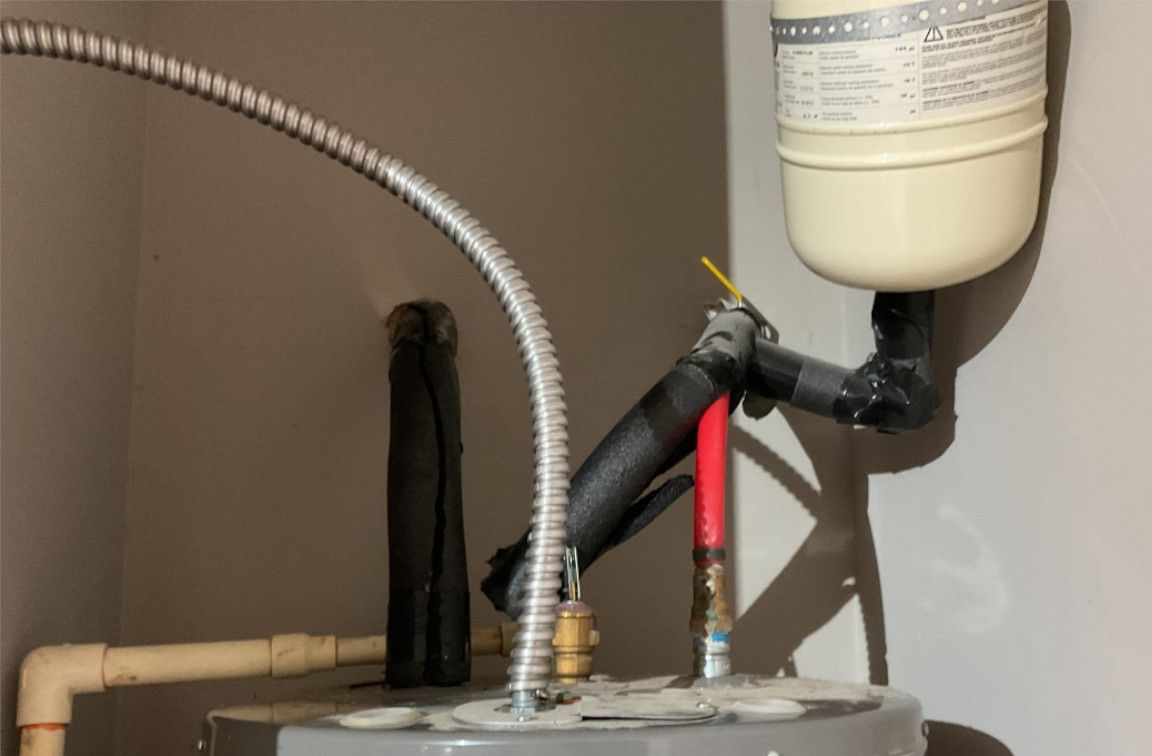
If you hear a loud knocking, banging, or hammering sound when you turn off a faucet or your washing machine stops filling, you're dealing with water hammer. This noise comes from your pipes, not the tank itself - but it often sounds like it's coming from your water heater because that's where the loudest reverberations occur.
Water hammers happen when water flow stops suddenly, creating a pressure shockwave that slams through your pipes. The force makes pipes bang against mounting brackets, wall studs, or each other, producing a sharp knocking sound.
This is the insight many articles miss: water hammers worsen as your water heater ages because the expansion tank (if you have one) loses its air cushion, or because increased sediment in the tank reduces the system's ability to absorb pressure surges.
Three reasons water hammers happen
Three factors contribute to water hammer near your water heater:
- Failed expansion tank. Modern plumbing codes require expansion tanks on water heaters. When the internal bladder fails, the tank can't absorb pressure surges.
- High water pressure. Incoming water pressure above 80 PSI increases the severity of water hammer.
- Quick-closing valves. Modern washing machines and dishwashers have solenoid valves that snap shut instantly, creating stronger pressure shockwaves than older appliances.
The best solution: Install or replace your expansion tank
A plumber diagnoses water hammer by checking your system pressure, inspecting your expansion tank (if present), and testing how your pipes react to sudden valve closures.
The most effective solution is installing a properly sized expansion tank near your water heater. This tank absorbs pressure surges before they create hammering sounds. If you already have an expansion tank, it may need replacement - they typically last 5-7 years before the internal bladder fails.
For severe cases, a plumber may also install water hammer arrestors at specific fixtures like your washing machine or add pipe mounting brackets to prevent loose pipes from banging.
Own a tankless water heater but still hearing noises? Read our guide to diagnose and fix tankless water heater noises.
{{fast-plumbing-answers-tankless-water-heater-making-noise="/blogs/fast-plumbing-answers-tankless-water-heater-making-noise"}}
Humming and Vibrating Signals a Loose Heating Element

If your electric water heater produces a low, steady humming or vibrating sound, the heating element has likely loosened in its mounting bracket. This happens as the element expands and contracts with temperature changes over years of use, gradually working the mounting bolts loose.
When electricity flows through a loose heating element, it vibrates at 60 cycles per second (the frequency of AC electricity). This creates an audible hum that resonates through the tank and surrounding pipes. The sound intensifies when the element is actively heating water.
Gas water heaters don't have heating elements, so if you have a gas unit making humming sounds, the noise comes from the gas burner assembly or a failing gas valve. Both require professional inspection.
Signs your heating element is loose
Look for these additional symptoms:
- Humming starts and stops with heating cycles
- Vibration you can feel when touching the tank
- Louder hum over time as the element loosens further
- No other operational problems - hot water supply is normal
A loose heating element doesn't affect your hot water supply initially, but if left unaddressed, it can damage the mounting gasket and cause leaks.
The best solution: Tighten or replace the heating element
A licensed plumber shuts off power to the tank, drains enough water to expose the heating element, and tightens the mounting bolts to manufacturer specifications. If the element shows signs of corrosion or the gasket has failed, the plumber replaces both components.
This repair stops the humming immediately and prevents future leaks from a compromised gasket seal. Electric water heaters have two heating elements (upper and lower), and both should be inspected since one loose element suggests the other may be loosening as well.
Hearing noise AND seeing a leak? Learn the three most common water heater leak sources and solutions.
{{fast-plumbing-answers-why-is-my-water-heater-leaking="/blogs/fast-plumbing-answers-why-is-my-water-heater-leaking"}}
Stop Noisy Water Heaters - Call Mother Today
Water heater noises are annoying, but they tell you exactly what's wrong:
- Popping and rumbling mean sediment buildup needs flushing.
- Knocking and banging indicate water hammer that requires an expansion tank.
- Humming and vibrating point to a loose heating element that needs tightening.
None of these noises are normal, and all of them signal problems that worsen over time. Sediment accelerates tank corrosion. Water hammer can burst pipes or damage appliances. A loose heating element eventually causes leaks.
The good news: all three problems have straightforward solutions when you catch them early. Mother Modern Plumbing's licensed plumbers diagnose water heater noises throughout Dallas-Fort Worth and provide expert repairs at fixed-quote prices.
Water heater making noise in Dallas? Mother's here for you 24/7 - we'll identify the source and fix it fast.
{{water-heater-repair="/services/water-heater-repair"}}