Fast Plumbing Answers: Tankless Water Heater Takes Forever



table of contents
table of contents
You’re used to a 30 second “cold water sandwich” as your tankless water heater starts up. But it’s been 4 minutes, and your shower’s still ice cold. Your Google search returned 5 possible answers, but you need the most likely reason right now- because your tankless is taking forever.
Don’t worry: we’ll answer all your questions in 2 minutes or less.
At Mother, we specialize in delivering the best possible solution for the real-world plumbing issues that matter to you. While tankless water heaters take a bit to heat up, a delay of more than 2-3 minutes means there’s a larger hot water delivery issue.
Most tankless hot water delays are caused by undersized units- the system capacity simply isn’t large enough to accommodate your home’s growing peak usage needs. If your tankless is big enough for your home, there’s likely sediment and scale buildup interfering with your heat exchanger’s ability to produce hot water.
Need a quick tankless repair in Dallas? Call Mother 24/7- our priority scheduling means you get a licensed plumber at our earliest possible appointment.
{{tankless-water-heater-repair="/services/tankless-water-heater-repair"}}
Tankless Taking Forever to Heat Up? It’s Probably Too Small
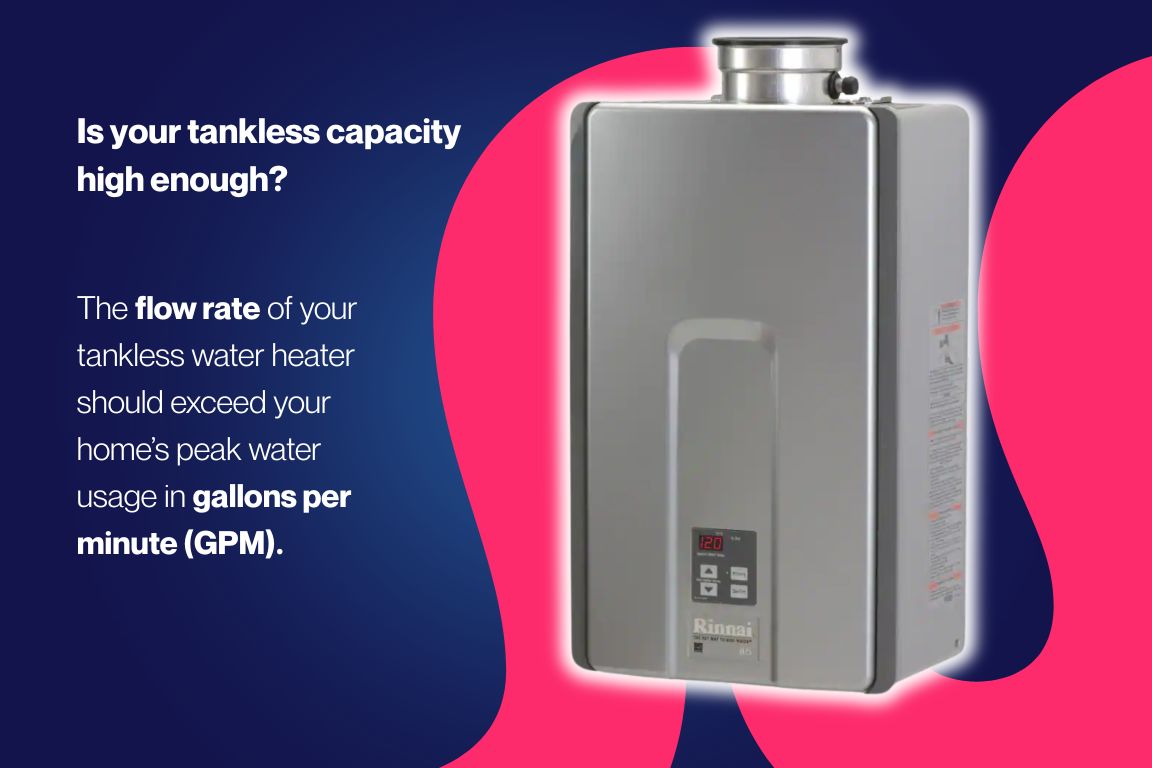
The most common reason for significant delays in hot water delivery from a tankless system is improper sizing. This means your tankless water heater is simply too small to deliver the amount of hot water your growing household needs.
When we talk about sizing a tankless, it’s not about the actual size of the unit- it’s about a measurement called flow rate. Flow rate refers to how many gallons per minute (GPM) your tankless can deliver throughout the fixtures in your home.
Here’s how much hot water your fixtures and appliances need
Each hot water-using appliance and fixture in your home has a peak usage demand that’s pretty standard. The best way to determine your home’s peak usage is simple:
Think about the most appliances and fixtures your household uses at any one time. Do you ever run a dishwasher and shower together? Are there two showers happening simultaneously, or do you wash dishes and do loads of laundry at the same time?
Here’s a handy chart to show the flow rate that your common household faucets and fixtures require in gallons per minute:
Example: If peak water usage in your household means running the washing machine, cleaning dishes in the sink, and taking a shower, then you need a tankless unit with a flow rate of at least 6.7 GPM.
Homes that require a maximum flow rate of 10.0 GPM and above should strongly consider adding a second tankless unit to their system.
Learn how to size your tankless water heater! Our Master Plumbers tell you GPM and flow rate from brands like Rinnai, Rheem and Navien.
{{fast-plumbing-answers-how-to-size-a-tankless-water-heater="/blogs/fast-plumbing-answers-how-to-size-a-tankless-water-heater"}}
Not a Sizing Issue? Scale Buildup is Likely to Blame
If you’ve properly sized the tankless water heater (or heaters) in your home and you still don’t get hot water quickly, our Master Plumbers say it’s likely a hard water issue.
“Scale buildup in the heating elements or filters of your tankless limits hot water delivery pretty quickly,” says our Master Plumber Jesse Crane.
Hard water contains calcium, magnesium and other sediment. As these hard minerals accumulate inside your tankless water heater, they create scale buildup that inhibits the performance of 3 key internal components:
- Heat exchanger: This component transfers heat from your gas burner or electric element to the cold water that enters your tankless. Mineral scaling reduces its efficiency, restricts water flow and causes longer wait times for hot water.
- Inlet filter: The inlet filter traps debris from entering your tankless. As this sediment and scale builds up, the clogged filter creates low flow problems. This means your tankless won’t sense enough incoming water to trigger the heating element.
- Igniter: Scale on your igniter essentially “insulates” the part, forcing the entire system to work even harder to heat your water. Over time, this leads to failed ignition and a lack of hot water delivery.
Tankless water heater won’t ignite? Read our quick 2-minute guide for fast diagnosis, and answers to your specific issue.
{{fast-plumbing-answers-tankless-water-heater-won-t-ignite="/blogs/fast-plumbing-answers-tankless-water-heater-won-t-ignite"}}
The Best Solutions to Speed Up Hot Water From Your Tankless
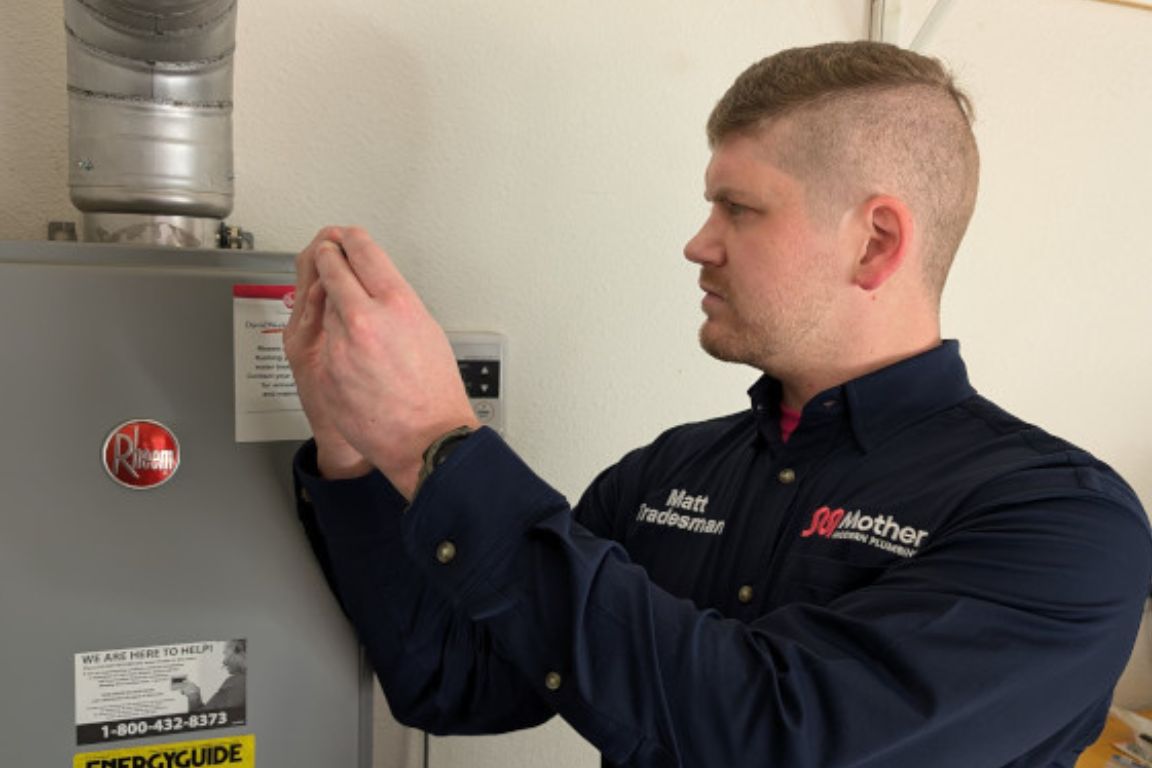
Whether you have an undersized tankless unit or scaling issues causing ignition and low flow problems, you’ve likely identified the culprit by now.
Now, let’s focus on the single best solutions to the specific problem causing your tankless water heater to take forever to heat up.
For undersized units: Right-size your tankless water heater
Contact your trusted plumber about updating your tankless system to accommodate the peak hot water needs of your growing household. Tell them your estimated peak water usage, and they’ll guide you to the product (or two) that provides ample hot water for your home.
Use our handy guide to look up which products match your home’s necessary flow rate from Rinnai, Navien and Rheem.
For scale buildup: Schedule tankless descaling service
The average home needs their tankless water heater descaled once per year to maintain optimal performance and efficiency.
If you live in an area with extremely hard water- like North Texas- our Master Plumbers recommend descaling once every 8-9 months to limit buildup. We perform descaling maintenance most frequently in Richardson and Plano.
{{tankless-descale="/services/tankless-descale"}}
For all homes: Consider a recirculation pump
Install a recirculation pump to boost the efficiency of your tankless and improve hot water delivery speed.
When you turn off the hot water faucet, the recirculation pump goes to work. It returns cooled water in your pipes back to the tankless. This water is reheated, so there’s far less of a lag on hot water delivery the next time you turn on the tap.
Our plumbers note you may experience a slight dip in energy savings by installing a recirculation pump. But if hot water delivery is lacking, it’s worth the trade-off.
Tankless not producing hot water at all? If you’re at your wit’s end, read our fast guide to find potential answers for persistent hot water problems.
{{fast-plumbing-answers-no-hot-water-from-tankless-heater="/blogs/fast-plumbing-answers-no-hot-water-from-tankless-heater"}}
Call Mother for Tankless Water Heater Repair in Dallas

In most homes, tankless systems that take forever to deliver hot water simply don’t offer a high enough flow rate to serve your peak water needs. A higher-capacity system should solve the problem.
If your tankless is right-sized for your home, the most common culprit for hot water delays is scale buildup in your heat exchanger, inlet filter or igniter. Schedule a descaling maintenance appointment with a licensed plumber to restore faster delivery.
In all cases, adding a recirculation pump to your tankless system improves the delivery speed of hot water throughout your water-using appliances, fixtures and taps.
Mother Modern Plumbing’s team of licensed tankless experts handles all these repairs and maintenance requests in Dallas-Fort Worth with speed, precision and care.
Need help with your tankless in Dallas? Mother’s here for you 24/7 with tech-driven solutions and the kind of service you’d expect from your own mom.
{{tankless-water-heater-repair="/services/tankless-water-heater-repair"}}