Fast Plumbing Answers: Signs of a Collapsed Sewer Line


table of contents
table of contents
We spoke at greater length with our Responsible Master Plumber about indoor and outdoor symptoms of a collapsed sewer line. Check out the update for further insights on why no-dig yard leak detection is the best first step for most homeowners before repairs begin.
Your kitchen sink is draining slowly. So is your bathroom sink. And when you step outside to check if anything looks wrong, there's a patch of grass near your driveway that's way greener than the rest of your lawn - and it smells terrible.
These aren't separate problems. They're all pointing to the same thing: a collapsed sewer line.
Don’t worry: we’ll answer all your questions in 5 minutes or less.
A collapsed sewer line sounds catastrophic- and it can be if you ignore it. But the earlier you catch the warning signs, the easier and less expensive the fix becomes. Mother’s Master Plumber tells you what to watch for, why it's happening, and exactly what to do about it.
A collapsed sewer line in Dallas is no joke. Call Mother 24/7 to skip the line with priority scheduling- we’ll restore peace to your household fast.
{{yard-leak-locating="/services/yard-leak-locating"}}
The #1 Sign of a Collapsed Sewer Line

Multiple slow drains throughout your house are the clearest warning sign that your sewer line has collapsed or is nearing failure.
“One slow drain means a localized clog in that fixture,” says our Responsible Master Plumber Steven Smith. “Two or three slow drains at once- that means the problem’s in your main sewer line.”
Think of your home’s plumbing like a highway system. Each drain in your house is an on-ramp to your main sewer line- the highway that leads to the city’s sewer system. When a section of that highway collapses, traffic backs up on every on-ramp at once. Water can't flow out of your home properly, so it drains slowly everywhere - your sinks, your shower, your toilet.
In severe cases, you'll see sewage backing up into your lowest drains- usually your toilet backing up into your shower. This happens when the collapsed pipe is completely blocked and wastewater has nowhere to go but back up into your home.
Want a clear picture of your home’s sewer system? Check out our 2-minute guide to your entire sewer line diagram.
{{fast-plumbing-answers-your-house-sewer-line-diagram="/blogs/fast-plumbing-answers-your-house-sewer-line-diagram"}}
Why This Is Happening
A collapsed sewer line means a section of your underground sewer pipe has caved in, cracked, or broken apart. The pipe no longer has a clear, open path for wastewater to flow through. Instead, there's a bottleneck - or a complete blockage - where the collapse occurred.
When wastewater hits that collapsed section, it slows down or stops entirely. The water backs up through your drain system, causing slow drains, gurgling, and backups in multiple fixtures at once.
3 Reasons Sewer Lines Collapse in Dallas-Fort Worth
Sewer lines collapse for a few common reasons in Dallas-Fort Worth:
Shifting clay soil is the biggest culprit. DFW sits on expansive clay soil that swells when wet and shrinks when dry. This constant expansion and contraction puts pressure on underground pipes. Over time, older pipes - especially cast iron, clay, or Orangeburg - crack under the stress and eventually collapse.
Tree root intrusion accelerates the process. Roots from live oaks, willows, and other water-seeking trees grow toward your sewer line. They find tiny cracks in the pipe, force their way in, and expand until the pipe breaks apart completely.
Age and deterioration play a role too. Cast iron pipes corrode from the inside out. Clay pipes become brittle and crack. Orangeburg pipes - a tar paper product used in mid-century construction - soften and collapse. If your home was built before 1980 and still has its original sewer line, you're working with a pipe that's well past its expected lifespan.
Why It's Not Something Else
Multiple slow drains feel like they could be caused by a few things - hard water buildup, a main line clog, or even venting issues. Here's why those explanations don't fit.
- Hard water buildup affects individual fixtures over time, not every drain at once. You'd see mineral deposits around faucets and showerheads first, and the slow draining would develop gradually over months or years in specific fixtures - not suddenly across your entire house.
- A main line clog from grease or debris can cause similar symptoms - multiple slow drains and gurgling - but it behaves differently. A clog usually resolves temporarily after hydro jetting or snaking. A collapsed pipe doesn't. The problem comes back immediately because the structural failure is still there. Also, clogs don't usually cause outdoor symptoms like soggy patches of grass or sinkholes in your yard.
- Vent pipe issues can cause gurgling and slow drains, but they don't cause sewage backups or outdoor warning signs. Venting problems affect air pressure in your drain system - not the actual flow of wastewater through your sewer line.
If you're seeing multiple slow drains combined with outdoor symptoms like wet spots in your yard or sewage odors near your foundation, you're looking at a collapsed sewer line - not a clog, not hard water, and not a vent issue.
Dealing with sewage backing up into multiple drains? That's a plumbing emergency - here's what to do right now.
{{fast-plumbing-answers-quick-sewage-backup-fix="/blogs/fast-plumbing-answers-quick-sewage-backup-fix"}}
Check Outside For Lush, Smelly Patches of Lawn

The most common outdoor sign of a collapsed sewer line is an unusually green, lush patch of grass in your yard - especially if the rest of your lawn is dry or struggling. That patch usually sits directly above the collapsed section of your sewer line, and it smells like sewage when you get close.
This happens because raw sewage is leaking out of the collapsed pipe and into the surrounding soil. Sewage is full of nitrogen and organic matter - it’s basically fertilizer. The grass above the leak gets a constant supply of nutrients and water, so it grows faster and greener than the rest of your yard.
The smell gives it away. If you walk near the patch and notice a sewage odor, that confirms it’s a sewer problem and not a freshwater leak.
You might also notice the patch feels soft or spongy when you walk on it. That's because the soil is saturated with wastewater. In some cases, the ground above a collapsed sewer line will start to sink or form a depression as soil washes away through the broken pipe.
Got a wet spot in your yard that won't dry out? Here's how to tell if it's a sewer line leak or something else.
{{fast-plumbing-answers-wet-spots-in-yard="/blogs/fast-plumbing-answers-wet-spots-in-yard"}}
Other Common Warning Signs of a Collapsed Sewer Line

If you're not seeing the two big signs above- multiple slow drains and soggy patches in your yard- here are nine other symptoms that point to a collapsed sewer line. Check for five of them indoors, and four more outdoors.
Five More Indoor Symptoms
- Toilet water level changes on its own: The water in your toilet bowl rises and falls without anyone flushing. This happens when pressure changes in your sewer line force air and water to shift in the drain system.
- Persistent sewage smell inside your home: If your bathroom or basement smells like sewage even after cleaning, sewer gas is escaping through a break in the pipe and backing up through your drains.
- Water pooling around floor drains: Basements with floor drains may see water or sewage pooling around the drain opening. This is wastewater backing up because the main line is blocked by a collapse.
- Frequent toilet clogs that keep coming back: A toilet that clogs repeatedly after being cleared - especially if other drains are also slow - often means the main sewer line is compromised.
- Gurgling and bubbling toilets. That's trapped air trying to escape as water struggles to push past the collapsed section of pipe. The gurgling gets worse when you run large amounts of water, like flushing another toilet or draining an upstairs bathtub.
Toilet gurgling or bubbling when you flush or run water? That's a sign of a sewer line problem - here's what it means.
{{fast-plumbing-answers-why-is-my-toilet-bubbling="/blogs/fast-plumbing-answers-why-is-my-toilet-bubbling"}}
Four More Outdoor Warning Signs
- Sinkholes or depressions in your yard: A noticeable dip or sinkhole in your lawn indicates that soil is washing away through a break in your sewer line. The ground collapses into the void left by the eroded soil.
- Sewage backing up in your outdoor cleanout: If you have a sewer cleanout in your yard, check it. Sewage pooling or backing up out of the cleanout cap means there's a blockage or collapse downstream.
- Cracks in your foundation or driveway: A collapsed sewer line under or near your foundation can cause soil to shift and settle unevenly. This puts stress on your foundation or concrete slabs, leading to visible cracks.
- Rodents or insects near drains: Rats, cockroaches, and other pests are attracted to sewer leaks. If you're seeing an unusual number of pests near your drains or in your yard, a break in the sewer line may be providing them access.
The Single Best Solution - What To Do Right Now
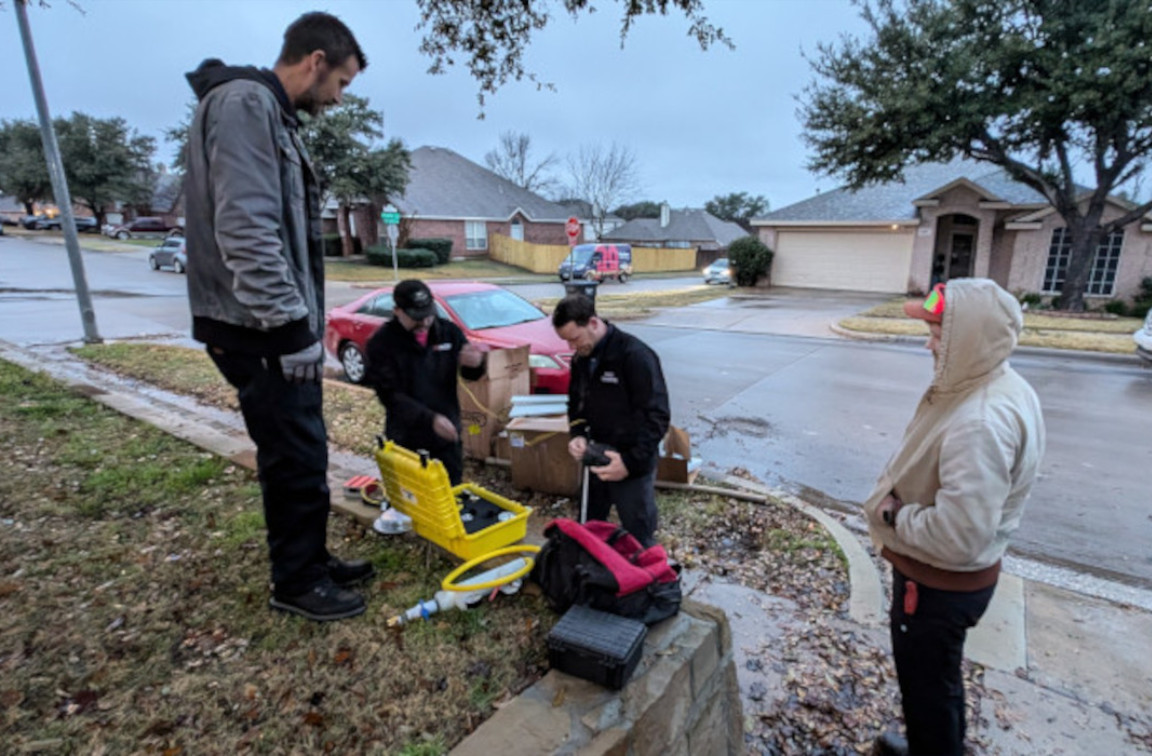
The right first step is non-invasive yard leak detection. This is how a plumber finds the exact location of the collapse without digging up your entire yard or making assumptions about where the problem is.
Modern plumbers use specialized equipment to pinpoint the collapsed section of your sewer line. This includes electronic leak detection with acoustic sensors, thermal imaging cameras, and sewer camera inspection. These tools let the plumber see exactly where the pipe has failed, how bad the damage is, and what's causing it - all without breaking ground.
Your sewer damage is messy enough. Find it with no holes, no digging and no property damage.
Once the location is confirmed, the plumber can recommend the right repair: spot repair for a localized collapse, partial replacement for a damaged section, or full replacement if the entire line is compromised. But none of that happens until the leak is located accurately.
Skipping this step and guessing where to dig wastes time, money, and causes unnecessary damage to your yard, landscaping, and hardscaping.
Why Location Must Happen Before Repairs
You can't fix what you can't find. Sewer lines run underground - sometimes under driveways, patios, landscaping, or even your home's foundation. Guessing where the collapse is and digging exploratory trenches across your yard creates a bigger mess, destroys your landscaping, and drives up costs.
Scheduling sewer leak detection before repairs saves you three invaluable things:
- Money. You're not paying for unnecessary excavation, and you're not tearing up sections of your yard that don't need to be touched.
- Time. Accurate leak detection saves on labor hours, because the plumber only digs where the problem actually is.
- Ongoing Headaches. A plumber with the right equipment can locate a collapsed section of sewer line in under an hour. Without that equipment, you're looking at days of trial-and-error digging, multiple visits, and a yard that looks like a construction zone.
Equipment Your Plumber Should Use and Own
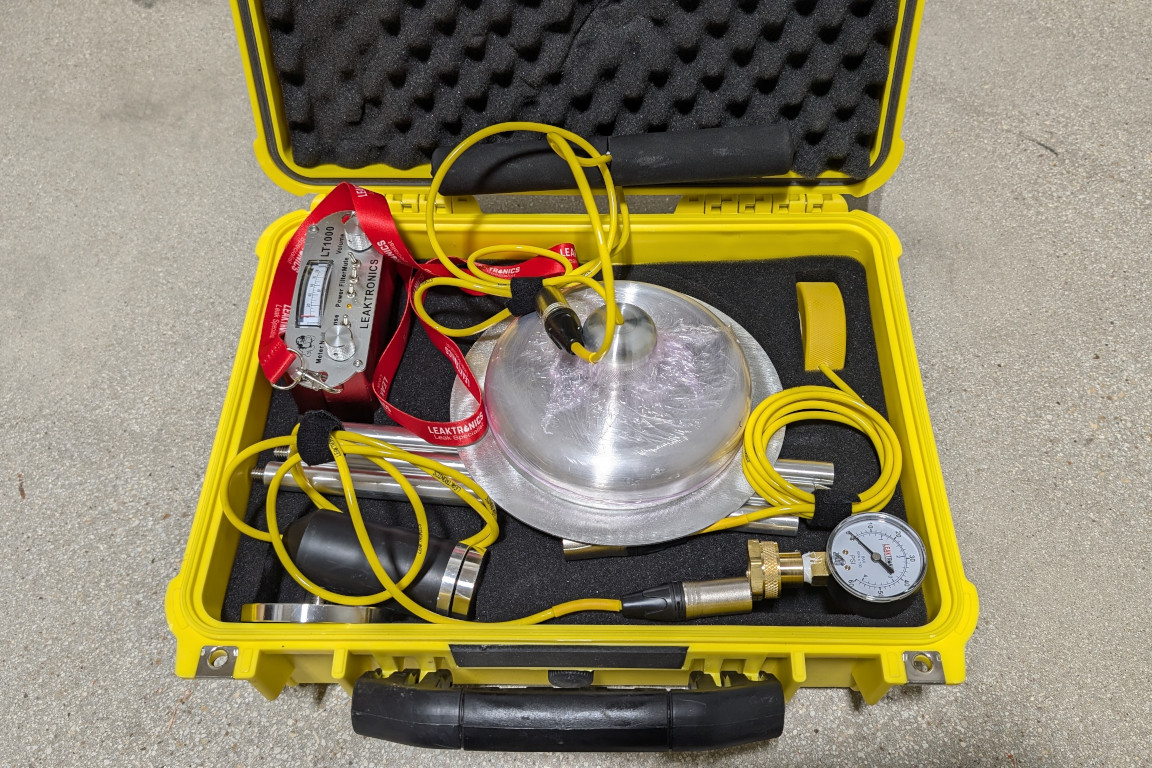
A plumber equipped to handle collapsed sewer line detection and repair should own three types of non-invasive diagnostic equipment:
- Electronic leak detection with onboard acoustic technology uses sound waves to locate leaks and breaks in underground pipes. The equipment listens for changes in water flow and identifies the exact point where the pipe has failed. This works even when the leak isn't visible at the surface yet.
- Thermal imaging cameras detect temperature differences in the ground caused by water leaking from a broken sewer line. Wastewater is warmer than the surrounding soil, so the camera shows a heat signature directly above the leak. This is especially useful for finding leaks under concrete, pavement or hardscaping where visual inspection isn't possible.
- Sewer camera inspection runs a small waterproof camera through your sewer line via the cleanout. The camera sends live video feed back to the plumber, showing the inside of the pipe in real time. This confirms the collapse, shows how severe it is, and reveals what caused it - roots, corrosion, soil pressure, or age-related deterioration.
Non-invasive technology is superior because it eliminates guesswork. The plumber sees the problem directly, documents it with video or thermal images, and gives you proof of what's wrong before any digging happens.
No exploratory work or unnecessary excavation. Just targeted, accurate repairs.
Want to learn more about non-invasive leak detection? Here's a deep dive into the best tools plumbers use to locate underground leaks fast.
{{4-best-tools-to-locate-underground-water-leaks-fast="/blogs/4-best-tools-to-locate-underground-water-leaks-fast"}}
Suspect a Sewer Line Collapse in Dallas? Call Mother
Multiple slow drains, gurgling toilets, and soggy patches of lawn aren't separate problems - they're all warning signs that your sewer line has collapsed or is close to it. The earlier you catch these symptoms, the easier and less expensive the repair becomes.
Don't wait for sewage to back up into your home or for a sinkhole to open up in your yard. Call a plumber who uses non-invasive leak detection to locate the collapse accurately, diagnose the cause, and recommend the right fix - whether that's a spot repair, partial replacement, or full sewer line replacement.
At Mother Modern Plumbing, we use electronic leak detection, thermal imaging, and sewer camera inspection to find collapsed sewer lines fast - without tearing up your yard. We'll show you exactly what's wrong, explain your options clearly, and handle the repair with minimal disruption to your home and property.
The right plumber doesn’t add to the mess. Homeowners throughout DFW trust Mother for non-invasive sewer leak location, accurate diagnosis, and the single best solution tailored to their needs.
Suspect a collapsed sewer line in Dallas? Call Mother 24/7 for fast, non-invasive sewer leak detection and repair.
{{yard-leak-locating="/services/yard-leak-locating"}}