Fast Plumbing Answers: How Do I Find My Sewer Line?


table of contents
table of contents
You have a sewer line problem- but you don't know if you need sewer repair or drain cleaning. To figure it out, you need to find your main sewer line. But where in the world is it? Knowing the answer can save you time and stress, especially if you're dealing with a plumbing emergency in your underground sewer line.
Don't worry — we'll answer all your questions in 2 minutes or less.
Most residential sewer lines leave your foundation at the lowest point of your plumbing system and follow a straight line to the municipal sewer system or your septic tank.
Homeowners should look for an exterior sewer line cleanout first, then check their sewer vent stack. If you can't find either, we'll help you look for visual clues in your yard.
Need professional sewer line locating in Dallas? Call Mother 24/7 for our same day locating service and sewer line repair.
What Is a Sewer Main, and How Do I Find It?
To explain your sewer line's location, you need to know two things:
- Your main line is the underground sewer pipe that connects your home to the city sewer or your septic tank.
- Your main drain is the pipe inside your house that collects wastewater from all your smaller branch pipes.
Your home's main sewer line connects to the main drain pipe at the lowest point in your residential plumbing system. That's why blockages in this area cause slow drains and sewage backups in your house- they can't move forward or go any lower.
From there, it travels the shortest distance from your house to its destination- a straight line.
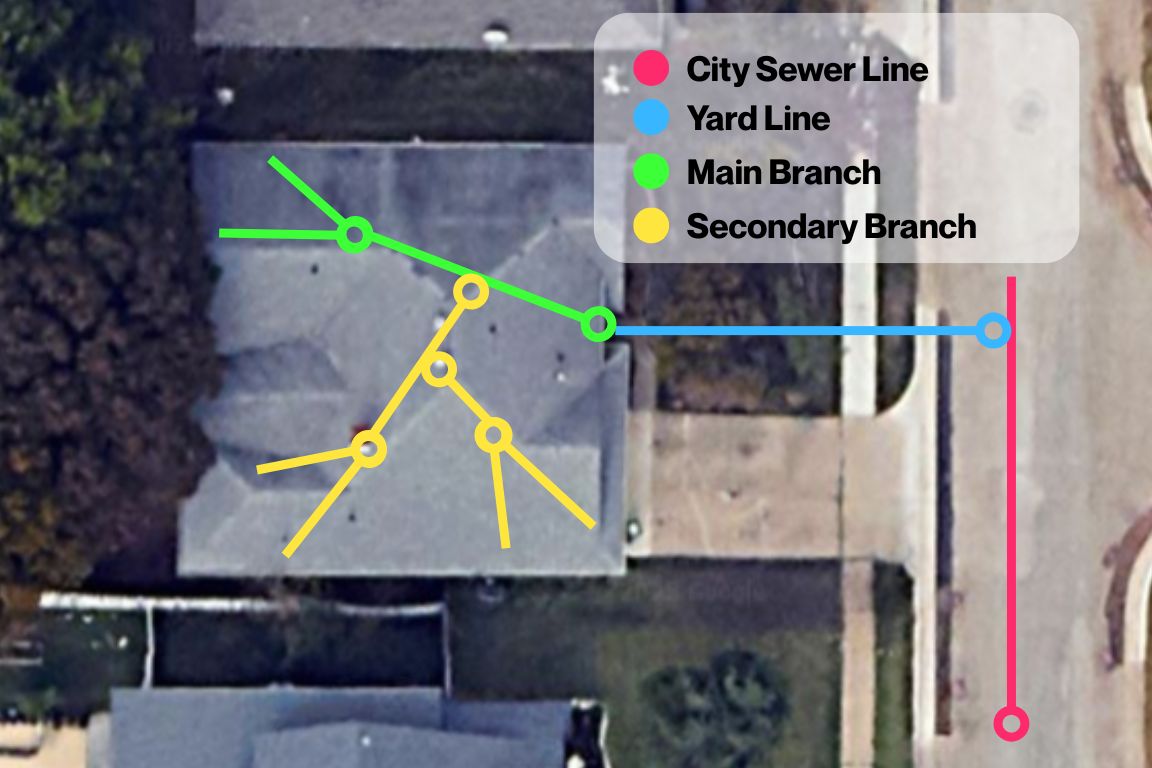
Find any point in your sewer main between your home and the street or septic, and you find your sewer line location.
Want a deeper dive? Check out your home's sewer line diagram.
We'll show you how licensed plumbers perform sewer line location without unnecessary digging in a bit. First, let's show you how to find it yourself.
Locating Sewer Lines? Use These 3 Steps
Locate your sewer main by finding these things, in this order:
- Your sewer line cleanout;
- Your main plumbing stack;
- Visual indicators in your lawn.
We’ll cover these in detail throughout the article.
Find Your Sewer Cleanout: Step 1
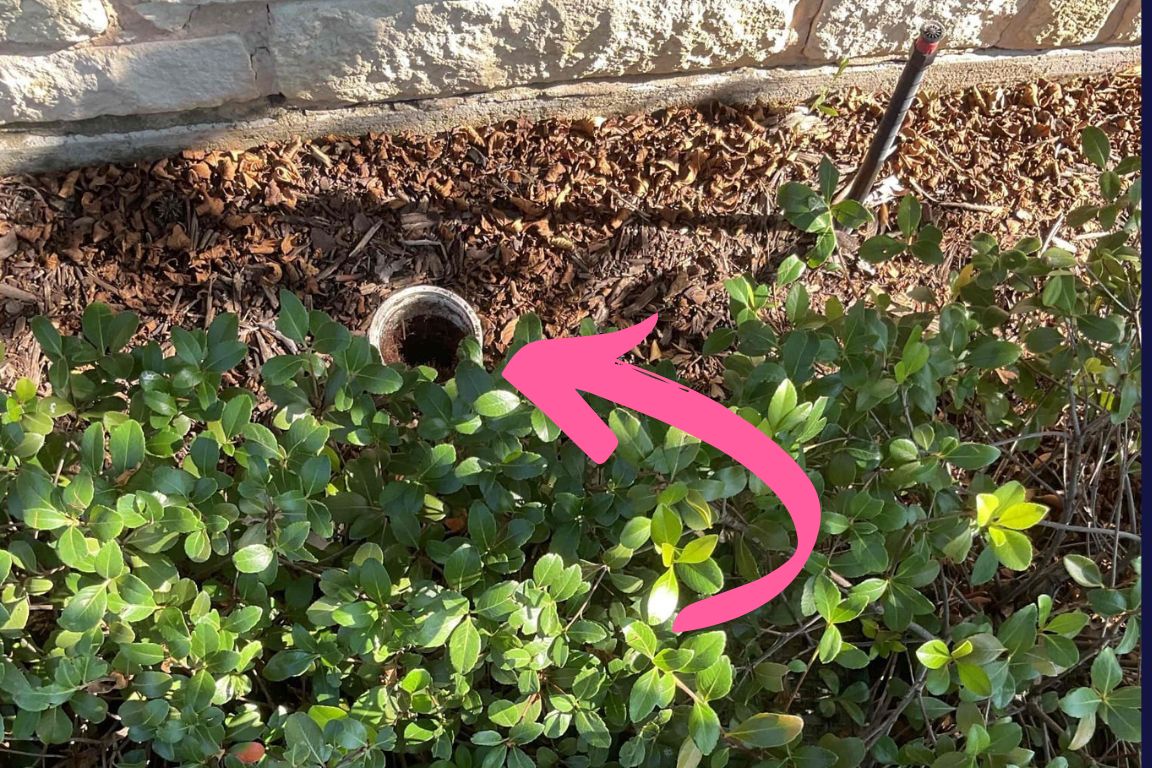
To find your main sewer line, start by looking for your sewer cleanouts. They are the primary access points to your main sewer system.
Sewer line cleanouts are almost always located in front of your house, but this isn’t a hard and fast rule.
Pro Tip: In many Dallas zip codes, it’s common for your sewer line to run through the alley. Ask your neighbors where their cleanouts are located- your house will connect to the city sewer from the same side.
How to Locate an Outdoor Sewer Cleanout
- Most common location: Near your home's foundation in the flower beds or landscaping. If your home backs up to an alleyway, check the back of the house.
- What to look for: Look for a capped pipe that's 3-4 inches in diameter. Newer exterior cleanouts have white PVC caps a few inches above ground level. Older homes may have cast iron or brass pipes.
- Have a city sewer connection? Check for a metal city cleanout where your yard line connects to the city line. This shows where your sewer line starts.
- Why they're important: Master Plumber Dillon Ashton explains that sewer cleanouts are where "we access your sewer system to run a camera or a sewer machine through it if you have a blockage."
Have a pool deck? Your cleanouts might be covered by decorative caps in this area. Look for a small silver cylinder with a Phillips head screw.
Interior Cleanouts: How to Find Them
- Most common location: These can sometimes be found inside your home in areas like the garage, basement, or utility room. Some might even be slightly up a wall.
- What to look for: These are typically 2-inch diameter pipes and are often specific to a single fixture, like a kitchen sink or a bathroom.
- Important distinction: Dillon notes that interior and secondary cleanouts aren't necessarily going directly to your main sewer line. “They are connected to your sewer, but those are usually two-inch cleanouts,” he explains. “The ones that are very, very important are the three-inch, the four-inch cleanouts that are in the flower bed."
Locate Your Main Plumbing Stack: Step 2
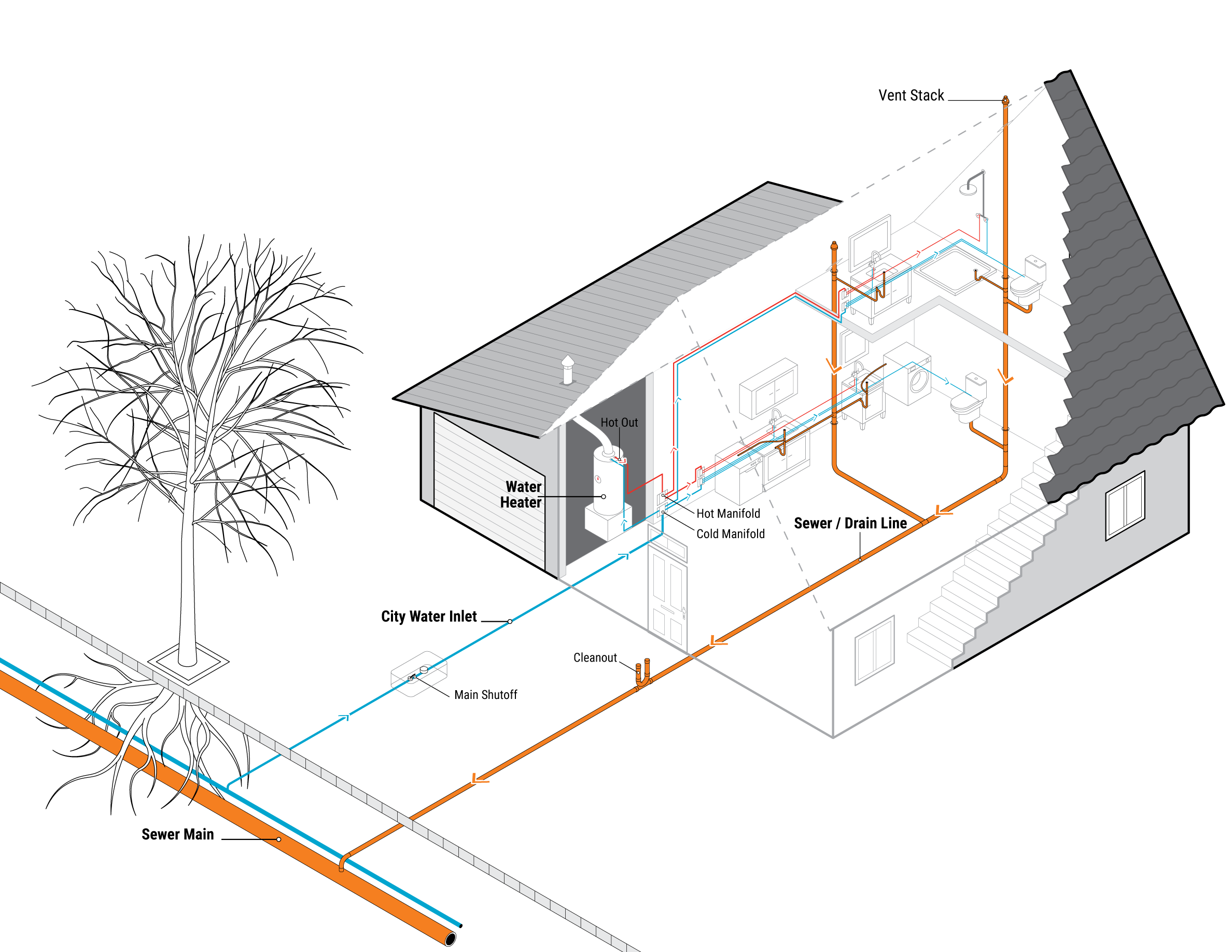
Most homes built before 1980 don't have an exterior sewer cleanout- they weren't part of the plumbing code yet. If you don't have one (or can't find it), move on to your plumbing stack.
You’re looking for a 3-4” diameter pipe that runs from the lowest level of your home through the roof of your home. If you have a basement, it originates there. The pipe allows sewer gases to pass up through your roof and into the air above your house.
The majority of your main vent pipe runs through a wall. While it’s almost always off the master bathroom, it may be located in the kitchen.
The pipe is usually ABS plastic. In older homes, you may have a cast iron vent pipe. It’s the largest pipe sticking out of your roof- follow its path downwards and you’ll discover where it connects to the sewer main.
{{sewer-vent-problems-cleaning-repairs="/blogs/sewer-vent-problems-cleaning-repairs"}}
Don't DIY This Without a Basement
If you have a slab foundation, locating the vents of your plumbing stack means climbing on the roof. Don't do this, especially if you aren't 100% sure what you're looking for. Move on to the next step, or call a licensed plumber.
Finding Sewer Line Location Clues in Your Yard: Step 3
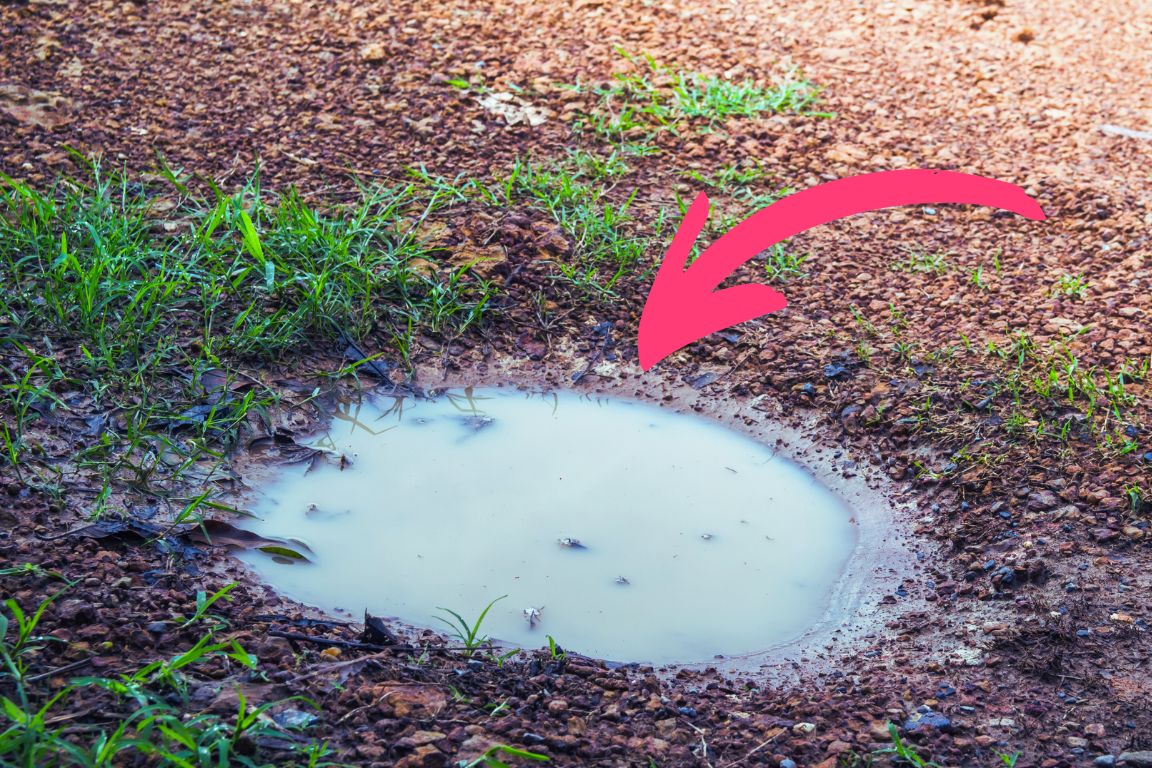
If you don’t have a cleanout, and you don’t want to climb on the roof (we don’t blame you!), then your hunt for the sewer main turns to a visual inspection of the lawn.
Look for these three signs to help detect where your sewer line is buried:
- Discolored strip of grass. Look for a single, straight strip of grass leading from your home to the street. The sewer main is likely buried directly beneath it.
- Smelly puddles. A leak in your sewer line creates small depressions in the soil above it that stink like sewage. Be careful- long-term leaks can lead to sinkholes in your lawn.
- Damp green patches of grass. Another clear indicator of a sewer leak. Wastewater nutrients create unusually damp, green spots in your backyard- even during droughts or the winter.
Finding Your Main Line Is Harder With a Slab Foundation
If your home sits on a slab foundation, that means you don’t have a basement or crawlspace. This makes identifying your sewer line’s location trickier. Since most of Dallas-Fort Worth homes are on concrete slabs, we’re all too familiar with this issue.
Sewer pipes are laid before the concrete slab is poured. There’s no basement or crawlspace access to find them, and they’re not just obscured by a layer of compacted soil.
You’ll need a plumber with non-invasive location equipment to find your underground pipe. If there’s a leak, we use thermal imaging and acoustic leak detectors to find them without digging or disturbing your property.
How Plumbers Find Your Sewer Line Without Digging
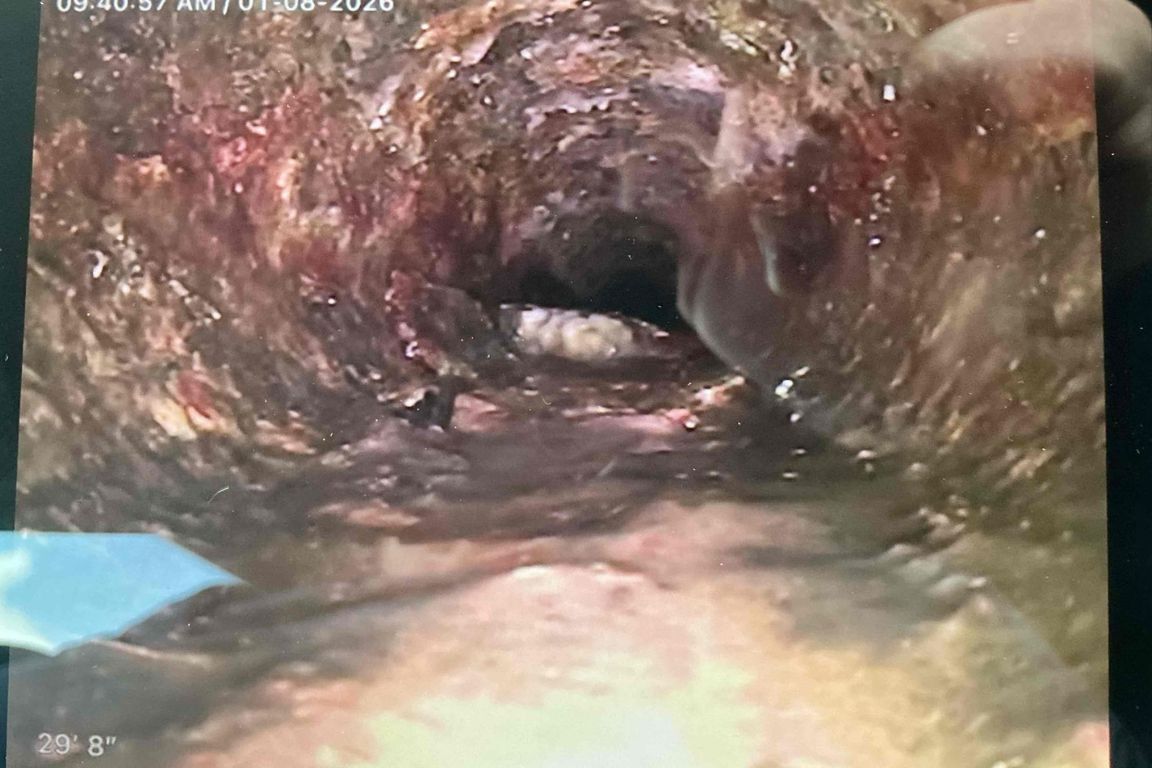
If your DIY efforts failed, it’s time to call in a professional plumber. If you’ve reached this point, you likely have a leak or break in the sewer line. Not only will a plumbing expert find your pipe, they’ll locate the issue with pinpoint accuracy.
Here’s what to expect when you call an expert like Mother Modern Plumbing to locate your sewer line- and what happens next.
Locating the Line and Your Underground Plumbing Issue
- Initial search: Your plumber will first look for the primary cleanouts outside your home, as these provide the best access to the main line.
- Expert access: Dillon explains, "The first thing we need to do is find these white caps. Those are what are called double cleanouts. That's where we access your sewer system." If these are hard to find, plumbers may look for other access points like your roof's vent stack or a shower drain.
- Technology used: A sewer camera inspection is often performed to visually identify the exact cause of the backup and assess the overall condition of your sewer line. This helps determine if the issue is a simple clog or a more serious problem like tree root intrusion or a broken pipe. You get clear visual proof of the exact location of the issue.
{{sewer-cleaning-why-a-camera-inspection-is-non-negotiable="/blogs/sewer-cleaning-why-a-camera-inspection-is-non-negotiable"}}
Your Sewer Inspection Reveals The Best Repair Option
Based on the camera inspection, your plumber will recommend the most effective solution. It's usually one of these 4:
- Sewer line cleaning: For deep blockages and wastewater backups, professional hydro jetting and chain knocking reaches sewer main clogs that in-home drain cleaning can't reach.
- Root removal: If tree roots are the culprit, specialized cutting attachments on a sewer machine can remove them.
- Sewer line repair: Spot repairs are great for targeted sewer main damage in a specific location. Trenchless repairs work well on newer lines and avoid unnecessary digging.
- Sewer line replacement: If more than 10 feet of your buried pipe is damaged, replacing it with new Schedule 40 PVC prevents future backups and plumbing emergencies. This applies to collapsed pipes, multiple root intrusions and significant cracks in older cast iron and clay tile pipes.
Weighing sewer repair vs replacement? Price your options with our updated Dallas sewer line replacement cost guide.
{{dallas-sewer-line-repair-replacement-cost-guide="/blogs/dallas-sewer-line-repair-replacement-cost-guide"}}
Find Your Dallas Sewer Line: Call Mother 24/7
Knowing how to find your main sewer line is the first step in avoiding an emergency plumbing call. These crucial access points, often white capped pipes in your flower beds, allow professionals to diagnose and resolve blockages effectively.
Start by locating your sewer cleanout. It’s usually outside the home and covered by a white PVC cap. If you don’t have one, start your search at your vent stack- then look for a strip of discolored grass leading from your home to the street.
If you can’t locate your main, call a plumber who owns non-invasive location equipment. Mother uses electronic, acoustic, thermal imaging and camera technology to find residential sewer lines and locate leaks and breaks with pinpoint accuracy- anywhere in DFW.
Call Mother 24/7 for same day Dallas sewer line services. We’ll give you a lasting solution and restore your peace of mind.