4 Best Tools to Locate Underground Water Leaks, Fast


table of contents
table of contents
A leak the size of a dime wastes 10,000 gallons of water a month. That’s enough to add $100+ to your monthly water bill- not to mention the risk of slab leaks and property damage. You need to know how to find a water leak underground with pinpoint accuracy- and no digging.
Our Master Plumbers compiled a list of the 4 best underground leak location tools for accurate detection of hidden leaks and breaks in your buried main water line:
- Electronic leak detectors are the gold standard for buried leak location..
- Thermal imaging is ideal for locating hot water leaks.
- Acoustic leak locators are perfect for finding slab leaks.
- Ground penetrating radar (GPR) creates a 3D map of the area around your pipe.
Our team didn’t just review this underground leak detection equipment. We purchased them, trained our entire team of licensed plumbers to use them, and use them to identify nearly 200 water leaks per year in the DFW Metroplex.
If you suspect a hidden leak in your yard, take advantage of the most modern underground leak detection service in Dallas.
Burst water pipe emergency in Dallas? Call Mother 24/7 for priority scheduling with a leak detection specialist.
{{yard-leak-locating="/services/yard-leak-locating"}}
Underground Water Leak Detection Equipment: The Top Four
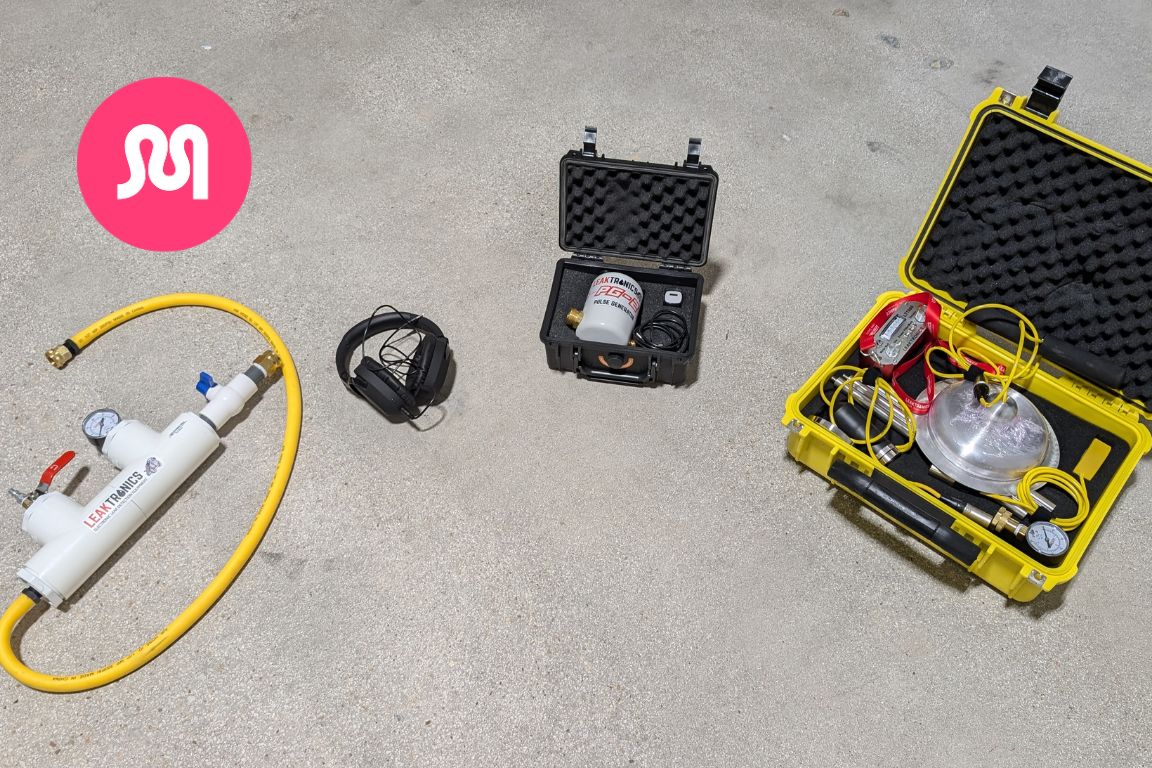
Mother Modern Plumbing’s on-staff Master Plumbers and research team approve these four advanced pieces of leak detection equipment for underground water leaks:
- Electronic leak detection
- Thermal imaging
- Acoustic leak detection
- Ground penetrating radar (GPR)
When used separately, each leak location device offers specific insight- using infrared technology, water pressure, sound wave detection, or visual inspection methods.
When you call Mother for leak detection service, we use them all to create a holistic, pinpoint picture of your underground leaks: their location, size and severity of damage.
Why we’re not highlighting hydrostatic testing
Hydrostatic testing is a tremendous leak detection method that isolates your affected pipe and gauges internal water pressure to identify holes and breaks.
There’s no inherent issue with the quality of hydrostatic testing- but it’s best used to detect and locate leaks in your home’s sewer line. This guide deals specifically with water line leaks.
(If you suspect a leak in your sewer line, expect quality hydrostatic testing as a service option from your licensed plumber.)
The Best Underground Leak Detector Tools: How We Chose
The individual methods of leak detection change from device to device. For example, acoustic leak detection relies heavily on triangulating sound waves, while thermal imaging utilizes infrared technology to map temperature changes.
Different as they are, the best leak detection equipment share four common characteristics:
- Pinpoint accuracy. When you have a hidden water leak, “close enough” doesn’t cut it. You require location solutions with specific accuracy down to the millimeter- no guesswork required.
- Non-invasive detection. We don’t like leak detection services that require digging holes in your yard. It’s messy, it’s invasive, and it’s not necessary. Our team prefers modern no-dig leak location technology.
- Fast diagnosis. Mother provides leak location results and optimal repair solutions in the same appointment as our diagnostics. No waiting, no wondering- every day that goes by adds more money to your next water bill.
- Consistent, evolving research. No matter how advanced leak location becomes, it can always improve. Our Master Plumbers prefer equipment developed in fields that consistently research and upgrade their tech.
Let’s dive into our 4 top options for yard leak detection service- the technology behind each, how they work, and when your plumber should use each.
Electronic Leak Detection
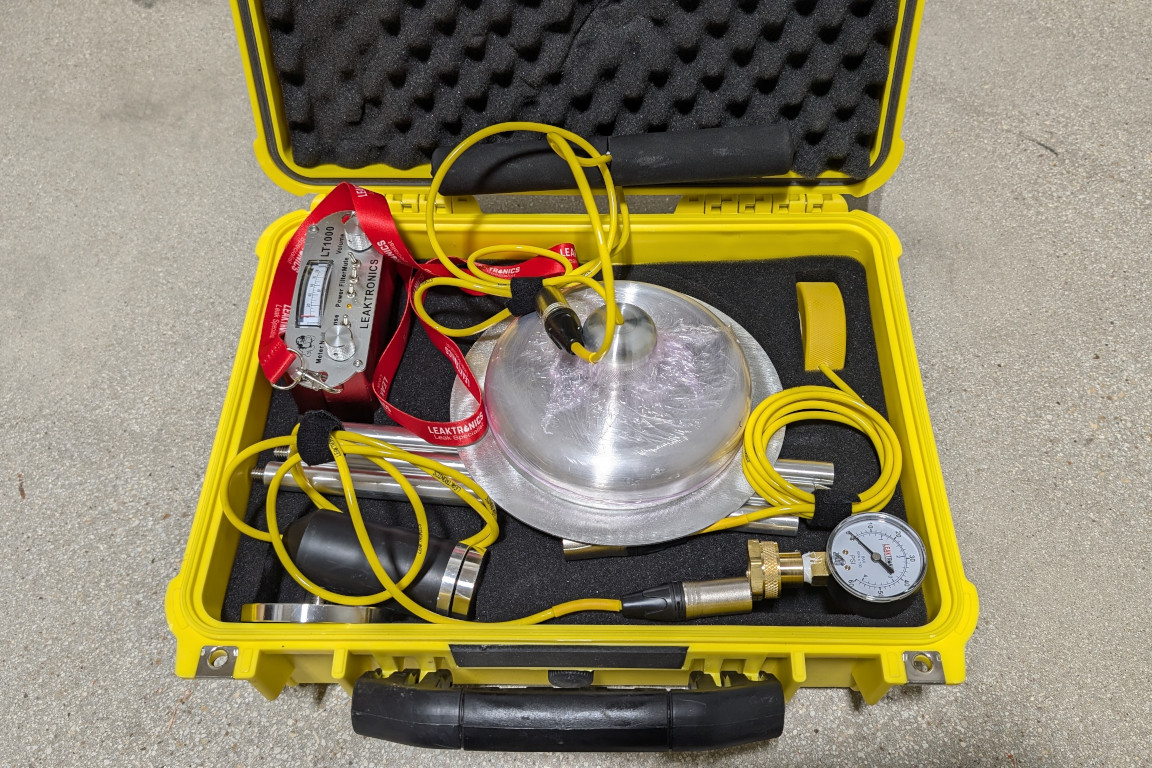
The technology: A combination of electrical circuitry and acoustic signals create the best overall tool for finding water leaks in underground pipes
How electronic leak detection works
Electronic leak detection takes a step past acoustic leak location by adding an electrical component to find hidden leaks.
When water moves through your underground pipe, it creates a constant sound. A leak or broken pipe causes the frequency of this sound to change. The electronic detection unit uses sensitive microphones to detect and amplify these changes in frequency.
A transducer is used to capture these amplified sounds. Your licensed plumbing tech listens to these sounds in headphones and interprets the frequencies to locate the leak.
Electronic leak detectors boost this technology with two additional capabilities:
- Moisture meters measure water levels in the surrounding environment. These are incredibly helpful underground, as they detect even small changes in soil’s water content.
- Thermal cameras highlight temperature variations (“cold spots” or “hot spots”). When water escapes a contained pipe, it changes the temperature of the surrounding soil or building materials.
This powerful trio of frequency analysis, moisture measurement and thermal imaging makes electronic leak detection the single best method to find a break in your water pipes.
Core benefits of electronic leak detection
- Multimodal detection. The best aspects of acoustic detection, thermal imaging and smart moisture sensors- all on-board in one powerful piece of equipment.
- Comprehensive analysis. The ability to find leaks based on sound, sight and “feel”.
- Location-proof use. Inside your walls, under the floorboards, outside your home, even under your home’s foundation- electronic leak detectors are usable tech everywhere.
Best use cases
- Use electronic leak detectors with confidence, anywhere. They’re the centerpiece of Mother Modern Plumbing’s advanced water leak detection services. The most modern tech, with the most comprehensive identification and diagnostic usability.
These tools are the best underground water leak detector for our customers in the DFW Metroplex. No unnecessary digging means we don't add to the damage caused by our region's expansive black clay soil.
Thermal Imaging
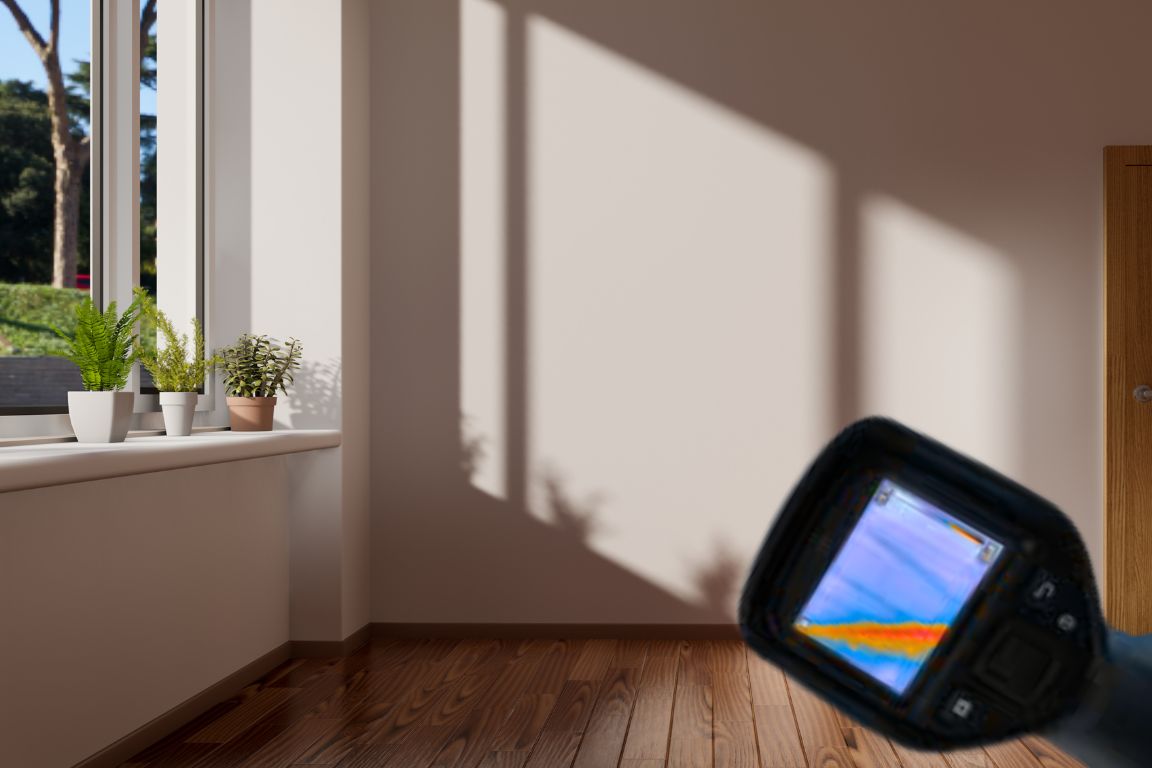
The technology: Infrared imaging to map localized changes in temperature
How thermal imaging works
Thermal cameras utilize advanced infrared technology to display the temperature range in a section of your yard or home.
The infrared camera creates heat signatures- think of this like the “color map” of a thermal body scan. (Red = hot, blue = cold.) These heat signatures are processed to create a visible “heat map”, called a thermogram.
Water leaks create shifts and changes in temperature- cold water leaks make the surrounding area colder, while hot water leaks warm up the surrounding area. These appear as cold spots and hot spots in your thermogram, giving your licensed plumber visual confirmation of underground water leaks.
Core benefits of thermal imaging
- Visual proof of temperature changes. If you feel a “hot spot”, a thermal camera provides clear visual proof that you’re correct.
- Heat mapping a leak source. The hot and cold spots on a thermogram radiate from certain locations- these are most likely to be the origins of your leak.
Best use cases
- Augmenting electronic leak detection. Thermal imaging is a key component of electronic leak detectors- ideally, your licensed plumber has access to this technology. If not, they certainly should have an infrared camera handy.
- Establishing hot water line leaks. Spikes in heat signatures on a thermogram indicate a leak in your hot water line, which helps plumbers narrow down potential locations and affected appliance lines.
Thermal imaging is a great water leak detection option in the older homes of University Park near SMU. We use thermal imaging to find in-wall leaks and leaks under floorboards, all without disturbing a square inch of the neighborhood's beautiful historic architecture.
Acoustic Leak Detection

The technology: Triangulation of frequency changes, sound-based leak detection
How acoustic leak detection works
Acoustic leak detectors use powerful, highly-sensitive on-board microphones to detect frequency changes.
When water escapes a pipe through a leak, the sound frequency of that moving water changes. The on-board microphones identify these changes and target the precise location of the shift in pitch.
A component called the transducer captures these frequency changes and allows your licensed plumber to hear them through headphones. An experienced technician uses this data to pinpoint the smallest pinhole leaks down to 0.004 inches.
This makes acoustic leak locators the best slab leak detection tool for most homeowners.
Core benefits of acoustic leak detection
- “Hear” your hidden leak. Leaks aren’t always visible- especially under your slab, a home extension (like a patio), or in your subfloor. Acoustic location helps.
- Exceptional precision. Acoustic leak detectors can identify sound variances from even a tiny pinhole leak.
Best use cases
- The best slab leak detection equipment. Acoustic leak location allows plumbers to identify problems in areas otherwise impossible to reach. No digging up your floor or cutting into your concrete slab!
- As part of electronic leak detection. As stated, modern plumbers should incorporate acoustic solutions into a complete electronic leak detection equipment package.
{{fast-plumbing-answers-how-to-find-a-water-leak-under-slab="/blogs/fast-plumbing-answers-how-to-find-a-water-leak-under-slab"}}
Ground Penetrating Radar (GPR)
The technology: High-frequency radio waves create a map of your buried plumbing system and damaged pipe
How GPR works
This leak detector tool sends quick, electromagnetic pulses through the ground. Each time these pulses pass through a new material- soil, water, metal pipes, tree roots- they record the change underneath the surface.
Each time a pulse is reflected back to the surface, it creates a wave pattern. Thousands of these waves combine to render a 3D cross-section of everything underneath your yard.
You'll see dips in water pressure, locations of water loss, and the problem areas around your underground pipe.
Core benefits of ground penetrating radar
- “See” more than your pipe leak. GPR provides a “cutaway view” of your underground plumbing system and everything around it. You'll see the current leak, plus areas that may cause future leaks.
Best use cases
- Scanning for voids in soil. When your underground pipe leak isn't caused by a root intrusion or corrosion. GPR shows the empty pockets of soil beneath buried pipes that cause separations and collapses.
Real DFW Homeowners Review Our Leak Detection Service
We're proud of the 5-star rating our underground leak detection service maintains. DFW residents value our modern technology, non-invasive methods and transparent, no-pressure diagnostics.
Here's a recent leak detection reviews we're particularly proud of:
If your plumbing leak doesn't require repairs, we're honest enough to tell you (and save you the money). Read more from Walter:
How to Find a Water Leak Underground: Call Mother

Our Master Plumbers agree- electronic leak detection is the best current solution for finding a water leak underground. Thermal imaging and acoustic leak detection are encompassed in this service option.
Back your electronic leak detection up with innovative water line camera footage, and you have an unbeatable yard leak location combination.
At Mother, we believe in tech-driven, innovative plumbing service that creates lasting results. If our team discovers a better solution than the ones we’ve listed, we’ll update this article with our findings.
Call Mother 24/7 for Dallas water leak detection with no unnecessary digging.
{{yard-leak-locating="/services/yard-leak-locating"}}