.svg)
Your Easy Tankless Water Heater Maintenance Checklist


table of contents
table of contents
You recently purchased a new tankless water heater for your home- or perhaps you noticed an error code for the first time. It’s time to set up a maintenance plan, and you know the basics: descale, clean the filters, run a test cycle. But how often should you do these things, and when?
Don’t worry: our Master Plumbers created the easiest tankless water heater maintenance checklist you’ll ever use.
At Mother, we specialize in tankless maintenance throughout the Dallas-Fort Worth area. Our licensed water heater technicians help homeowners battle scale buildup and wear and tear with smart, proactive solutions that guarantee endless hot water delivery and extend the lifespan of your unit.
In this simple guide, we’ll break down the seven necessary maintenance tasks for your tankless and build a checklist you can use for decades. Most homeowners should descale their tankless unit once a year- if you live in a hard water region, do it every 8-9 months.
Schedule tankless descaling and maintenance in Dallas! Call Mother 24/7- we’re here to answer your call and keep your hot water flowing on demand.
{{tankless-descale="/services/tankless-descale"}}
The Quick Answer: Your Tankless Water Heater Checklist
You’re busy- maybe you don’t have time to read the whole article right now. No problem!
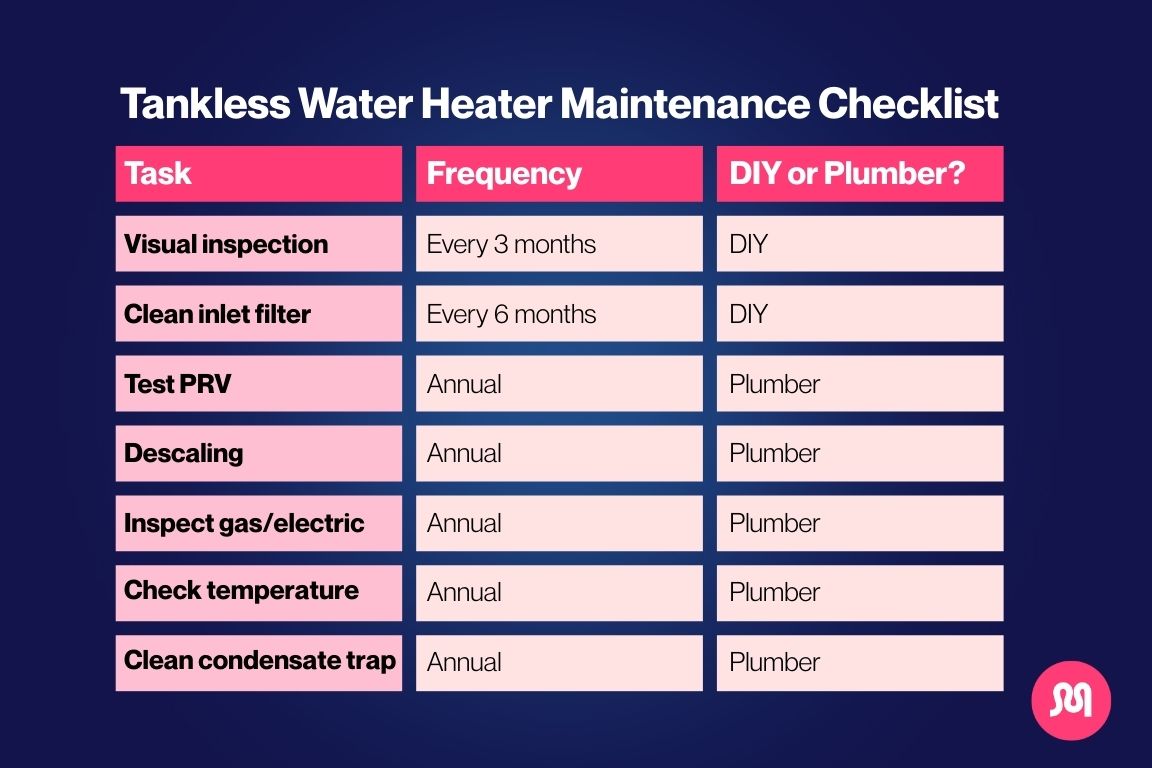
Just download and save this handy checklist for the perfect tankless water heater maintenance schedule.
This tankless maintenance checklist covers everything you’ll need for an efficient, high-performing unit.
The 7 Maintenance Tasks for Your Tankless Checklist
Every tankless water heater requires seven basic maintenance tasks to extend its lifespan and guarantee performance during peak water usage in your home:
*Schedule these services once every 8-9 months in regions with extremely hard water, like North Texas, Las Vegas or Phoenix.
Let’s explore these tankless maintenance tasks in greater detail. We’ll explain why each is vital to your unit’s performance and why a licensed plumber is needed (or not).
Visual Inspection of Your Tankless Water Heater
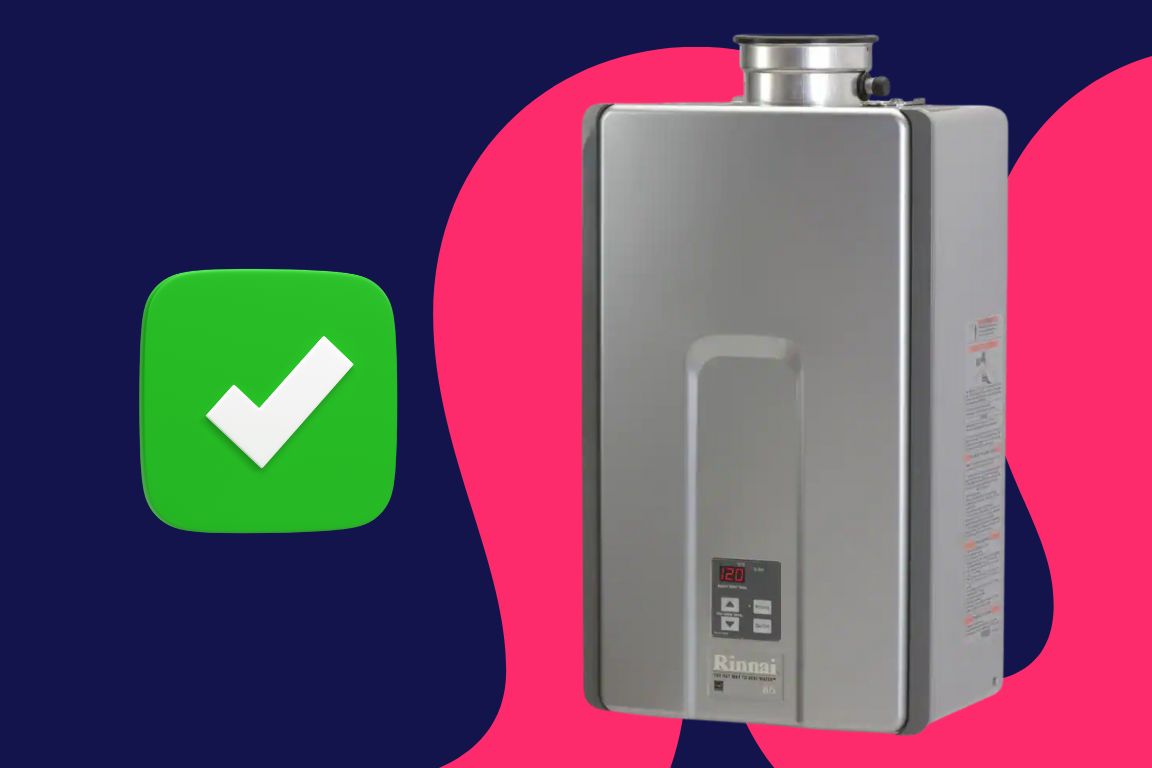
How often: Every three months
DIY or licensed plumber?: DIY task
What’s involved: All you need is a flashlight and a good eye for detail- you don’t need to touch your tankless at all.
You’re looking for five things:
- Normal digital display (system status and water temperature)
- Dents or damage to the external casing;
- Any signs of leaks, cracks or corrosion;
- Any objects blocking your vents; and
- All lines, connections and fittings are snug and secure.
If your tankless hasn’t thrown an error code or failed to deliver hot water in the last three months, you shouldn’t notice any signs of damage.
Tankless Inlet Filter Cleaning
How often: Every six months
DIY or licensed plumber?: DIY task
What’s involved: As with any tankless maintenance task that involves opening the unit, always shut off power and water to the system before starting. Your job here is to clean any scale and sediment buildup that’s clogging the inlet filter. Here’s how:
- Flip your tankless circuit breaker to the ‘off’ position and close the cold water inlet valve.
- Remove the external cover to expose your water valves.
- Close the hot water valve to avoid any hot water leaving the unit.
- Take a small bucket or pan and place it under the pressure relief valve.
- Open the pressure relief valve to let a small amount of water out.
- Locate the filter inside the cold water inlet- look for a cap or knob on your incoming water pipe.
- Remove the filter screen from its housing. Rinse under cold water to loosen and remove any sediment or scale buildup. If any pesky spots remain, use a soft brush.
- Slide your clean filter back into place, screw the cap or knob back onto the pipe (and tighten gently with a pair of pliers).
- Turn your water back on, then turn the breaker back on. You’re done!
Don’t feel comfortable? That’s okay! A lot of homeowners don’t like touching their tankless at all- plumbers handle inlet filter cleaning all the time.
PRV Valve Testing
How often: Once per year- or every 8-9 months in hard water regions
DIY or licensed plumber?: Hiring a licensed plumber is best; any damage or broken valves caused by DIYers will void your product warranty. Plus, you’ll avoid the risk of burning yourself on boiling hot water.
What’s involved: You’re testing the pressure relief valve (PRV) that automatically opens to release hot water and steam if your unit’s internal temperature or pressure gets too high.
Here’s what your plumber will do to test the PRV on your tankless:
- Turn off the power and/or gas supply to the system.
- Always wear gloves, long sleeves and closed-toe shoes to protect from scalding.
- Locate the PRV: it’s usually a brass valve with a lever/handle on the side or top of the unit.
- Place a bucket under the PRV on the floor (make sure it’s heat-resistant). If your unit is outside, use a copper drain pipe to direct water away safely.
- Lift the PRV lever for about 10 seconds. There should be healthy water flow and a “gurgling” sound like you’re using mouthwash.
- After 10 seconds, let the lever down. Look for the water to stop right away, and stop completely. No drips, no dribbles.
Tankless Descaling Service
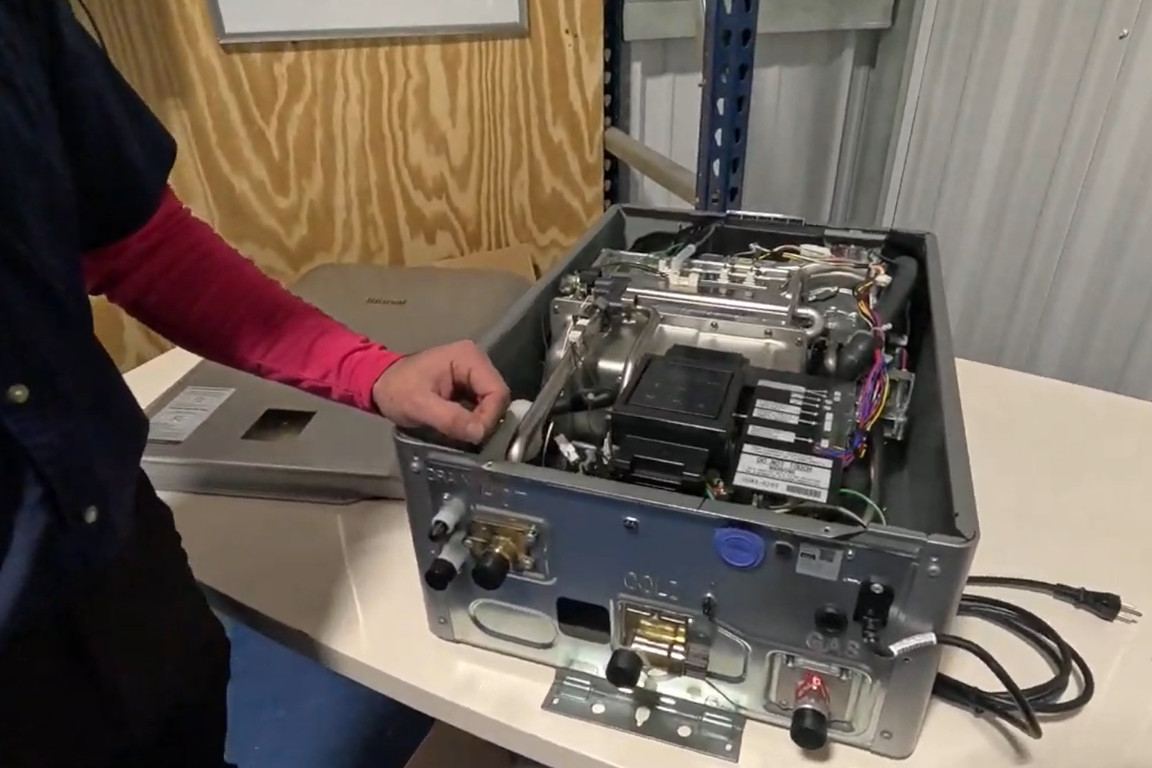
How often: Once per year- or every 8-9 months in hard water regions
DIY or licensed plumber?: Licensed plumbers should be hired to descale tankless systems. This is especially true with Rinnai and Navien units, where product warranties are easily voided by mistakes in DIY descaling.
What’s involved: “Scale buildup in internal components is the #1 reason tankless water heaters don’t produce hot water,” says our Master Plumber Dillon Ashton. Descaling your tankless is the single best preventative measure to keep your unit at peak efficiency.
Descaling solution is run through your system to flush out sediment and scale buildup that’s settled out of hot water. This scale interferes with virtually every internal component of your tankless- from ignition failure to flame loss, faulty flow sensors to dirty anode rods and heat exchangers.
As stated, it’s best to leave descaling to a licensed plumber that’s deeply familiar with tankless maintenance. At Mother, we descale dozens of Rinnai, Rheem, Navien, A.O. Smith and State Water Heater units every year.
We built a step-by–step guide for homeowners intent on DIY descaling their tankless units. If you’re going to do it yourself, we want to make sure you descale the system properly and safely- no accidental warranty voids and no incomplete flushing!
{{how-to-descale-tankless-water-heater="/blogs/how-to-descale-tankless-water-heater"}}
Tankless Gas & Electric Inspection
How often: Once per year
DIY or licensed plumber?: Licensed plumber
What’s involved: A comprehensive performance check of the incoming gas and electric lines, their hookups and fittings to ensure safe operation and optimal efficiency of the unit.
Expect your licensed plumber to conduct a thorough inspection of all of these systems:
- Gas supply line and piping
- Electrical wiring
- Gas hookups and connections
- Electrical connections
- Venting system, including exhaust and air intake vents
- Ignition and heating element check
- Combustion check
- Disconnect switch check
Temperature Check
How often: Once per year
DIY or licensed plumber?: Licensed plumber
What’s involved: At first glance, checking your tankless water heater’s temperature seems like a DIY job. But a complete temp check involves more than just looking at your digital display.
Your plumber compares the temperature reading on your unit’s display with the actual temperature of your hot water from faucets and taps throughout the home. It should match the temperature preset on the unit- normally 120°F for safety.
The temperature of hot water output should be measured at various flow rates, to ensure consistent heating regardless of your water needs. (A slowly running faucet should deliver the same temperature as a powerful shower or your washing machine.)
Tankless not producing hot water? Find the quick answer to your specific problem in our 2-minute guide!
{{fast-plumbing-answers-no-hot-water-from-tankless-heater="/blogs/fast-plumbing-answers-no-hot-water-from-tankless-heater"}}
Condensate Trap Cleaning
How often: Once per year (on condensing units)
DIY or licensed plumber?: Licensed plumber
What’s involved: If your tankless is a condensing unit (most high efficiency models are), it will have a condenser. You shouldn’t DIY any condenser-related maintenance tasks: this component handles high-acidity fluids that easily damage your skin, eyes, nose and throat.
Your plumber shuts off power and gas to the tankless unit, then locates the condensate trap. Over the year, the trap collects debris and sediment as your condenser flushes condensate out of the system. This debris should be thoroughly cleaned from the trap before re-insertion.
Our Responsible Master Plumber, Steven Smith, always checks the O-ring and seal in this component before reassembling a tankless unit. “O-rings and gaskets degrade easily. They’re usually the first thing to go in a tankless,” Steven explains.
Build Your Dallas Tankless Maintenance Plan With Mother

Your tankless water heater maintenance checklist should revolve around annual descaling service to keep your filters, heat exchanger, flow sensors and valves free from scale. Descale your unit once a year- or every 8-9 months in regions with extremely hard water.
You can DIY certain tasks, like quarterly visual inspections of the unit and venting. Rely on your trusted licensed plumber for PRV checks, condensate trap cleaning and gas and electric inspections. These jobs not only carry safety risks, but homeowners often void their product warranties by making DIY mistakes.
Use the 7-step checklist provided in this article, and you’ll ensure a long, healthy life for your tankless water heater, with endless hot water for your household’s busiest days.
Meet the smartest tankless water heater maintenance in Dallas. Call Mother 24/7 to ensure decades of on-demand hot water delivery with no interruptions.
{{tankless-descale="/services/tankless-descale"}}