.svg)
Rinnai RX199iN Tankless Water Heater: Master Plumbers Review
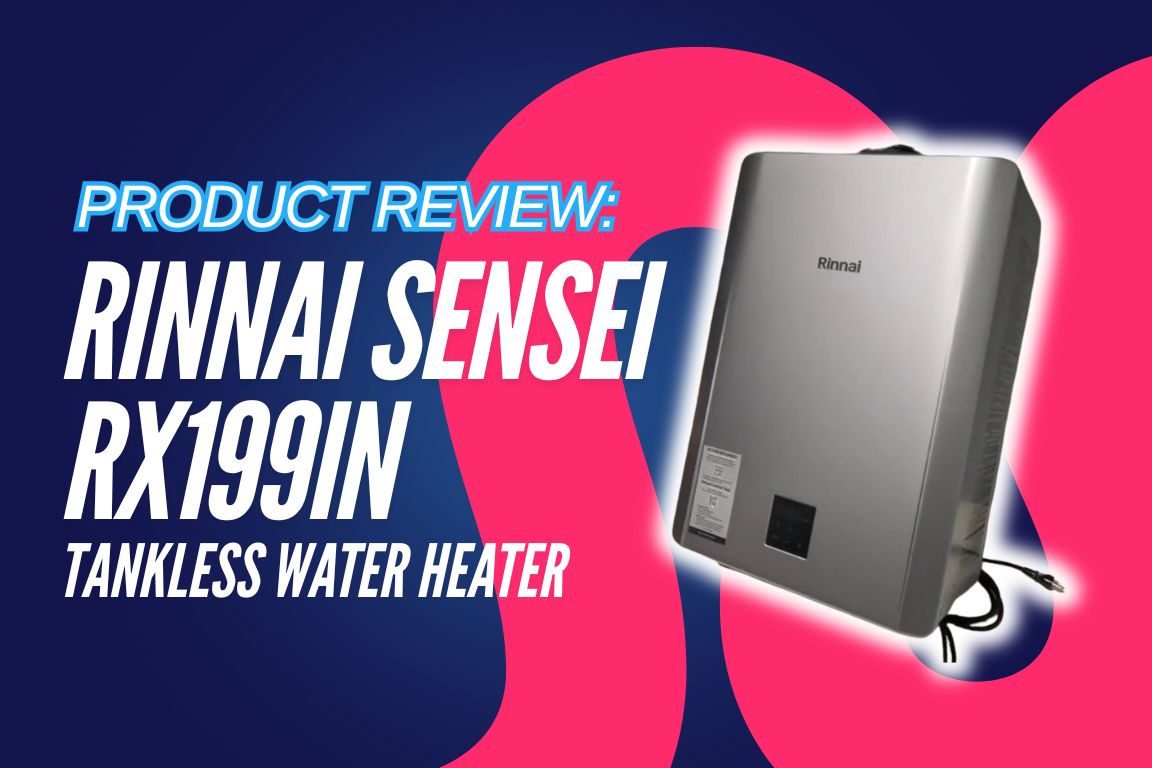


table of contents
table of contents
You’re considering a switch to a tankless water heater for your gas-powered home. You’ve read about the advantages of a condensing unit and potential discounts from your insurance carrier. Now, it’s time to make a decision, and you want some expert advice.
Our team reviewed the Rinnai RX199iN tankless water heater and compared it to other leading tankless units from Rheem and Navien. Overall, we recommend the Rinnai RX199iN as the best gas tankless water heater for most homes. When used with a recirculation pump, this condensing unit offers exceptional hot water delivery and highly-efficient performance.
We considered six ultra high-efficiency tankless water heaters in our review process, on top of the thousands of tankless installations and repairs we’ve conducted for our customers. We spent 12 hours researching the Rinnai SENSEI RX199iN.
Our Responsible Master Plumber, Steven Smith, provided insights based on installing hundreds of Rinnai tankless units in customers’ homes as our Fort Worth tankless water heater specialist. We also spoke to Paxten Volbrecht, Director of Agency Operations at Jacobs Insurance Solutions, about why insurance carriers prefer first-floor tankless units over conventional water heaters.
We’ll discuss the core features that the Rinnai RX199iN tankless water heater provides, specifically to homes powered by natural gas and propane. We’ll cover the pros and cons that matter to everyday homeowners, as well as the cost to own and maintain the unit.
Switching to a tankless in Dallas? Call Mother 24/7- our expert technicians will be there within 24 hours for a no-hassle estimate.
{{tankless-water-heater-installation="/services/tankless-water-heater-installation"}}
Why You Should Read This Rinnai Review
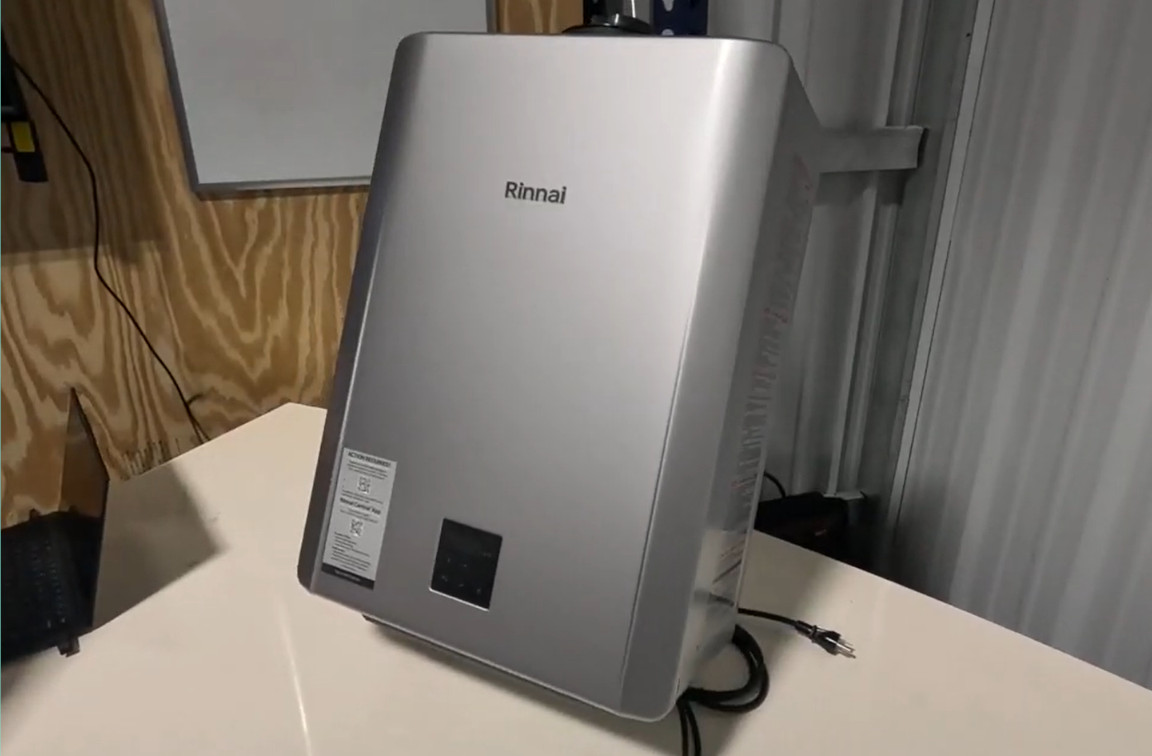
Mother Modern Plumbing’s team of licensed technicians is certified by Rinnai to install, repair and maintain their tankless systems. We install them weekly and perform regular maintenance and descaling service on Rinnai products for our customers.
Our Responsible Master Plumber has worked with Rinnai tankless systems for over 15 years and installed dozens of RX199iN units in DFW homes. He offered direct insight on product pros and cons, “what’s in the box”, maintenance needs and projected lifespan of the device.
Our regular use and working knowledge of tankless water heaters- particularly in gas-powered homes- gives us a clear view of which products and features work- and which ones don’t.
Then, we tell you what we learned in simple terms anyone can understand.
{{our-standards-for-writing-plumbing-product-reviews="/blogs/our-standards-for-writing-plumbing-product-reviews"}}
Electric Tankless Systems Stink- We Don’t Review Them
Our Master Plumbers focused solely on natural gas tankless water heaters for this review series.
We don’t recommend electric tankless water heaters to homeowners. It costs most people far too much to upgrade the electrical infrastructure of their homes to handle the power needed to run an electric tankless system- most users never make their money back on that initial investment.
Refer to our direct comparison guide between gas and electric tankless systems for a detailed breakdown of why we don’t recommend electric units.
{{are-gas-tankless-water-heaters-good="/blogs/are-gas-tankless-water-heaters-good"}}
Rinnai SENSEI RX199iN: The Bottom Line
If you’re living in a household of 3 to 5 people and want a gas tankless water heater that handles high peak water usage with minimal repairs, the Rinnai “SENSEI” RX199iN is the right unit for you.
Homeowners looking for consistent hot water delivery and high-efficiency performance value the RX199iN model. Propane users find the Smart Sense gas control easy to use, and quite handy when switching from natural gas to propane.
The Rinnai RX199iN tankless performs best with a recirculation pump, which significantly reduces delays in hot water delivery and lessens “cold water sandwich” issues. We’d give the product a near-perfect score- but its recirculation pump is an add-on, not built-in. We also don’t like the plastic drain lines.
NOTE: If you want all of Rinnai’s benefits with built-in recirculation pump, our plumbers suggest the Rinnai RXP199iN. It’s about $300 more expensive to buy than the RX199iN, but it saves you on the labor costs of adding on a recirc.
If you’re going to buy one accessory, it’s Versa-Vent. It reduces the overall cost of your venting work and allows the flexibility to install your system indoors or outside.
We ultimately chose the Rinnai as best-in-class for durability. Over the last 2 years, we haven’t received a call to repair any Rinnai tankless units, vs. several gasket and seal replacements on Navien units.
If you don’t have time to read the full review, here’s a brief summary of things that mattered most to homeowners in our review process:
Setup: You’ll need a licensed plumber to properly install the unit, preferably one that’s certified by Rinnai. Installation requires tools you likely don’t have, like a torch set, copper tubing cutter and steel pipe cutters.
Installation: Rinnai’s Versa-Vent accessory allows you to install your tankless indoors or outdoors- only install indoors without it. Not only does this offer flexibility, our Master Plumber says it saves you money on installation.
Space Needs: The RX199iN is about the size of a big suitcase. Allow 2 feet in front of the water heater for service and repairs. Maintain total device clearance of 2 inches on top and 12 inches below, particularly from exhaust vents, dryer vents, and shelves with combustibles and liquids.
Venting Needs: You’ll need 2”x4” or 3”x5” concentric venting, or Schedule 40 PVC/CPVC to vent to the outdoors. Leave a minimum of 12 inches between the ends of your exhaust and intake.
Avoid plumbers who work with aftermarket or generic vent parts- Rinnai systems require certified vent components. You risk losing warranty coverage without them.
Performance: RX199iN systems are condensing units. This means the unit uses an extra heat exchanger to capture waste heat, making it up to 20% more energy efficient. The product’s Uniform Energy Factor (UEF) is 9.8- this means it converts 98% of the energy it uses into hot water. That’s 5% higher than the average high-efficiency gas tankless water heater.
Digital Display: A front-mounted digital display includes the temperature reading of your water supply, which can be set by the user. In case of an issue, the temperature on your digital display is replaced by an error code. If you aren’t near your unit, use the Rinnai app.
Price: As of this publication, the average price ranges from $1,530-$1,725 without installation. That makes it $100-$300 cheaper than the Navien NPE-240A2 and Rheem IKONIC 11.2.
Warranty: The Rinnai RX199iN offers a 15-year limited heat exchanger warranty and a 5-year general warranty on parts. A 1-year standard warranty on labor may be extended to 5 years if you register the unit within 90 days of installation. While the standard warranty terms are the same as Rheem IKONIC 11.2 and Navien NPE-240A2, the 5-year labor extension for fast registration is unique to the Rinnai.
Recommendation: Our Master Plumbers judge the Rinnai RX199iN tankless water heater as the best gas tankless water heater for most homeowners. Rinnai’s lengthy history of great-to-excellent tankless heating products adds confidence to our rating. Households of 3-5 people who run multiple hot water-using appliances at once see the greatest benefit.
Compare the Rinnai RX199iN to its main competition! Read our new review of the Navien NPE-240A2 tankless.
{{navien-npe-240a2-tankless-review="/blogs/navien-npe-240a2-tankless-review"}}
An 11.1 GPM Workhorse: RX199iN Stats and Analysis
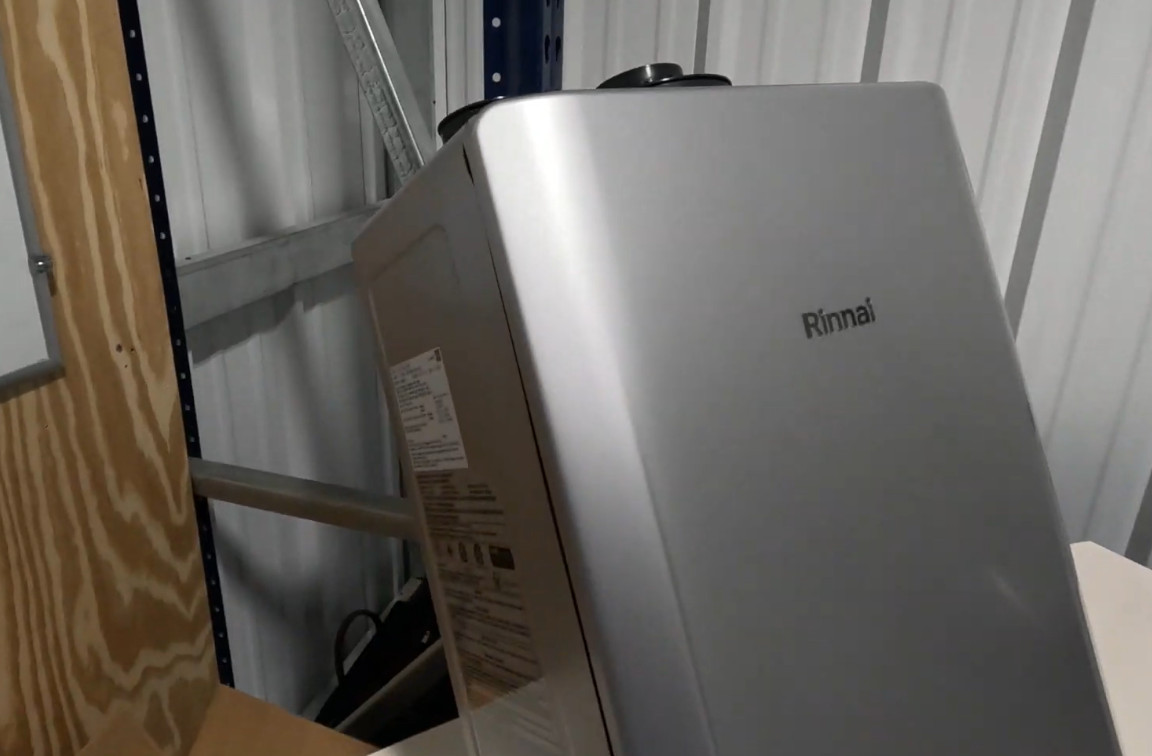
Let’s look at the basics of how the RX199iN tankless works: how it earns its ultra high-efficiency label and what’s in the box when you purchase one.
Plus, our Responsible Master Plumber and a home insurance expert discuss how installing this Rinnai product affects your home.
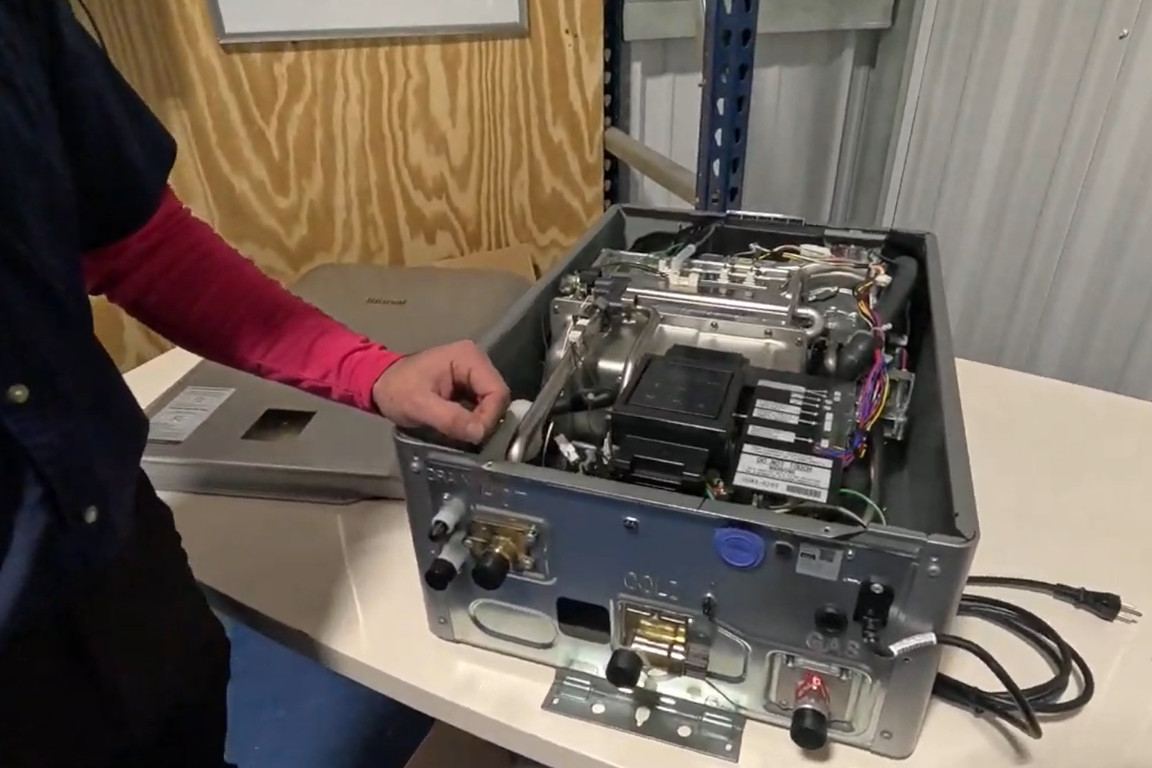
Rinnai RX199iN: what’s in the box?
Here’s what we found when we opened a new Rinnai SENSEI RX199iN product package:
- Rinnai RX199iN gas tankless water heater
- (2) vent screens
- Wall mount bracket
- Gas conversion info label for propane
- Screws
- Self-tapping screws
- Operation and Installation manual
Rinnai RX199iN: product specs
Rinnai RX199iN: product features
Insurance benefits and incentives
Insurance carriers value gas tankless water heater products for a simple reason: no big tank of water means less home flooding and water damage concerns. This means less water damage claims- so many carriers prefer homeowners make the switch to a tankless.
“A majority of insurance companies are moving towards tankless water heaters as a risk mitigation factor,” says Paxten Volbrecht, Director of Agency Operations at Jacobs Insurance Solutions. “Obviously having a tank in your home - if that were to leak or burst, all of that water’s going to end up everywhere, very quickly.”
Where you install your tankless water heater matters. According to Paxten, the best place to install your tankless water heater is “on the first floor, preferably in the garage.”
Ultimately, installing a Rinnai tankless water heater reduces the risk of water damage claims in your home. Notify your insurance carrier that you intend to switch, and ask about potential reductions in your policy premium.
{{dallas-tankless-water-heaters-save-money="/blogs/dallas-tankless-water-heaters-save-money"}}
Our Master Plumber’s review of the Rinnai RX199iN
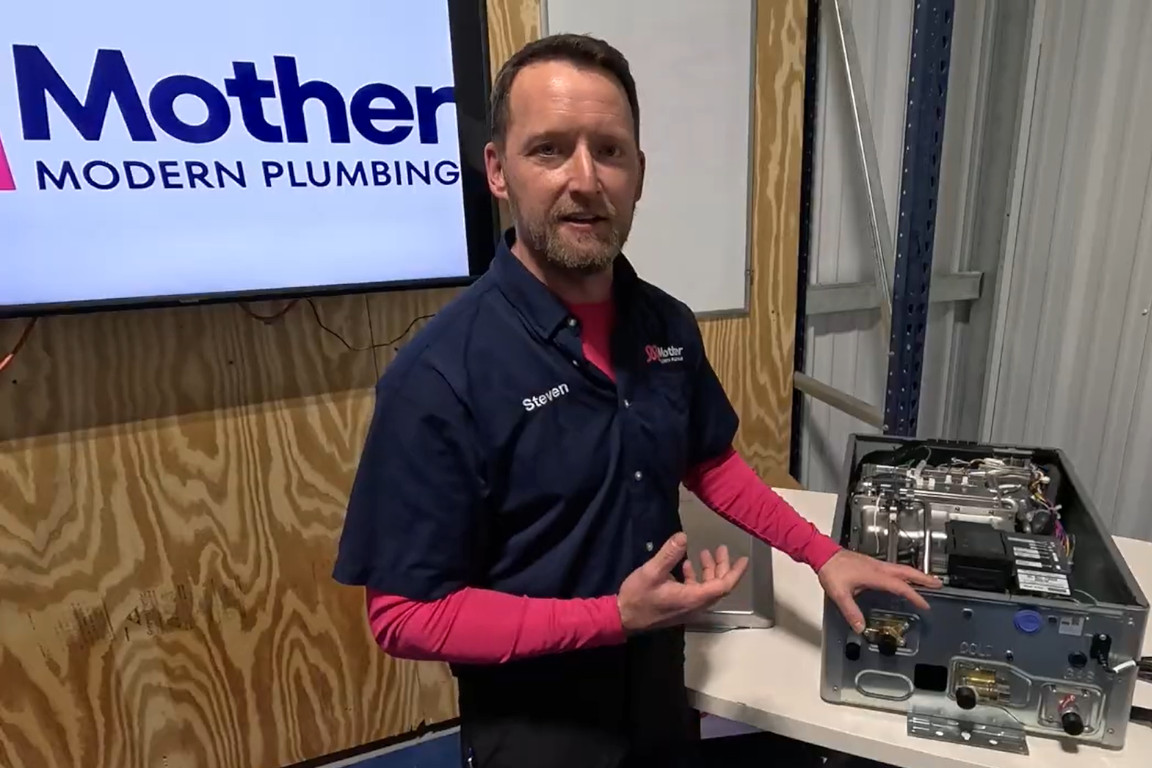
We spoke to our Responsible Master Plumber, Steven Smith, about his hands-on experience testing, installing and repairing the Rinnai RX199iN tankless water heater. Steven calls Rinnai his “no-doubt brand of choice” when it comes to residential tankless systems.
“I’ve worked with Rinnai systems for years, and I’ve had less service calls with them than other brands,” he reports. “Not installation errors- just general repair jobs. They appear to be more reliable than other products.”
While every tankless system has its own set of error codes, Steven notes that Rinnai RX199iN units don’t show as wide a variety of error types as competing products.
“Rinnai typically throws less error codes,” Steven says. “If I see a Rinnai error code, it’s one of 2 or 3, not dozens of different ones. They usually have to do with an installation problem like blocked venting, not the internal workings.”
One of the reasons for the unit’s durability is its stainless steel heat exchanger, which Steven cites as among the RX199iN’s best features.
By contrast, other tankless products with inferior small parts tend to require repairs on O-rings. “I’ve never seen a gasket go on a Rinnai,” he says.
Steven notes his high level of trust in Rinnai products to handle hard water and mineral scaling issues in regions like North Texas, where scale often damages components like the heat exchanger and flow switch.
“Heat exchangers and flow switches suffer in hard water conditions,” he says. “As long as you keep up yearly descaling maintenance on a Rinnai, you shouldn’t have a problem.”
{{tankless-descale="/services/tankless-descale"}}
What It’s Like to Live With the Rinnai RX199iN In Your House
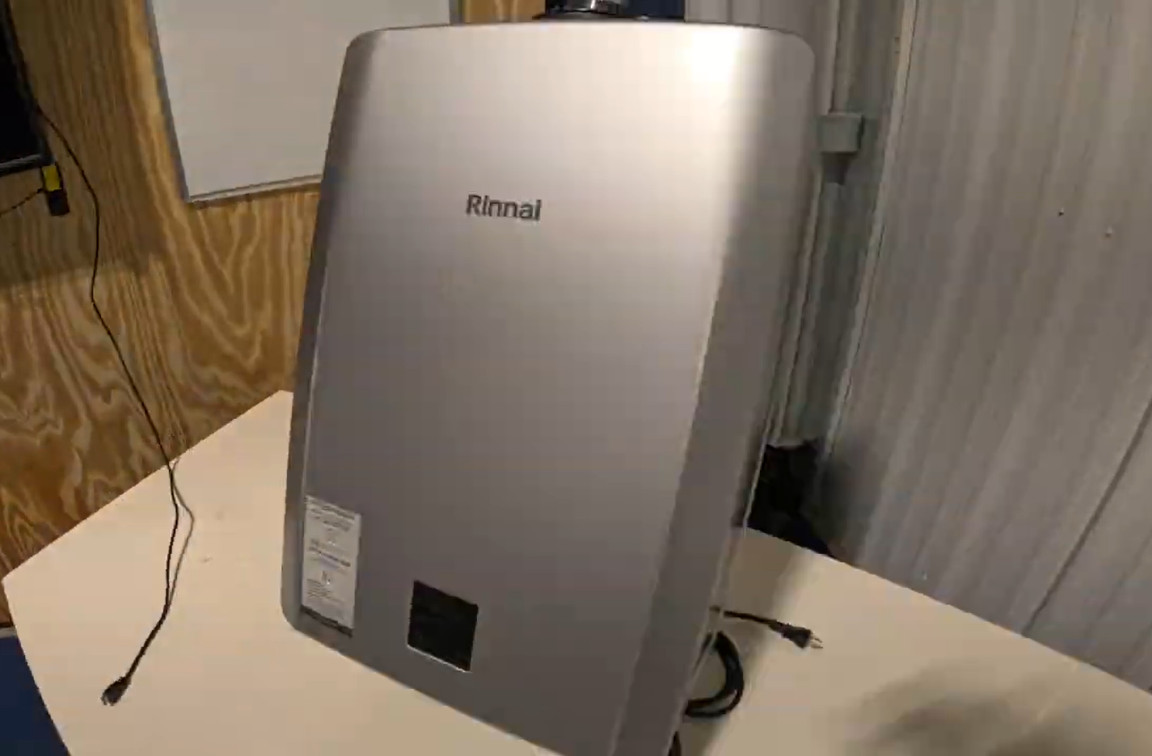
It’s great to get industry perspectives from Master Plumbers and insurance experts. It’s just as important to see how a tankless water heater performs in real-world scenarios- directly from the homeowners who purchase and own the device.
Most homeowners who call us about the RX199iN are scheduling annual descaling maintenance. We receive significantly fewer calls to repair Rinnai tankless water heaters than tankless units from competing brands.
We also analyzed 131 customer reviews of the Rinnai product we verified to be authentic (no bots, no fake reviews, no paid reviews).
Here’s what people are saying about the Rinnai RX199iN gas tankless water heater:
Real-world pros and cons of ownership
Our team sought out feedback from Rinnai RX199iN (“SENSEI”) owners that offered brand-specific insights. This allows you to see the unique benefits of this tankless compared to other devices.
Pros of the Rinnai SENSEI RX199iN
- High volume capacity. The unit’s flow rate (11.1 gallons per minute, or GPM) means you get 11.1 gallons of hot water every minute. In “real world” terms- you could run 3 showers and a washing machine at the same time.
- Excellent efficiency. The RX199iN converts 98% of its energy into hot water. The average high-efficiency unit converts at a 93% rate (UEF 9.3).
- Condensing unit. Condensing gas tankless water heaters are superior- they’re 20% more energy efficient than non-condensing models.
- Smart default temperature. The safety setting of 120°F means no burning yourself by accident. (If you need extra-hot laundry water, ask your plumber- they can adjust the setting up to 140°F for you.)
- We love the EZConnect Cable. Larger home? Use the EZConnect Cable to connect two Rinnai tankless units and operate them like one unit.
- Good electricity savings. Several reviews from households of 3-4 members report average electricity bill savings of 18-20% over the first 6 months of ownership.
- $600 tax credit. Take advantage of the EnergyStar tax credit for installing a tankless water heater in your home.
- Bluetooth compatibility. Control an add-on recirculation pump with Push Button connectivity via Bluetooth (look for RPB200).
- Above-average lifespan. With proper annual descaling and maintenance, expect the Rinnai RX199iN gas model to last 18-20 years.
- Price point. It’s generally believed that Rheem wins on price, but the RX199iN is cheaper on average than 11.1-11.2 GPM flow rate systems from Rheem and Navien.
Cons of the Rinnai SENSEI RX199iN
- You’ll hear some noise. The condensing unit occasionally makes the unit a bit noisy for 2-3 minutes after you turn off the hot water. (Don’t install it near the bedroom.)
- No built-in recirc pump. Buy the recirculation pump anyway- it’s a vital add-on to get the best performance out of the RX199iN. If you don’t want to buy an add-on, opt for the RXP199iN unit (which has a recirc built in).
- Do your fittings match?. The valve has ½” fittings- homeowners with ⅜” faucets and hookups may need to purchase fittings to adapt.
- Potential gas line upsizing. If you don’t have at least a ¾” gas line, you’ll need to upsize your line to accommodate the unit.
Replacing your water heater with a tankless? Dive deeper into the pros and cons of switching in our updated guide!
{{replacing-water-heater-with-tankless="/blogs/replacing-water-heater-with-tankless"}}
What real homeowners say about the Rinnai RX199iN
We found 131 helpful reviews from homeowners who purchased and installed the Rinnai RX199iN tankless water heater in their natural gas or propane-powered homes. Their insights range from hot water delivery to peak usage feedback, operational noise to installation experiences.
⭐⭐⭐⭐⭐ “I had replaced my 13 year old Rinnai tankless with the same updated model…I could run 2 showers and an additional faucet all at the same time. Although it is very sophisticated electronic wise, it always worked. Time will tell if I like the newer version, but both virtually perform the same for the 200k btu unit. Overall very pleased with efficiency.”
– Verified owner via Home Depot
⭐⭐⭐⭐⭐ “Our electric water heater sprang a leak so we decided to spend the bucks and go tankless. We had a propane tank already…This water heater is very economical to operate, is saving us money on electric, and it gives us unlimited hot water. More than enough to run a washing machine, dishwasher, and shower simultaneously! Wish I would have made these change sooner. Now planning to put the same model in a mountain home.”
– Verified owner via Amazon
⭐⭐⭐⭐ “Works well…louder than I expected. Just a humming sound almost like a condensate pump. Only been using it for about 3 weeks. It is nice not running out of hot water. The only issue in my house is it turns on and off like 40 or 50 times a day a few seconds at a time between washing hands, cleaning dishes, and everything else hot water is used for.”
– Verified owner via Home Depot
We also reviewed internal data from installation and repair service calls our customers made about Rinnai tankless water heaters. These are the 3 most common critiques of the products:
- Gas upgrades may be necessary. You need at least a ¾” gas line to run the RX199iN properly- this may require upsizing your current line.
- Some noise takes getting used to. The condensing pump makes a humming noise after hot water is used- some homeowners take awhile to adjust to the sound.
- Tough to DIY. Novice DIYers find installing PVC and/or black steel pipe difficult when trying to install the RX199iN themselves.
Purchase and Installation Costs

In this section, we’ll cover the true overall cost of the Rinnai RX199iN tankless unit- not just the purchase price, but the cost to install and repair the system.
How much does the Rinnai RX199iN cost?
As of this publication, the average cost to purchase the Rinnai RX199iN gas tankless water heater ranges from $1,530-$1,725 without installation.
We found the least expensive price point for the RX199iN at Home Depot.
The price point is lower than competing products that deliver similar flow rate capacity. It’s $100-$300 cheaper than the Navien NPE-240A2, and $50-$75 cheaper than the Rheem IKONIC 11.2.
Is the RX199iN the right size for your home? If you have a small household or 5+ family members, use our quick guide to find the proper size for your tankless.
{{fast-plumbing-answers-how-to-size-a-tankless-water-heater="/blogs/fast-plumbing-answers-how-to-size-a-tankless-water-heater"}}
How much does it cost to install the Rinnai RX199iN?
It costs between $6,000-$12,000 all-in to install a Rinnai SENSEI RX199iN system in your home. That includes product price, installation and upsizing your existing gas and electric.
Expect to pay more to install a tankless water heater than a conventional tank. Tankless units are plumbed from below, which is more labor-intensive than traditional water heaters (which are plumbed from above).
These are the 3 key drivers of tankless water heater installation costs:
- Installation upgrades and upsizing. If you’re installing multiple units, or units that require more complex gas, electrical and venting, expect to pay more.
- Labor. Labor costs account for a bulk of your installation.
- Product selection. Ultra high-efficiency gas tankless water heater products range in price from $1,500-2,100.
Why you need a licensed plumber to install a tankless water heater
Unless you’re a licensed plumber yourself, you should hire one to install your tankless water heater. You’ll also need an electrician for wiring and proper load calculations.
Rinnai reserves the right to void your product warranty if installation is not performed by a licensed pro- they prefer services like Mother who have completed Rinnai-specific training on proper install procedures.
Your insurance provider may also request proof of licensed installation in order to convey any benefits or premium incentives related to putting a tankless in your home.
Rinnai RX199iN Gas Tankless: Our Plumbers’ Conclusions
The ideal customer for the Rinnai RX199iN tankless water heater is a homeowner with 3-5 household members who wants high-efficiency, on-demand hot water delivery for their natural gas or propane-powered home. Since 2023, Mother has received zero service calls to conduct repairs on Rinnai tankless units.
The Rinnai RX199iN offers enough continuous hot water to handle a shower and dishwasher running at the same time. While larger households (5+ individuals) may require a second unit, this is true of any tankless product for homes this size.
Homeowners with a recirculation pump see outstanding performance with limited heating delays, and an efficiency rate roughly 5% higher than the average high-efficiency tankless model.
This high efficiency rate, coupled with the lower installation cost of natural gas systems vs. electric, gives Rinnai owners the best chance to achieve total product payback while never running out of hot water.
Dallas residents: want to install a Rinnai tankless? Call Mother 24/7- our licensed plumbing experts install our top brand with precision and confidence.
{{tankless-water-heater-installation="/services/tankless-water-heater-installation"}}