Fast Plumbing Answers: Tankless Tripping Your Breaker?
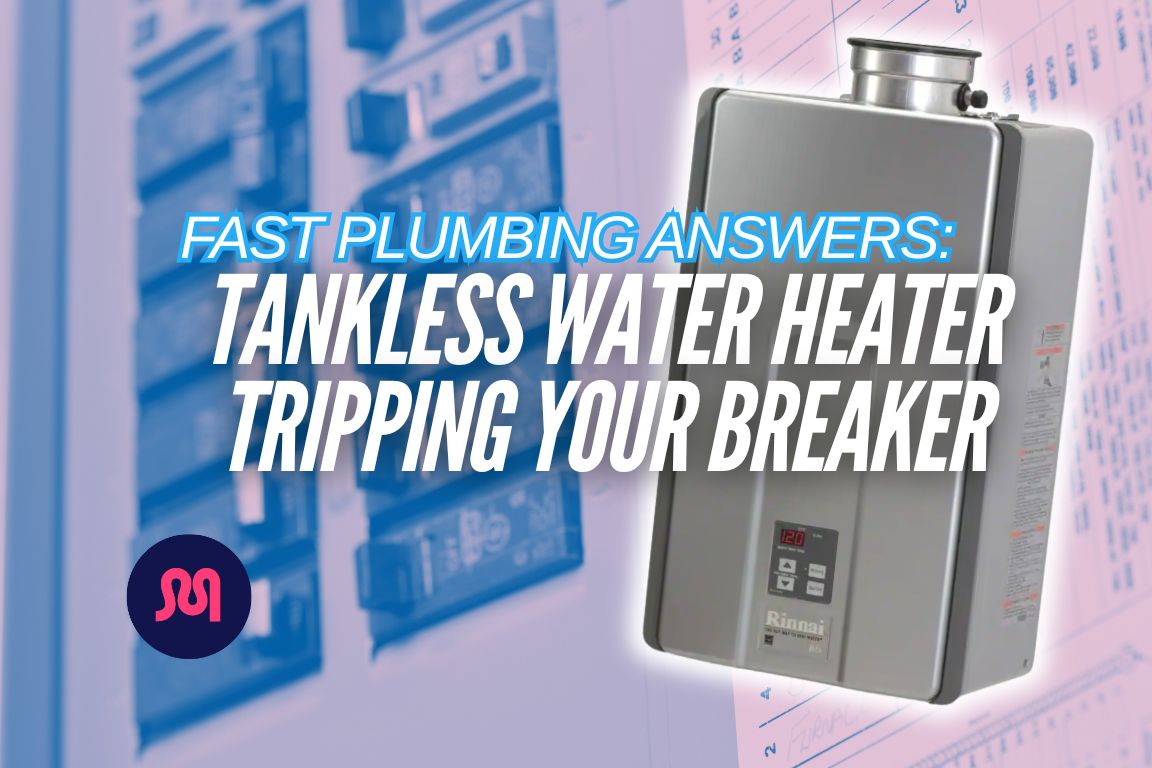


table of contents
table of contents
Your tankless water heater was working fine yesterday. Now the breaker trips every time you turn on the hot water tap, and you're resetting it for the third time today.
Don't worry: we'll answer all your questions in 3 minutes or less.
At Mother, we diagnose issues in tankless systems daily. Most breaker trips come down to three causes: an undersized circuit, a short circuit in the wiring, or a failing heating element. We'll guide you through each problem and the single best solution to fix it.
If the problem is an internal component in your tankless, call a licensed plumber. If it’s an electrical fault, you’ll need to call a licensed electrician.
Need emergency tankless repair in Dallas? Call Mother 24/7--priority scheduling means a licensed pro arrives at your home ASAP.
{{tankless-water-heater-repair="/services/tankless-water-heater-repair"}}
Most Breaker Trips Are Caused by an Undersized Circuit
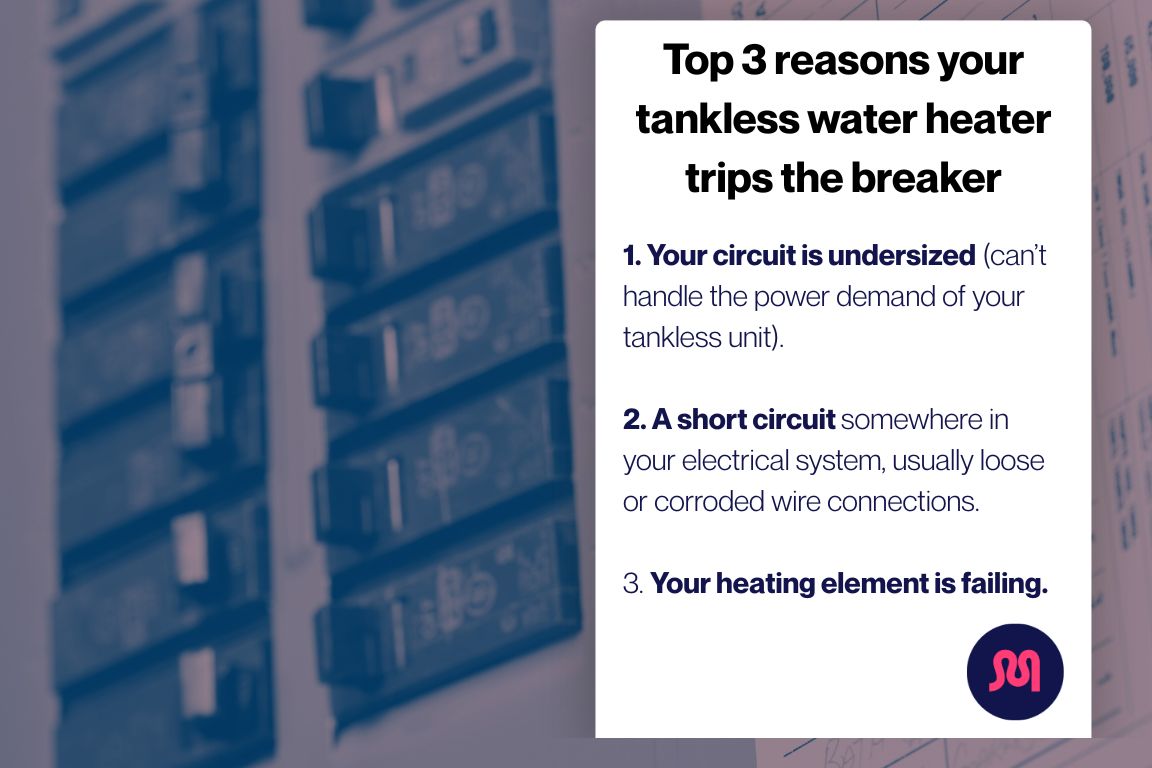
The #1 reason electric tankless water heaters trip breakers is simple: the electrical circuit isn't large enough to handle the power demand.
"Electric tankless units pull a crazy amount of power," explains our Responsible Master Plumber Steven Smith. "If the circuit wasn't sized correctly during installation, it'll trip every time the unit fires up."
Your tankless needs a certain amount of electrical current (measured in amps) to heat water instantly. If your circuit breaker is rated for less than what the unit demands, it trips as a safety measure to prevent overheating and fire hazards.
The math: Your circuit breaker should be rated at least 125% of your tankless unit's maximum amperage draw. For example, if your tankless draws 120 amps, you need a breaker rated for at least 150 amps.
How to know if your circuit is undersized
Check these three things to determine if you have an undersized circuit:
- Your tankless unit's amperage requirement. Look at the product specifications on the unit itself or in your owner's manual. Most whole-home electric tankless units require between 100-150 amps.
- Your circuit breaker's rating. Open your electrical panel and check the breaker that controls your tankless. The amp rating is printed on the breaker switch itself.
If your breaker's rating is lower than your tankless requires, you've found your problem.
The single best solution: Upgrade your electrical service
Contact a licensed electrician to upgrade your home's electrical service and install a properly sized dedicated circuit for your tankless water heater. This typically involves:
- Installing a new circuit breaker rated for your tankless unit's requirements
- Running new, appropriately gauged electrical wire from the panel to the unit
- Potentially upgrading your home's main electrical service if your current panel can't support the additional load
This isn't a DIY job. Working inside your electrical panel is dangerous, and improper installation can cause house fires.
The cost for this upgrade typically ranges from $600-$2,000 depending on the complexity of the job and whether your main panel needs upgrading. It's a one-time investment that solves the problem permanently.
Tankless taking forever to heat up? If your unit isn't tripping breakers but still underperforming, check our guide to slow hot water delivery.
{{fast-plumbing-answers-tankless-water-heater-takes-forever="/blogs/fast-plumbing-answers-tankless-water-heater-takes-forever"}}
Not a Sizing Issue? You Likely Have a Short Circuit
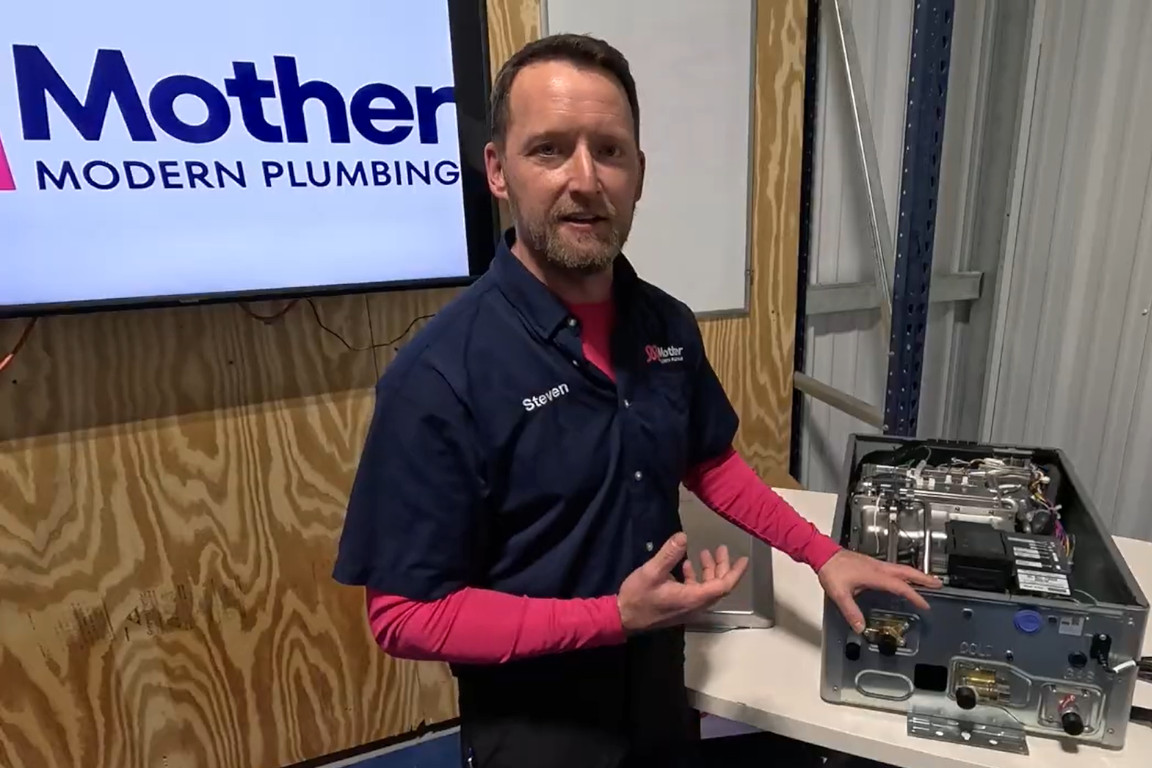
If your circuit is properly sized but your breaker still trips, the next most common culprit is a short circuit somewhere in the electrical system. This happens when electricity takes an unintended path, usually because of damaged wiring or loose connections..
Short circuits are more serious than undersized circuits because they indicate actual damage to your electrical system. They tend to trip the breaker immediately rather than after the unit runs for a few minutes.
Where short circuits typically occur in tankless systems
Short circuits in tankless systems occur most often in these four locations:
- Wire connections at the unit. Loose or corroded wire connections where power enters the tankless are common failure points, especially in older installations.
- Damaged wire insulation. Rodents, age, or physical damage can expose bare wires that contact each other or metal surfaces, creating a short.
- Water damage. If your tankless has leaked or is installed in a damp location, water can infiltrate electrical connections and cause shorts.
- Internal component failure. A failed heating element or control board inside the tankless can create internal short circuits.
How to identify a short circuit
Here are the telltale signs you're dealing with a short circuit rather than an undersized circuit:
- Immediate trip. The breaker trips the instant you turn on hot water, rather than after the unit runs for a few seconds or minutes.
- Burning smell. You notice a burning or electrical odor near the tankless unit or electrical panel.
- Visible damage. You can see scorched wire insulation, melted connections, or burn marks.
- GFCI involvement. If you have a GFCI breaker, it trips even when no water is running.
Critical safety note: If you suspect a short circuit, do NOT keep resetting the breaker. Short circuits can pose serious fire and electrocution risks.
The best solution: Call an electrician immediately
Short circuits require professional diagnosis and repair. A licensed electrician will:
- Use specialized testing equipment to locate the exact point of the short
- Inspect all wiring and connections from the panel to the unit
- Check for water damage or environmental factors
- Replace damaged wiring and secure all connections
- Test the system to ensure safe operation
Attempting to DIY repair a short circuit is extremely dangerous. The repair cost typically ranges from $300-$800 depending on the extent of the damage and accessibility.
Getting error codes on your tankless? Learn what every beeping alarm means on Rinnai, Rheem, and Navien units.
{{fast-plumbing-answers-tankless-water-heater-beeping="/blogs/fast-plumbing-answers-tankless-water-heater-beeping"}}
Less Common Reason: A Failing Heating Element
If your circuit is properly sized and there's no short circuit, a failing heating element is the next likely cause. Electric tankless water heaters use heating elements to warm water as it flows through the unit. When these elements begin to fail, they can draw more current than normal, overloading your circuit breaker.
"Heating elements don't usually fail all at once," Steven explains. "They corrode and break down over time, especially if you have hard water."
As your heating element degrades, it pulls more amps than your circuit can handle.
Signs your heating element is failing
Look for these four symptoms that point to heating element issues:
- Progressive trips. The breaker didn't trip at first, but now trips after increasingly shorter run times.
- Inconsistent hot water. You get hot water sometimes, but it's unreliable and accompanied by breaker trips.
- Scale buildup. If you've never descaled your tankless, mineral deposits on the heating elements can cause electrical issues.
- Age. Your tankless is 7+ years old and has never had the heating elements serviced or replaced.
The best solution: Replace the heating element
A licensed plumber can diagnose whether your heating element is the culprit and replace it if necessary. The process involves:
- Testing the element's resistance with a multimeter
- Shutting off power and draining the unit
- Removing and replacing the faulty heating element
- Descaling the new element and surrounding components
- Testing the system under load
Heating element replacement typically costs $300-$600 including parts and labor. If your unit is older and has multiple failing components, it may be more cost-effective to replace the entire tankless system.
Important: Some heating element failures are covered under manufacturer warranties, especially if your unit is less than 5 years old. Check your warranty documentation before paying for repairs.
Tankless won’t ignite? Get fast answers for this common problem, and learn how to ensure ample gas, air and water flow to your ignition sequence.
{{fast-plumbing-answers-tankless-water-heater-won-t-ignite="/blogs/fast-plumbing-answers-tankless-water-heater-won-t-ignite"}}
Least Common Reasons for a Tripped Breaker
If none of the above causes fit your situation, here are three less common reasons your tankless might trip the breaker:
1. Faulty breaker
The circuit breaker itself can wear out over time and trip prematurely even when there's no actual overload. If your breaker is old (10+ years) or shows signs of damage, have an electrician test and potentially replace it.
2. Simultaneous high electrical loads
If your tankless shares a circuit with other high-draw appliances (which it shouldn't), multiple devices running simultaneously can trip the breaker. This is a code violation and requires immediate correction.
3. Ground fault
A ground fault occurs when electrical current escapes to the ground through an unintended path. GFCI breakers will trip in this scenario. This is similar to a short circuit but involves the grounding system rather than hot wires touching.
Stop Those Breaker Trips--Call Mother Today

In most homes, electric tankless water heaters trip breakers because the electrical circuit simply isn't large enough to handle the power demand. Upgrading to a properly sized dedicated circuit solves the problem permanently.
If your circuit is correctly sized, you're likely dealing with a short circuit in the wiring or a failing heating element inside the unit. Both require professional diagnosis and repair--these aren't DIY jobs.
Never ignore repeated breaker trips. They're your electrical system's way of protecting your home from fire hazards and equipment damage.
Mother Modern Plumbing's team of licensed plumbers handles tankless issues throughout Dallas-Fort Worth with speed, expertise, and the kind of care you'd expect from your own mom.
Tankless tripping your breaker in Dallas? Call Mother 24/7. We'll diagnose the issue and get your hot water flowing safely again.
{{tankless-water-heater-repair="/services/tankless-water-heater-repair"}}