.svg)
Fast Plumbing Answers: Descaling Rinnai Tankless Water Heater
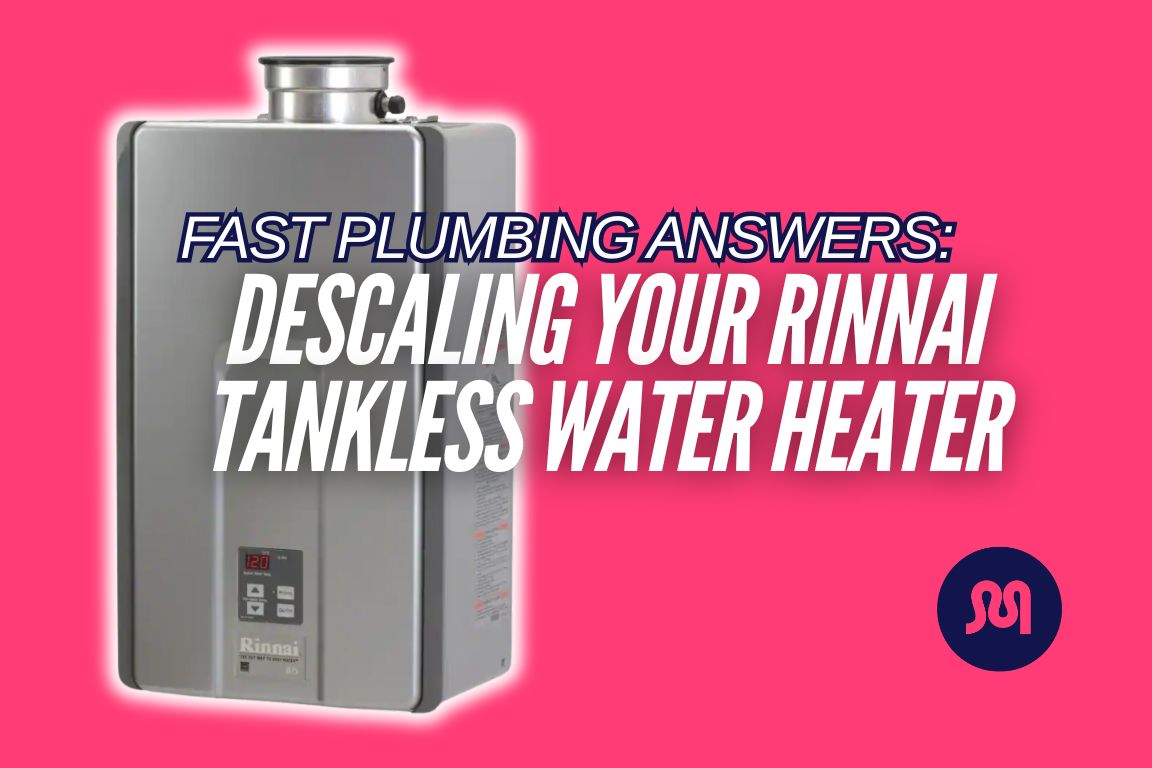


table of contents
table of contents
Your Rinnai tankless water heater is making odd noises and taking longer than usual to deliver hot water. Maybe you noticed error code 11 or LC 00 on your digital display. The problem is clear: you need to descale your Rinnai unit. But why is it important, and how do you do it?
Don’t worry: we’ll answer all your questions in 2 minutes or less.
At Mother, our expert technicians install Rinnai tankless water heaters more than any other brand. Our Responsible Master Plumber calls Rinnai his “brand of choice” for its overall efficiency, ease of operation and lack of repair needs.
Annual descaling maintenance is crucial to the lifespan and performance of any tankless water heater- even Rinnai systems, known for their durability. Though it costs a bit more than DIY, pro descaling from a licensed plumber ensures a thorough cleaning of the unit- and helps you avoid the risk of accidentally voiding your warranty.
Need tankless descaling service in Dallas? Call Mother 24/7- our licensed plumbers are certified to maintain all major tankless brands, like Rinnai, Navien, Rheem and AO Smith.
{{tankless-descale="/services/tankless-descale"}}
Why Descaling Your Tankless Water Heater Is So Important
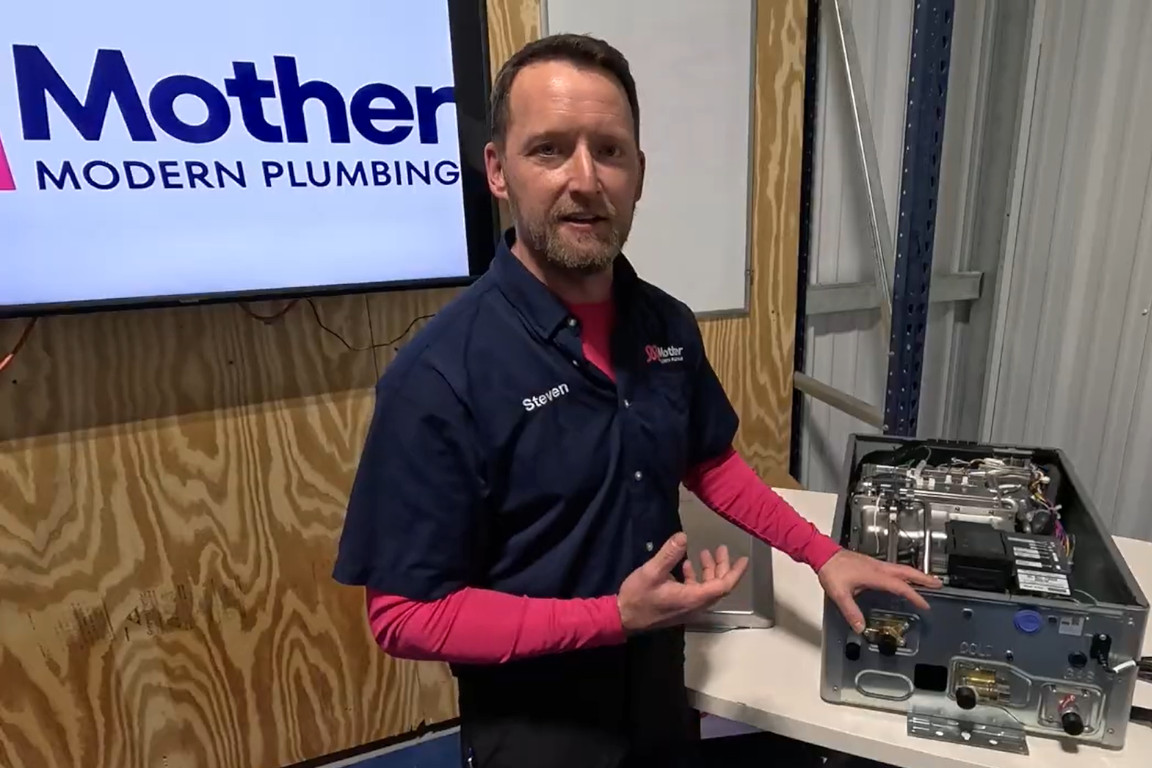
“Think of all of the tubes in your tankless as your arteries,” says our Responsible Master Plumber Steven Smith. “When you go the doctor, you hear about plaque buildup- that’s scale. Scale in your water gradually builds up on the inside and clogs your system.”
As water travels into your home, it carries dissolved minerals like calcium and magnesium. These dissolved minerals separate out and settle, forming mineral deposits in your pipes and water-using appliances.
The added heat in water heater units creates ideal conditions for these hard minerals to accumulate on their internal components. Even though your tankless doesn’t have a big metal tank, it still has plenty of parts that are blocked, clogged and disrupted by scale buildup.
4 ways tankless descaling improves system efficiency
Removing scale deposits from the inside of your tankless water heater improves virtually every aspect of its performance- specifically these four:
- Energy efficiency: Mineral deposits force your system to work harder than normal to heat up water. This leads to higher utility bills and system overheating.
- Ignition and flame: Scale blocks gas, air and water from flowing property into your tankless. This is the reason for most ignition failure and flame loss within units.
- Hot water delivery: The more scale in your system, the longer it takes to heat water and deliver it through your pipes. Cleaner pipes, cleaner tankless = faster, stronger hot water delivery.
- System lifespan: The average tankless unit is expected to last 15-20 years or more with proper maintenance. Failing to descale your unit knocks years off this life expectancy.
Weak, lukewarm showers? Read up on what’s causing the low flow issues from your tankless water heater in our quick guide.
{{fast-plumbing-answers-tankless-low-flow-problem="/blogs/fast-plumbing-answers-tankless-low-flow-problem"}}
Descaling Your Rinnai Tankless Unit Has Big Benefits
Our Master Plumbers rate Rinnai as the best overall tankless water heater manufacturer for most homeowners- especially ones in natural gas or propane-powered homes.
One of the biggest advantages Rinnai systems have over competitors is durability. Mother received zero repair calls for Rinnai tankless units from 2023-2025.
“I’ve worked with Rinnai systems for years, and I’ve had less service calls with them than other brands,” Steven says. “Not installation errors- just general repair jobs. They appear to be more reliable than other products.”
3 long-term effects of not descaling your Rinnai tankless
Steven has a high level of trust in Rinnai products to handle hard water and mineral scaling issues. But that doesn’t mean you can get away with not descaling your unit on a yearly basis.
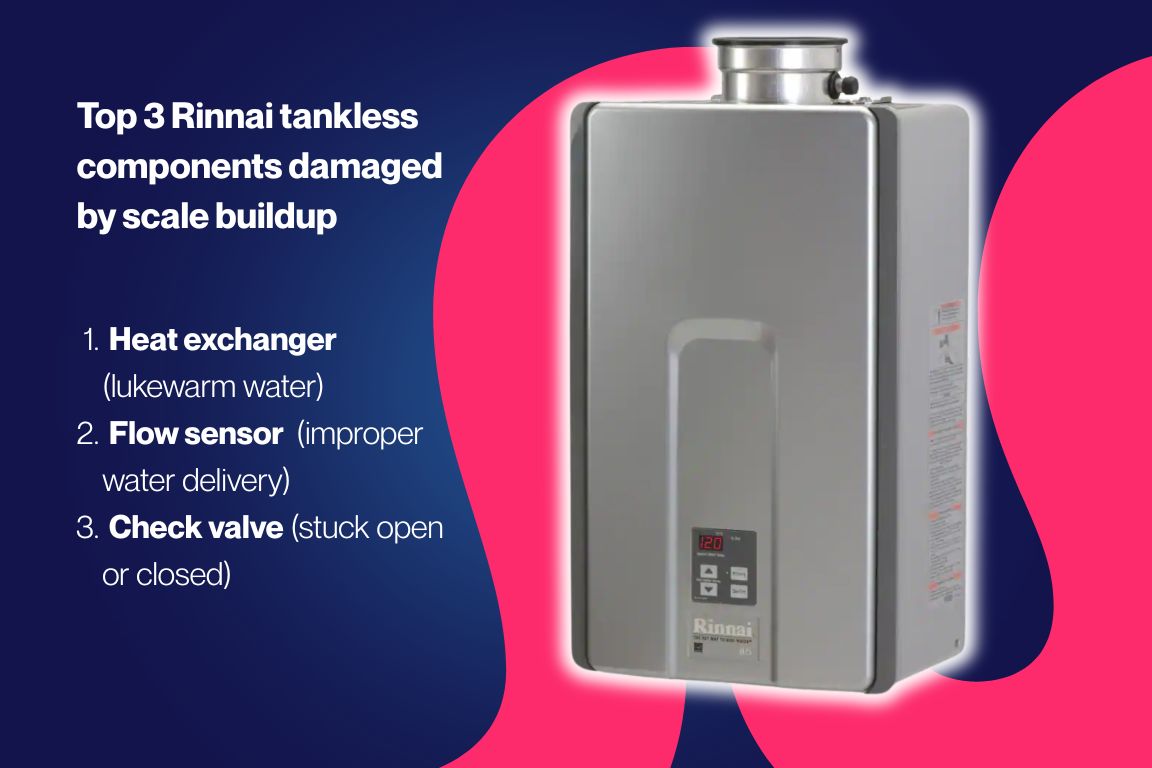
In regions like North Texas, hard water issues create larger-than-normal scaling problems for homeowners and their plumbing systems. These are the top 3 components of your Rinnai tankless that suffer without proper descaling:
- Heat exchanger: Scaling on the heating element leads to lukewarm or cold water delivery, pressure drops in your system, and internal overheating and corrosion.
- Flow sensor: Scale buildup on the flow sensor leaves your tankless unable to monitor incoming water flow properly. You’ll notice weak water pressure, especially in the shower.
- Check valve: As minerals build up here, you may get a “stuck check valve”- where the valve is trapped in the open or closed position.
Steven says the solution is simple: descale your Rinnai once a year to avoid these issues.
“Heat exchangers and flow switches suffer in hard water conditions,” he explains. “As long as you keep up yearly descaling maintenance on a Rinnai, you shouldn’t have a problem.”
How Descaling Your Rinnai Tankless Water Heater Works
Descaling your tankless water heater involves running a descaling solution through the closed water loop using a submersible pump (sump pump).
This process takes about an hour for DIYers, and 30-45 minutes for our licensed plumbers.
As the descaling solution leaves the loop, you’ll notice it’s turned cloudy, discolored, or even looks a bit muddy. This is a good thing: it means mineral buildup is being effectively flushed from your tankless.
You can DIY tankless descaling- here’s why you shouldn’t
Yes, it’s possible to DIY the tankless descaling process. But there’s one very good reason not to do so: your product warranty.
Manufacturers like Rinnai and Navien take their product warranties seriously. They want installations done by licensed plumbers and electricians, and repairs and maintenance work done by approved professionals trained on their systems.
Any damage to a Rinnai tankless water heater that’s done without a licensed professional on hand isn’t covered- and they’ll almost certainly void your warranty.
We’ve seen this happen to several tankless owners. Here are the 3 most common ways DIYers accidentally void their warranty during tankless descaling:
- Improper cleaning solution use
- Accidental dents or internal component damage
- Accidental damage to external casing
TLDR: Unless you’re extremely handy, call your licensed plumber to descale a Rinnai tankless. Your peace of mind- and your warranty- are worth a few extra bucks.
Descaling Rinnai Tankless Water Heater: DIY vs. Plumber
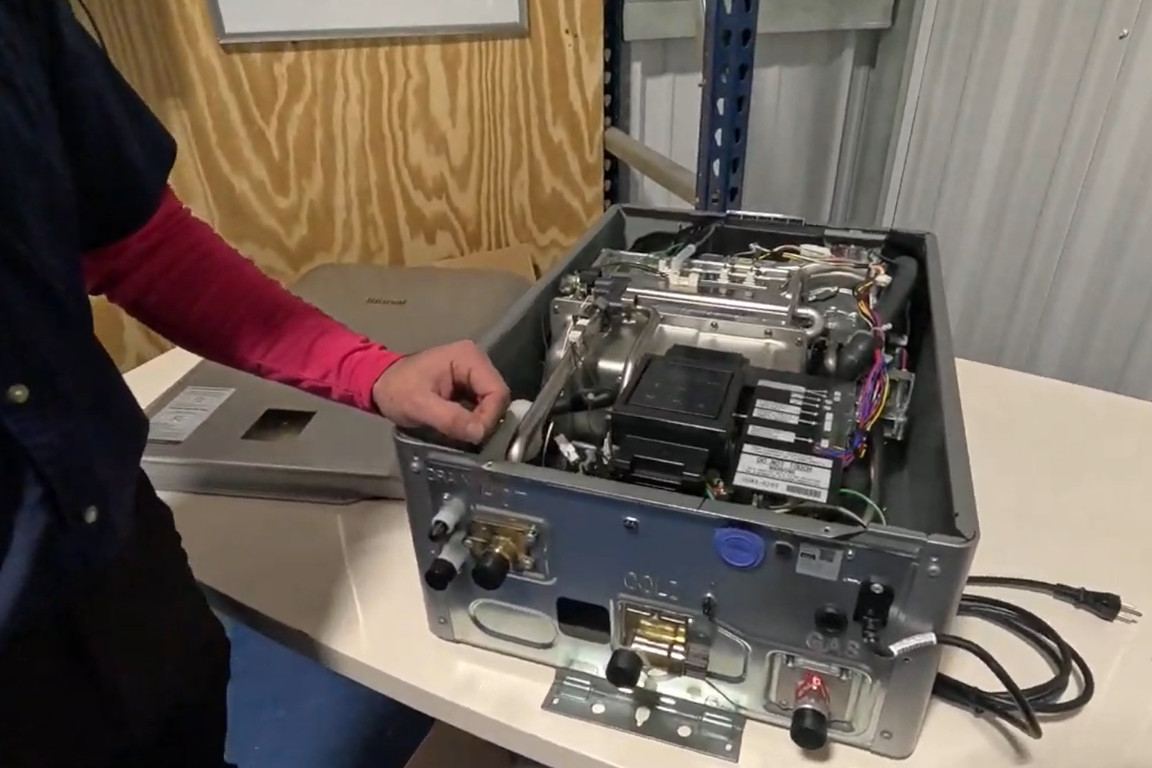
Not sure whether to DIY your descaling or call in a licensed plumber? We recently wrote a comprehensive guide to descaling your tankless system, where we compare the costs, benefits and drawbacks of doing it yourself vs. hiring a pro.
Here are some key comparison points as they specifically pertain to Rinnai units:
Cost
It costs $250-$350 to hire a plumber for annual descaling of a Rinnai tankless water heater.
Compare this to the costs of purchasing the items you’ll need to DIY descale:
- ¼ hp submersible pump: $120-$160
- Two 6-foot washer hoses: $20
- Tankless descaling solution: $20 per ¼ gallon
- Bucket and rags: cheap to free
Time investment
It takes the average homeowner 60-80 minutes to complete a full DIY descaling of their Rinnai tankless unit.
It takes Mother’s licensed Rinnai maintenance pros 30-45 minutes to descale a system.
Potential risks
It seems simple, but we can’t tell you how many accidents happen because homeowners forget to turn off the power and gas to their tankless before attempting to descale it.
Don’t just turn these systems off- wait the appropriate amount of time to let the unit cool down!
As stated above, any damage you cause trying to DIY Rinnai descaling will almost certainly void your product warranty.
Hiring a licensed pro to handle the job avoids all these risks.
Decided you want to DIY? Follow the detailed instructions in our descaling guide very carefully- make sure you keep your warranty safe and sound!
{{how-to-descale-tankless-water-heater="/blogs/how-to-descale-tankless-water-heater"}}
Need Rinnai Tankless Service in Dallas? Call Mother

Descaling is the single most important maintenance task for any tankless water heater- even the incredibly durable and efficient Rinnai product line. It protects crucial internal components like your heat exchanger and flow sensor, and allows your system to operate at peak efficiency and deliver hot water on your schedule.
If you decide to DIY the process, please proceed with caution- you risk voiding your product warranty with any damage. It’s slightly more expensive to call in a licensed plumber for descaling service, but you eliminate all those risks in the process.
Mother’s team of licensed tankless technicians works with Rinnai more than any other brand. If you need descaling or maintenance service in Dallas, you can call us with confidence.
Ready to descale your tankless water heater? Call us 24/7 from anywhere in the DFW Metroplex- use our priority scheduling to get fast service.
{{tankless-descale="/services/tankless-descale"}}