Soft Water Systems for Fort Worth Homes
What's included:
- Protection From Appliance Scale Damage
- Built-In Filtration of Contaminants
- Complimentary In-Home Walkthrough
- Get Same Day Service!
- Family Owned and Operated
- Fix Your Issue 100% Guaranteed



Whole House Water Softener Installation in Fort Worth: Healthier Appliances, Healthier Family
That white crust ringing your showerhead isn’t soap scum. It is calcium carbonate, which is proof that Fort Worth’s hard water is already building up inside your pipes, your water heater, and every appliance connected to your plumbing.
This mineral accumulation adds a silent tax on your home, shortening the lifespan of your fixtures and increasing your monthly energy costs.
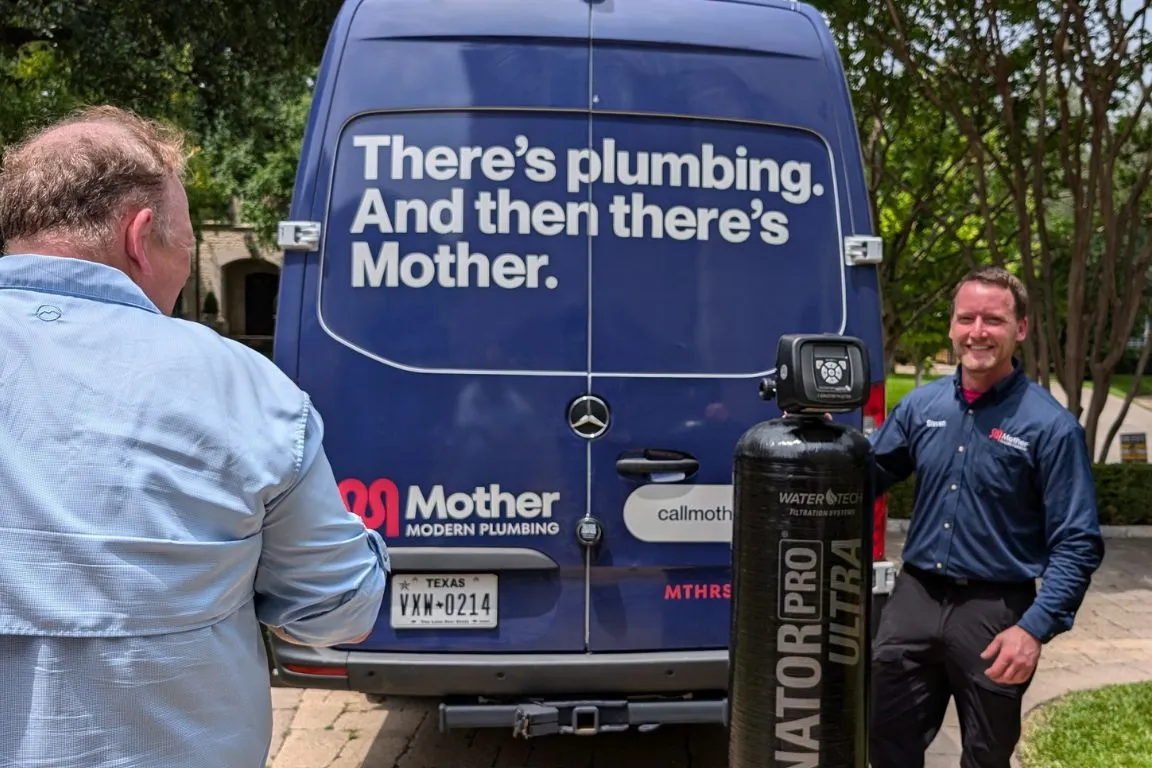
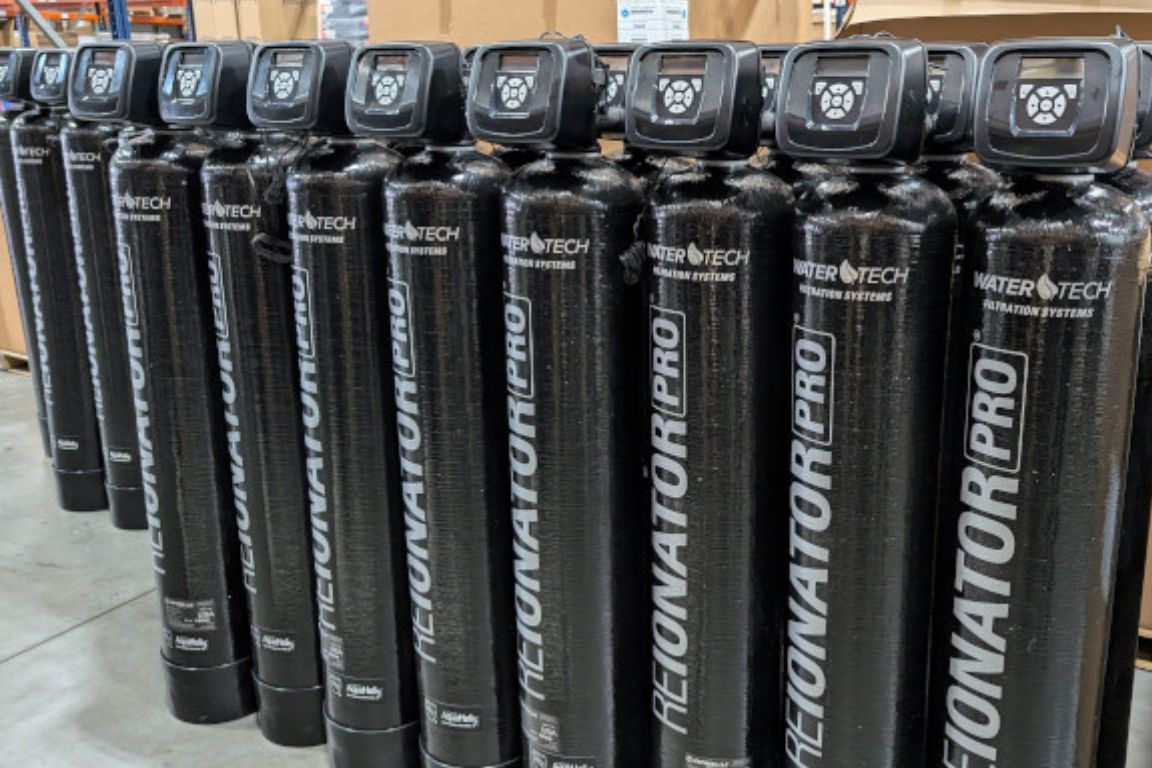
Mother Modern Plumbing offers professional whole house water softener installation to eliminate these minerals at the point of entry. We install lab-certified systems from top makers like WaterTech to protect every pipe and fixture in your home.
Our technicians test your specific water chemistry to ensure your system is calibrated perfectly for the local environment.
Call Mother 24/7 for whole house water softener installation in Fort Worth.
Evidence of Mineral Saturation in Your Pipes
Hard water does not always cause a sudden flood, but it leaves clear signals that your infrastructure is under stress.
- White, chalky deposits on faucets and shower heads
- Stains and spots on your dishes and glassware
- Dingy whites and scratchy fabric in your laundry
- Dry skin, hair and nails after showering
- Less efficient water heaters and water-using appliances
- Increased utility bills due to appliance strain
- Decreased water pipe diameter over time
Tarrant County Geology Demands Water Softening
Fort Worth draws its water from several surface sources, including Lake Worth, Eagle Mountain Lake, and Lake Bridgeport. Because this water travels through diverse geological layers before reaching the city reservoirs, it carries a significant mineral load. City reports show hardness levels ranging from 76.5 to 175 parts per million, which is classified as moderately hard to hard.
This mineral concentration fluctuates by season. During North Texas drought conditions, reservoir levels drop and mineral levels spike, making your water even more aggressive toward your plumbing.
The city also uses chloramine disinfection. While this keeps water safe for consumption, it is very hard on rubber gaskets and seals. When combined with heavy mineral scale, these chemicals accelerate the deterioration of older plumbing components throughout Tarrant County.
Protecting Infrastructure in Fort Worth Neighborhoods
- Fairmount: This neighborhood features homes built in the early 1900s that often rely on original galvanized supply lines. Hard water is particularly dangerous here because minerals bond with existing internal rust, creating blockages that can completely choke off water pressure.
- Ridglea Hills: Many mid-century homes in this area are notorious for hard water issues. The 8 to 12 grains per gallon of hardness found here can cause water heaters to fail years ahead of schedule by insulating the heating elements with a thick layer of rock-like scale.
- Walsh Ranch: Even in brand-new developments, the incoming water remains hard. High-efficiency appliances and tankless water heaters in these modern homes are extremely sensitive to scale. Without a softener at the point of entry, these expensive systems can lose significant efficiency within just a few years of operation.
The Mechanics of Professional Mineral Removal
Mother installs systems that utilize high-performance ion exchange technology. This process uses specialized resin beads to swap hardness minerals for sodium ions. As water flows through the softening tank, the calcium and magnesium are captured by the resin, allowing only soft water to enter your home’s plumbing.
This is a point of entry solution, meaning the system is integrated into your main water line before it branches off to your water heater or faucets. This protects every downstream component, including your dishwasher, washing machine, and ice maker.
Our technicians program the regeneration cycles based on your household's actual usage patterns to ensure you always have soft water without wasting salt or water.
Your Mother Installation and Configuration Protocol
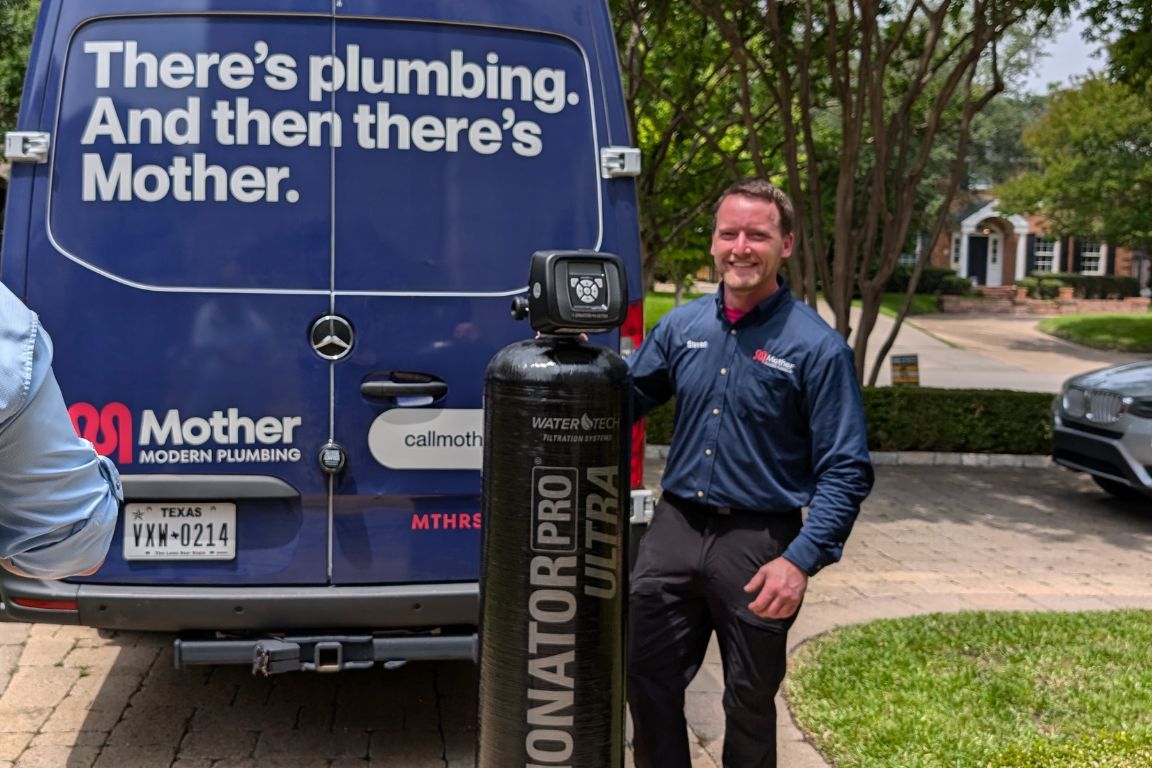
Our professional installation ensures that your system meets all local safety codes and operates at peak efficiency.
- On-Site Analysis: We test your water for exact hardness levels, pH, and total dissolved solids to calibrate the system for your specific street.
- Main Line Integration: We cut into the main supply line and install high-quality fittings and a professional bypass valve for easy future service.
- Backflow Prevention: Following Fort Worth code, we ensure proper air gaps are maintained and install thermal expansion tanks where required.
- Power and Drainage Setup: We verify grounded electrical connections and secure the drain line to ensure the regeneration cycle functions safely.
- System Commissioning: We verify that output hardness drops to nearly zero and walk you through the simple maintenance steps required to keep the system running.
Long Term Integrity and Performance Verification
A whole house water softener is an investment in the longevity of your home’s infrastructure. By removing minerals at the source, you can extend the life of your water heater by five years or more and reduce the amount of soap and detergent needed by nearly half.
Mother manages all the necessary documentation for your installation. While standard softener replacements often do not require city permits, we ensure every new setup is code-compliant and fully warrantied.
We provide you with a written record of your system settings and a maintenance schedule so you can enjoy the benefits of soft water without any guesswork.
Call Mother 24/7 for whole house water softener installation in Fort Worth.
FAQs: Water Softening Systems in Fort Worth
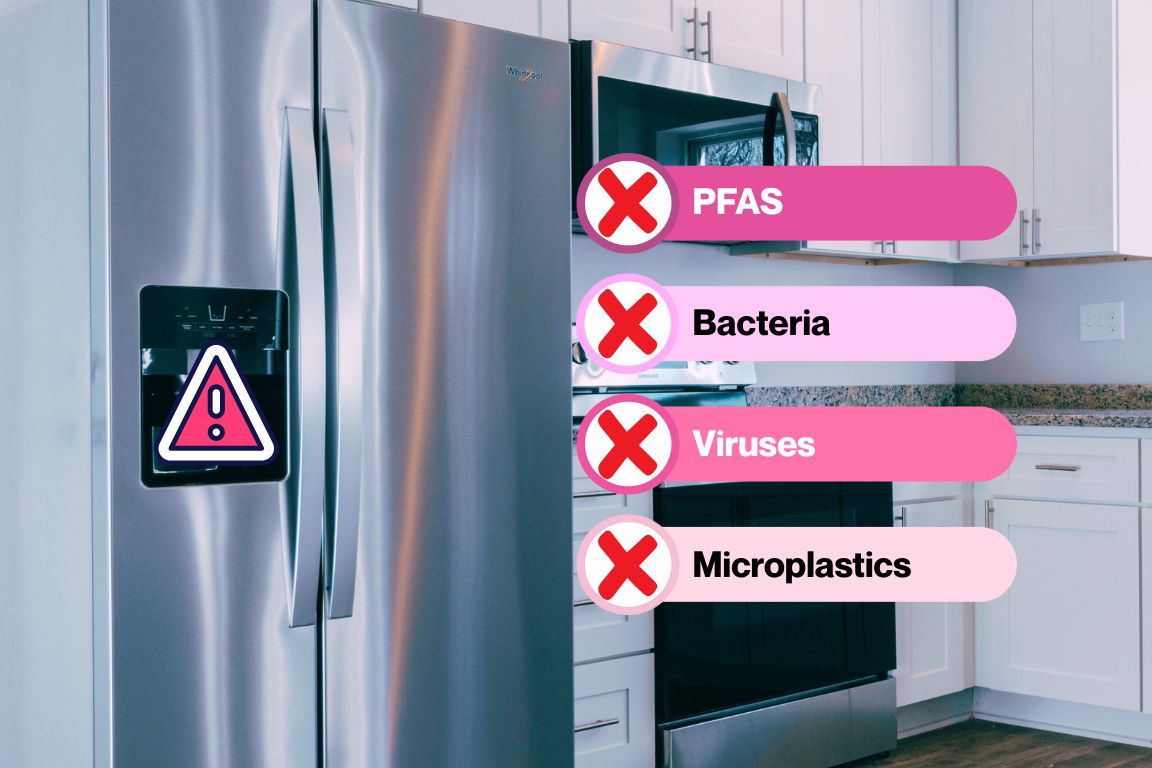
- What if I also want a home water filter? You’re in luck. Mother installs WaterTech systems- they’re not only designed to soften water, they’re lab-certified to remove contaminants like bacteria, viruses, heavy metals, nitrates, pharmaceuticals, pesticides and herbicides from your drinking water.
Serving Fort Worth’s Neighborhoods with Professional Water Softener Installation
Saratoga is a master-planned community in North Fort Worth featuring approximately 840 homes built between 2006 and 2011, ranging from 1,600 to 4,500 square feet. These newer construction homes with multiple bathrooms benefit greatly from whole house water softeners to protect plumbing fixtures and water heaters from Fort Worth's notoriously hard water. Located near Heritage Trace Parkway and convenient to retail centers along North Tarrant Parkway, Saratoga homeowners can extend the life of their appliances with professional water softening systems.
### Ridglea North
Ridglea North sits in northwest Fort Worth just off Camp Bowie Boulevard, near Ridglea Country Club and the charming boutiques of the Ridglea Village shopping district. The neighborhood features a mix of classic mid-century ranch-style and traditional homes with tree-lined streets, many of which have been updated or enlarged over the decades. Whole house water softeners are essential for these older homes to protect vintage plumbing and prevent mineral buildup in updated fixtures near landmarks like Barney Park.
### Southfork Estates
Southfork Estates is a peaceful, family-friendly neighborhood in Fort Worth known for its spacious homes and well-kept lawns, conveniently located near major highways for easy access to surrounding areas. The larger lot sizes and substantial single-family homes in this close-knit community make whole house water softeners an ideal investment to maintain irrigation systems, protect water-using appliances, and ensure soft water throughout every bathroom and kitchen.
Saratoga
Saratoga is a master-planned community in North Fort Worth featuring approximately 840 homes built between 2006 and 2011, ranging from 1,600 to 4,500 square feet. These newer construction homes with multiple bathrooms benefit greatly from whole house water softeners to protect plumbing fixtures and water heaters from Fort Worth's notoriously hard water. Located near Heritage Trace Parkway and convenient to retail centers along North Tarrant Parkway, Saratoga homeowners can extend the life of their appliances with professional water softening systems.
Ridglea North
Ridglea North sits in northwest Fort Worth just off Camp Bowie Boulevard, near Ridglea Country Club and the charming boutiques of the Ridglea Village shopping district. The neighborhood features a mix of classic mid-century ranch-style and traditional homes with tree-lined streets, many of which have been updated or enlarged over the decades. Whole house water softeners are essential for these older homes to protect vintage plumbing and prevent mineral buildup in updated fixtures near landmarks like Barney Park.
Southfork Estates
Southfork Estates is a peaceful, family-friendly neighborhood in Fort Worth known for its spacious homes and well-kept lawns, conveniently located near major highways for easy access to surrounding areas. The larger lot sizes and substantial single-family homes in this close-knit community make whole house water softeners an ideal investment to maintain irrigation systems, protect water-using appliances, and ensure soft water throughout every bathroom and kitchen.



Stanley Grimm
Rick arrived to replace my cracked cotton water filter housing. He did a great job and now I have my whole house water filtration system back up and working again thanks to Rick’s years of Master Plumbing experience! Thank you Rick!
February 2025

Lisa Speiss
Had issues with water pressure turned out to be the water softener. We had the softener removed.
December 2025

Jermaine Galloway
Tyler is incredibly knowledgeable and establishes a comfortable rapport quickly. He doesn’t offer up extra services just for the sale. He explains things in easy to understand terms. I trust Tyler and Mother Modern Plumbing with all of our plumbing needs.
February 2026
Do you install water softeners in Fort Worth?
Why is Fort Worth water hard?
Are you certified for Fort Worth softeners?
Do I need to clean the resin bed of my water softener?


-(27).webp)
-(22).webp)
-(16).webp)
-(8).webp)