.svg)
Residential Tankless Repair + Installation in Fort Worth

What's included:
- Certified Repairs on Rinnai, Navien, A.O. Smith + More
- 12-Year Bumper-to-Bumper Warranty
- Fully Stocked Trucks for Same Day Repairs
- Get Same Day Service!
- Family Owned and Operated
- Fix Your Issue 100% Guaranteed


Cristina Robinson
Josh from Mother was fantastic! He arrived on time, wore protective shoe covering, had a red carpet outside my front door, looked at the issue, explained what was wrong and what it would take to fix it, created a temporary fix that day, ordered the remaining needed parts, and set up the next appt. I paid for everything on the first visit so no money needed for the follow up of installation later. Today Josh reached out to let me know he was on the way annd arrived to install the ordered parts and checked and explained everything. I am beyond thrilled. I signed up for a year of membership so I can call them anytime and get help quickly. This is my go to plumbing company now! The folks on the phone were so kind and thorough and Josh is very personable, polite, neat and thorough. Thank you SND for giving me back hot showers!
November 2024

Marjorie Tulana Keller
Josh was amazing! My husband and I really appreciated the time he took to explain everything regarding the tankless water heater, as well as other options! He was very professional and had such a knowledgeable expertise. He didn’t seem in a hurry. He did above what we expected.
February 2025

Brian Policky
Dillon Ashton was exceptional in explaining the issues he found with our Rennai tankless HW heater and provided several options for rectifying our problem.
July 2025

Tankless Water Heater Repair in Fort Worth: Restoring On-Demand Performance
A flashing error code on your tankless unit often means your morning routine is about to stop. When these high-tech systems fail, the water goes cold fast.
In Fort Worth, tankless repairs are usually caused by the heavy minerals in our water or parts that have worn out over time. You need a technician who can read the codes and fix the system without guessing.
Mother Modern Plumbing provides professional tankless water heater repair across Fort Worth. We carry specialized tools to flush out mineral scale and test the electronic sensors that run your unit.
Our technicians find the exact reason for the failure and get your hot water back on before the day ends.
Call Mother 24/7 for same-day tankless water heater repair in Fort Worth.
Common Signals of a Struggling Tankless System
- Sudden Cold Water: If your water starts hot but turns ice cold after a minute, the unit is likely shutting down to protect itself from overheating.
- Digital Error Codes: Most units show a number or letter on the screen when they fail. These codes tell us if the problem is with the gas, the air flow, or the ignition.
- Reduced Hot Water Pressure: If your hot water flow is much weaker than the cold water, mineral deposits are likely blocking the heat exchanger.
- Clicking or Whistling Noises: These sounds often mean the igniter is struggling to start the burner or there is a problem with the fan.
- Inconsistent Temperatures: When the water cycles between hot and cold, the internal sensors are often dirty or failing.
How Fort Worth Water Chokes Heat Exchangers
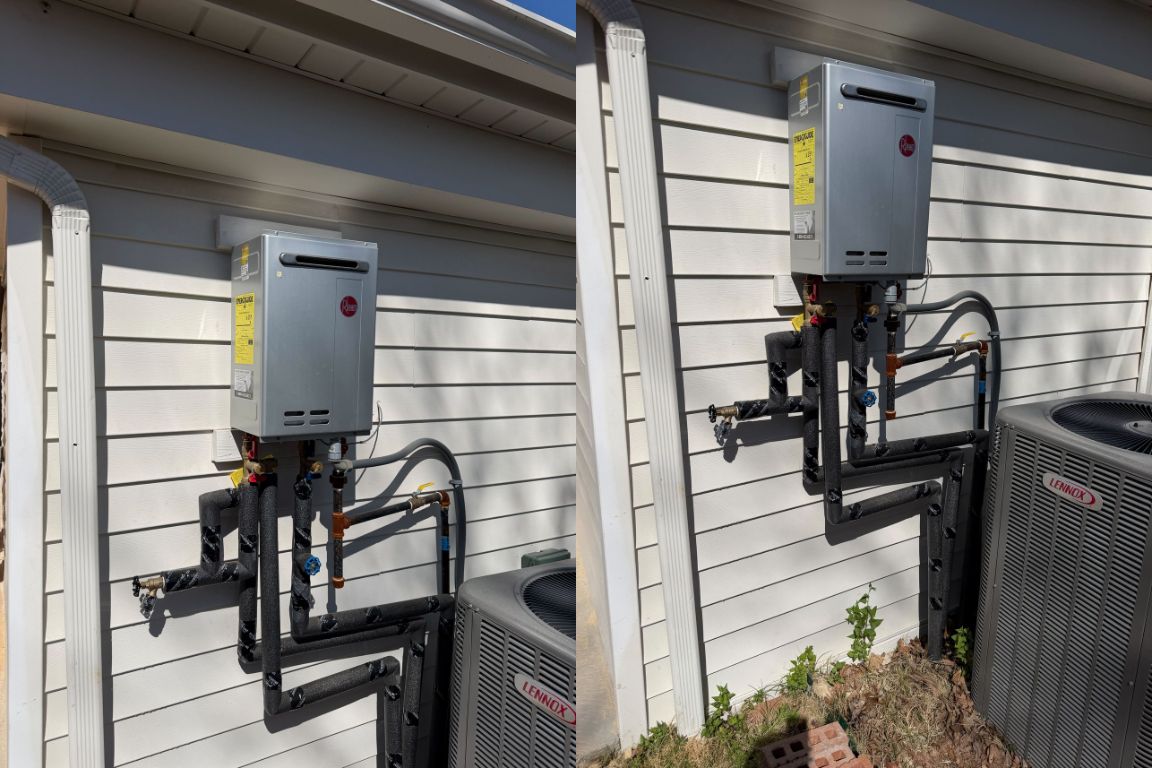
Fort Worth water is safe to drink, but a nightmare for your tankless unit. It contains 5 to 10 GPG of minerals like calcium and magnesium. When water is heated instantly, these minerals fall out of the water and stick to the copper or steel inside the unit.
This buildup is called scale. It acts like a thick blanket that stops heat from reaching the water. The unit has to work much harder and get much hotter to do its job. This extra heat wears out the sensors and can eventually crack the heat exchanger.
In neighborhoods with new homes, these units can fail in just a few years if they are not cleaned. We use a professional descaling process to dissolve this rock-hard buildup and restore your unit’s efficiency.
Tankless Challenges in Your Fort Worth Neighborhood
- Crawford Farms: These newer homes near Golden Triangle Boulevard often feature tankless systems. With the busy lifestyles in this area, a broken heater is a major problem. We provide rapid repairs for these 2 to 4 bedroom homes to keep your family's routine on track.
- Walsh: This community near Aledo uses modern plumbing and energy-efficient systems. Shifting clay soil in this area can sometimes affect gas lines, which leads to ignition errors. we ensure these high-tech units are calibrated correctly for the local conditions.
- Coventry Hills: Homes here were built in the 1990s and 2000s and often have modern gas setups. While these systems are safe, routine maintenance is key to preventing the unit from locking out. We help these residents near Keller ISD keep their systems running without unexpected shutdowns.
The Mother Diagnostic Strategy for Tankless Units
We never swap parts and hope for the best. Our plumbers follow a technical process to ensure your unit is safe and efficient. Every repair starts with reading the computer history of the machine. This tells us how many times it has failed and why.
Once we know the history, we check the gas pressure and the air intake. Tankless units need a very specific amount of fuel and oxygen to burn correctly. If the mixture is off, the unit will show an error code and refuse to start.
We also check the "flame sensor," which is a small rod that can get covered in soot. Cleaning this one small part can often fix a unit that won't stay lit.
What to Expect During Your Mother Service Call
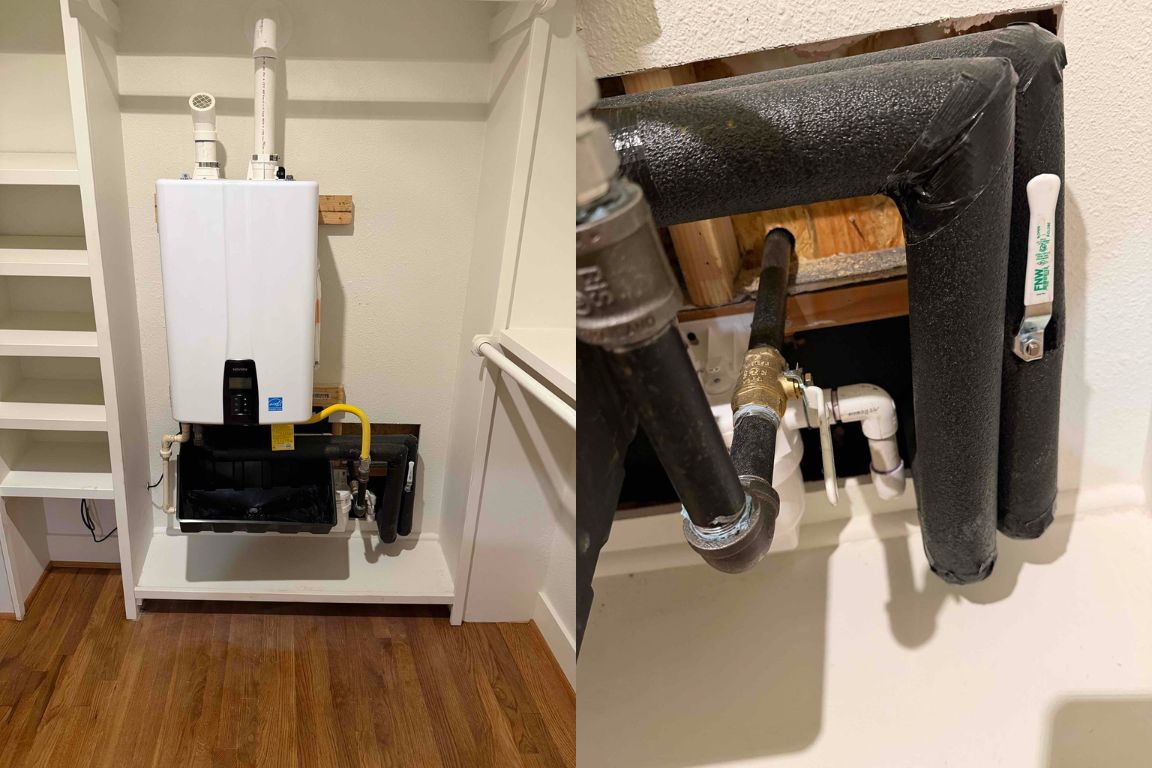
- System Error Audit: We download the error codes from your unit’s computer to see the exact failure history.
- Infrastructure Check: We verify that your gas pressure and venting meet the manufacturer’s rules.
- Heat Exchanger Inspection: We look for signs of mineral scale or soot buildup that could cause overheating.
- Component Testing: We test the igniter, the fan, and the flow sensors to find any broken parts.
- Professional Descaling: If the unit is choked with minerals, we flush it with a safe solution to clear the internal pipes.
- Full System Test: We run hot water at multiple faucets to make sure the unit modulates correctly and stays at the right temperature.
Technical Expertise for Your Fort Worth Tankless
Your tankless water heater is a precision machine. It requires a technician who understands electronics and gas pressure, not just pipes. Mother Modern Plumbing provides the technical skills and honest communication you need to protect this investment.
Our technicians fix the problem today and establish the maintenance schedule you need to prevent scale damage from striking again.
Call Mother 24/7 for tankless water heater repair in Fort Worth.
FAQs: Tankless Water Heater Repair in Fort Worth
- What does a "Code 11" mean on my Rinnai? This usually means there is an ignition problem. It could be a gas issue, a dirty igniter, or a problem with the venting. We test each part to find the exact cause.
- How often should I have my tankless unit serviced? In Fort Worth, we recommend a professional descaling every year. This prevents mineral scale from destroying the heat exchanger and keeps your gas bills lower.
- Can you fix any brand of tankless heater? Yes. We are trained to work on Rinnai, Navien, Rheem, and other major brands. We carry common parts like sensors and igniters on our trucks to get your water hot again fast.
Fort Worth Neighborhoods We Proudly Serve With Expert Tankless Water Heater Repair
Mother's tankless water heater repair service in Crawford Farms serves the newer 2-4 bedroom homes located off I-35W near Golden Triangle Boulevard and Old Denton Road. This north Fort Worth community, just 20 minutes from downtown and close to Alliance Town Center shopping, features modern construction that pairs well with energy-efficient tankless systems.
### Fossil Park
Tankless water heater repair in Fossil Park addresses the mix of charming ranch-style homes and modern houses situated near Rufe Snow Drive and Loop 820. With convenient access to Fossil Creek Park and abundant nearby shopping, homeowners in this family-friendly area benefit from tankless units that accommodate varying hot water demands across different home sizes.
### Glenwyck
Glenwyck features quiet, family-friendly neighborhood's well-kept single-family homes in northeast Fort Worth near North Richland Hills. The community's newer Express Homes construction and strong sense of neighborhood pride make tankless water heaters a popular choice for efficient, space-saving hot water solutions.
What are the most common tankless water heater repair types?
How often should I descale my tankless water heater?
How often should I replace the inlet filter on a tankless water heater?
What types of water heaters do you install and repair?


-(27).webp)
-(22).webp)
-(16).webp)
-(8).webp)