Fast Plumbing Answers: Why Does My Sink Drain Smell?
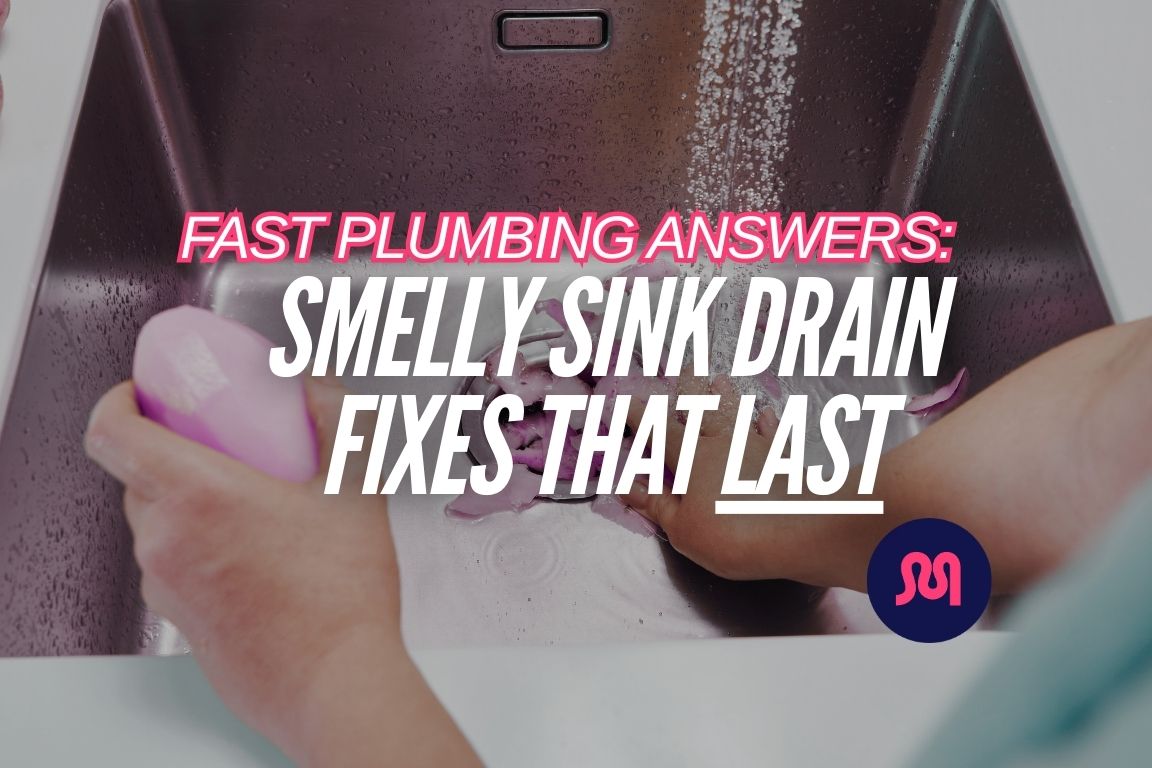


table of contents
table of contents
We got a lot of questions about this article! Our Master Plumber added more insights- including how corrugated drains cause stinky sink drains, and why those DIY hacks you keep trying never solve the problem for more than 72 hours.
Your sink drain stinks. Every time you walk into the kitchen or bathroom, the smell hits you - a sewer odor coming from the drain that won't go away no matter how much you rinse it. You've tried running water, pouring dish soap down the drain, even lighting a candle. Nothing works.
Don’t worry: we’ll answer all your questions in 5 minutes or less.
A stinky sink drain isn't just unpleasant - it's a sign something is wrong with your plumbing. The good news: the cause is almost always fixable. The bad news: most online DIY solutions either don't work or make the problem worse.
Mother’s Master Plumbers explain what’s actually causing those stinky odors from your drains. We’ll show you how to solve the smell for good- and which DIY hacks actually make things worse.
Stink from your sink drain in Dallas? Call Mother 24/7 for professional drain cleaning that solves the problem forever- not for two weeks.
{{drain-cleaning="/services/drain-cleaning"}}
The #1 Reason Your Sink Drain Smells
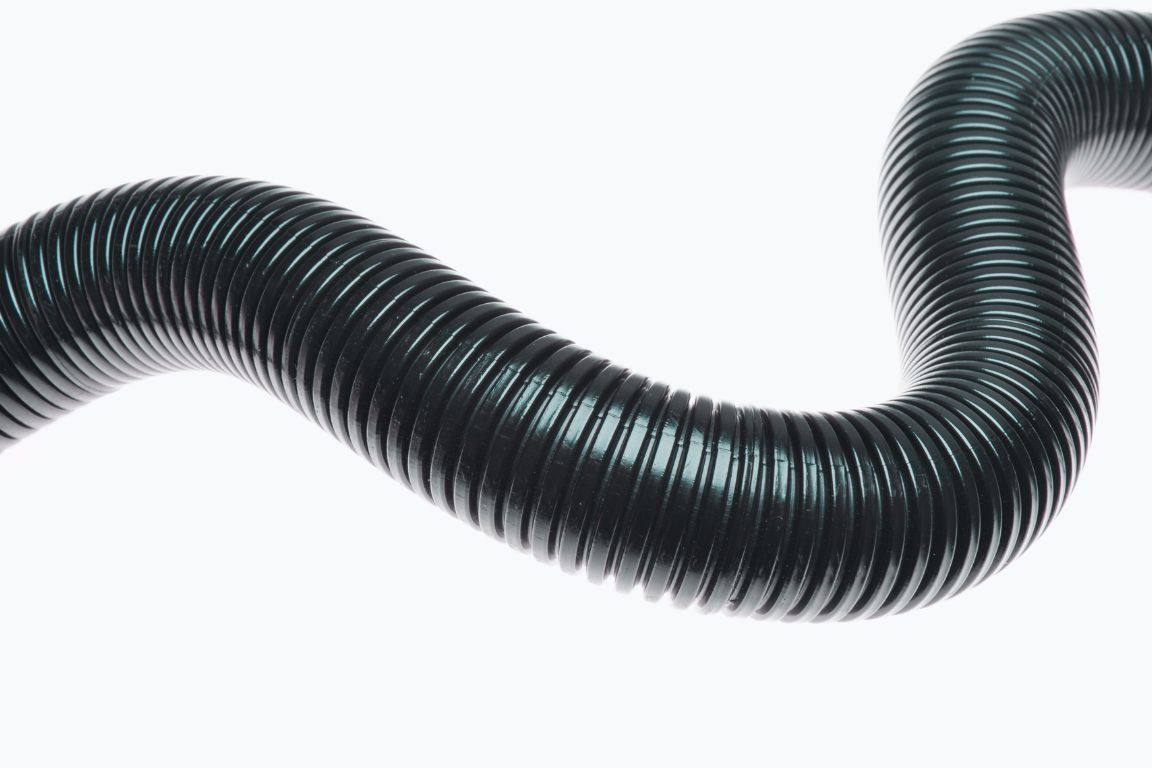
The most common cause of a persistent sewer odor from your sink is a corrugated drain pipe under your sink. These flexible, ribbed pipes trap food particles, grease, soap scum, and hair in their ridges. As this organic matter sits and decomposes, it releases the stinky smell you're dealing with.
Corrugated pipes are like an accordion - all those folds and grooves create hundreds of tiny pockets where debris gets stuck. Unlike smooth PVC pipes that let waste flow straight through, corrugated pipes hold onto everything. The buildup becomes a breeding ground for bacteria, which produces the sewer smell.
Professional plumbers don't install corrugated drains for exactly this reason. They're cheap and flexible, which makes them tempting for DIY jobs or quick handyman fixes - but they create ongoing problems. If you have a corrugated drain under your sink, that's your culprit.
How to Fix a Corrugated Drain
Replace the corrugated pipe with a proper smooth P-trap and drain assembly. This is a straightforward job for a plumber - they remove the old corrugated section and install a new smooth pipe that won't trap debris.
You'll need a plumber for this because it requires cutting and fitting pipe to create a leak-free seal. The cost is minimal compared to dealing with recurring drain smells, and once it's done, the problem is solved permanently.
When It's Not the Drain Pipe: Three Other Common Causes
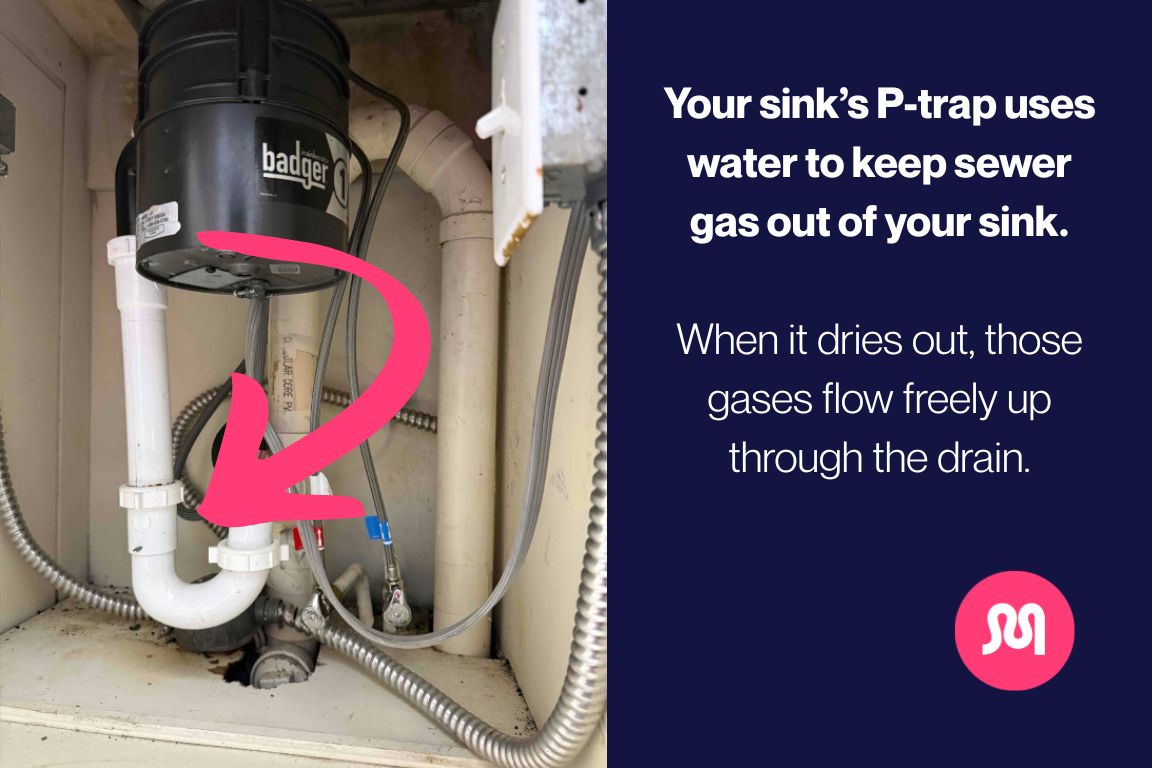
If you don't have a corrugated drain - or you've already replaced it and still smell sewer gas - here are the other likely suspects.
Dry P-Trap
The P-trap is the U-shaped pipe under your sink. It holds a small amount of water that acts as a seal, blocking sewer gas from coming up through your drain and into your home. When the P-trap dries out, that seal disappears and sewer gas flows freely into your bathroom or kitchen.
This happens most often in guest bathrooms or basement sinks that don't get used regularly. The water in the trap evaporates over a few weeks, and suddenly you smell sewage.
The fix: Run water down the drain for 60 seconds to refill the trap. If the smell goes away and stays gone, you solved it.
If it comes back: A P-trap that dries out with regular use means there's a crack in the trap or a venting issue that's pulling water out faster than normal. Call a plumber to inspect and replace the trap if needed.
Biofilm Buildup Inside the Drain
Biofilm is a slimy layer of bacteria that forms inside drains over time. It clings to the inside walls of your pipes and releases a musty, sewage-like smell - especially when you run hot water that activates the bacteria.
Kitchen sinks get biofilm from grease and food particles. Bathroom sinks get it from soap scum, toothpaste, and hair. Either way, the buildup creates an ongoing odor that doesn't go away by running water.
The fix: A plumber uses a drain snake to physically scrape the biofilm off the inside of your pipes, then flushes the line with high-pressure water. For severe buildup, enzyme drain cleaners can help break down organic matter - but this is a maintenance step, not a cure for an existing biofilm problem.
We ranked enzyme drain cleaners! Find out why Endure by American Formula is our Master Plumbers’ top pick for grease clogs.
{{best-drain-cleaner-for-grease-buildup="/blogs/best-drain-cleaner-for-grease-buildup"}}
Broken or Blocked Sewer Vent
Your home's plumbing system includes vent pipes that extend through your roof. These vents let sewer gas escape safely outside and help water drain properly by allowing air into the system. When a vent gets blocked by debris, a bird's nest, or ice, or when it cracks and breaks, sewer gas backs up into your home instead of venting outside.
A broken vent often causes smells in multiple drains, not just one sink. You might also notice slow draining or gurgling sounds when water goes down.
The fix: This requires a plumber. They'll inspect your vent pipes, clear any blockages, and repair or replace damaged sections. Vent work involves roof access and working with pipes inside your walls - not a DIY job.
Need more info about your sewer vent stack? Our plumbers teach you the basics about the “hidden” cause of sewer smells on your roof.
{{sewer-vent-problems-cleaning-repairs="/blogs/sewer-vent-problems-cleaning-repairs"}}
Bathroom Sink Smells vs. Kitchen Sink Smells

The cause of your stinky sink varies slightly depending on whether it's in your bathroom or kitchen - and the fix adjusts accordingly.
Why Your Bathroom Sink Smells
Bathroom sinks collect soap scum, toothpaste, hair, and other organic matter that builds up inside the drain and creates biofilm. The smell is usually musty or mildew-like rather than a sharp sewer smell - unless you have a dry P-trap or vent issue.
Bathroom sink drains also see less water flow than kitchen sinks, which means buildup sits longer and smells worse. If you have a pop-up drain stopper (the kind you push down to close), gunk accumulates around the stopper mechanism and under the cap, creating a constant source of odor.
The fix: Remove the pop-up stopper and clean it thoroughly - you'll likely find a disgusting layer of hair and slime wrapped around it. For biofilm inside the drain, a plumber can snake and flush the line. For persistent smells, replace corrugated pipes with smooth ones.
If it’s not a simple clog, read our helpful article below and learn how to solve a dry P-trap under your bathroom sink.
Smell sewer gas in your bathroom? Whether it’s your sink, toilet or shower, we’ve got the fast answer- read our updated guide!
{{fast-plumbing-answers-sewer-smell-in-bathroom="/blogs/fast-plumbing-answers-sewer-smell-in-bathroom"}}
Why Your Kitchen Sink Smells
Kitchen sinks deal with grease, food particles, and organic waste that decompose and smell terrible. Grease is the main problem - it flows down as a liquid, cools and solidifies inside your pipes, and traps food debris that rots.
If you have a garbage disposal, food can get stuck in the disposal unit itself or in the rubber baffle that seals the drain opening. This trapped food smells as it decomposes.
The fix: For garbage disposal odors, grind ice cubes and citrus peels to clean the blades and baffle. For grease buildup in the drain line, a plumber uses a drain snake or hydro jetting to clear the pipes and remove the solidified grease coating the walls.
Bad Advice From the Internet: What NOT to Do
The internet is full of DIY solutions for stinky drains. Some are harmless but useless. Others can damage your plumbing. Here's what to skip.
Baking Soda and Vinegar: Don’t Do It
This is the most popular DIY drain hack online. The idea: pour baking soda down the drain, add vinegar, watch it fizz, and the reaction will break down whatever is causing the smell.
Why it doesn't work: The fizzing reaction is too weak to remove biofilm, dissolve grease, or clear any real buildup. You're creating a show that feels productive but accomplishes nothing. The smell comes back within days.
Why it can harm your drains: If you use this method repeatedly, the reaction pushes loose debris deeper into your drain line instead of breaking it down. You're not cleaning the drain - you're relocating the problem. Also, the acidic vinegar accelerates corrosion in older metal pipes with repeated use.
Boiling Water: Never In Winter
Pouring boiling water down your drain is suggested as a quick fix for grease buildup and smells. The idea is that the heat will melt grease and flush it out.
Why it's only a short-term fix: Boiling water might temporarily melt surface grease, but it doesn't remove the grease coating deeper in your pipes. The grease cools and re-solidifies a few feet down the line. The smell returns within a day or two.
Why it's dangerous in winter: Never pour boiling water down your drains during freezing temperatures or winter months in DFW. The sudden temperature change can crack PVC pipes - especially if the pipes are cold from sitting near exterior walls or in unheated crawl spaces. A cracked pipe is a much bigger problem than a smelly drain.
Ice Cubes and Citrus Peels in the Disposal: Great For 72 Hours
This is actually one DIY method that works - but only for garbage disposal odors, and only as a short-term fix. Grinding ice cubes knocks debris off the disposal blades, and citrus peels mask the smell temporarily.
The limitation: This cleans the disposal itself, not the drain line. If your smell is coming from buildup in the pipes below the disposal, ice and peels won't touch it. The smell returns once the citrus scent fades - usually within hours.
If you have a disposal smell, try this method first. But if the smell persists or returns quickly, the problem is deeper in your drain line and needs professional cleaning.
That Bad Odor Isn't Your Biggest Problem
Yes, that smell is awful. It affects your personal comfort and quality of life. But a stinky sink drain also indicates an underlying plumbing issue.
Ignoring these odors leads to more significant problems for your Dallas-Fort Worth main drain and sewer line down the road.
Potential problem #1: exposure to bacteria
Decomposing matter in corrugated drains creates a breeding ground for bacteria and other microorganisms. This produces a foul odor — but more importantly, it exposes your family to a host of bacteria.
Potential problem #2: sewer gas leaks
If the smell is due to a dry P-trap or a broken sewer vent, you are being exposed to sewer gas, primarily methane.
Our Master Plumber Steven Smith explains that sewer gas “needs to exit above the house so it's not hazardous to anybody in the home." Anywhere else, it becomes a health hazard.
Prolonged exposure to methane in sewer gas causes headaches, nausea, and other health issues. It also indicates a breach in your plumbing system that allows other harmful substances to enter your home.
Potential problem #3: poor drainage and slow drains
The same issues that cause odors — blockages in corrugated pipes — also impedes proper drainage. When your sink drains slowly, it creates standing water and contributes to unsanitary conditions.
What Your Plumber Should Do For Lasting Results

When you call a plumber about a stinky sink, here's what the diagnostic and repair process should look like:
- Ask where the smell is coming from. One sink or multiple drains? Bathroom or kitchen? How long has it been going on? These questions help pinpoint whether the issue is localized (like a corrugated drain or biofilm) or systemic (like a vent issue).
- Inspect under the sink. The plumber checks for corrugated pipes, cracks in the P-trap, and visible signs of leaks or damage.
- Run water and test the P-trap. If the P-trap might be dry, they run water to refill it and see if the smell improves immediately.
- Snake the drain if needed. For biofilm or organic buildup, they run a drain snake through the line to physically remove the slimy layer coating the inside of your pipes.
- Check venting if symptoms suggest it. If you're smelling sewer gas and the P-trap is full, they inspect your vent pipes for blockages or damage.
- Recommend replacement for corrugated pipes. If you have a corrugated drain, a good plumber explains why it needs replacement and installs a proper smooth P-trap and drain assembly.
The goal is finding the root cause - not just masking the smell temporarily with cleaners or deodorizers.
Get That “New Sink” Smell Back For Good
Your sink drain stinks because of a corrugated drain pipe trapping debris, a dry P-trap letting sewer gas through, or biofilm buildup coating the inside of your pipes. The fix depends on the cause: replace corrugated pipes with smooth ones, refill or repair your P-trap, or have a plumber snake and flush your drain line.
Skip the baking soda and vinegar - it doesn't work. Don't pour boiling water down your drains in winter - it can crack your pipes. And if you try ice cubes in the disposal and the smell comes back, the problem is deeper than the disposal unit.
A stinky drain is your plumbing's way of telling you something is wrong. DIY hacks are like putting on deodorant without showering. Call a plumber, and end the cycle of 3-day fixes with a permanently stink-free sink.
Have a stinky sink drain in Dallas? Call Mother 24/7 for professional drain cleaning that solves the problem permanently.
{{drain-cleaning="/services/drain-cleaning"}}